Chapter 20
The Town Hall Power Play
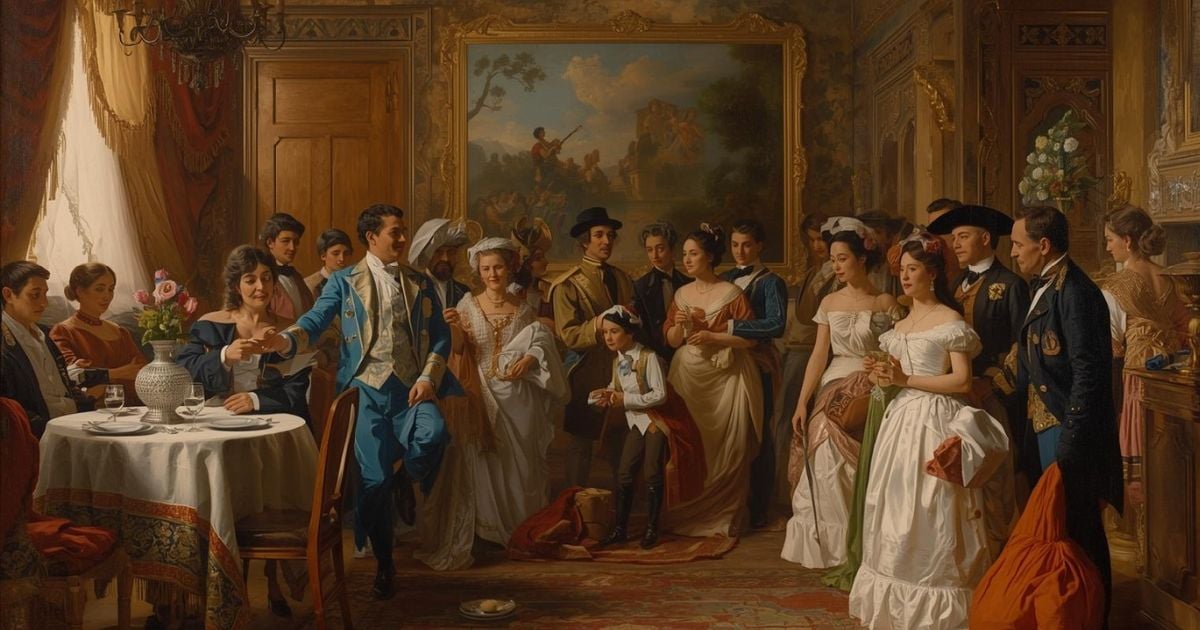
The Meeting in the Town Hall The hall was about twelve to fifteen meters long by eight to ten wide. Its whitewashed walls were covered with drawings in charcoal, more or less ugly and obscene, with inscriptions to complete their meanings. Stacked neatly against the wall in one corner were to be seen about a dozen old flint-locks among rusty swords and talibons, the armament of the cuadrilleros. [66] At one end of the hall there hung, half hidden by soiled red curtains, a picture of his Majesty, the King of Spain. Underneath this picture, upon a wooden platform, an…
Public-domain chapter text, formatted for reading.
Master this chapter. Complete your experience
Purchase the complete book to access all chapters and support classic literature
Available in paperback, hardcover, and e-book formats
Now let's explore the literary elements.
Key Quotes & Analysis
"The conduct of the gobernadorcillo fills me with distrust,"
Context: Opening debate in the town hall
Filipo names procedural delay as political suspicion. Local leadership already feels captured before the curate's order is revealed.
In Today's Words:
He says he does not trust the mayor's slow handling of the fiesta budget because it hides whose plan will really win. The same pressure appears today when a family promise shrinks under a partner's influence, or when someone with power keeps sounding reasonable while doing less and less for the people who depend on
"as I shall present the plan of the old men myself!"
Context: Following Tasio's strategy
Filipo adopts reverse psychology: propose the extravagant plan to force rejection. Debate becomes tactical theater.
In Today's Words:
He announces he will offer the conservatives' costly theater idea himself so they will vote it down and open room for youth. The same pressure appears today when a family promise shrinks under a partner's influence, or when someone with power keeps sounding reasonable while doing less and less for the people who depend on
"I propose that we erect a theater in the middle of the plaza"
Context: Presenting the elders' parody plan
The absurd proposal exposes how celebration budgets serve vanity. Laughter in the hall precedes the real punchline: friar veto.
In Today's Words:
Filipo mocks the old men's dream of a Roman-style arena in the square to show how ridiculous their spending priorities are. The same pattern still appears when corrupt institutions punish honesty, reward flattery, and teach people to mistake cruelty for order or tradition. The same pattern still appears when corrupt institutions punish honesty, reward flattery,
"The curate must be obeyed."
Context: After collecting contributions
The line ends democracy. All debate collapses into obedience once money is gathered for orders never voted in the hall.
In Today's Words:
The mayor tells the town they must follow the priest's festival commands even though the assembly just chose a different program. The same pattern still appears when corrupt institutions punish honesty, reward flattery, and teach people to mistake cruelty for order or tradition. The same pattern still appears when corrupt institutions punish honesty, reward flattery,
Thematic Threads
Hidden Authority
In This Chapter
The curate controls the festival through the gobernadorcillo without appearing at the meeting
Development
Introduced here as the invisible force behind colonial administration
In Your Life:
You might be arguing with someone who has no real power to change the situation you're fighting about.
Political Strategy
In This Chapter
Don Filipo uses reverse psychology to manipulate the conservatives into accepting his agenda
Development
Shows his evolution from earlier passive resistance to active maneuvering
In Your Life:
Sometimes getting what you want requires proposing what you don't want first.
Class Division
In This Chapter
Liberals want local culture and education while conservatives prefer expensive imported entertainment
Development
Deepens the ideological split introduced in earlier chapters
In Your Life:
Your values about money and culture often reveal which social class you identify with or aspire to join.
Colonial Control
In This Chapter
Spanish religious authority overrules local Filipino decision-making processes
Development
Reveals the mechanism behind the oppression shown throughout the novel
In Your Life:
Outside forces might be shaping your community's decisions in ways that aren't immediately obvious.
Wasted Effort
In This Chapter
The elaborate political maneuvering becomes meaningless when real authority intervenes
Development
Introduced here as the futility of working within a rigged system
In Your Life:
You might be putting tremendous energy into influencing people who can't actually change anything.
You now have the context. Time to form your own thoughts.
Discussion Questions
This is not a test. Five prompts guide you through the chapter, from how it opens to how it closes, so you notice context and rhythm rather than facts to memorize. Sit with each question in your own words. When you see "One way to read it," treat it as a starting point, not the only answer.
- 1
What strategy does Tasio give Don Filipo for the town hall debate?
analysis • surfaceOne way to read it
Present the elders' extravagant plan yourself so they reject it, then let youth offer the real sensible program. It is reverse psychology in public meeting form.
- 2
Why does Capitan Valentin defeat Filipo's parody theater proposal?
analysis • mediumOne way to read it
Valentin argues from dignity and cost, exposing vanity in the elders' plan. The hall applauds reason before learning the curate already decided.
- 3
How does the gobernadorcillo's final announcement undo the youth victory?
application • mediumOne way to read it
He reveals the curate ordered processions, sermons, and a Tondo comedy, then collects contributions. Votes become theater when friar will precedes them.
- 4
What does Filipo mean when he calls himself a slave chief?
application • deepOne way to read it
He leads debate without power to enforce outcomes. Local office exists to manage obedience to higher authority, not community choice.
- 5
When have you seen a meeting applaud a plan that was already overruled elsewhere?
reflection • deepOne way to read it
Corporate retreats, HOA votes, or union meetings where executives pre-decided outcomes mirror San Diego's fiesta politics.
Critical Thinking Exercise
Map the Real Power Structure
Think of a frustrating situation where you tried to change something but kept hitting walls. Draw a simple diagram showing who you thought had the power to make decisions versus who actually controlled the outcome. Include the visible decision-makers, the hidden influences, and the real beneficiaries of keeping things unchanged.
Consider:
- •Look for people who benefit financially or politically from the current system
- •Notice who stays quiet during debates or conflicts
- •Consider external pressures like regulations, corporate policies, or family expectations
Journaling Prompt
Write about a time when you discovered the person you were trying to convince had no real authority. How did you adjust your approach once you understood the actual power structure?
Coming Up Next...
Chapter 21: When the System Breaks a Mother
As political frustrations mount in the town, we turn to a more intimate story that reveals how personal tragedy and maternal sacrifice shape the community's deeper struggles. The opening of The Story of a Mother will tighten the family's position faster than anyone at Norland expected, and the next scene will test whether good intentions survive polite pressure..