Wide Reads
Literature MattersLife IndexEducators
Sign in
Where to Begin
Moby-Dick - Chapter 72

Herman Melville

Moby-Dick

Chapter 72

Home›Books›Moby-Dick›Chapter 72
Previous
72 of 135
Next

Summary

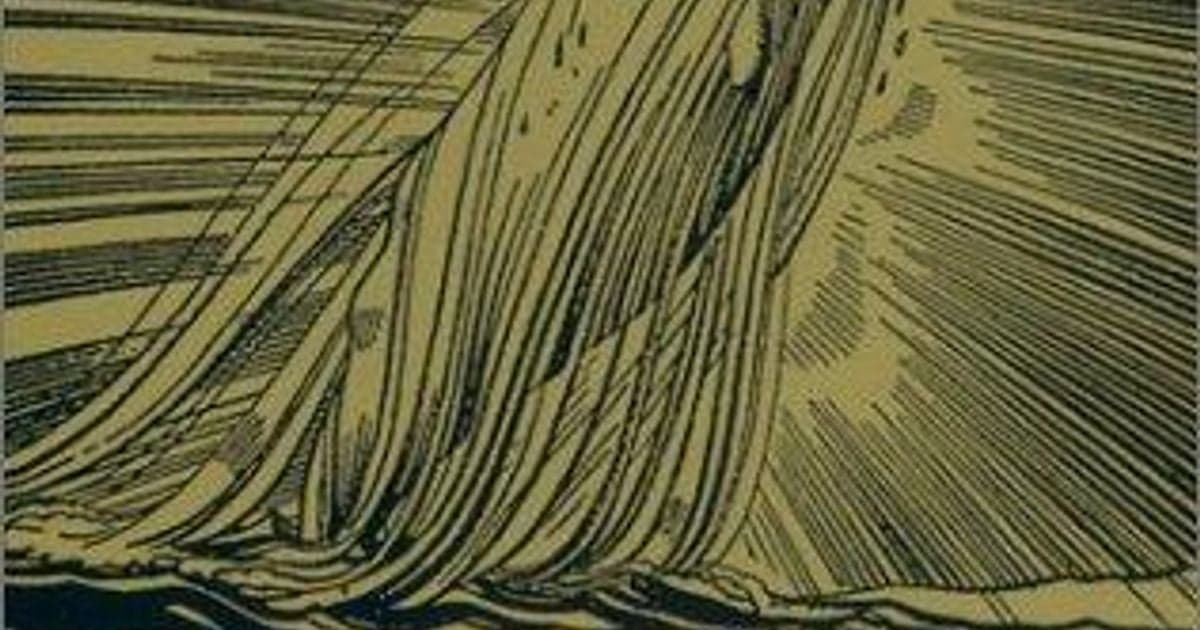
The Pequod encounters the Monkey-Rope, and Ishmael finds himself literally tied to Queequeg's fate. While Queequeg works on the slippery whale carcass floating alongside the ship, Ishmael holds the other end of a rope attached to his friend's waist—if Queequeg falls into the shark-infested waters, Ishmael goes with him. This physical bond becomes a powerful metaphor that Ishmael can't ignore. Standing on deck, gripping that rope, he realizes we're all connected by invisible monkey-ropes to other people. Your coworker's mistakes, your kid's choices, your partner's health—they all tug at your lifeline whether you realize it or not. Ishmael sees this as both beautiful and terrifying. The chapter shifts between describing the dangerous work of processing the whale (with Queequeg balancing on the whale's back while sharks circle below) and Ishmael's philosophical revelations about human interdependence. He recognizes that his careful, cautious nature is now bound to Queequeg's bold, physical courage. The rope that could kill them both also represents their brotherhood. Meanwhile, the sharks below represent all the dangers that threaten not just individuals but everyone connected to them. The chapter ends with both men safe but changed—Ishmael especially, who now understands that no one truly controls their own fate. We're all holding someone's rope, and someone is holding ours. This realization doesn't make him fearful but oddly comforted, knowing that human connection, even when dangerous, gives life meaning.

Coming Up in Chapter 73

After witnessing the monkey-rope's lesson in human connection, Ishmael turns his attention to Stubb's peculiar appetite. The second mate has ordered a very special meal prepared from the whale, and his dining habits reveal surprising truths about power, privilege, and who gets to feast while others do the dangerous work.

Share it with friends

Previous ChapterNext Chapter
GO ADS FREE — JOIN US
Original text
complete·1,619 words
T

he Monkey-Rope.

1 / 11

Master this chapter. Complete your experience

Purchase the complete book to access all chapters and support classic literature

Read Free on GutenbergBuy at Powell'sBuy on Amazon

As an Amazon Associate, we earn a small commission from qualifying purchases at no additional cost to you.

Available in paperback, hardcover, and e-book formats

GO ADS FREE — JOIN US

Why This Matters

Connect literature to life

Skill: Mapping Hidden Dependencies

This chapter teaches you to identify whose actions directly control your security, making invisible ropes visible before crisis hits.

Practice This Today

This week, list three people whose decisions could wreck your stability—then create one backup plan for the riskiest rope.

GO ADS FREE — JOIN US

Now let's explore the literary elements.

Key Quotes & Analysis

"So strongly and metaphysically did I conceive of my situation then, that while earnestly watching his motions, I seemed distinctly to perceive that my own individuality was now merged in a joint stock company of two."

— Ishmael

Context: Realizing while holding Queequeg's rope that their fates are now completely intertwined

This moment captures the loss of individual control when you're responsible for someone else. Ishmael sees their connection as both a business partnership and something deeper - a merger of destinies.

In Today's Words:

It hit me hard - we weren't two separate people anymore. If he went down, I went down. We were a package deal now.

"I saw that this situation of mine was the precise situation of every mortal that breathes; only, in most cases, he, one way or other, has this Siamese connexion with a plurality of other mortals."

— Ishmael

Context: Expanding his personal realization to a universal truth about human connection

The monkey-rope becomes a metaphor for all human relationships. Ishmael realizes everyone is tied to multiple people - family, friends, coworkers - whose choices affect our lives whether we like it or not.

In Today's Words:

Then it clicked - we're all in this boat. Everyone's got invisible ropes tied to a dozen other people. Their mess becomes your mess.

"If you be a philosopher, though seated in the whale-boat, you would not at heart feel one whit more of terror, than though seated before your evening fire with a poker, and not a harpoon, by your side."

— Narrator

Context: Reflecting on how philosophy can make dangerous situations feel abstract

Ishmael notes how overthinking can disconnect you from immediate danger. While Queequeg faces real sharks, Ishmael is lost in metaphors about human connection - a luxury of his safer position.

In Today's Words:

If you think too much, you can convince yourself that standing in traffic is no different than sitting on your couch - until a truck hits you.

"Queequeg was my own inseparable twin brother; nor could I any way get rid of the dangerous liabilities which the hempen bond entailed."

— Ishmael

Context: Accepting the weight of being responsible for another person's life

The rope transforms their friendship into something more binding than blood. Ishmael can't choose to disconnect - the job and their survival depend on maintaining this dangerous connection.

In Today's Words:

Queequeg wasn't just my buddy anymore - he was my conjoined twin. No backing out, no safety net, just the two of us against the sharks.

Thematic Threads

Human Relationships

In This Chapter

Physical rope between Ishmael and Queequeg literalizes the bonds between people

Development

Evolves from chosen brotherhood in earlier chapters to involuntary mutual dependency

In Your Life:

Your coworker's performance review affects your department's budget and your job security

Class

In This Chapter

Working-class reality of shared risk—one man's slip means both men die

Development

Builds on earlier themes of workers facing danger while owners stay safe on shore

In Your Life:

When your partner loses their job, your whole family's stability is threatened

Identity

In This Chapter

Ishmael realizes his individual identity is fiction—he's part of a web of connections

Development

Shifts from his earlier isolation as an outsider to accepting deep interdependence

In Your Life:

Your identity as 'responsible one' exists only in relation to others who depend on you

Personal Growth

In This Chapter

Ishmael grows from seeing danger in the rope to finding meaning in connection

Development

Progresses from his initial alienation to embracing human bonds despite their risks

In Your Life:

Growth means accepting you can't control everything, only how you handle your connections

GO ADS FREE — JOIN US

You now have the context. Time to form your own thoughts.

Discussion Questions

  1. 1

    What was the monkey-rope, and why did it terrify Ishmael when he realized what it meant?

    analysis • surface
  2. 2

    Why does Melville use this specific dangerous situation—Queequeg on the whale, Ishmael on deck—to reveal how human lives are interconnected?

    analysis • medium
  3. 3

    Think of a time when someone else's mistake or decision directly impacted your life. How did that 'invisible rope' reveal itself?

    application • medium
  4. 4

    If you mapped out all your 'monkey-ropes'—the people whose choices could pull you under—what would you do differently to protect yourself while still maintaining meaningful connections?

    application • deep
  5. 5

    Ishmael finds odd comfort in realizing no one controls their own fate. Why might accepting our interdependence be more freeing than believing in total independence?

    reflection • deep

Critical Thinking Exercise

10 minutes

Map Your Monkey-Ropes

Draw yourself in the center of a page. Around you, sketch the people whose choices directly impact your security—financial, professional, emotional. Draw thick lines to those with the most power to affect your life, thin lines to those with less. For each connection, write one word describing what's at risk (job, home, credit, health, peace).

Consider:

  • •Which ropes feel secure and which feel like they could snap at any moment?
  • •Are there ropes you've been ignoring that need immediate attention?
  • •Which connections give you strength versus those that only create vulnerability?

Journaling Prompt

Choose your most dangerous 'monkey-rope.' Write about specific steps you could take this week to either strengthen that connection or create a safety net in case it fails.

Coming Up Next...

Chapter 73

After witnessing the monkey-rope's lesson in human connection, Ishmael turns his attention to Stubb's peculiar appetite. The second mate has ordered a very special meal prepared from the whale, and his dining habits reveal surprising truths about power, privilege, and who gets to feast while others do the dangerous work.

Continue to Chapter 73
Previous
Chapter 71
Contents
Next
Chapter 73

Continue Exploring

Moby-Dick Study GuideTeaching ResourcesEssential Life IndexBrowse by ThemeAll Books
Identity & Self-DiscoveryMoral Dilemmas & EthicsPower & Corruption

You Might Also Like

Crime and Punishment cover

Crime and Punishment

Fyodor Dostoevsky

Explores identity & self

The Idiot cover

The Idiot

Fyodor Dostoevsky

Explores identity & self

Frankenstein cover

Frankenstein

Mary Shelley

Explores identity & self

Siddhartha cover

Siddhartha

Hermann Hesse

Explores identity & self

Browse all 47+ books

Share This Chapter

Know someone who'd enjoy this? Spread the wisdom!

TwitterFacebookLinkedInEmail

Read ad-free with Prestige

Get rid of ads, unlock study guides and downloads, and support free access for everyone.

Subscribe to PrestigeCreate free account
Intelligence Amplifier
Intelligence Amplifier™Powering Wide Reads

Exploring human-AI collaboration through books, essays, and philosophical dialogues. Classic literature transformed into navigational maps for modern life.

2025 Books

→ The Amplified Human Spirit→ The Alarming Rise of Stupidity Amplified→ San Francisco: The AI Capital of the World
Visit intelligenceamplifier.org
hello@widereads.com

WideReads Originals

→ You Are Not Lost→ The Last Chapter First→ The Lit of Love→ Wealth and Poverty→ 10 Paradoxes in the Classics · coming soon
Arvintech
arvintechAmplify your Mind
Visit at arvintech.com

Navigate

  • Home
  • Library
  • Essential Life Index
  • How It Works
  • Subscribe
  • Account
  • About
  • Contact
  • Authors
  • Suggest a Book
  • Landings

Made For You

  • Students
  • Educators
  • Families
  • Readers
  • Literary Analysis
  • Finding Purpose
  • Letting Go
  • Recovering from a Breakup
  • Corruption
  • Gaslighting in the Classics

Newsletter

Weekly insights from the classics. Amplify Your Mind.

Legal

  • Privacy Policy
  • Terms of Service
  • Cookie Policy
  • Accessibility

Why Public Domain?

We focus on public domain classics because these timeless works belong to everyone. No paywalls, no restrictions—just wisdom that has stood the test of centuries, freely accessible to all readers.

Public domain books have shaped humanity's understanding of love, justice, ambition, and the human condition. By amplifying these works, we help preserve and share literature that truly belongs to the world.

A Pilgrimage

Powell's City of Books

Portland, Oregon

If you ever find yourself in Portland, walk to the corner of Burnside and 10th. The building takes up an entire city block. Inside is over a million books, new and used on the same shelf, organized by color-coded rooms with names like the Rose Room and the Pearl Room. You can lose an afternoon. You can lose a weekend. You will find a book you have been looking for your whole life, and three you did not know existed.

It is a pilgrimage. We cannot find a bookstore like it anywhere on earth. If you read the classics, and you ever get the chance, go. It belongs on every reader's bucket list.

Visit powells.com

We are not in any way affiliated with Powell's. We are just a very big fan.

© 2026 Wide Reads™. All Rights Reserved.

Intelligence Amplifier™ and Wide Reads™ are proprietary trademarks of Arvin Lioanag.

Copyright Protection: All original content, analyses, discussion questions, pedagogical frameworks, and methodology are protected by U.S. and international copyright law. Unauthorized reproduction, distribution, web scraping, or use for AI training is strictly prohibited. See our Copyright Notice for details.

Disclaimer: The information provided on this website is for general informational and educational purposes only and does not constitute professional, legal, financial, or technical advice. While we strive to ensure accuracy and relevance, we make no warranties regarding completeness, reliability, or suitability. Any reliance on such information is at your own risk. We are not liable for any losses or damages arising from use of this site. By using this site, you agree to these terms.