Wide Reads
Literature MattersLife IndexEducators
Sign in
Where to Begin
Moby-Dick - Chapter 14

Herman Melville

Moby-Dick

Chapter 14

Home›Books›Moby-Dick›Chapter 14
Previous
14 of 135
Next

Summary

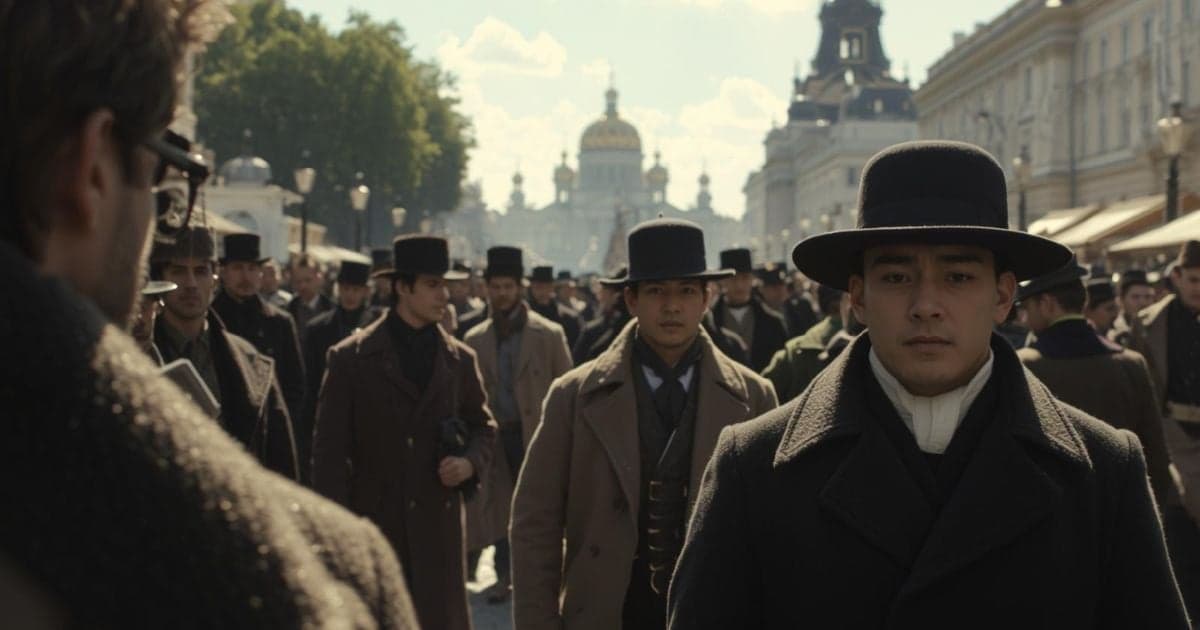
Ishmael arrives in New Bedford, the whaling capital of America, and immediately feels like an outsider in this bustling port city. The streets are filled with actual cannibals from the South Seas – men with tattooed faces and filed teeth who've been recruited as harpooners. These 'savages' walk freely among Quakers and Yankees, creating a wild mix of cultures that both fascinates and unsettles Ishmael. He wanders the frozen December streets, past opulent mansions built on whale oil fortunes, searching for a cheap inn. The fancy places are too expensive for his thin wallet, so he heads toward the waterfront where sailors congregate. As night falls and the cold bites deeper, Ishmael's romantic notions about going to sea start to crack. He's hungry, nearly broke, and the only affordable lodging appears to be in the roughest part of town. The chapter shows us that Ishmael isn't some experienced sailor – he's a middle-class guy who's read too many adventure books and is now face-to-face with the gritty reality of maritime life. His educated observations about the town's architecture and history reveal his background, but his empty pockets and growing desperation show he's committed to this journey despite having no idea what he's getting into. This contrast between Ishmael's intellectual curiosity and his practical inexperience sets up a key tension: he wants to understand everything about this world, but he's also completely out of his element. New Bedford becomes a testing ground where Ishmael must shed his landlubber pretensions and figure out how to survive among rough men who've actually faced the dangers he's only dreamed about.

Coming Up in Chapter 15

Ishmael's search for cheap lodging leads him to a mysterious inn with an ominous name and an even more ominous reputation. The locals seem to know something about this place that they're not saying.

Share it with friends

Previous ChapterNext Chapter
GO ADS FREE — JOIN US
Original text
complete·753 words
N

antucket.

Nothing more happened on the passage worthy the mentioning; so, after a fine run, we safely arrived in Nantucket.

1 / 5

Master this chapter. Complete your experience

Purchase the complete book to access all chapters and support classic literature

Read Free on GutenbergBuy at Powell'sBuy on Amazon

As an Amazon Associate, we earn a small commission from qualifying purchases at no additional cost to you.

Available in paperback, hardcover, and e-book formats

GO ADS FREE — JOIN US

Why This Matters

Connect literature to life

Skill: Reading Cultural Capital

This chapter teaches how to identify unspoken class markers and social codes that exclude or include people in professional spaces.

Practice This Today

This week, notice when people assume shared experiences or resources—vacation references, restaurant suggestions, technology everyone 'should' have—and consider what these assumptions reveal about expected class background.

GO ADS FREE — JOIN US

Now let's explore the literary elements.

Key Quotes & Analysis

"In thoroughfares nigh the docks, any considerable seaport will frequently offer to view the queerest looking nondescripts from foreign parts."

— Narrator

Context: Ishmael describing the diverse crowds in New Bedford's port district

Shows how whaling creates unexpected diversity, bringing together people who'd never meet otherwise. Ishmael's academic tone reveals his outsider status - he's observing like an anthropologist rather than belonging.

In Today's Words:

Walk through any airport or truck stop and you'll see the wildest mix of people from all over

"Actual cannibals stand chatting at street corners; savages outright; many of whom yet carry on their bones unholy flesh."

— Narrator

Context: Ishmael's shocked observation of Polynesian harpooners in New Bedford

Reveals Ishmael's sheltered background and prejudices - he sees these skilled workers as exotic savages. His fear and fascination show how unprepared he is for the multicultural reality of whaling life.

In Today's Words:

There were guys with face tattoos and gold teeth just hanging out on the corner like it was nothing

"It was a Saturday night in December. Much was I disappointed upon learning that the little packet for Nantucket had already sailed."

— Narrator

Context: Ishmael realizing he's stuck in New Bedford with little money on a freezing night

The romantic adventure suddenly becomes real hardship. Missing the boat forces Ishmael to face practical problems - cold, hunger, and poverty - that his middle-class life hadn't prepared him for.

In Today's Words:

It was Saturday night in December and I'd just found out the last bus had already left

"With halting steps I paced the streets, and passed the sign of 'The Crossed Harpoons' - but it looked too expensive and jolly there."

— Narrator

Context: Ishmael searching for affordable lodging, rejecting places beyond his means

Pride meets poverty as Ishmael must choose between comfort and affordability. The 'expensive and jolly' inn represents the life he's leaving behind - he can look but can't afford to enter.

In Today's Words:

I walked past this nice-looking sports bar, but one look at the crowd told me a beer would cost my last twenty

Thematic Threads

Class

In This Chapter

Ishmael's middle-class background collides with waterfront reality—his education can't buy dinner, his pretensions mean nothing to tattooed harpooners

Development

Introduced here

In Your Life:

When your background becomes a barrier instead of a benefit in a new environment

Identity

In This Chapter

Ishmael must choose between clinging to his educated gentleman identity or adapting to survive among rough sailors

Development

Builds from earlier chapters where he questions his place in the world

In Your Life:

When you realize the identity that worked in one context is useless or even harmful in another

Initiation

In This Chapter

New Bedford serves as the first real test—can Ishmael handle the gap between maritime romance and frozen reality?

Development

Deepens from his philosophical musings to actual physical and economic challenges

In Your Life:

The moment your dreams meet reality and you must decide whether to continue or retreat

Cultural Collision

In This Chapter

Cannibals walking among Quakers, savage harpooners in civilized streets—worlds mixing without merging

Development

Introduced here

In Your Life:

When you witness or experience radically different worldviews coexisting in the same space

You now have the context. Time to form your own thoughts.

Discussion Questions

  1. 1

    What specific details show us that Ishmael is out of his element in New Bedford? How does his reaction to the 'cannibals' reveal his background?

    analysis • surface
  2. 2

    Why does Melville have Ishmael notice both the mansions and the cheap inns? What is he trying to show us about how outsiders experience new communities?

    analysis • medium
  3. 3

    Think of a time you walked into a situation where everyone seemed to know the rules except you - maybe a new job, school, or social group. What specific things made you feel like an outsider?

    application • medium
  4. 4

    If you were coaching someone starting a job in a completely different industry or social class, what would you tell them to look for in their first week? How would you help them decode the unwritten rules?

    application • deep
  5. 5

    Why do you think humans create these invisible barriers and unspoken rules in communities? What purpose does making outsiders 'prove themselves' serve, and when does it become harmful?

    reflection • deep

Critical Thinking Exercise

10 minutes

Decode the Invisible Rules

Think of a community or workplace you're part of now. List 5 unwritten rules that everyone follows but no one explains to newcomers. For each rule, write what happens when someone breaks it and how a newcomer would learn it. Then flip it: imagine you're the newcomer. What would confuse you most?

Consider:

  • •Focus on subtle things like how people dress, speak, or interact rather than official policies
  • •Consider rules about status, respect, and belonging that aren't posted anywhere
  • •Think about what 'everyone just knows' that actually took you months to figure out

Journaling Prompt

Write about a time when you were the 'cannibal' in someone else's New Bedford - when your normal behavior marked you as different. How did you realize it? How did you adapt?

Coming Up Next...

Chapter 15

Ishmael's search for cheap lodging leads him to a mysterious inn with an ominous name and an even more ominous reputation. The locals seem to know something about this place that they're not saying.

Continue to Chapter 15
Previous
Chapter 13
Contents
Next
Chapter 15

Continue Exploring

Moby-Dick Study GuideTeaching ResourcesEssential Life IndexBrowse by ThemeAll Books
Identity & Self-DiscoveryMoral Dilemmas & EthicsPower & Corruption

You Might Also Like

Crime and Punishment cover

Crime and Punishment

Fyodor Dostoevsky

Explores identity & self

The Idiot cover

The Idiot

Fyodor Dostoevsky

Explores identity & self

Frankenstein cover

Frankenstein

Mary Shelley

Explores identity & self

Siddhartha cover

Siddhartha

Hermann Hesse

Explores identity & self

Browse all 47+ books

Share This Chapter

Know someone who'd enjoy this? Spread the wisdom!

TwitterFacebookLinkedInEmail

Read ad-free with Prestige

Get rid of ads, unlock study guides and downloads, and support free access for everyone.

Subscribe to PrestigeCreate free account
Intelligence Amplifier
Intelligence Amplifier™Powering Wide Reads

Exploring human-AI collaboration through books, essays, and philosophical dialogues. Classic literature transformed into navigational maps for modern life.

2025 Books

→ The Amplified Human Spirit→ The Alarming Rise of Stupidity Amplified→ San Francisco: The AI Capital of the World
Visit intelligenceamplifier.org
hello@widereads.com

WideReads Originals

→ You Are Not Lost→ The Last Chapter First→ The Lit of Love→ Wealth and Poverty→ 10 Paradoxes in the Classics · coming soon
Arvintech
arvintechAmplify your Mind
Visit at arvintech.com

Navigate

  • Home
  • Library
  • Essential Life Index
  • How It Works
  • Subscribe
  • Account
  • About
  • Contact
  • Authors
  • Suggest a Book
  • Landings

Made For You

  • Students
  • Educators
  • Families
  • Readers
  • Literary Analysis
  • Finding Purpose
  • Letting Go
  • Recovering from a Breakup
  • Corruption
  • Gaslighting in the Classics

Newsletter

Weekly insights from the classics. Amplify Your Mind.

Legal

  • Privacy Policy
  • Terms of Service
  • Cookie Policy
  • Accessibility

Why Public Domain?

We focus on public domain classics because these timeless works belong to everyone. No paywalls, no restrictions—just wisdom that has stood the test of centuries, freely accessible to all readers.

Public domain books have shaped humanity's understanding of love, justice, ambition, and the human condition. By amplifying these works, we help preserve and share literature that truly belongs to the world.

A Pilgrimage

Powell's City of Books

Portland, Oregon

If you ever find yourself in Portland, walk to the corner of Burnside and 10th. The building takes up an entire city block. Inside is over a million books, new and used on the same shelf, organized by color-coded rooms with names like the Rose Room and the Pearl Room. You can lose an afternoon. You can lose a weekend. You will find a book you have been looking for your whole life, and three you did not know existed.

It is a pilgrimage. We cannot find a bookstore like it anywhere on earth. If you read the classics, and you ever get the chance, go. It belongs on every reader's bucket list.

Visit powells.com

We are not in any way affiliated with Powell's. We are just a very big fan.

© 2026 Wide Reads™. All Rights Reserved.

Intelligence Amplifier™ and Wide Reads™ are proprietary trademarks of Arvin Lioanag.

Copyright Protection: All original content, analyses, discussion questions, pedagogical frameworks, and methodology are protected by U.S. and international copyright law. Unauthorized reproduction, distribution, web scraping, or use for AI training is strictly prohibited. See our Copyright Notice for details.

Disclaimer: The information provided on this website is for general informational and educational purposes only and does not constitute professional, legal, financial, or technical advice. While we strive to ensure accuracy and relevance, we make no warranties regarding completeness, reliability, or suitability. Any reliance on such information is at your own risk. We are not liable for any losses or damages arising from use of this site. By using this site, you agree to these terms.