Wide Reads
Literature MattersLife IndexEducators
Sign in
Where to Begin
Middlemarch - When Social Causes Meet Personal Feelings

George Eliot

Middlemarch

When Social Causes Meet Personal Feelings

Home›Books›Middlemarch›Chapter 39
Previous
39 of 86
Next

Summary

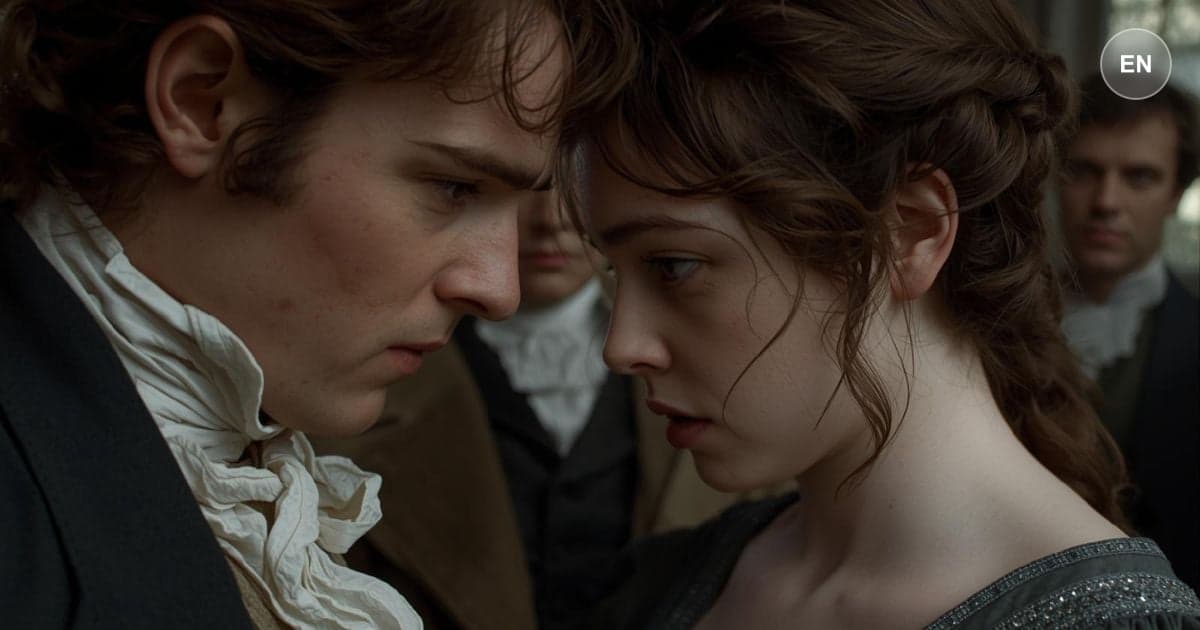
Sir James's plan: use Celia's supposed indisposition as a pretext to bring Dorothea alone to the Grange, after making her fully aware of the estate situation. Will, when Dorothea is announced, starts up as from an electric shock: "every molecule in his body had passed the message of a magic touch." Her entrance was like "the freshness of morning." Dorothea, however, is preoccupied with the estate. She tells her uncle directly that Sir James is confident he is going to have the farms valued, repairs made, cottages improved — and that he is going to engage Mr. Garth. Brooke, caught, says Chettam is a little hasty. Dorothea goes on in a voice "as clear and unhesitating as that of a young chorister chanting a credo" — naming specific tenants: Kit Downes, a wife and seven children in a house with one sitting room and one bedroom hardly larger than the library table; the Dagleys in their tumble-down farmhouse, living in the back kitchen and leaving the other rooms to the rats. She speaks of coming from the village with "all that dirt and coarse ugliness like a pain within me, and the simpering pictures in the drawing-room seemed to me like a wicked attempt to find delight in what is false." "We have no right to come forward and urge wider changes for good, until we have tried to alter the evils which lie under our own hands." Will is simultaneously moved and chilled: "A man is seldom ashamed of feeling that he cannot love a woman so well when he sees a certain greatness in her: nature having intended greatness for men." Brooke, whose masculine consciousness is "in rather a stammering condition," is rescued by the arrival of a footman — one of Dagley's boys has been caught with a dead leveret. He shuffles away. Alone with Will, Dorothea asks him to feel how right the proposed changes are. Will says he does — and then tells her the thing that has been pressing on him: that Casaubon has forbidden him to come to Lowick. She does not know it. She is evidently much moved — but Will sees that her sorrow is not all for him personally, that she does not suspect that Casaubon's dislike turns upon herself. He feels an odd mixture of delight and vexation: "of delight that he could dwell and be cherished in her thought as in a pure home, without suspicion and without stint — of vexation because he was of too little account with her." Will says he intends to stay and make the position useful and honorable. Dorothea asks what her belief is, that helps her most. She says: "That by desiring what is perfectly good, even when we don't quite know what it is and cannot do what we would, we are part of the divine power against evil — widening the skirts of light and making the struggle with darkness narrower." Will says his religion is "To love what is good and beautiful when I see it." They part. Brooke stops at Dagley's farm on the way home. Dagley, back from market and well lubricated with ale and rum-and-water, is in a decidedly quarrelsome state. When Brooke asks him to give the boy a reprimand, Dagley erupts: he has lived on that ground from his father and grandfather before him; and he has heard in Middlemarch what the "Rinform" is, and what it means for landlords who never done the right thing by their tenants — "they'll hev to scuttle off." Brooke escapes as quickly as he can. He had never before been insulted on his own land, and had been inclined to regard himself as a general favourite.

Coming Up in Chapter 40

Back at the Garth household breakfast table — nine letters, a school at York, and a letter from Sir James Chettam. Caleb Garth is about to read the best news of his year.

Share it with friends

Previous ChapterNext Chapter
GO ADS FREE — JOIN US
Original text
complete·4,595 words
I

“f, as I have, you also doe,
Vertue attired in woman see,
And dare love that, and say so too,
And forget the He and She;

And if this love, though placed so,
From prophane men you hide,
Which will no faith on this bestow,
Or, if they doe, deride:

Then you have done a braver thing
Than all the Worthies did,
And a braver thence will spring,
Which is, to keep that hid.”
—DR. DONNE.

Sir James Chettam’s mind was not fruitful in devices, but his growing anxiety to “act on Brooke,” once brought close to his constant belief in Dorothea’s capacity for influence, became formative, and issued in a little plan; namely, to plead Celia’s indisposition as a reason for fetching Dorothea by herself to the Hall, and to leave her at the Grange with the carriage on the way, after making her fully aware of the situation concerning the management of the estate.

In this way it happened that one day near four o’clock, when Mr. Brooke and Ladislaw were seated in the library, the door opened and Mrs. Casaubon was announced.

1 / 25

Master this chapter. Complete your experience

Purchase the complete book to access all chapters and support classic literature

Read Free on GutenbergBuy at Powell'sBuy on Amazon

As an Amazon Associate, we earn a small commission from qualifying purchases at no additional cost to you.

Available in paperback, hardcover, and e-book formats

GO ADS FREE — JOIN US

Why This Matters

Connect literature to life

Skill: Detecting Performative Care

This chapter teaches how to distinguish between genuine concern and the performance of caring that protects people from having to act.

Practice This Today

This week, notice when someone expresses concern for an issue but consistently finds reasons to avoid direct engagement—watch for the gap between their words and their proximity to consequences.

GO ADS FREE — JOIN US

Now let's explore the literary elements.

Key Quotes & Analysis

"I think we have no right to come forward and urge wider changes for good, until we have tried to alter the evils which lie under our own hands."

— Dorothea

Context: She's arguing that they should fix local problems before talking about bigger political reforms

This shows Dorothea's practical idealism - she believes in starting change at home rather than just talking about grand theories. It also reveals how her moral clarity makes others uncomfortable because it demands actual action.

In Today's Words:

You can't post about social justice online if you're not willing to call out problems in your own workplace or community.

"The best piety is to enjoy—when you can. You are doing the most then to save the earth's character as an agreeable planet."

— Will Ladislaw

Context: He's explaining his philosophy of life to Dorothea, contrasting his simpler approach with her intense moral mission

Will's philosophy sounds shallow compared to Dorothea's, but it reveals his honest self-awareness about his limitations. He's not trying to be something he's not, which is both refreshing and inadequate.

In Today's Words:

Life's short - sometimes the best thing you can do is just appreciate good things when they happen.

"Oh, you go round and round. You go the long way to work, sirs. I want a drink of water."

— Dagley

Context: He's dismissing Mr. Brooke's nervous attempts to avoid discussing the real problems with the tenant farms

Dagley cuts through all the polite deflection and gets to the point - he needs basic necessities, not speeches. His directness exposes how the wealthy use complicated language to avoid simple responsibilities.

In Today's Words:

Stop giving me the runaround - I need actual help, not excuses.

Thematic Threads

Class

In This Chapter

Brooke's shock at his tenant's anger reveals how class insulates people from consequences of their decisions

Development

Continues from earlier chapters showing how social position shapes perception

In Your Life:

You might see this when managers make decisions affecting workers without understanding the daily reality

Attraction

In This Chapter

Dorothea and Will's growing connection deepens through shared values despite social obstacles

Development

Builds from previous encounters, now with added forbidden element

In Your Life:

You recognize this when you're drawn to someone whose values align with yours despite practical barriers

Reform

In This Chapter

Dagley's mention of 'Rinform' threatens the comfortable assumptions of those in power

Development

Political change emerges as backdrop affecting personal relationships

In Your Life:

You see this when systemic changes threaten to expose your own comfortable assumptions

Moral Passion

In This Chapter

Dorothea's eloquent advocacy for tenant farmers both inspires and overwhelms the men present

Development

Her moral intensity continues to set her apart from social expectations

In Your Life:

You experience this when your genuine concern for others makes people uncomfortable with their inaction

Forbidden Connection

In This Chapter

Casaubon's ban on Will's visits creates intimacy through shared constraint

Development

External restrictions intensify the emotional bond between Dorothea and Will

In Your Life:

You know this feeling when outside forces try to control who you can connect with

GO ADS FREE — JOIN US

You now have the context. Time to form your own thoughts.

Discussion Questions

  1. 1

    What happens when Mr. Brooke visits his tenant farmer Dagley, and how does Dagley's response surprise him?

    analysis • surface
  2. 2

    Why does Mr. Brooke deflect with talk about art and politics when Dorothea describes the poverty she's witnessed among his tenants?

    analysis • medium
  3. 3

    Where do you see this pattern of 'comfortable distance' in your own workplace or community - people who care about problems but avoid direct contact with them?

    application • medium
  4. 4

    When someone consistently finds reasons to avoid the uncomfortable parts of issues they claim to care about, how do you protect yourself from getting caught in their cycle of empty promises?

    application • deep
  5. 5

    What does Dagley's raw anger reveal about what happens when people in power stay too insulated from the consequences of their decisions?

    reflection • deep

Critical Thinking Exercise

10 minutes

Map Your Own Comfortable Distance

Think of an issue you genuinely care about - maybe workplace conditions, family problems, or community issues. Write down three specific ways you maintain comfortable distance from the messiest, most uncomfortable parts of this problem. Then identify one small step you could take to get closer to the actual reality, even if it makes you uncomfortable.

Consider:

  • •Notice how you might use 'caring language' while avoiding direct action
  • •Consider what real engagement would actually cost you in time, comfort, or relationships
  • •Pay attention to the difference between feeling good about caring and doing the hard work of change

Journaling Prompt

Write about a time when you were confronted with the reality of a problem you thought you understood from a distance. How did that confrontation change your perspective or actions?

GO ADS FREE — JOIN US

Coming Up Next...

Chapter 40: Good Work and Second Chances

Back at the Garth household breakfast table — nine letters, a school at York, and a letter from Sir James Chettam. Caleb Garth is about to read the best news of his year.

Continue to Chapter 40
Previous
The Cost of Political Ambition
Contents
Next
Good Work and Second Chances

Continue Exploring

Middlemarch Study GuideTeaching ResourcesEssential Life IndexBrowse by ThemeAll Books
Social Class & StatusLove & RelationshipsMoral Dilemmas & Ethics

You Might Also Like

Jane Eyre cover

Jane Eyre

Charlotte Brontë

Explores personal growth

Great Expectations cover

Great Expectations

Charles Dickens

Explores personal growth

The Strange Case of Dr Jekyll and Mr Hyde cover

The Strange Case of Dr Jekyll and Mr Hyde

Robert Louis Stevenson

Explores personal growth

Don Quixote cover

Don Quixote

Miguel de Cervantes Saavedra

Explores personal growth

Browse all 47+ books
GO ADS FREE — JOIN US

Share This Chapter

Know someone who'd enjoy this? Spread the wisdom!

TwitterFacebookLinkedInEmail

Read ad-free with Prestige

Get rid of ads, unlock study guides and downloads, and support free access for everyone.

Subscribe to PrestigeCreate free account
Intelligence Amplifier
Intelligence Amplifier™Powering Wide Reads

Exploring human-AI collaboration through books, essays, and philosophical dialogues. Classic literature transformed into navigational maps for modern life.

2025 Books

→ The Amplified Human Spirit→ The Alarming Rise of Stupidity Amplified→ San Francisco: The AI Capital of the World
Visit intelligenceamplifier.org
hello@widereads.com

WideReads Originals

→ You Are Not Lost→ The Last Chapter First→ The Lit of Love→ Wealth and Poverty→ 10 Paradoxes in the Classics · coming soon
Arvintech
arvintechAmplify your Mind
Visit at arvintech.com

Navigate

  • Home
  • Library
  • Essential Life Index
  • How It Works
  • Subscribe
  • Account
  • About
  • Contact
  • Authors
  • Suggest a Book
  • Landings

Made For You

  • Students
  • Educators
  • Families
  • Readers
  • Literary Analysis
  • Finding Purpose
  • Letting Go
  • Recovering from a Breakup
  • Corruption
  • Gaslighting in the Classics

Newsletter

Weekly insights from the classics. Amplify Your Mind.

Legal

  • Privacy Policy
  • Terms of Service
  • Cookie Policy
  • Accessibility

Why Public Domain?

We focus on public domain classics because these timeless works belong to everyone. No paywalls, no restrictions—just wisdom that has stood the test of centuries, freely accessible to all readers.

Public domain books have shaped humanity's understanding of love, justice, ambition, and the human condition. By amplifying these works, we help preserve and share literature that truly belongs to the world.

A Pilgrimage

Powell's City of Books

Portland, Oregon

If you ever find yourself in Portland, walk to the corner of Burnside and 10th. The building takes up an entire city block. Inside is over a million books, new and used on the same shelf, organized by color-coded rooms with names like the Rose Room and the Pearl Room. You can lose an afternoon. You can lose a weekend. You will find a book you have been looking for your whole life, and three you did not know existed.

It is a pilgrimage. We cannot find a bookstore like it anywhere on earth. If you read the classics, and you ever get the chance, go. It belongs on every reader's bucket list.

Visit powells.com

We are not in any way affiliated with Powell's. We are just a very big fan.

© 2026 Wide Reads™. All Rights Reserved.

Intelligence Amplifier™ and Wide Reads™ are proprietary trademarks of Arvin Lioanag.

Copyright Protection: All original content, analyses, discussion questions, pedagogical frameworks, and methodology are protected by U.S. and international copyright law. Unauthorized reproduction, distribution, web scraping, or use for AI training is strictly prohibited. See our Copyright Notice for details.

Disclaimer: The information provided on this website is for general informational and educational purposes only and does not constitute professional, legal, financial, or technical advice. While we strive to ensure accuracy and relevance, we make no warranties regarding completeness, reliability, or suitability. Any reliance on such information is at your own risk. We are not liable for any losses or damages arising from use of this site. By using this site, you agree to these terms.