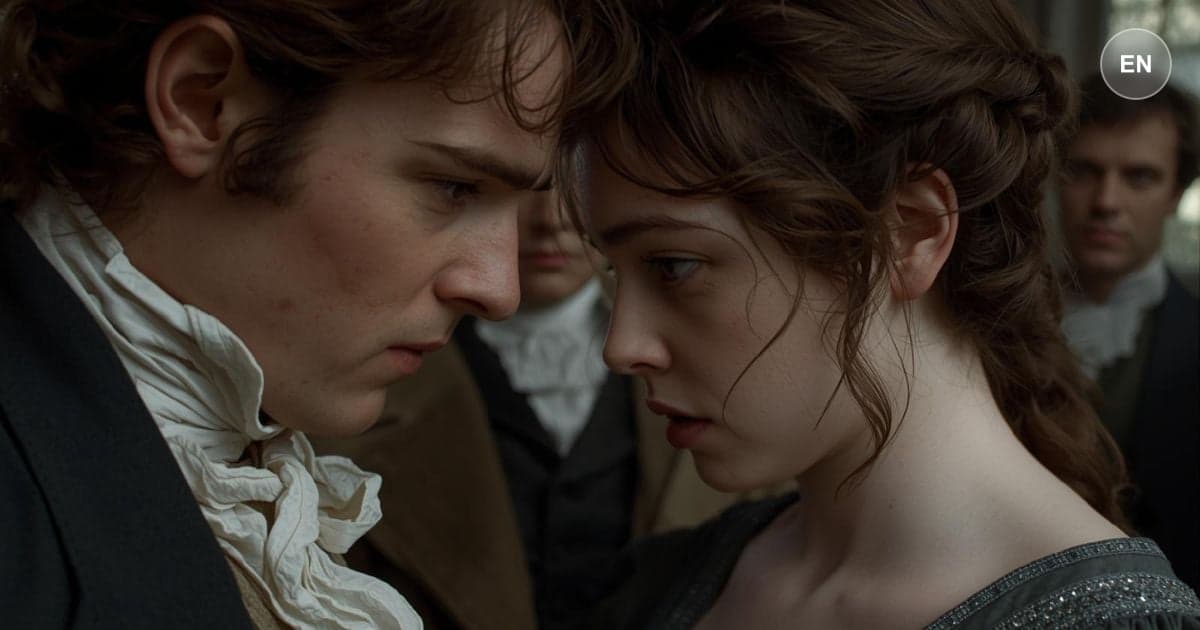
Middlemarch buzzes with Reform politics and rumor that Brooke has bought the Pioneer and hired Will Ladislaw to edit it. Hawley sneers at the quill-driving alien; Casaubon hears Shelley comparisons and feels jealousy sharpened because Dorothea may share Will's views and because Will's republican energy makes the scholar's house feel like a museum. Will, grateful yet resentful, decides Casaubon wronged Dorothea by marrying her, and vows to watch over her while staying near if she wishes. Public newspaper work and private marriage suspicion braid before anyone speaks plainly at Lowick, and the town treats the editor's name as scandal before he writes a line.
Will takes shelter from rain at Lowick, finds Dorothea alone in the library, and speaks openly as in Rome. He admits he came for the chance of seeing her alone; she answers with plain gladness that she is so glad to see him. He urges a secretaryship; she insists her happiness is helping her husband finish the Key to all Mythologies. They discuss Will's family, disinherited Aunt Julia, and Dorothea pleads Casaubon's illness as excuse for harshness toward kin. She says she would like Will to stay in the neighborhood; then shame recalls her husband's likely veto and she asks Will to wait. He leaves hurriedly before Casaubon returns, carrying both relief and danger in the same rainy afternoon at Lowick.
Dorothea mentions Brooke's proposal that evening; Casaubon closes his eyes and later sends a formal letter vetoing Will's neighborhood work and banning him from the house, inferring from Mrs. Casaubon that Will entertained the editorship and using her words as evidence while refusing dialogue. Dorothea, innocent and stirred, broods on justice for Julia and plans to alter the will so Will has his rightful share without knowing she is feeding her husband's worst fear. At night she asks to discuss money and fairness; Casaubon forbids her judgment on alliances and Ladislaw, naming his range of affairs as distinctly and properly his alone and rejecting revision or dictation within it.
Will replies that obligation cannot fetter lawful occupation and that he will not leave Middlemarch on command alone; Casaubon reads defiance and thinks Dorothea is already influenced. The marriage tightens around property, pride, and proximity while Reform talk outside supplies a public frame for private veto. Dorothy should read XXXVII as triangulated war: rain forces honesty in the library, duty sends Dorothea back to Edward's frame, and polite letters perform cruelty without a raised voice. Will's courteous refusal keeps him near the flame; Dorothea's justice instinct feeds suspicion; Casaubon's fear dresses as etiquette. Hawley's sneer, Shelley's ghost, Julia's disinheritance, and Brooke's Pioneer offer sit on one table with a wife's gladness and a husband's closed eyes. Each document fights about who may influence whom, not about newspaper work alone. Sympathy becomes evidence without consent; a ban in cold grammar cannot end what rain began in plain speech. Middlemarch will remember the triangle long after the editor's name fades from the masthead while Dorothea still believes she serves justice, not trespass, and Will still believes he serves her mind, not her marriage's ruin. Three wills collide in one week: Casaubon's to control proximity, Dorothea's to repair Julia's wrong through the ledger, and Will's to remain where conscience and attraction pull together. Reform provides cover for jealousy; generosity for suspicion; etiquette for exile. Will stays; Casaubon writes; Dorothea plans; Hawley listens as Book IV's public energy becomes Book V's private siege. Brooke's purchase of the Pioneer and offer of editorship sit at the center: Will needs work and Dorothea needs intelligent conversation; Casaubon needs control. When Dorothea tells her husband what Brooke proposed, she thinks she speaks fairness; he hears Ladislaw's name as trespass. The formal letter forbids neighborhood employment and house visits, inferring Will entertained the post from her report alone. Will answers that no obligation to Casaubon can fetter lawful occupation, and stays in Middlemarch on that principle while Dorothea broods on altering the will for Julia's line. Night talk forbids her judgment on alliances; she must accept no revision within affairs he calls his own. Hawley sneers in public; jealousy works in private; rain opened honesty that etiquette tries to close. None names love; all name duty, and the town will prefer the simpler scandal and call it Ladislaw's fault before Dorothea's name is spoken. Eliot's chapter is a manual on triangulated veto: speak to power before the banned friend acts, or your sympathy becomes evidence without your consent to the wording and before the codicil will name Ladislaw in a later book. Dorothea will carry that lesson into widowhood when she learns the dead hand can forbid a name she has not yet spoken aloud as love, even when she still calls it justice for Julia's line and for Brooke's careless patronage of Will.