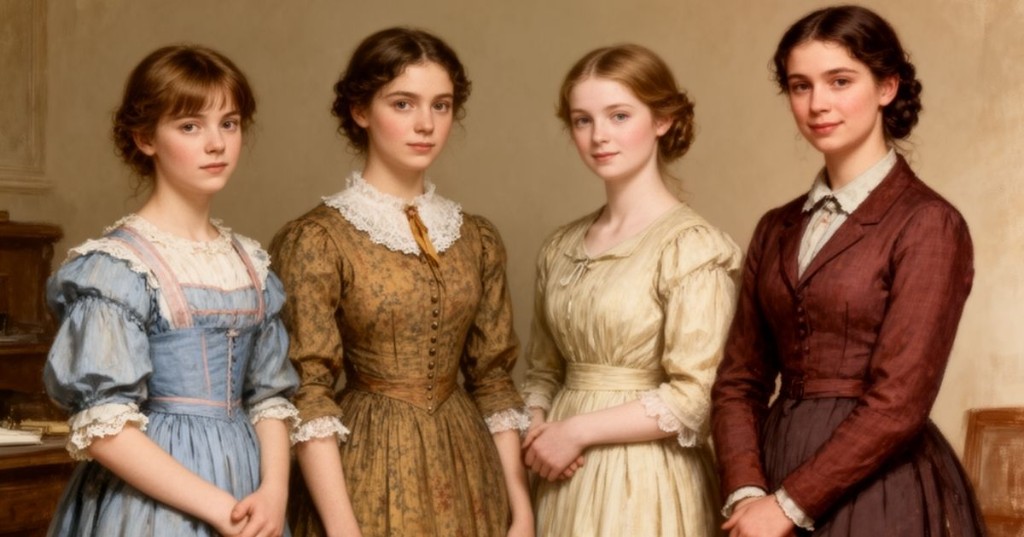
Chapter 28
The Reality of Marriage
CHAPTER TWENTY-EIGHT DOMESTIC EXPERIENCES Like most other young matrons, Meg began her married life with the determination to be a model housekeeper. John should find home a paradise, he should always see a smiling face, should fare sumptuously every day, and never know the loss of a button. She brought so much love, energy, and cheerfulness to the work that she could not but succeed, in spite of some obstacles. Her paradise was not a tranquil one, for the little woman fussed, was over-anxious to please, and bustled about like a true Martha, cumbered with many cares. She was too…
Public-domain chapter text, formatted for reading.
Master this chapter. Complete your experience
Purchase the complete book to access all chapters and support classic literature
Available in paperback, hardcover, and e-book formats
Now let's explore the literary elements.
Key Quotes & Analysis
"model housekeeper"
Context: Meg's goal at the start of marriage
Idealism drives her early efforts and later crash when reality resists performance.
In Today's Words:
She wanted to be the perfect homemaker. New partners still try to run a flawless household to prove love. Performance exhausts everyone when upkeep is daily. The same pressure appears today when people perform a version of themselves that looks impressive on paper but drains the energy needed for real competence and connection.
"paradise"
Context: What Meg wants John's home to be
Paradise language sets expectations John never asked for and Meg cannot sustain.
In Today's Words:
She promised him a perfect home. People still sell marriage as constant comfort. Real homes include burnt food, bills, and days too tired for smiles. The same pressure appears today when people perform a version of themselves that looks impressive on paper but drains the energy needed for real competence and connection.
"too cruel to hint"
Context: John jokes after the jelly failure
A small joke lands on a large shame and triggers disproportionate pain.
In Today's Words:
She thought he was mocking her failure. Partners still hear teasing as contempt when they are already ashamed. Timing can turn humor into harm. The same pressure appears today when people perform a version of themselves that looks impressive on paper but drains the energy needed for real competence and connection.
"afraid of her husband"
Context: After the silk dress quarrel
Money conflict reveals authority in marriage and Meg's first sight of John's anger.
In Today's Words:
She feared him for the first time. Financial betrayal can change how safe a relationship feels. Overspending is not only math; it is trust. The same pressure appears today when people perform a version of themselves that looks impressive on paper but drains the energy needed for real competence and connection.
Thematic Threads
Class
In This Chapter
Meg's friendship with wealthy Sallie creates pressure to live beyond her means, showing how class differences strain relationships
Development
Evolved from earlier chapters about March family's genteel poverty to show how class anxiety affects marriage
In Your Life:
You might feel inadequate about your lifestyle when interacting with wealthier friends or colleagues
Expectations
In This Chapter
Meg's perfectionist homemaking attempts backfire spectacularly, revealing the gap between idealized roles and reality
Development
Built on earlier themes of social expectations for women, now showing marriage-specific pressures
In Your Life:
You might exhaust yourself trying to meet impossible standards for parenting, work performance, or relationships
Communication
In This Chapter
John and Meg's fight escalates because both hide their true feelings—he suffers silently, she acts deceptively
Development
Continues the book's emphasis on honest communication as essential for healthy relationships
In Your Life:
You might avoid difficult conversations with your partner, letting resentment build until it explodes
Growth
In This Chapter
Both characters learn from their mistakes and emerge stronger, with twins symbolizing new beginnings
Development
Reinforces the book's core message that personal development comes through facing challenges honestly
In Your Life:
You might discover that working through conflicts with loved ones actually strengthens your relationships
You now have the context. Time to form your own thoughts.
Discussion Questions
This is not a test. Five prompts guide you through the chapter, from how it opens to how it closes, so you notice context and rhythm rather than facts to memorize. Sit with each question in your own words. When you see "One way to read it," treat it as a starting point, not the only answer.
- 1
What does Meg mean by making home a paradise?
analysis • surfaceOne way to read it
She wants perfect comfort, food, and mood for John without visible effort or failure.
- 2
Why does the jelly scene escalate?
analysis • mediumOne way to read it
A day of failure meets an unexpected guest and a joke that feels like mockery, so shame becomes anger.
- 3
How does the silk dress conflict differ from the jelly fight?
application • mediumOne way to read it
It involves money and trust, not only pride, and makes Meg see sternness in John she never feared before.
- 4
What does Marmee want Meg to learn about marriage?
application • deepOne way to read it
Share trouble honestly instead of performing perfection, so John can be a partner rather than an audience.
- 5
When has hiding a mistake at home made the fight worse?
reflection • deepOne way to read it
Strong answers describe a small failure that grew because they tried to look competent before asking for help.
Critical Thinking Exercise
Track Your Comparison Triggers
For the next three days, notice when you feel dissatisfied with something you were previously content with. Write down what triggered the feeling—was it social media, a conversation, visiting someone's home, or seeing someone's purchase? Track the pattern from contentment to comparison to wanting something you didn't need before. This exercise helps you recognize comparison poisoning in real-time.
Consider:
- •Pay attention to the exact moment your mood shifts from satisfied to wanting
- •Notice whether the trigger involves seeing someone else's highlight reel versus their daily reality
- •Consider whether you were actually unhappy before the comparison moment
Journaling Prompt
Write about a time when comparison to others led you to make a decision you later regretted. What would you do differently now that you can name this pattern?
Coming Up Next...
Chapter 29: The Art of Social Navigation
As Meg adjusts to motherhood with twins, the March family faces new social pressures. Amy's artistic ambitions and romantic prospects begin to shift the family dynamics in unexpected ways Amy drags Jo into the social rite of calling, half a dozen visits in one day, a promise Jo instantly regrets. Jo loathes the ritual of cards, costumes, and careful speech, but Amy insists bargains.