Chapter 123
Fighting the Voices That Lead Us Astray
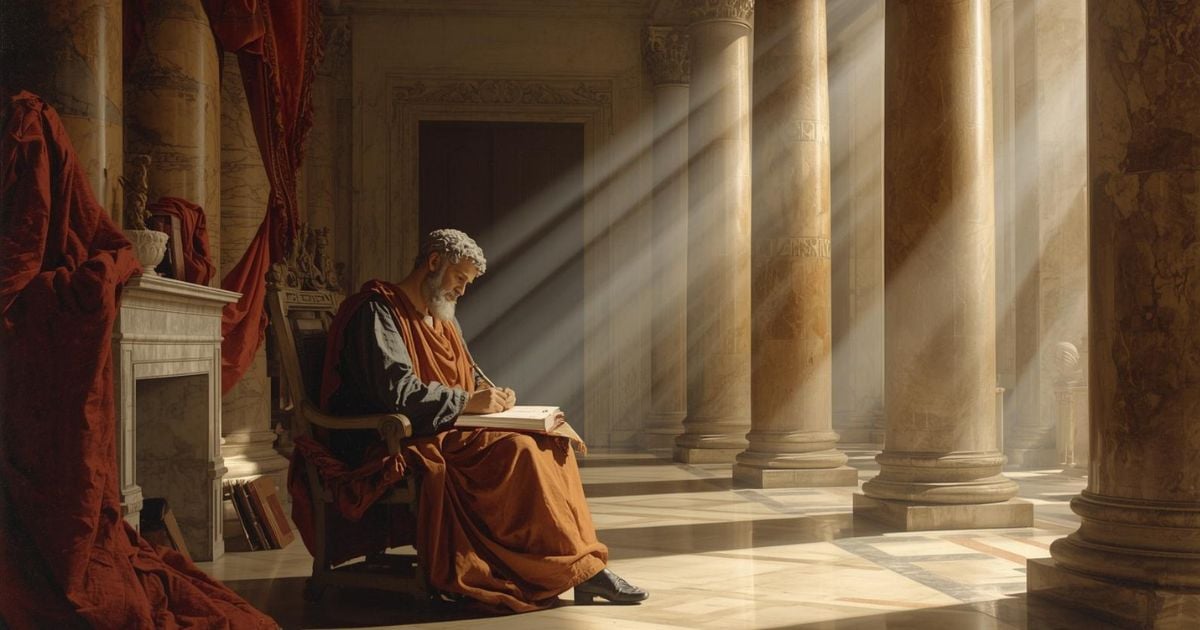
1.Wearied with the discomfort rather than with the length of my journey, I have reached my Alban villa late at night, and I find nothing in readiness except myself. So I am getting rid of fatigue at my writing-table: I derive some good from this tardiness on the part of my cook and my baker. For I am communing with myself on this very topic—that nothing is heavy if one accepts it with a light heart, and that nothing need provoke one’s anger if one does not add to one’s pile of troubles by getting angry. 2. My baker…
Public-domain chapter text, formatted for reading.
Master this chapter. Complete your experience
Purchase the complete book to access all chapters and support classic literature
Available in paperback, hardcover, and e-book formats
Now let's explore the literary elements.
Key Quotes & Analysis
"nothing is heavy if one accepts it with a light heart, and that nothing need provoke one’s anger if one does not add to one’s pile of troubles by getting angry."
Context: On late arrival
Attitude shapes weight.
In Today's Words:
Seneca says nothing is heavy if accepted with a light heart and anger need not enlarge troubles. Reaction often hurts more than event. Practice calm when plans fail before blaming circumstances. Apply that test to one real decision you face in the next few days.
"cheerfully to employ what comes to him."
Context: On independence
Use what arrives.
In Today's Words:
Seneca says we cannot have all we wish but can cheerfully employ what comes to us. Independence grows from a good-humoured stomach. Train contentment with slender fare before fortune turns. Apply that test to one real decision you face in the next few days. Apply that test to one real decision you face in the
"attain a goal where the words “pleasant” and “honourable” have the same meaning"
Context: On virtue's aim
Pleasure must match honour.
In Today's Words:
Seneca says it is better to follow a straight course where pleasant and honourable have the same meaning. True happiness does not betray virtue. Reject choices that require calling wrong right. Apply that test to one real decision you face in the next few days.
"philosophy ought not to try to explain away vice."
Context: On false teachers
Do not excuse corruption.
In Today's Words:
Seneca says philosophy ought not explain away vice, as when a physician bids a sick man live recklessly. Rationalization kills recovery. Reject teachers who baptize appetites as wisdom. Apply that test to one real decision you face in the next few days. Apply that test to one real decision you face in the next few
Thematic Threads
Social Expectations
In This Chapter
Seneca warns how society pressures us to live with elaborate displays of wealth and comfort because that's what's expected
Development
Builds on earlier themes about external validation, now showing how social pressure operates through casual influence
In Your Life:
You might feel pressure to spend money on things you don't need because everyone around you considers them normal.
Class
In This Chapter
The letter reveals how class distinctions are maintained through lifestyle expectations - servants, expensive travel, material displays
Development
Expands earlier class discussions to show how class pressure operates through social conformity rather than direct commands
In Your Life:
You might feel ashamed of your practical choices when surrounded by people who spend more freely.
Personal Growth
In This Chapter
Seneca advocates training ourselves to move toward difficulty rather than pleasure, building real strength through deliberate practice
Development
Continues the theme of intentional development, now focusing on resisting social corruption through disciplined choice
In Your Life:
You might need to consciously choose harder paths that align with your values instead of easier ones that please others.
Identity
In This Chapter
The chapter shows how our sense of self gets corrupted when we absorb other people's definitions of what constitutes a good life
Development
Deepens earlier identity themes by showing how external influences can literally change who we think we are
In Your Life:
You might find yourself wanting things you never cared about before, simply because people around you value them.
Human Relationships
In This Chapter
Seneca warns about the danger of conversations with people whose values corrupt our judgment, comparing them to sirens
Development
Introduces the idea that relationships themselves can be toxic if they consistently undermine our principles
In Your Life:
You might need to limit time with people whose casual conversations consistently make you question your solid life choices.
You now have the context. Time to form your own thoughts.
Discussion Questions
This is not a test. Five prompts guide you through the chapter, from how it opens to how it closes, so you notice context and rhythm rather than facts to memorize. Sit with each question in your own words. When you see "One way to read it," treat it as a starting point, not the only answer.
- 1
Seneca arrives late at his villa with no cook or bread ready and turns fatigue into a writing topic. What principle begins the letter?
analysis • surfaceOne way to read it
Nothing is heavy with a light heart; anger need not be added to trouble. Hunger will make even late bread good.
- 2
Seneca lists seductions: poverty, death, superstition, and the voices that redirect us. What is superstition's error?
analysis • mediumOne way to read it
Misguided fear that dreads those it should love and dishonors what it worships. It shares with vice the power of empty opinion.
- 3
Seneca says philosophy should not explain away vice, and reckless living after a reckless prescription dooms the sick. Where is vice being softened into acceptability?
application • mediumOne way to read it
Rationalizations that rename indulgence as realism. Philosophy must not prescribe what destroys recovery.
- 4
Seneca urges learning principles by heart so outside voices cannot redirect you. Which voice most often steers you astray?
application • deepOne way to read it
Fashion, fear, or crowd opinion pressing on a tired mind. Memorized truths resist seduction when comfort is absent.
- 5
Could you accept tonight's inconveniences with a light heart instead of adding anger? What would that practice train?
reflection • deepOne way to read it
Equanimity under small lacks prepares for larger trials. Refusing to pile anger on discomfort.
Critical Thinking Exercise
Track Your Influence Network
List the five people you spend the most time talking to (in person, online, or on the phone). For each person, write down what they typically complain about, what they spend money on, and what they consider 'normal' or 'necessary.' Then honestly assess: are their casual comments making you feel inadequate about choices that used to feel fine?
Consider:
- •Notice which conversations leave you feeling like your choices aren't enough
- •Pay attention to how people describe their spending as 'needs' rather than wants
- •Consider whether you're absorbing their definitions of success without realizing it
Journaling Prompt
Write about a time when someone's casual comment about money, lifestyle, or possessions made you question a choice you'd previously felt good about. How did that conversation change your thinking, and do you want it to?
Coming Up Next...
Chapter 124: True Good Comes from Reason
In the final letter of this collection, Seneca turns to the ultimate question: what is the true good that reason can attain? He'll explore how ancient wisdom can guide us toward lasting fulfillment, even when we feel ashamed to learn such fundamental truths..