Wide Reads
Literature MattersLife IndexEducators
Sign in
Where to Begin

The Power of Strategic Withdrawal — Letters from a Stoic

Letters from a Stoic - The Power of Strategic Withdrawal

Seneca

Letters from a Stoic

The Power of Strategic Withdrawal

Home›Books›Letters from a Stoic›Chapter 8: The Power of Strategic Withdrawal
Previous
8 of 124
Next

Analysis by the Wide Reads editorial team·Reviewed against the source text·Updated December 11, 2025

Summary

The Power of Strategic Withdrawal

Letters from a Stoic by Seneca

0:000:00
Listen to Next Chapter

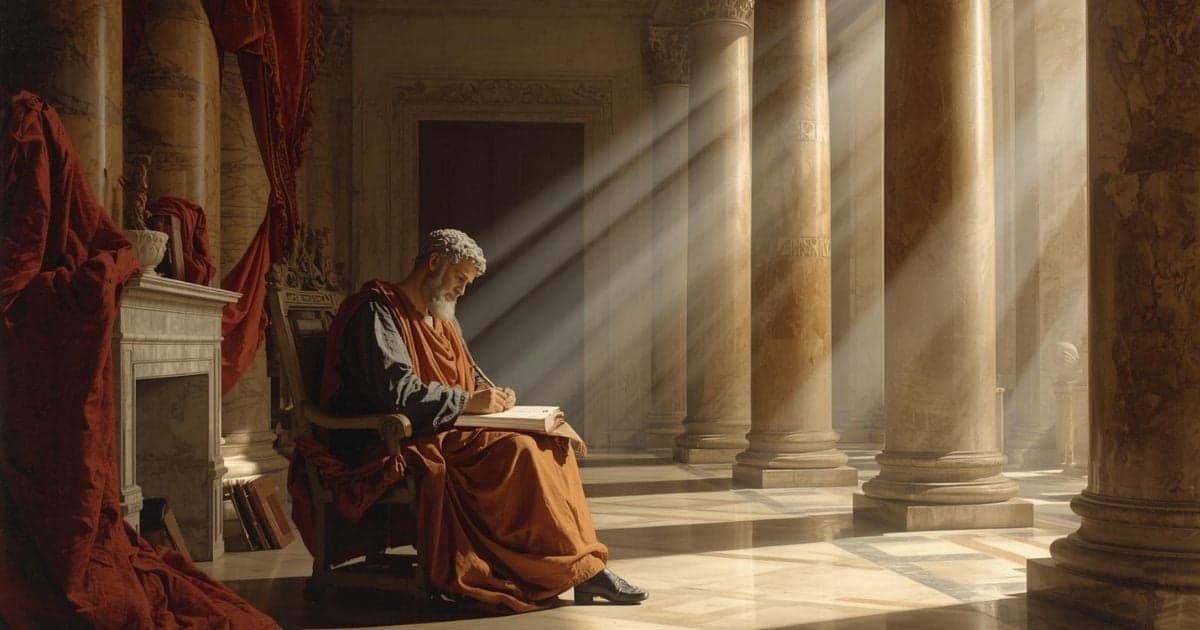
When someone accuses Seneca of hiding from the world, his answer surprises. He isn't hiding, he's working for a larger audience than any courtroom or forum could hold: future generations. Letter 8 is his defense of strategic withdrawal. The counsels he's writing down, he says, are like prescriptions for useful drugs, they'll outlast anything he could accomplish in public life.

But the letter quickly pivots from self-justification to a broader argument about what Fortune actually offers. Her gifts, power, wealth, prominence, look like prizes until you examine them. They're traps. The more you reach for them, the more leverage they have over you.

Seneca's alternative is deliberately countercultural: eat to satisfy hunger, not appetite; dress for warmth, not display; live in a home that shelters, not one that impresses. This isn't self-punishment, it's self-possession. When you've detached from external props, nothing Fortune takes back can unmake you.

The letter closes with an apparent paradox: true freedom comes from becoming a slave, not to circumstances or to other people's opinions, but to philosophy itself. The person mastered by wisdom is freer than any emperor.

In this chapter: Terms Characters Key Quotes Themes Modern Story

Why This Matters

Connect literature to life

Skill: Strategic Withdrawal

Stepping back from the crowd is not the same as stepping out of work. Seneca tells Lucilius he withdrew to write counsels like medical prescriptions for future generations, working through the night while others chase visible busyness. Block one uninterrupted hour for work that will outlast today's meetings and treat it as seriously as a paid shift.

Coming Up in Chapter 9

Next, Seneca asks whether the wise man truly needs friends or can stand alone. His answer pairs Stilbo's courage after total loss with a warning against fair weather friendships.

Share it with friends

PreviousPrevious ChapterNextNext Chapter
Original text
939 wordscomplete

Chapter 08

The Power of Strategic Withdrawal

1.“Do you bid me,” you say, “shun the throng, and withdraw from men, and be content with my own conscience? Where are the counsels of your school, which order a man to die in the midst of active work?” As to the course[1] which I seem to you to be urging on you now and then, my object in shutting myself up and locking the door is to be able to help a greater number. I never spend a day in idleness; I appropriate even a part of the night for study. I do not allow time for sleep…

Public-domain chapter text, formatted for reading.

Master this chapter. Complete your experience

Purchase the complete book to access all chapters and support classic literature

Buy at Powell'sBuy on Amazon

Available in paperback, hardcover, and e-book formats

Now let's explore the literary elements.

Key Quotes & Analysis

"I never spend a day in idleness; I appropriate even a part of the night for study."

— Seneca

Context: Defending withdrawal as intense labor

Productivity redefined beyond public visibility.

In Today's Words:

Seneca says he never spends a day in idleness and even takes part of the night for study. Withdrawal is not laziness when it fuels serious work. If you step back from noise, show the calendar blocks that prove you are building something real. Apply that test to one real decision you face in the

"Avoid whatever pleases the throng: avoid the gifts of Chance! Halt before every good which Chance brings to you, in a spirit of doubt and fear; for it is the dumb animals and fish that are deceived by tempting hopes."

— Seneca

Context: Counsels written for future readers

Popular approval and Fortune's prizes are traps.

In Today's Words:

Seneca warns readers to avoid what pleases the throng and the gifts of Chance. Crowd applause and sudden luck train dependence on what you cannot control. Before you chase a promotion or windfall, ask what it would cost you to keep it. Apply that test to one real decision you face in the next few

"If you would enjoy real freedom, you must be the slave of Philosophy."

— Epicurus (quoted by Seneca)

Context: Closing paradox on true liberty

Submission to wisdom frees you from fortune and opinion.

In Today's Words:

Epicurus, quoted by Seneca, says you must be the slave of Philosophy to enjoy real freedom. Commitment to principle frees you from mood and circumstance. Pick one rule you will follow this week even when it is inconvenient and watch how much anxiety drops. Apply that test to one real decision you face in the

"What Chance has made yours is not really yours."

— Lucilius (quoted by Seneca)

Context: Seneca praises Lucilius's own formulation

Fortune can withdraw what it gave.

In Today's Words:

Seneca quotes Lucilius: what Chance has made yours is not really yours. Anything fortune can give, fortune can take. Separate what you need to sleep at night from what merely flatters your status on paper. Apply that test to one real decision you face in the next few days.

Thematic Threads

Social Expectations

In This Chapter

Seneca faces criticism for withdrawing from public duties, revealing how society pressures individuals to conform to visible productivity

Development

Building on earlier themes about external validation, now showing the cost of defying social expectations

In Your Life:

You might feel this when choosing personal development over social obligations and facing judgment for it

Class

In This Chapter

The tension between aristocratic leisure and duty to society reflects class-based assumptions about how different people should spend their time

Development

Evolving from individual class anxiety to broader questions about social responsibility across class lines

In Your Life:

You might experience this when your choices don't match what people expect from someone in your position

Identity

In This Chapter

Seneca redefines what it means to be useful to society, shifting from public performance to private contribution

Development

Deepening the theme of self-definition versus external definition that runs throughout the letters

In Your Life:

You might struggle with this when your sense of purpose conflicts with how others see your role

Personal Growth

In This Chapter

The letter advocates for choosing long-term development over short-term social approval

Development

Expanding on earlier growth themes to include the social costs of self-improvement

In Your Life:

You might face this when prioritizing learning or skill-building over immediate social or financial gains

Human Relationships

In This Chapter

Seneca's withdrawal affects his relationships but he argues it ultimately serves others better through his writing

Development

Complicating earlier relationship themes by showing how helping others sometimes requires disappointing them

In Your Life:

You might experience this when setting boundaries that hurt people's feelings but serve everyone's long-term interests

You now have the context. Time to form your own thoughts.

Discussion Questions

This is not a test. Five prompts guide you through the chapter, from how it opens to how it closes, so you notice context and rhythm rather than facts to memorize. Sit with each question in your own words. When you see "One way to read it," treat it as a starting point, not the only answer.

  1. 1

    Lucilius asks whether Seneca is urging him to shun the throng and withdraw, contrary to Stoic counsel to die in the midst of active work. How does Seneca answer that apparent contradiction?

    ▶One way to read it

    His seclusion is not idleness. He withdraws to write remedies for later generations and, he argues, does more good in study than in courtrooms or senate business.

    analysis • surface
  2. 2

    Seneca compares wholesome counsels to prescriptions and says he writes what helped minister to his own sores. Why does sharing late-found wisdom require admitting you wandered first?

    ▶One way to read it

    The path he points others toward is one he found late after weariness. Honesty about his own wounds gives the prescription credibility and keeps advice from sounding abstract.

    analysis • medium
  3. 3

    Seneca calls Fortune's gifts snares and limed twigs, saying we think we hold them but they hold us. What modern 'gifts of Chance' trap people the same way?

    ▶One way to read it

    Sudden promotions, viral attention, windfall money, or status that arrives unearned can bind you to upkeep, fear of loss, and compromise. What looked like grasping Fortune often means being grasped.

    application • medium
  4. 4

    Seneca repeats a rule to indulge the body only as far as health requires and says a thatch shelters as well as a roof of gold. How does that test differ from both luxury and performative austerity?

    ▶One way to read it

    Use food, drink, dress, and shelter for need, not display. Despise ornament made by useless toil. The soul alone is worthy of wonder; material extremes either enslave or posture.

    application • deep
  5. 5

    Seneca quotes Epicurus that real freedom requires being philosophy's slave, then asks why such words belong only to Epicurus. What does treating truth as common property add to strategic withdrawal?

    ▶One way to read it

    Withdrawal is for clearer service, not tribal loyalty. Good ideas remain good no matter who said them. Philosophy frees you the moment you submit to it, wherever you find it.

    reflection • deep

Critical Thinking Exercise

10 minutes

Map Your Strategic Withdrawal

Think of an area where you feel pressure to stay constantly busy or visible. Map out what stepping back might look like: What would you stop doing? What would you focus on instead? What criticism might you face, and from whom? Finally, imagine the long-term results of both staying busy versus stepping back strategically.

Consider:

  • •Consider who benefits from keeping you busy in the current situation
  • •Think about the difference between temporary discomfort and long-term regret
  • •Remember that explaining your strategy to critics often backfires - results speak louder

Journaling Prompt

Write about a time when you stepped back from something everyone expected you to do. What did you gain from that withdrawal? If you've never done this, describe what you might step back from now and why it scares you.

Coming Up Next...

Chapter 9: The Art of True Friendship

Next, Seneca asks whether the wise man truly needs friends or can stand alone. His answer pairs Stilbo's courage after total loss with a warning against fair weather friendships.

Continue to Chapter 9
Previous
Why Crowds Can Corrupt You
Contents
Next
The Art of True Friendship
Keep exploring

Continue Exploring

Study guides, teaching tools, themes, and the full library.More ways to read Letters from a Stoic: study guides, teaching tools, and the wider library.

  • Letters from a Stoic Study Guide
  • Teaching Resources
  • Essential Life Index
  • Browse by Theme
  • All Books

Life-skill deep dives in Letters from a Stoic

  • Choosing Friendships WiselySeneca on true friendship, toxic company, and the inner circle: how the people you keep either improve you or slowly become you.
  • Dealing with AdversitySeneca on illness, exile, loss, and hardship: how to endure what you cannot remove without surrendering your judgment or dignity.
  • Emotional RegulationSeneca on anger, fear, and grief: how to feel without being ruled, and how emotional storms pass through those who train the mind.
  • Facing Mortality with CourageSeneca on memento mori without morbidity: prepare for death early, drain its terror, and let mortality clarify how you live now.
  • Living According to ValuesSeneca on integrity, virtue, and the gap between what we praise and what we do: close it before wealth, crowds, or comfort make hypocrisy normal.
  • Managing Time and PrioritiesSeneca on guarding your hours: reclaim time from distraction, busywork, and other people

You Might Also Like

Meditations cover

Meditations

Marcus Aurelius

Explores personal growth

The Dhammapada cover

The Dhammapada

Buddha

Explores suffering & resilience

The Enchiridion cover

The Enchiridion

Epictetus

Explores suffering & resilience

The Consolation of Philosophy cover

The Consolation of Philosophy

Boethius

Explores suffering & resilience

Browse all 106+ books

Share This Chapter

Know someone who'd enjoy this? Spread the wisdom!

TwitterFacebookLinkedInEmail

Go further with Prestige

Unlock study guides and downloads, early access, and exclusive content — and support free access for everyone.

Subscribe to PrestigeCreate free account
Intelligence Amplifier
Intelligence Amplifier™Powering Wide Reads

Exploring human-AI collaboration through books, essays, and philosophical dialogues. Classic literature transformed into navigational maps for modern life.

2025 Books

→ The Amplified Human Spirit→ The Alarming Rise of Stupidity Amplified→ San Francisco: The AI Capital of the World
Visit intelligenceamplifier.org
hello@widereads.com

WideReads Originals

→ You Are Not Lost→ The Last Chapter First→ The Lit of Love→ Wealth and Poverty→ Wisdom for the Wounded
Arvintech
arvintechAmplify your Mind
Visit at arvintech.com

Navigate

  • Home
  • Library
  • Essential Life Index
  • How It Works
  • Subscribe
  • Account
  • About
  • Contact
  • Authors
  • Suggest a Book
  • Landings

Made For You

  • Trending
  • Students
  • Educators
  • Families
  • Readers
  • Literary Analysis
  • Finding Purpose
  • Letting Go
  • Recovering from a Breakup
  • Corruption
  • Gaslighting in the Classics

Newsletter

Weekly insights from the classics. Amplify Your Mind.

Legal

  • Privacy Policy
  • Terms of Service
  • Editorial Standards
  • Cookie Policy
  • Accessibility

Why Public Domain?

We focus on public domain classics because these timeless works belong to everyone. No paywalls, no restrictions—just wisdom that has stood the test of centuries, freely accessible to all readers.

Public domain books have shaped humanity's understanding of love, justice, ambition, and the human condition. By amplifying these works, we help preserve and share literature that truly belongs to the world.

A Pilgrimage

Powell's City of Books

Portland, Oregon

If you ever find yourself in Portland, walk to the corner of Burnside and 10th. The building takes up an entire city block. Inside is over a million books, new and used on the same shelf, organized by color-coded rooms with names like the Rose Room and the Pearl Room. You can lose an afternoon. You can lose a weekend. You will find a book you have been looking for your whole life, and three you did not know existed.

It is a pilgrimage. We cannot find a bookstore like it anywhere on earth. If you read the classics, and you ever get the chance, go. It belongs on every reader's bucket list.

Visit powells.com

We are not in any way affiliated with Powell's. We are just a very big fan.

© 2026 Wide Reads™. All Rights Reserved.

Intelligence Amplifier™ and Wide Reads™ are proprietary trademarks of Arvin Lioanag.

Copyright Protection: All original content, analyses, discussion questions, pedagogical frameworks, and methodology are protected by U.S. and international copyright law. Unauthorized reproduction, distribution, web scraping, or use for AI training is strictly prohibited. See our Copyright Notice for details.

Disclaimer: The information provided on this website is for general informational and educational purposes only and does not constitute professional, legal, financial, or technical advice. While we strive to ensure accuracy and relevance, we make no warranties regarding completeness, reliability, or suitability. Any reliance on such information is at your own risk. We are not liable for any losses or damages arising from use of this site. By using this site, you agree to these terms.