Wide Reads
Literature MattersLife IndexEducators
Sign in
Where to Begin

Volume I, Book 3: In the Year 1817 - Fantine — Les Misérables: Essential Edition

Les Misérables: Essential Edition - Volume I, Book 3: In the Year 1817 - Fantine

Victor Hugo

Les Misérables: Essential Edition

Volume I, Book 3: In the Year 1817 - Fantine

Home›Books›Les Misérables: Essential Edition›Chapter 4: Volume I, Book 3: In the Year 1817 - Fantine
Previous
4 of 48
Next

Analysis by the Wide Reads editorial team·Reviewed against the source text·Updated January 28, 2025

Summary

We meet Fantine, a young working-class woman in 1817 Paris who represents the countless invisible poor struggling to survive in an indifferent society. Abandoned as a child and left to fend for herself, Fantine embodies the vulnerability of those without family, education, or social safety nets. Her beauty and youth cannot protect her from the harsh realities of economic desperation. Hugo introduces us to a character whose fate will illuminate the broader themes of social injustice and the way society fails its most vulnerable members. Her story begins as one of hope - a young woman seeking her fortune in the big city - but the seeds of tragedy are already visible in her complete lack of support systems or viable opportunities for advancement.

In this chapter: Terms Characters Key Quotes Themes Modern Story

Why This Matters

Connect literature to life

Skill: Systemic Thinking

Systemic Thinking is not a slogan but a repeatable choice under pressure. We meet Fantine, a young working-class woman in 1817 Paris who represents the countless invisible poor struggling to survive in an indifferent society. When encountering someone's difficult situation, ask 'What systems failed here?' before asking 'What did they do wrong?' Look for patterns in problems affecting multiple people in similar circumstances.

Coming Up in Chapter 5

Fantine's innocent love affair with a charming student ends in abandonment and pregnancy, forcing her into increasingly desperate circumstances as a single mother trying to survive in an unforgiving world.

Share it with friends

PreviousPrevious ChapterNextNext Chapter
Chapter overview
312 wordsexcerpt

Chapter 04

Volume I, Book 3: In the Year 1817 - Fantine

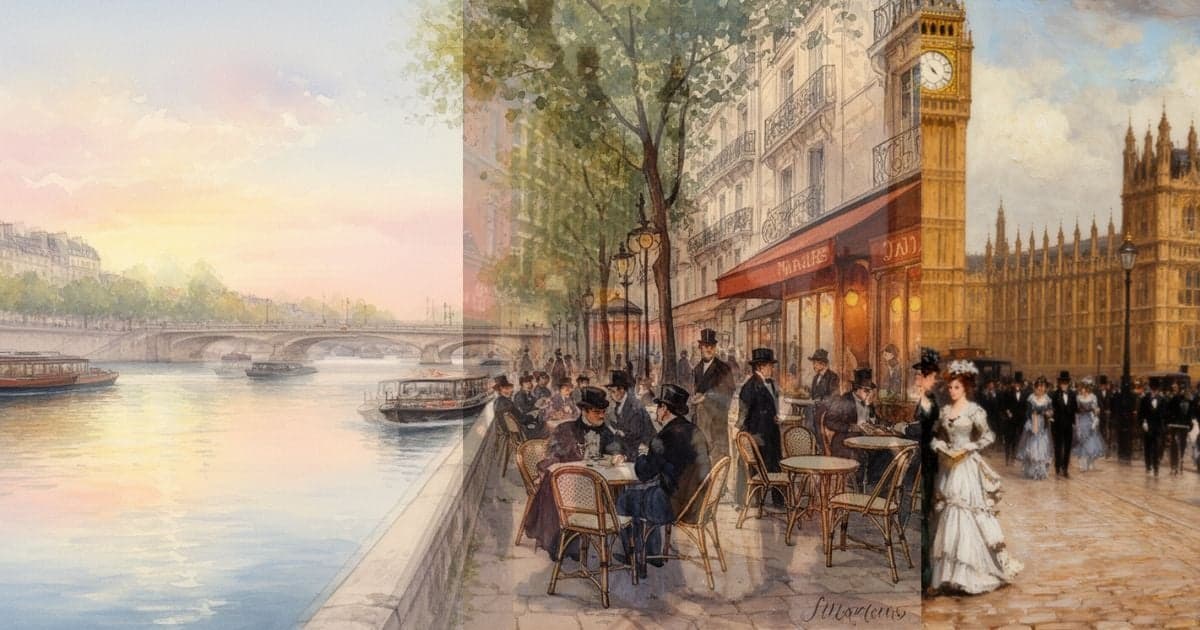
We shall be obliged to mention Paris as it was then, and as it is today. In 1817, Paris still preserved much of its provincial aspect. We shall have occasion to speak of the Faubourg Saint-Antoine and the Faubourg du Temple. At that period there existed on the Montparnasse barrier, near the spot where now stands the principal entrance to the cemetery, a place of evil repute called 'The Barriere Blanche.' Here lived Fantine. She was one of those women who spring up, so to speak, from the dregs of the people. Born of the gutter, ignorant of her parentage,…

Master this chapter. Complete your experience

Purchase the complete book to access all chapters and support classic literature

Buy at Powell'sBuy on Amazon

Available in paperback, hardcover, and e-book formats

Now let's explore the literary elements.

Key Quotes & Analysis

"She was one of those women who spring up, so to speak, from the dregs of the people."

— Narrator

Context: Hugo's introduction of Fantine emphasizes her origins in society's lowest class

This phrase reveals both Fantine's resilience and society's view of the poor as disposable, while 'spring up' suggests unexpected strength emerging from harsh conditions

In Today's Words:

She was one of those people society throws away, yet somehow she survived and even flourished despite everything working against her. Hugo maps how law, poverty, and reputation trap people long after punishment ends. The line still names a pattern you can spot in hiring, housing, policing, and family life whenever dignity is withheld from someone society has already condemned.

"She bore a man's name , Fantine , having never known either father or mother."

— Narrator

Context: Explaining Fantine's complete lack of family or social support

The arbitrary nature of her name reflects her arbitrary place in society - no heritage, no protection, no identity except what chance provided

In Today's Words:

She was completely alone in the world, with nothing but a random name to call her own. Hugo maps how law, poverty, and reputation trap people long after punishment ends. The line still names a pattern you can spot in hiring, housing, policing, and family life whenever dignity is withheld from someone society has already condemned.

"We shall be obliged to mention Paris as it was then, and as it is today."

— Narrator

Context: Passage from Volume I, Book 3: In the Year 1817 - Fantine

Hugo uses concrete detail to show how institutions and neighbors shape a person's options.

In Today's Words:

In today's language, the passage says: We shall be obliged to mention Paris as it was then, and as it is today. Hugo maps how law, poverty, and reputation trap people long after punishment ends. The line still names a pattern you can spot in hiring, housing, policing, and family life whenever dignity is withheld from someone society has already condemned.

"In 1817, Paris still preserved much of its provincial aspect."

— Narrator

Context: Passage from Volume I, Book 3: In the Year 1817 - Fantine

Hugo uses concrete detail to show how institutions and neighbors shape a person's options.

In Today's Words:

In today's language, the passage says: In 1817, Paris still preserved much of its provincial aspect. Hugo maps how law, poverty, and reputation trap people long after punishment ends. The line still names a pattern you can spot in hiring, housing, policing, and family life whenever dignity is withheld from someone society has already condemned.

Thematic Threads

Social inequality

In This Chapter

Fantine's complete lack of family, education, or opportunities versus society's indifference to her struggle

Development

Will escalate as her situation worsens and society's response becomes increasingly punitive rather than helpful

In Your Life:

Consider how many struggling people remain invisible in your daily life - the cashier working three jobs, the student choosing between textbooks and food, the elderly neighbor too proud to ask for help

Vulnerability of women

In This Chapter

Fantine's beauty is mentioned as significant, but provides no real protection from economic hardship

Development

Her gender will make her situation more precarious as limited options force increasingly desperate choices

In Your Life:

Notice how women in your life face different and often more severe consequences for similar circumstances - single mothers, women in low-wage jobs, elderly women living alone

Systemic failure

In This Chapter

No institutions exist to help someone like Fantine - no family, no social services, no safety net

Development

Will become more apparent as every system she encounters either ignores or actively harms her

In Your Life:

Observe gaps in support systems around you - who falls through the cracks when they need help? What happens to people who don't qualify for existing programs?

You now have the context. Time to form your own thoughts.

Discussion Questions

This is not a test. Five prompts guide you through the chapter, from how it opens to how it closes, so you notice context and rhythm rather than facts to memorize. Sit with each question in your own words. When you see "One way to read it," treat it as a starting point, not the only answer.

  1. 1

    How does Volume I, Book 3: In the Year 1817 - Fantine show the conflict between rigid justice and compassionate mercy?

    ▶One way to read it

    Hugo's chapter supports this reading directly. We meet Fantine, a young working-class woman in 1817 Paris who represents the countless invisible poor struggling to survive in an indifferent society. Abandoned as a child and left to fend for herself, Fantine embodies the vulnerability of those without family, education, or social safety nets. The question asks you to connect that narrative pressure to lived experience: where do you see the same pattern in workplaces, families, courts, or public policy today? Use the text as evidence, not as a moral slogan.

    analysis • deep
  2. 2

    What social or economic trap does Hugo expose in Volume I, Book 3: In the Year 1817 - Fantine, and who profits from keeping it in place?

    ▶One way to read it

    Hugo's chapter supports this reading directly. We meet Fantine, a young working-class woman in 1817 Paris who represents the countless invisible poor struggling to survive in an indifferent society. Abandoned as a child and left to fend for herself, Fantine embodies the vulnerability of those without family, education, or social safety nets. The question asks you to connect that narrative pressure to lived experience: where do you see the same pattern in workplaces, families, courts, or public policy today? Use the text as evidence, not as a moral slogan.

    reflection • medium
  3. 3

    Where do you see Jean Valjean's dilemma reflected in modern debates about second chances and criminal records?

    ▶One way to read it

    Hugo's chapter supports this reading directly. We meet Fantine, a young working-class woman in 1817 Paris who represents the countless invisible poor struggling to survive in an indifferent society. Abandoned as a child and left to fend for herself, Fantine embodies the vulnerability of those without family, education, or social safety nets. The question asks you to connect that narrative pressure to lived experience: where do you see the same pattern in workplaces, families, courts, or public policy today? Use the text as evidence, not as a moral slogan.

    application • surface
  4. 4

    Which character choice in Volume I, Book 3: In the Year 1817 - Fantine best reveals Hugo's argument about redemption, and why?

    ▶One way to read it

    Hugo's chapter supports this reading directly. We meet Fantine, a young working-class woman in 1817 Paris who represents the countless invisible poor struggling to survive in an indifferent society. Abandoned as a child and left to fend for herself, Fantine embodies the vulnerability of those without family, education, or social safety nets. The question asks you to connect that narrative pressure to lived experience: where do you see the same pattern in workplaces, families, courts, or public policy today? Use the text as evidence, not as a moral slogan.

    analysis • deep
  5. 5

    If you had to defend or challenge one character's decision in Volume I, Book 3: In the Year 1817 - Fantine, what evidence from the chapter would you use?

    ▶One way to read it

    Hugo's chapter supports this reading directly. We meet Fantine, a young working-class woman in 1817 Paris who represents the countless invisible poor struggling to survive in an indifferent society. Abandoned as a child and left to fend for herself, Fantine embodies the vulnerability of those without family, education, or social safety nets. The question asks you to connect that narrative pressure to lived experience: where do you see the same pattern in workplaces, families, courts, or public policy today? Use the text as evidence, not as a moral slogan.

    reflection • medium

Critical Thinking Exercise

10 minutes

Mapping Invisible Struggles

Think about the people you encounter in a typical day - cashiers, bus drivers, cleaning staff, delivery workers, servers. Choose one interaction and consider what you don't know about that person's life circumstances, challenges, or dreams.

Consider:

  • •What assumptions do you make based on their job or appearance?
  • •What struggles might be invisible to you as a customer or passerby?
  • •How might their economic situation affect their daily choices and stress levels?
  • •What systems of support might or might not be available to them?

Journaling Prompt

Write about a time when you realized someone's situation was much more difficult than you initially understood. What changed your perspective, and how did it affect your response to similar situations afterward?

Coming Up Next...

Chapter 5: The Weight of Trust: Fantine's Desperate Bargain

Fantine's innocent love affair with a charming student ends in abandonment and pregnancy, forcing her into increasingly desperate circumstances as a single mother trying to survive in an unforgiving world.

Continue to Chapter 5
Previous
Volume I, Book 2: The Silver Candlesticks - The Transformation
Contents
Next
The Weight of Trust: Fantine's Desperate Bargain
Keep exploring

Continue Exploring

Study guides, teaching tools, themes, and the full library.More ways to read Les Misérables: Essential Edition: study guides, teaching tools, and the wider library.

  • Les Misérables: Essential Edition Study Guide
  • Teaching Resources
  • Essential Life Index
  • Browse by Theme
  • All Books

Life-skill deep dives in Les Misérables: Essential Edition

  • Recognizing Redemption and TransformationTrack Jean Valjean
  • Standing Up for Social JusticeRevolution, barricades, and conscience in Les Misérables: when to fight for justice against the odds.
  • The Power of Compassion and MercyDiscover how Bishop Myriel
  • Understanding Systemic InjusticeHow Les Misérables exposes systems that punish poverty and block second chances after prison.
Moral Dilemmas & EthicsSocial Class & Status

You Might Also Like

A Tale of Two Cities cover

A Tale of Two Cities

Charles Dickens

Explores justice & fairness

The Count of Monte Cristo cover

The Count of Monte Cristo

Alexandre Dumas

Explores justice & fairness

Noli Me Tángere cover

Noli Me Tángere

José Rizal

Explores justice & fairness

The Jungle cover

The Jungle

Upton Sinclair

Explores justice & fairness

Browse all 106+ books

Share This Chapter

Know someone who'd enjoy this? Spread the wisdom!

TwitterFacebookLinkedInEmail

Go further with Prestige

Unlock study guides and downloads, early access, and exclusive content — and support free access for everyone.

Subscribe to PrestigeCreate free account
Intelligence Amplifier
Intelligence Amplifier™Powering Wide Reads

Exploring human-AI collaboration through books, essays, and philosophical dialogues. Classic literature transformed into navigational maps for modern life.

2025 Books

→ The Amplified Human Spirit→ The Alarming Rise of Stupidity Amplified→ San Francisco: The AI Capital of the World
Visit intelligenceamplifier.org
hello@widereads.com

WideReads Originals

→ You Are Not Lost→ The Last Chapter First→ The Lit of Love→ Wealth and Poverty→ Wisdom for the Wounded
Arvintech
arvintechAmplify your Mind
Visit at arvintech.com

Navigate

  • Home
  • Library
  • Essential Life Index
  • How It Works
  • Subscribe
  • Account
  • About
  • Contact
  • Authors
  • Suggest a Book
  • Landings

Made For You

  • Trending
  • Students
  • Educators
  • Families
  • Readers
  • Literary Analysis
  • Finding Purpose
  • Letting Go
  • Recovering from a Breakup
  • Corruption
  • Gaslighting in the Classics

Newsletter

Weekly insights from the classics. Amplify Your Mind.

Legal

  • Privacy Policy
  • Terms of Service
  • Editorial Standards
  • Cookie Policy
  • Accessibility

Why Public Domain?

We focus on public domain classics because these timeless works belong to everyone. No paywalls, no restrictions—just wisdom that has stood the test of centuries, freely accessible to all readers.

Public domain books have shaped humanity's understanding of love, justice, ambition, and the human condition. By amplifying these works, we help preserve and share literature that truly belongs to the world.

A Pilgrimage

Powell's City of Books

Portland, Oregon

If you ever find yourself in Portland, walk to the corner of Burnside and 10th. The building takes up an entire city block. Inside is over a million books, new and used on the same shelf, organized by color-coded rooms with names like the Rose Room and the Pearl Room. You can lose an afternoon. You can lose a weekend. You will find a book you have been looking for your whole life, and three you did not know existed.

It is a pilgrimage. We cannot find a bookstore like it anywhere on earth. If you read the classics, and you ever get the chance, go. It belongs on every reader's bucket list.

Visit powells.com

We are not in any way affiliated with Powell's. We are just a very big fan.

© 2026 Wide Reads™. All Rights Reserved.

Intelligence Amplifier™ and Wide Reads™ are proprietary trademarks of Arvin Lioanag.

Copyright Protection: All original content, analyses, discussion questions, pedagogical frameworks, and methodology are protected by U.S. and international copyright law. Unauthorized reproduction, distribution, web scraping, or use for AI training is strictly prohibited. See our Copyright Notice for details.

Disclaimer: The information provided on this website is for general informational and educational purposes only and does not constitute professional, legal, financial, or technical advice. While we strive to ensure accuracy and relevance, we make no warranties regarding completeness, reliability, or suitability. Any reliance on such information is at your own risk. We are not liable for any losses or damages arising from use of this site. By using this site, you agree to these terms.