Wide Reads
Literature MattersLife IndexEducators
Sign in
Where to Begin
King Lear - When Your Children Turn Against You

William Shakespeare

King Lear

When Your Children Turn Against You

Home›Books›King Lear›Chapter 8
Previous
8 of 24
Next

Summary

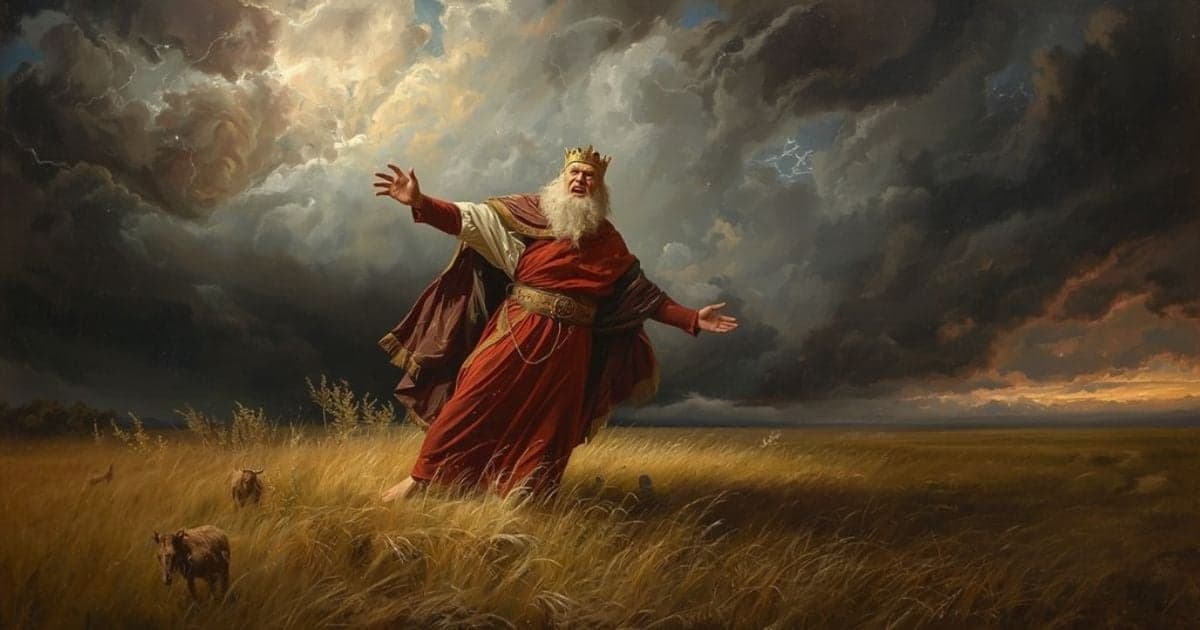
Lear arrives at Gloucester's castle to find Kent locked in the stocks. His response is disbelief — flat denial, repeated: "No." "Yes." "No, I say." "I say, yea." "They durst not do't. They could not, would not do't." When Kent confirms it was both Regan and Cornwall, Lear names it for what it is: "'tis worse than murder, to do upon respect such violent outrage." Before he can confront them, he tries to steady himself. Told that Regan and Cornwall will not come out — they are tired, they have been travelling — Lear almost talks himself down. Maybe Cornwall is unwell; illness makes people neglect their duties; he will be patient. Then he glances at Kent still sitting in the stocks. The patience ends. He demands they come out or he will beat the drum at their chamber door till it "cry sleep to death." Regan appears and immediately defends her sister. She tells Lear he is old, that his state of mind needs managing by someone who understands it better than he does, and that he should return to Goneril and apologise. Lear's answer is to kneel in bitter mock-supplication: "Dear daughter, I confess that I am old; age is unnecessary: on my knees I beg that you'll vouchsafe me raiment, bed, and food." Regan tells him to stop performing. Then Goneril arrives. Regan takes her hand. The two sisters present a unified front, and the negotiation begins in earnest — how many followers may Lear keep? One hundred becomes fifty, becomes twenty-five, becomes ten, becomes five. Then Regan asks: "What need one?" What follows is one of the play's central speeches. Lear argues that need is not the point. "Our basest beggars are in the poorest thing superfluous: allow not nature more than nature needs, man's life is cheap as beast's." He is not asking for luxuries. He is arguing for the principle that human dignity exceeds bare survival — that to strip a man to his minimum requirements is to make him less than human. His daughters are unmoved. The storm begins. Lear leaves into it, unable to weep — "this heart shall break into a hundred thousand flaws or ere I'll weep" — and tells the Fool he is going mad. The doors are shut behind him. Regan's verdict: "To wilful men the injuries that they themselves procure must be their schoolmasters."

Coming Up in Chapter 9

Cast out into the storm, Lear will face the full fury of nature while his mind begins to crack. On the heath, he'll encounter others who've lost everything and discover what it truly means to be powerless.

Share it with friends

Previous ChapterNext Chapter
GO ADS FREE — JOIN US
Original text
complete·2,587 words
S

CENE IV. Before Gloucester’s Castle; Kent in the stocks

Enter Lear, Fool and Gentleman.

LEAR.
’Tis strange that they should so depart from home,
And not send back my messenger.

GENTLEMAN.
As I learn’d,
The night before there was no purpose in them
Of this remove.

KENT.
Hail to thee, noble master!

LEAR.
Ha! Mak’st thou this shame thy pastime?

KENT.
No, my lord.

FOOL. Ha, ha! he wears cruel garters. Horses are tied by the heads; dogs and bears by the neck, monkeys by the loins, and men by the legs: when a man is overlusty at legs, then he wears wooden nether-stocks.

LEAR.
What’s he that hath so much thy place mistook
To set thee here?

KENT.
It is both he and she,
Your son and daughter.

LEAR.
No.

KENT.
Yes.

LEAR.
No, I say.

KENT.
I say, yea.

LEAR.
No, no; they would not.

KENT.
Yes, they have.

LEAR.
By Jupiter, I swear no.

KENT.
By Juno, I swear ay.

1 / 17

Master this chapter. Complete your experience

Purchase the complete book to access all chapters and support classic literature

Read Free on GutenbergBuy at Powell'sBuy on Amazon

As an Amazon Associate, we earn a small commission from qualifying purchases at no additional cost to you.

Available in paperback, hardcover, and e-book formats

GO ADS FREE — JOIN US

Why This Matters

Connect literature to life

Skill: Detecting Incremental Manipulation

This chapter teaches how to recognize when someone systematically strips away your power through small, reasonable-sounding requests.

Practice This Today

This week, notice when someone frames taking something from you as 'helping' you, and practice saying 'This isn't up for discussion' instead of defending your right to basic dignity.

GO ADS FREE — JOIN US

Now let's explore the literary elements.

Key Quotes & Analysis

"O reason not the need! Our basest beggars are in the poorest thing superfluous. Allow not nature more than nature needs, man's life is cheap as beast's."

— Lear

Context: When Regan asks why he needs even one follower

This is Lear's most powerful speech about human dignity. He argues that if we only kept what we absolutely needed to survive, we'd be no better than animals. He's defending the idea that humans need more than just food and shelter to maintain their humanity and dignity.

In Today's Words:

Don't tell me I only need the bare minimum to survive! Even homeless people have something extra they don't absolutely need. If you strip away everything but basic survival, you're treating people like animals.

"Horses are tied by the heads, dogs and bears by the neck, monkeys by the loins, and men by the legs."

— Fool

Context: Making a joke about Kent being locked in the stocks

The Fool uses dark humor to point out how Kent is being treated like an animal. His joke reveals the deeper truth that Lear's daughters are dehumanizing everyone around their father, including Lear himself.

In Today's Words:

They've got Kent chained up like he's some kind of animal in a zoo.

"They durst not do't. They could not, would not do't; 'tis worse than murder."

— Lear

Context: Refusing to believe his daughters ordered Kent's punishment

Lear's denial shows how completely he's misjudged his daughters. He considers this humiliation worse than murder because it attacks honor and dignity rather than just ending life. His repetition shows his desperate need to believe his daughters wouldn't betray him this way.

In Today's Words:

They wouldn't dare! They couldn't do something like this! This is worse than just killing someone!

"What need one?"

— Regan

Context: After cutting Lear's retinue down to almost nothing

This simple question reveals Regan's complete lack of understanding about dignity, respect, or her father's emotional needs. She reduces everything to cold practicality, missing the point that this isn't about need but about treating him like he still matters.

In Today's Words:

Why do you even need one person? What's the point?

Thematic Threads

Power

In This Chapter

Lear's daughters use his dependency to control and humiliate him, flipping the traditional parent-child power dynamic

Development

Power has shifted completely from Lear to his daughters since he divided his kingdom

In Your Life:

You might see this when adult children take control of aging parents' lives or when employers exploit workers' need for income

Dignity

In This Chapter

Lear fights for his right to maintain followers and respect, arguing that humans need more than bare survival

Development

Lear's understanding of dignity has evolved from demanding flattery to defending basic human worth

In Your Life:

You might face this when others try to convince you that your standards or needs are 'too much'

Family

In This Chapter

Goneril and Regan coordinate to strip their father of power while claiming to act in his best interest

Development

The family bonds have completely inverted from earlier scenes of proclaimed love

In Your Life:

You might experience this when family members gang up on you during times of vulnerability or crisis

Class

In This Chapter

The sisters reduce Lear's status by controlling his retinue, the visible symbol of his rank and importance

Development

Class distinctions continue to matter even when formal power has been transferred

In Your Life:

You might see this when others try to diminish your status by controlling your resources or social connections

Vulnerability

In This Chapter

Lear's age and dependency make him easy prey for his daughters' calculated cruelty

Development

Lear's vulnerability has increased as his power decreased, making him more desperate and reactive

In Your Life:

You might face this during illness, job loss, or other times when you need others' help to survive

GO ADS FREE — JOIN US

You now have the context. Time to form your own thoughts.

Discussion Questions

  1. 1

    How do Regan and Goneril convince their father to give up his followers, and why does their approach work so well?

    analysis • surface
  2. 2

    Why do the sisters frame their demands as practical concerns rather than outright cruelty? What does this tell us about how power operates?

    analysis • medium
  3. 3

    Where have you seen this 'death by a thousand cuts' approach in modern life? Think about healthcare, workplace situations, or family dynamics.

    application • medium
  4. 4

    If you were advising someone facing this kind of incremental erosion, what specific strategies would you recommend to protect their dignity?

    application • deep
  5. 5

    What does Lear's speech about human dignity versus animal survival teach us about what makes life worth living?

    reflection • deep

Critical Thinking Exercise

10 minutes

Map Your Non-Negotiables

Think about an area of your life where you hold some power or independence (your job, your home, your relationships, your health decisions). Write down what you consider absolutely non-negotiable in that area. Then imagine someone using Regan and Goneril's approach to chip away at those boundaries. How would you recognize the pattern early and protect what matters most?

Consider:

  • •Notice how reasonable each individual request might sound in isolation
  • •Consider who benefits when you start negotiating your basic dignity
  • •Think about what allies or documentation you might need to maintain your position

Journaling Prompt

Write about a time when you felt pressured to give up something important through a series of small, seemingly reasonable requests. How did it feel? What would you do differently now?

GO ADS FREE — JOIN US

Coming Up Next...

Chapter 9: Storm and Secrets on the Heath

Cast out into the storm, Lear will face the full fury of nature while his mind begins to crack. On the heath, he'll encounter others who've lost everything and discover what it truly means to be powerless.

Continue to Chapter 9
Previous
When Loyalty Meets Power
Contents
Next
Storm and Secrets on the Heath

Continue Exploring

King Lear Study GuideTeaching ResourcesEssential Life IndexBrowse by ThemeAll Books

You Might Also Like

Hamlet cover

Hamlet

William Shakespeare

Also by William Shakespeare

Jane Eyre cover

Jane Eyre

Charlotte Brontë

Explores personal growth

Great Expectations cover

Great Expectations

Charles Dickens

Explores personal growth

The Strange Case of Dr Jekyll and Mr Hyde cover

The Strange Case of Dr Jekyll and Mr Hyde

Robert Louis Stevenson

Explores personal growth

Browse all 47+ books
GO ADS FREE — JOIN US

Share This Chapter

Know someone who'd enjoy this? Spread the wisdom!

TwitterFacebookLinkedInEmail

Read ad-free with Prestige

Get rid of ads, unlock study guides and downloads, and support free access for everyone.

Subscribe to PrestigeCreate free account
Intelligence Amplifier
Intelligence Amplifier™Powering Wide Reads

Exploring human-AI collaboration through books, essays, and philosophical dialogues. Classic literature transformed into navigational maps for modern life.

2025 Books

→ The Amplified Human Spirit→ The Alarming Rise of Stupidity Amplified→ San Francisco: The AI Capital of the World
Visit intelligenceamplifier.org
hello@widereads.com

WideReads Originals

→ You Are Not Lost→ The Last Chapter First→ The Lit of Love→ Wealth and Poverty→ 10 Paradoxes in the Classics · coming soon
Arvintech
arvintechAmplify your Mind
Visit at arvintech.com

Navigate

  • Home
  • Library
  • Essential Life Index
  • How It Works
  • Subscribe
  • Account
  • About
  • Contact
  • Authors
  • Suggest a Book
  • Landings

Made For You

  • Students
  • Educators
  • Families
  • Readers
  • Literary Analysis
  • Finding Purpose
  • Letting Go
  • Recovering from a Breakup
  • Corruption
  • Gaslighting in the Classics

Newsletter

Weekly insights from the classics. Amplify Your Mind.

Legal

  • Privacy Policy
  • Terms of Service
  • Cookie Policy
  • Accessibility

Why Public Domain?

We focus on public domain classics because these timeless works belong to everyone. No paywalls, no restrictions—just wisdom that has stood the test of centuries, freely accessible to all readers.

Public domain books have shaped humanity's understanding of love, justice, ambition, and the human condition. By amplifying these works, we help preserve and share literature that truly belongs to the world.

A Pilgrimage

Powell's City of Books

Portland, Oregon

If you ever find yourself in Portland, walk to the corner of Burnside and 10th. The building takes up an entire city block. Inside is over a million books, new and used on the same shelf, organized by color-coded rooms with names like the Rose Room and the Pearl Room. You can lose an afternoon. You can lose a weekend. You will find a book you have been looking for your whole life, and three you did not know existed.

It is a pilgrimage. We cannot find a bookstore like it anywhere on earth. If you read the classics, and you ever get the chance, go. It belongs on every reader's bucket list.

Visit powells.com

We are not in any way affiliated with Powell's. We are just a very big fan.

© 2026 Wide Reads™. All Rights Reserved.

Intelligence Amplifier™ and Wide Reads™ are proprietary trademarks of Arvin Lioanag.

Copyright Protection: All original content, analyses, discussion questions, pedagogical frameworks, and methodology are protected by U.S. and international copyright law. Unauthorized reproduction, distribution, web scraping, or use for AI training is strictly prohibited. See our Copyright Notice for details.

Disclaimer: The information provided on this website is for general informational and educational purposes only and does not constitute professional, legal, financial, or technical advice. While we strive to ensure accuracy and relevance, we make no warranties regarding completeness, reliability, or suitability. Any reliance on such information is at your own risk. We are not liable for any losses or damages arising from use of this site. By using this site, you agree to these terms.