Wide Reads
Literature MattersLife IndexEducators
Sign in
Where to Begin
King Lear - The Disguised Servant Returns

William Shakespeare

King Lear

The Disguised Servant Returns

Home›Books›King Lear›Chapter 4
Previous
4 of 24
Next

Summary

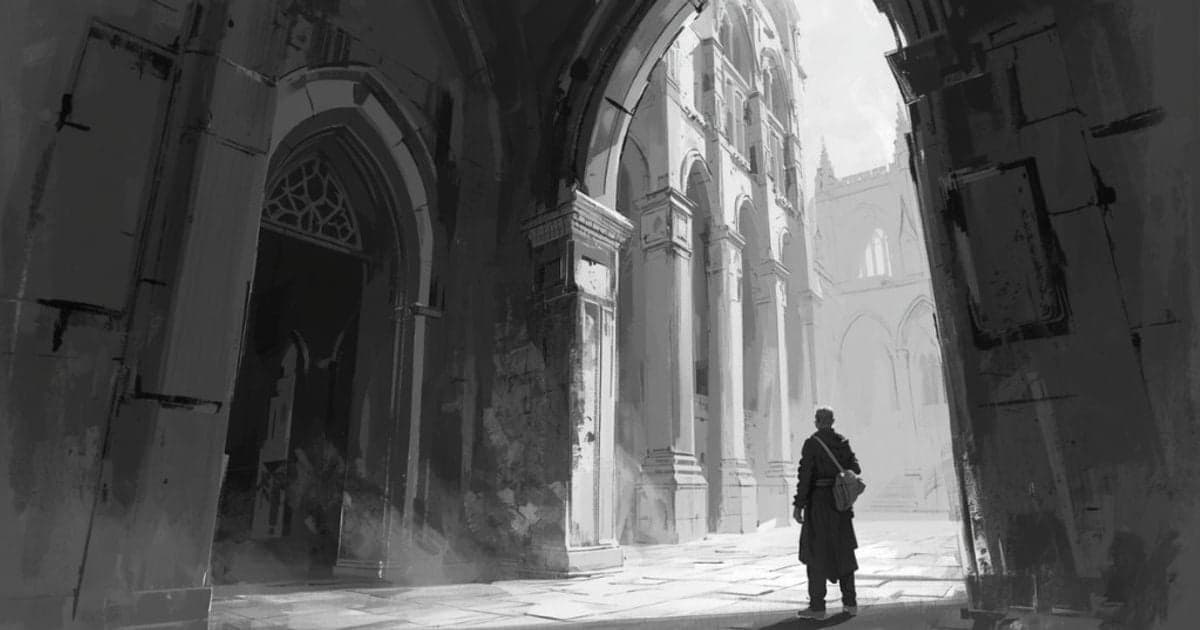
Kent, banished in the previous scene, returns in disguise. When Lear asks what he is, he says: "I do profess to be no less than I seem" — a man who can deliver a plain message bluntly, whose best quality is diligence. Lear hires him without recognising him. It is a small, pointed irony: the king who cannot see his daughters clearly cannot see his most loyal servant either. The Fool enters and begins working. He offers Kent his jester's cap for taking the part of a man out of favour. Then, to Lear directly: "this fellow has banished two on's daughters, and did the third a blessing against his will." Every joke is a diagnosis. When Lear asks if he is calling him a fool, the Fool replies: "All thy other titles thou hast given away; that thou wast born with." Lear calls him bitter. The Fool keeps going. The neglect Goneril ordered is already visible. Oswald ignores Lear when called. A knight reports that the whole household has grown cold. Lear admits he has "perceived a most faint neglect of late," which he had tried to explain away as his own oversensitivity. He can no longer. Goneril enters and delivers her complaint: his knights are riotous, his fool is insolent, his retinue turns her palace into a tavern. She demands he reduce his followers. Lear's response is one of the scene's pivotal moments — not just rage, but the beginning of bewilderment. "Doth any here know me?" he asks. "This is not Lear; doth Lear walk thus? speak thus? Where are his eyes?" The Fool answers quietly: "Lear's shadow." He then unleashes a curse on Goneril — calling on nature to make her sterile, or if she must have a child, to make it a torment to her. Then comes the line that catches him: he remembers Cordelia. "O most small fault, how ugly didst thou in Cordelia show!" He struck at her for the same honesty Goneril is now punishing him for. He strikes his own head. He leaves for Regan's. Before going, he learns fifty of his knights have already been dismissed. He is losing ground faster than he understood. Goneril, unmoved, tells Albany the hundred knights are a political threat. Albany warns she may be pushing too hard. Goneril dismisses this as "milky gentleness" — and sends her letter to Regan.

Coming Up in Chapter 5

Lear's journey to Regan's castle begins, but will his second daughter prove any more welcoming than the first? Kent and the Fool accompany the increasingly desperate king as family bonds continue to fracture.

Share it with friends

Previous ChapterNext Chapter
GO ADS FREE — JOIN US
Original text
complete·2,729 words
S

CENE IV. A Hall in Albany’s Palace

Enter Kent, disguised.

KENT.
If but as well I other accents borrow,
That can my speech defuse, my good intent
May carry through itself to that full issue
For which I rais’d my likeness. Now, banish’d Kent,
If thou canst serve where thou dost stand condemn’d,
So may it come, thy master, whom thou lov’st,
Shall find thee full of labours.

Horns within. Enter King
Lear, Knights and Attendants.

LEAR.
Let me not stay a jot for dinner; go get it ready.

[Exit an Attendant.]

How now! what art thou?

KENT.
A man, sir.

LEAR.
What dost thou profess? What wouldst thou with us?

KENT. I do profess to be no less than I seem; to serve him truly that will put me in trust; to love him that is honest; to converse with him that is wise and says little; to fear judgement; to fight when I cannot choose; and to eat no fish.

LEAR.
What art thou?

KENT.
A very honest-hearted fellow, and as poor as the King.

LEAR. If thou be’st as poor for a subject as he’s for a king, thou art poor enough. What wouldst thou?

KENT.
Service.

1 / 16

Master this chapter. Complete your experience

Purchase the complete book to access all chapters and support classic literature

Read Free on GutenbergBuy at Powell'sBuy on Amazon

As an Amazon Associate, we earn a small commission from qualifying purchases at no additional cost to you.

Available in paperback, hardcover, and e-book formats

GO ADS FREE — JOIN US

Why This Matters

Connect literature to life

Skill: Reading Power Dynamics

This chapter teaches you to spot when relationships shift from personal to transactional by watching who stays versus who calculates.

Practice This Today

This week, notice when someone changes their approach to help you after a conflict, that's likely genuine care worth preserving.

GO ADS FREE — JOIN US

Now let's explore the literary elements.

Key Quotes & Analysis

"I do profess to be no less than I seem; to serve him truly that will put me in trust; to love him that is honest; to converse with him that is wise and says little; to fear judgement; to fight when I cannot choose; and to eat no fish."

— Kent

Context: Kent describes his qualifications when Lear asks what he can do

Kent presents himself as completely honest while actually living a lie through his disguise. His description emphasizes loyalty, honesty, and discretion, exactly what Lear needs but doesn't recognize. The irony is that Lear is hiring the very man he banished for these same qualities.

In Today's Words:

I'm exactly who I appear to be: someone who's loyal to people who trust me, who values honesty, and who knows when to keep quiet.

"Dost thou know me, fellow?"

— Lear

Context: Lear questions Kent about whether he recognizes his authority

This simple question reveals Lear's desperate need for recognition and respect. He's testing whether this stranger sees his remaining authority, showing how his identity was entirely tied to his royal status.

In Today's Words:

Do you know who I am?

"You have that in your countenance which I would fain call master."

— Kent

Context: Kent explains why he wants to serve Lear

Kent recognizes true authority in Lear's bearing, even though Lear has given away his actual power. This shows how real leadership comes from character, not just position, and explains why Kent remains loyal despite the banishment.

In Today's Words:

You have the kind of presence that makes me want to follow you.

Thematic Threads

Identity

In This Chapter

Kent completely transforms his identity to continue serving Lear, becoming unrecognizable even to someone who knew him well

Development

Builds on earlier identity themes but shows how identity can be consciously reshaped for purpose

In Your Life:

You might reinvent how you show up at work or in relationships when your usual approach isn't working

Truth-telling

In This Chapter

The Fool uses riddles and humor to deliver harsh truths about Lear's situation that no one else dares speak directly

Development

Introduced here as a new way to navigate dangerous honesty

In Your Life:

You might find yourself using humor or indirect methods to address sensitive topics with family or coworkers

Power

In This Chapter

Complete reversal as Goneril now controls her father's living situation and dictates terms, while Lear rages helplessly

Development

Escalates from earlier power shifts, showing how quickly dynamics can flip

In Your Life:

You might experience this when aging parents become dependent, or when workplace hierarchies suddenly change

Loyalty

In This Chapter

Kent's return in disguise demonstrates loyalty that transcends recognition or reward, persisting despite banishment

Development

Introduced here as authentic versus transactional loyalty

In Your Life:

You might find yourself supporting someone who doesn't appreciate it, or recognizing who truly has your back during difficult times

Family

In This Chapter

Goneril treats her father as a political problem to manage rather than a parent to honor, making their relationship purely transactional

Development

Deepens from earlier family tensions, showing how relationships can become completely businesslike

In Your Life:

You might recognize when family interactions become more about managing problems than maintaining connection

GO ADS FREE — JOIN US

You now have the context. Time to form your own thoughts.

Discussion Questions

  1. 1

    Why does Kent return to serve Lear after being banished, and how does he manage to get hired?

    analysis • surface
  2. 2

    What makes the Fool's approach to telling Lear hard truths different from how others try to communicate with him?

    analysis • medium
  3. 3

    Think about your workplace or family. Where have you seen someone find creative ways to help or stay connected after being pushed away or rejected?

    application • medium
  4. 4

    When someone you care about is making destructive choices and won't listen to direct advice, what strategies might actually work to reach them?

    application • deep
  5. 5

    What does this chapter reveal about the difference between loyalty that depends on recognition versus loyalty that persists regardless of acknowledgment?

    reflection • deep

Critical Thinking Exercise

10 minutes

Map Your Support Network

Draw three circles representing different levels of your support network: inner circle (closest supporters), middle circle (regular supporters), and outer circle (occasional supporters). Now identify who has stayed consistent even when you've been difficult, who adapts their approach when direct communication doesn't work, and who might be offering disguised help that you haven't recognized.

Consider:

  • •Look for people who show up differently rather than not at all when relationships get strained
  • •Consider whether you've been rejecting good advice because you didn't like how it was delivered
  • •Think about times you've had to find creative ways to help someone who was pushing you away

Journaling Prompt

Write about a time when someone showed you disguised loyalty, or when you had to find an indirect way to help someone who wouldn't accept direct support. What did you learn about persistence versus adaptation?

GO ADS FREE — JOIN US

Coming Up Next...

Chapter 5: The Fool's Bitter Truths

Lear's journey to Regan's castle begins, but will his second daughter prove any more welcoming than the first? Kent and the Fool accompany the increasingly desperate king as family bonds continue to fracture.

Continue to Chapter 5
Previous
Goneril Sets Her Trap
Contents
Next
The Fool's Bitter Truths

Continue Exploring

King Lear Study GuideTeaching ResourcesEssential Life IndexBrowse by ThemeAll Books

You Might Also Like

Hamlet cover

Hamlet

William Shakespeare

Also by William Shakespeare

Jane Eyre cover

Jane Eyre

Charlotte Brontë

Explores personal growth

Great Expectations cover

Great Expectations

Charles Dickens

Explores personal growth

The Strange Case of Dr Jekyll and Mr Hyde cover

The Strange Case of Dr Jekyll and Mr Hyde

Robert Louis Stevenson

Explores personal growth

Browse all 47+ books
GO ADS FREE — JOIN US

Share This Chapter

Know someone who'd enjoy this? Spread the wisdom!

TwitterFacebookLinkedInEmail

Read ad-free with Prestige

Get rid of ads, unlock study guides and downloads, and support free access for everyone.

Subscribe to PrestigeCreate free account
Intelligence Amplifier
Intelligence Amplifier™Powering Wide Reads

Exploring human-AI collaboration through books, essays, and philosophical dialogues. Classic literature transformed into navigational maps for modern life.

2025 Books

→ The Amplified Human Spirit→ The Alarming Rise of Stupidity Amplified→ San Francisco: The AI Capital of the World
Visit intelligenceamplifier.org
hello@widereads.com

WideReads Originals

→ You Are Not Lost→ The Last Chapter First→ The Lit of Love→ Wealth and Poverty→ 10 Paradoxes in the Classics · coming soon
Arvintech
arvintechAmplify your Mind
Visit at arvintech.com

Navigate

  • Home
  • Library
  • Essential Life Index
  • How It Works
  • Subscribe
  • Account
  • About
  • Contact
  • Authors
  • Suggest a Book
  • Landings

Made For You

  • Students
  • Educators
  • Families
  • Readers
  • Literary Analysis
  • Finding Purpose
  • Letting Go
  • Recovering from a Breakup
  • Corruption
  • Gaslighting in the Classics

Newsletter

Weekly insights from the classics. Amplify Your Mind.

Legal

  • Privacy Policy
  • Terms of Service
  • Cookie Policy
  • Accessibility

Why Public Domain?

We focus on public domain classics because these timeless works belong to everyone. No paywalls, no restrictions—just wisdom that has stood the test of centuries, freely accessible to all readers.

Public domain books have shaped humanity's understanding of love, justice, ambition, and the human condition. By amplifying these works, we help preserve and share literature that truly belongs to the world.

A Pilgrimage

Powell's City of Books

Portland, Oregon

If you ever find yourself in Portland, walk to the corner of Burnside and 10th. The building takes up an entire city block. Inside is over a million books, new and used on the same shelf, organized by color-coded rooms with names like the Rose Room and the Pearl Room. You can lose an afternoon. You can lose a weekend. You will find a book you have been looking for your whole life, and three you did not know existed.

It is a pilgrimage. We cannot find a bookstore like it anywhere on earth. If you read the classics, and you ever get the chance, go. It belongs on every reader's bucket list.

Visit powells.com

We are not in any way affiliated with Powell's. We are just a very big fan.

© 2026 Wide Reads™. All Rights Reserved.

Intelligence Amplifier™ and Wide Reads™ are proprietary trademarks of Arvin Lioanag.

Copyright Protection: All original content, analyses, discussion questions, pedagogical frameworks, and methodology are protected by U.S. and international copyright law. Unauthorized reproduction, distribution, web scraping, or use for AI training is strictly prohibited. See our Copyright Notice for details.

Disclaimer: The information provided on this website is for general informational and educational purposes only and does not constitute professional, legal, financial, or technical advice. While we strive to ensure accuracy and relevance, we make no warranties regarding completeness, reliability, or suitability. Any reliance on such information is at your own risk. We are not liable for any losses or damages arising from use of this site. By using this site, you agree to these terms.