Wide Reads
Literature MattersLife IndexEducators
Sign in
Where to Begin
King Lear - The Bastard's Brilliant Deception

William Shakespeare

King Lear

The Bastard's Brilliant Deception

Home›Books›King Lear›Chapter 2
Previous
2 of 24
Next

Summary

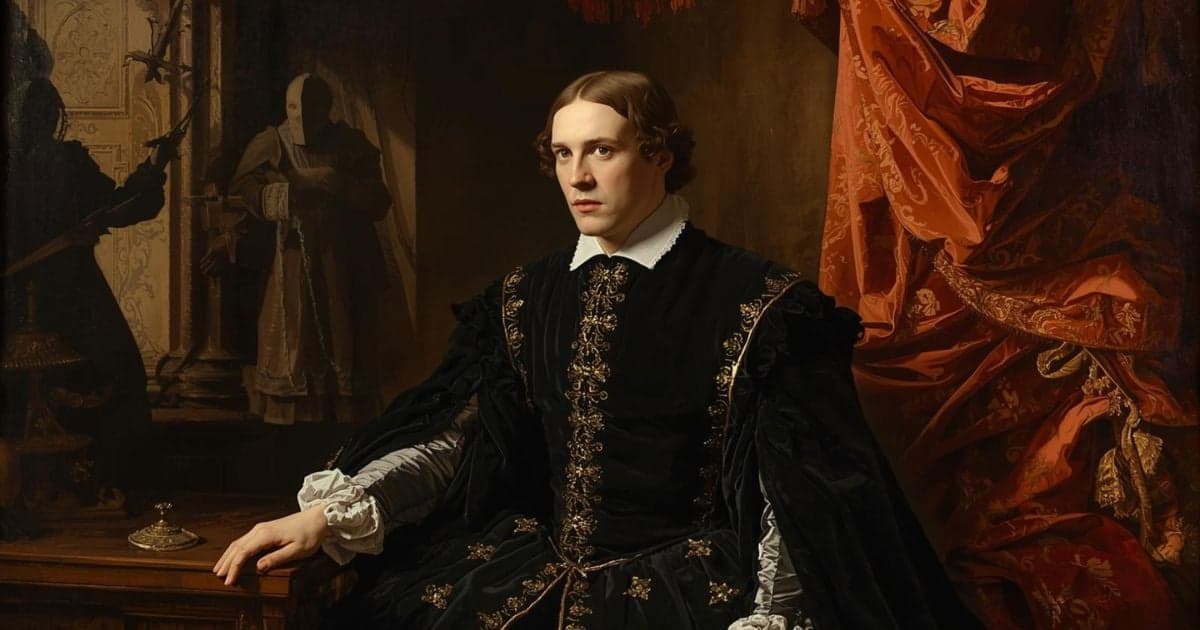
Edmund opens alone, and what he says before anyone enters tells you everything. He is not bitter and confused — he is clear-eyed and decided. He refuses the category of bastard, which he sees as a legal fiction designed to protect inheritance at the expense of merit. His dimensions are as well compact, his mind as generous, his shape as true as any legitimate son. The accident of his birth means nothing; the system that punishes him for it means everything. "Now, gods, stand up for bastards," he says. Then he gets to work. The letter he produces — supposedly written by Edgar — is his own invention. Its contents are calibrated to infuriate a father: Edgar supposedly wants the old to yield to the young, and hints that if Gloucester were to sleep permanently, Edgar would share the revenue with Edmund. When Gloucester enters, Edmund makes a performance of hiding it. The psychology is precise — a letter tucked away is more interesting than one openly offered. Gloucester demands to see it. Edmund hands it over with theatrical reluctance. Gloucester reads and explodes, calling Edgar a villain six times in as many lines. Edmund plays the loyal son who wants fairness — perhaps Edgar wrote this only as a test of Edmund's virtue; perhaps they should hear him out. He offers to arrange for Gloucester to overhear a conversation between the brothers. Gloucester, desperate to believe his son is not a monster, agrees. Left alone briefly, Gloucester blames the disorder on eclipses — cosmic forces portending unnatural divisions between children and parents. Edmund, in soliloquy, dismantles this with contempt: "when we are sick in fortune... we make guilty of our disasters the sun, the moon, and the stars." He was who he is regardless of what star was overhead at his birth. Blaming heaven for what men choose to do is, he says, "the excellent foppery of the world." Edgar arrives and Edmund manages him just as smoothly — warning him their father is furious, advising him to stay away and go armed. Edgar suspects nothing. The scene ends with Edmund naming what he has found: "A credulous father, and a brother noble, whose nature is so far from doing harms that he suspects none; on whose foolish honesty my practices ride easy." He does not gloat. He simply observes — and moves on.

Coming Up in Chapter 3

As Edmund's web of lies spreads through Gloucester's household, we shift to another family in crisis. Goneril begins to show her true nature toward her father King Lear, setting up a confrontation that will test the bonds between parent and child.

Share it with friends

Previous ChapterNext Chapter
GO ADS FREE — JOIN US
Original text
complete·1,530 words
S

CENE II. A Hall in the Earl of Gloucester’s Castle

Enter Edmund with a
letter.

EDMUND.
Thou, Nature, art my goddess; to thy law
My services are bound. Wherefore should I
Stand in the plague of custom, and permit
The curiosity of nations to deprive me?
For that I am some twelve or fourteen moonshines
Lag of a brother? Why bastard? Wherefore base?
When my dimensions are as well compact,
My mind as generous, and my shape as true
As honest madam’s issue? Why brand they us
With base? With baseness? bastardy? Base, base?
Who, in the lusty stealth of nature, take
More composition and fierce quality
Than doth within a dull stale tired bed
Go to the creating a whole tribe of fops
Got ’tween asleep and wake? Well then,
Legitimate Edgar, I must have your land:
Our father’s love is to the bastard Edmund
As to the legitimate: fine word: legitimate!
Well, my legitimate, if this letter speed,
And my invention thrive, Edmund the base
Shall top the legitimate. I grow, I prosper.
Now, gods, stand up for bastards!

Enter Gloucester.

1 / 9

Master this chapter. Complete your experience

Purchase the complete book to access all chapters and support classic literature

Read Free on GutenbergBuy at Powell'sBuy on Amazon

As an Amazon Associate, we earn a small commission from qualifying purchases at no additional cost to you.

Available in paperback, hardcover, and e-book formats

GO ADS FREE — JOIN US

Why This Matters

Connect literature to life

Skill: Detecting Manufactured Conflict

This chapter teaches how to recognize when someone creates problems between others while appearing to help solve them.

Practice This Today

This week, notice when someone brings you concerning information about another person, and ask yourself what the messenger gains if you believe them.

GO ADS FREE — JOIN US

Now let's explore the literary elements.

Key Quotes & Analysis

"Thou, Nature, art my goddess; to thy law My services are bound."

— Edmund

Context: Edmund opens the chapter by rejecting social rules about legitimacy

Edmund declares he'll follow natural law instead of human customs that label him inferior. This reveals his philosophy that strength and cunning matter more than birth circumstances or moral rules.

In Today's Words:

I don't care what society says about me. I'm going to play by my own rules.

"Why bastard? Wherefore base? When my dimensions are as well compact, My mind as generous, and my shape as true As honest madam's issue?"

— Edmund

Context: Edmund questions why he should be considered inferior to his legitimate brother

This shows Edmund's core grievance: he's just as capable and attractive as Edgar but gets none of the respect or inheritance. His anger is understandable, but his solution is destructive.

In Today's Words:

Why should I be treated like I'm worth less? I'm just as smart and good-looking as my brother.

"Well, my legitimate, if this letter speed, And my invention thrive, Edmund the base Shall top the legitimate."

— Edmund

Context: Edmund reveals his plan to use the forged letter to destroy Edgar

Edmund's wordplay shows his intelligence and his determination to flip the social order. He's not just seeking equality but dominance over the brother who had advantages he was denied.

In Today's Words:

If this fake letter works like I planned, the bastard is going to beat the golden child.

"These late eclipses in the sun and moon portend no good to us."

— Gloucester

Context: Gloucester blames cosmic events for the family chaos he's witnessing

This shows how Gloucester avoids taking responsibility for family problems by blaming external forces. It also reveals his superstitious nature that Edmund will exploit.

In Today's Words:

All this bad stuff happening must be because of those weird eclipses we had recently.

Thematic Threads

Resentment

In This Chapter

Edmund's fury at being labeled 'bastard' despite equal capabilities drives him to systematic revenge

Development

Introduced here as the driving force behind manipulation and family destruction

In Your Life:

You might feel this when repeatedly passed over for promotions despite strong performance.

Manipulation

In This Chapter

Edmund uses psychological warfare, making each victim feel he's protecting them while destroying their relationships

Development

Introduced here as sophisticated emotional manipulation disguised as concern

In Your Life:

You might encounter this when someone always brings you 'concerning' news about others.

Trust

In This Chapter

Gloucester and Edgar both trust Edmund completely, making them easy targets for his deception

Development

Introduced here showing how trust becomes vulnerability when not balanced with verification

In Your Life:

You might experience this when you believe alarming news without checking the source's motives.

Identity

In This Chapter

Edmund rejects the identity society assigns him and creates his own through destruction of others

Development

Introduced here as the refusal to accept assigned social position

In Your Life:

You might face this when deciding whether to accept others' definitions of your worth and capabilities.

Responsibility

In This Chapter

Edmund mocks Gloucester's tendency to blame cosmic forces instead of human choices for problems

Development

Introduced here as the contrast between external blame and personal accountability

In Your Life:

You might recognize this when you blame circumstances instead of examining your own choices in difficult situations.

GO ADS FREE — JOIN US

You now have the context. Time to form your own thoughts.

Discussion Questions

  1. 1

    How does Edmund trick both his father and brother into believing lies about each other?

    analysis • surface
  2. 2

    Why does Edmund's manipulation work so well on both Gloucester and Edgar?

    analysis • medium
  3. 3

    Where have you seen someone play the 'helpful messenger' role while actually stirring up trouble between other people?

    application • medium
  4. 4

    What red flags would help you spot when someone is trying to turn you against another person?

    application • deep
  5. 5

    What does Edmund's success reveal about how resentment can poison family and workplace relationships?

    reflection • deep

Critical Thinking Exercise

10 minutes

Spot the Manipulation Pattern

Think of a time when someone brought you 'concerning' information about another person. Map out what happened: Who told you what? How did they position themselves? What did they gain if you believed them? Now analyze whether this was genuine concern or manipulation disguised as helpfulness.

Consider:

  • •Did the messenger seem reluctant to share the information, making it feel more credible?
  • •Did they position themselves as protecting you or looking out for your interests?
  • •What was their relationship to the person they were warning you about?

Journaling Prompt

Write about a relationship that went wrong after someone else's 'helpful' warnings. What would you do differently now to verify information before reacting?

Coming Up Next...

Chapter 3: Goneril Sets Her Trap

As Edmund's web of lies spreads through Gloucester's household, we shift to another family in crisis. Goneril begins to show her true nature toward her father King Lear, setting up a confrontation that will test the bonds between parent and child.

Continue to Chapter 3
Previous
The Love Test That Destroys a Family
Contents
Next
Goneril Sets Her Trap

Continue Exploring

King Lear Study GuideTeaching ResourcesEssential Life IndexBrowse by ThemeAll Books

You Might Also Like

Hamlet cover

Hamlet

William Shakespeare

Also by William Shakespeare

Jane Eyre cover

Jane Eyre

Charlotte Brontë

Explores personal growth

Great Expectations cover

Great Expectations

Charles Dickens

Explores personal growth

The Strange Case of Dr Jekyll and Mr Hyde cover

The Strange Case of Dr Jekyll and Mr Hyde

Robert Louis Stevenson

Explores personal growth

Browse all 47+ books

Share This Chapter

Know someone who'd enjoy this? Spread the wisdom!

TwitterFacebookLinkedInEmail

Read ad-free with Prestige

Get rid of ads, unlock study guides and downloads, and support free access for everyone.

Subscribe to PrestigeCreate free account
Intelligence Amplifier
Intelligence Amplifier™Powering Wide Reads

Exploring human-AI collaboration through books, essays, and philosophical dialogues. Classic literature transformed into navigational maps for modern life.

2025 Books

→ The Amplified Human Spirit→ The Alarming Rise of Stupidity Amplified→ San Francisco: The AI Capital of the World
Visit intelligenceamplifier.org
hello@widereads.com

WideReads Originals

→ You Are Not Lost→ The Last Chapter First→ The Lit of Love→ Wealth and Poverty→ 10 Paradoxes in the Classics · coming soon
Arvintech
arvintechAmplify your Mind
Visit at arvintech.com

Navigate

  • Home
  • Library
  • Essential Life Index
  • How It Works
  • Subscribe
  • Account
  • About
  • Contact
  • Authors
  • Suggest a Book
  • Landings

Made For You

  • Students
  • Educators
  • Families
  • Readers
  • Literary Analysis
  • Finding Purpose
  • Letting Go
  • Recovering from a Breakup
  • Corruption
  • Gaslighting in the Classics

Newsletter

Weekly insights from the classics. Amplify Your Mind.

Legal

  • Privacy Policy
  • Terms of Service
  • Cookie Policy
  • Accessibility

Why Public Domain?

We focus on public domain classics because these timeless works belong to everyone. No paywalls, no restrictions—just wisdom that has stood the test of centuries, freely accessible to all readers.

Public domain books have shaped humanity's understanding of love, justice, ambition, and the human condition. By amplifying these works, we help preserve and share literature that truly belongs to the world.

A Pilgrimage

Powell's City of Books

Portland, Oregon

If you ever find yourself in Portland, walk to the corner of Burnside and 10th. The building takes up an entire city block. Inside is over a million books, new and used on the same shelf, organized by color-coded rooms with names like the Rose Room and the Pearl Room. You can lose an afternoon. You can lose a weekend. You will find a book you have been looking for your whole life, and three you did not know existed.

It is a pilgrimage. We cannot find a bookstore like it anywhere on earth. If you read the classics, and you ever get the chance, go. It belongs on every reader's bucket list.

Visit powells.com

We are not in any way affiliated with Powell's. We are just a very big fan.

© 2026 Wide Reads™. All Rights Reserved.

Intelligence Amplifier™ and Wide Reads™ are proprietary trademarks of Arvin Lioanag.

Copyright Protection: All original content, analyses, discussion questions, pedagogical frameworks, and methodology are protected by U.S. and international copyright law. Unauthorized reproduction, distribution, web scraping, or use for AI training is strictly prohibited. See our Copyright Notice for details.

Disclaimer: The information provided on this website is for general informational and educational purposes only and does not constitute professional, legal, financial, or technical advice. While we strive to ensure accuracy and relevance, we make no warranties regarding completeness, reliability, or suitability. Any reliance on such information is at your own risk. We are not liable for any losses or damages arising from use of this site. By using this site, you agree to these terms.