Part II opens with Marlow overhearing the manager and his uncle plot against Kurtz. They hope the climate may do away with their rival rather than forcing an open fight. Kurtz has sent down ivory and contempt in equal measure, along with a note saying he would rather be alone than keep company with the kind of men the Company disposes of easily. The word ivory rings through the station like prayer. Everyone wants the product; nobody wants the person who produces too much of it. The manager survives by hollowness and by never being the one who takes visible risk. Competent men snap. Marlow learns that institutional envy can be as lethal as any weapon on the river. Kurtz has become dangerous because he proves the system works too well when one man stops pretending. The Eldorado Expedition vanishes into the patient wilderness. Long afterwards Marlow hears all the donkeys died. The less valuable animals, he assumes, got what they deserved. That throwaway line tells you how quickly the job teaches contempt dressed as realism.
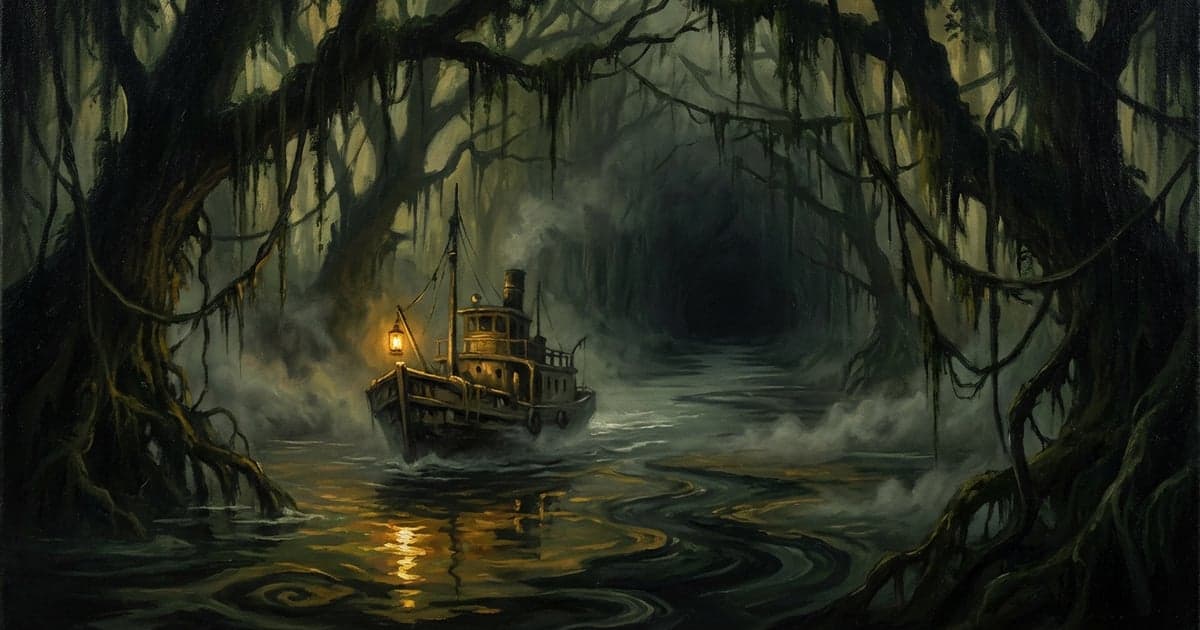
The steamer crawls upriver through a wall of green that feels like travelling back to the earliest world. Pilgrims in red dot the deck while Marlow listens to Kurtz grow larger in talk before he grows larger in view. The landscape stops feeling exotic and starts feeling ancient, as if the boat were moving backward through time rather than forward through progress. Marlow reads Towson's book on seamanship in a deserted hut and finds cipher notes in the margin: another man's attempt to impose order on chaos. Cannibals on the crew stay hungry but restrained in a way the pilgrims never notice and Marlow cannot fully explain. Kurtz wants to be alone because solitude lets a man become whatever the wilderness and his own appetite permit. The Company calls that mission. Marlow starts to suspect it is something closer to license. Every mile upstream removes another layer of the language he brought from Europe. What remains is hunger with better manners downstream and worse manners ahead. Marlow steers through snags with the blind intensity of a man who knows scraping bottom is the unpardonable sin for a seaman. Surface work keeps the inner truth hidden, luckily for everyone on board. Marlow steers through snags with the blind intensity of a man who knows scraping bottom is the unpardonable sin for a seaman. Surface work keeps the inner truth hidden, luckily for everyone on board.
In the fog Marlow delivers a lecture to terrified pilgrims about grief on the shore, then watches them stare as if he has gone mad. He understands before they do that the cry from the bank was sorrow as much as threat. Then the fog arrives at the worst moment. Arrows strike from the bank; Marlow pulls the whistle until the forest itself seems to answer. The helmsman dies at his feet with a look of remote kinship Marlow cannot forget. Marlow throws the shoes he has been saving into the river because restraint has stopped meaning what it meant downstream. Restraint, he thinks, has no definition here. The attack is not a battle so much as a reminder that the company narrative never included the people on the shore. The pilgrims open fire blindly into the bush and call it glory. Marlow knows the steam whistle did more than the rifles. Survival depends on noise, nerve, and the willingness to keep moving when the forest refuses to stay passive scenery. Death on the deck is intimate and sudden, not heroic.
What survives the attack is appetite with a new face: not trade talk, but the report voice of Kurtz himself. Marlow reads language about enlarged mind and noble intention while the shore keeps showing him something else. The famous report ends with a postscript that blazes out of the civilised prose: exterminate all the brutes. Kurtz apparently forgot he wrote it, which is the point. Eloquence and atrocity can share the same page when nobody is watching. The Russian trader appears at the inner station in motley, a boyish fan who says Kurtz enlarged his mind. Marlow is close now. The company wants Kurtz retrieved or neutralized, but the journey has already shown Marlow that the institution loves output more than it loves control. Even dying, Kurtz remains larger as a voice than the men who came to collect him. Marlow grieves the loss of that voice before he has heard it, which tells him how much the word already outweighs the man.
Part II ends with Kurtz still ahead, still magnified by everything the Company both fears and needs. Marlow has moved from listener to witness. The river has stopped being geography and become a test of how much truth one man can carry without breaking the frame that keeps the world recognisable. The steamer keeps crawling toward a voice that has already outgrown every report written about it. Whatever waits at the inner station will not match the brochure, and Marlow already knows he will have to lie about some of what he sees, not because he is cowardly, but because the truth would not survive translation back to the men who sent him. The inner station is no longer a place on a map. It is the place where language and appetite finally meet without an audience. Marlow has stopped expecting rescue from the Company, from Kurtz, or from his own better instincts. He expects only to arrive, see, and carry whatever is left back downstream. Marlow has stopped expecting rescue from the Company, from Kurtz, or from his own better instincts. He expects only to arrive, see, and carry whatever is left back downstream.