Wide Reads
Literature MattersLife IndexEducators
Sign in
Where to Begin

The Horror and the Lie — Heart of Darkness

Heart of Darkness - The Horror and the Lie

Joseph Conrad

Heart of Darkness

The Horror and the Lie

Home›Books›Heart of Darkness›Chapter 3: The Horror and the Lie
Previous
3 of 3

Analysis by the Wide Reads editorial team·Reviewed against the source text·Updated December 1, 2025

Summary

The Horror and the Lie

Heart of Darkness by Joseph Conrad

0:000:00

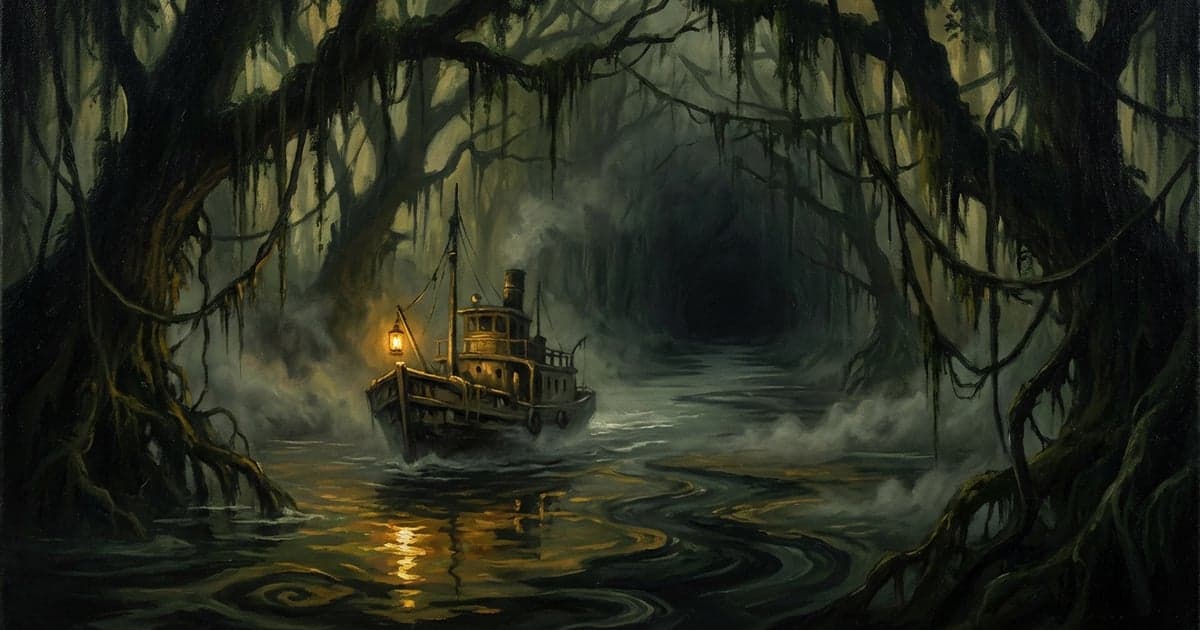
Part III opens on the Russian trader in motley, a boyish fan who says he went a little farther with Kurtz than he can walk back. He treats the wilderness like a dare and Kurtz like a prophet. Marlow sees the inner station as a private kingdom: severed heads on posts near the house, worship and fear mixed together, and a man who arrived with moral language and became something the language cannot contain. The harlequin's admiration is sincere and terrifying because it shows how easily devotion can attach to power once the usual checks disappear. Kurtz did not simply go native. He built a world around his own image and called it progress. The Russian's loyalty is the final proof that charisma can outlast morality when nobody is watching. He has kept the natives from attacking the steamer because they do not want Kurtz to go. That detail tells Marlow everything about what Kurtz became on shore. The Russian speaks of midnight dances and unspeakable rites offered up to Kurtz himself, then returns to brotherly talk about tobacco as if horror were just another travel anecdote.

Kurtz is carried out on a stretcher and still commands the pilgrims with a voice that seems to fill the forest. Marlow reads the report line about extermination and hears the gap between what the Company prints and what the shore allows. Ivory heaps around the mud shanty like proof of a bargain nobody wants to name. Kurtz speaks of my ivory, my station, my river, as if the whole interior belonged to his personality. The self-myth collapses in two words at the end: The horror! The horror! A boy announces Mistah Kurtz he dead, and the manager's petty victory looks small beside what has been lost. Kurtz is no longer a rumor or a threat. He is a body, a voice, and finally a confession. The horror is not a single event. It is the full cost of letting eloquence outrun accountability until there is nothing left to hide behind. Even the manager, who wanted Kurtz gone, now speaks of him as a loss to the Company. The pilgrims fill the steamer with ivory until it piles on the deck. Kurtz watches his hoard the way a dying man watches proof that his life meant something. The pilgrims fill the steamer with ivory until it piles on the deck. Kurtz watches his hoard the way a dying man watches proof that his life meant something.

Marlow becomes responsible for Kurtz's reputation whether he wants it or not. He can bury the report in the dustbin of progress, he says, but Kurtz will not be forgotten because he was never common. Marlow turns back toward Europe carrying Kurtz's memory, papers, and the knowledge that he has seen what the Company will never put in its brochures. He tips the helmsman's body into the river rather than let it become food or symbol for the pilgrims. The return is not cleansing. It is translation: how to live among people who still believe the words. Every polite conversation in civilization now sounds like a performance he can see through because he watched the performance built from the ground up. The journey downstream repeats the river in reverse, but Marlow is not the same man who went up it. He has become the kind of witness civilization prefers not to employ. Kurtz's papers travel with him like evidence the world will refuse to read clearly. Marlow thinks about the helmsman more than the pilgrims would understand: a partnership of steering and care broken in an instant.

In Brussels, Marlow visits the Intended, Kurtz's fiancée, who still lives inside a noble story about his words and his future. She speaks of Kurtz's goodness with a certainty that only ignorance can sustain. He could not tell her the truth; it would have been too dark. He gives her an excellent name instead of an accurate one because the lie protects the only story she has left to stand on. That lie is not cowardice in Marlow's telling. It is mercy shaped like silence. She needs Kurtz the emissary of light, not Kurtz the man who wrote exterminate all the brutes and meant it in practice as well as rhetoric. Marlow chooses her grief over her knowledge, and the choice haunts the ending as much as the river does. Women, he says, should be kept out of it, in their beautiful world, lest ours get worse. The sentence is protective and condescending at once, which fits the book's mood.

The novella ends where it began, on the Nellie, with the Thames flowing toward the heart of an immense darkness. The darkness was never only geography. It is what human beings do when power runs without accountability and when civilization prefers a usable story to an honest witness. Marlow has told the story to men who understand ships and silence. The river still runs. London still looks civilized from the deck, which is exactly the problem the tale has been trying to name. The frame closes, but the testimony remains unfinished in the only way that matters: you cannot unknow what efficiency looks like when the idea behind it rots. The listeners have heard one inconclusive experience, and inconclusive is the honest shape of the truth. They sit on the Thames in comfortable darkness while Marlow's voice comes out of the night like a warning they can hear but not fully use. That gap between knowing and acting is the book's final subject. They sit on the Thames in comfortable darkness while Marlow's voice comes out of the night like a warning they can hear but not fully use. That gap between knowing and acting is the book's final subject.

In this chapter: Terms Characters Key Quotes Themes Modern Story

Why This Matters

Connect literature to life

Skill: The Lie That Protects the Story

Sometimes the kindest thing a witness can do is preserve the story someone needs to live inside. Marlow visits Kurtz's Intended and she asks what justice his memory is owed, but he could not tell her what the river actually did and instead says the last word Kurtz pronounced was her name. Recognize the lie that protects the story: when full truth would break the only innocence left, name what you are choosing to spare and what you are burying with the noble version.

Share it with friends

PreviousPrevious Chapter
Original text
11,594 wordscomplete

Chapter 03

The Horror and the Lie

III “I looked at him, lost in astonishment. There he was before me, in motley, as though he had absconded from a troupe of mimes, enthusiastic, fabulous. His very existence was improbable, inexplicable, and altogether bewildering. He was an insoluble problem. It was inconceivable how he had existed, how he had succeeded in getting so far, how he had managed to remain—why he did not instantly disappear. ‘I went a little farther,’ he said, ‘then still a little farther—till I had gone so far that I don’t know how I’ll ever get back. Never mind. Plenty time. I can manage.…

Public-domain chapter text, formatted for reading.

Master this chapter. Complete your experience

Purchase the complete book to access all chapters and support classic literature

Buy at Powell'sBuy on Amazon

Available in paperback, hardcover, and e-book formats

Now let's explore the literary elements.

Key Quotes & Analysis

"I went a little farther"

— Russian trader

Context: Explaining how he followed Kurtz into the wilderness

The harlequin models how admiration becomes self-destruction one step at a time.

"The horror! The horror!"

— Kurtz

Context: Kurtz's last words

The self-myth collapses into one plain sentence. Judgment turns inward at the end.

"Mistah Kurtz—he dead."

— Pilgrim boy

Context: Announcing Kurtz's death to the crew

The grand figure is reduced to a blunt fact. Empire's language cannot hold the moment.

"heart of an immense darkness."

— Marlow

Context: Final sentence of the novella

The book ends on the river, not Kurtz. Darkness is scale, not location.

Thematic Threads

Power

In This Chapter

Power corrupts through isolation—Kurtz becomes godlike to locals, the manager schemes in shadows, everyone fears direct confrontation

Development

Evolved from corporate hierarchy to personal transformation and worship

In Your Life:

You might see this when someone gets promoted and suddenly treats old friends differently

Identity

In This Chapter

Extreme circumstances strip away social masks—the Russian becomes a devotee, Kurtz becomes a deity, Marlow becomes a witness

Development

Deepened from social expectations to complete personality transformation

In Your Life:

You might discover who you really are during a family crisis or job loss

Class

In This Chapter

European 'civilization' crumbles in the wilderness—educated men become savages, 'primitive' people show more restraint than their employers

Development

Evolved from social climbing to complete role reversal

In Your Life:

You might notice how people's true character shows when they think no one important is watching

Loyalty

In This Chapter

Conflicting allegiances tear everyone apart—company vs. humanity, survival vs. dignity, civilization vs. transformation

Development

Introduced here as the central conflict

In Your Life:

You face this when your boss asks you to do something that goes against your values

Isolation

In This Chapter

Physical separation from civilization changes people fundamentally—Kurtz becomes unrecognizable, the Russian loses touch with reality

Development

Deepened from loneliness to complete psychological transformation

In Your Life:

You might see this in yourself during long periods of working alone or caring for someone sick

You now have the context. Time to form your own thoughts.

Discussion Questions

This is not a test. Five prompts guide you through the chapter, from how it opens to how it closes, so you notice context and rhythm rather than facts to memorize. Sit with each question in your own words. When you see "One way to read it," treat it as a starting point, not the only answer.

  1. 1

    What do the severed heads on posts near Kurtz's station show about his rule?

    ▶One way to read it

    They are not trade secrets or profit—they show Kurtz lacked restraint when appetite met absolute power. Eloquence could not supply the small matter missing inside him.

    analysis • surface
  2. 2

    Why does the Russian trader admire Kurtz even after Kurtz threatened to shoot him for ivory?

    ▶One way to read it

    Devotion attaches to charisma once ordinary checks vanish. The harlequin accepts terror as greatness because Kurtz enlarged his mind and filled his empty wilderness.

    analysis • medium
  3. 3

    What does Kurtz mean when he cries The horror! The horror! at the end?

    ▶One way to read it

    It is judgment on his own life—candour after eloquence fails. He names what civilization sent him to do and what solitude let him become.

    application • medium
  4. 4

    Why does Marlow tell the Intended that Kurtz's last word was her name?

    ▶One way to read it

    Full truth would destroy the only story keeping her intact. The lie protects her noble grief; Marlow carries the horror so she can keep the emissary of light.

    application • deep
  5. 5

    When have you withheld a harsh truth to spare someone whose life depended on a simpler story?

    ▶One way to read it

    Protective lies choose which innocence survives contact with reality. Ask what you are sparing—and what you bury when the noble version wins.

    reflection • deep

Critical Thinking Exercise

10 minutes

Map Your Competing Loyalties

Think of a current situation where you feel pulled in different directions by competing loyalties. Draw three columns: What each choice protects, what each choice costs, and which choice reflects who you want to be. This isn't about finding the 'right' answer - it's about making conscious choices instead of letting others force your hand.

Consider:

  • •Notice which loyalty feels most urgent versus which feels most important long-term
  • •Consider what you'd advise a friend facing the same choice
  • •Ask yourself what values you want to be known for when the pressure is off

Journaling Prompt

Write about a time when you had to choose between competing loyalties. What did your choice reveal about your true priorities? How did that decision shape who you became?

Previous
Up the River
Contents
Keep exploring

Continue Exploring

Study guides, teaching tools, themes, and the full library.More ways to read Heart of Darkness: study guides, teaching tools, and the wider library.

  • Heart of Darkness Study Guide
  • Teaching Resources
  • Essential Life Index
  • Browse by Theme
  • All Books

What this chapter teaches

Theme analyses that draw on this chapter and apply it to modern life.

  • The Lie at the EndMarlow hates lies above all things — then lies to the Intended. Why he does it, what it costs, and what Conrad says about truth and compassion.
  • What Kurtz RevealsKurtz was everything the civilizing mission promised — eloquent, idealistic, visionary. What happens when genuine capacity meets total power.
Power & CorruptionMoral Dilemmas & EthicsIdentity & Self-Discovery

You Might Also Like

Noli Me Tángere cover

Noli Me Tángere

José Rizal

Explores power & authority

Gulliver's Travels cover

Gulliver's Travels

Jonathan Swift

Explores morality & ethics

Great Expectations cover

Great Expectations

Charles Dickens

Explores morality & ethics

Hard Times cover

Hard Times

Charles Dickens

Explores morality & ethics

Browse all 106+ books

Share This Chapter

Know someone who'd enjoy this? Spread the wisdom!

TwitterFacebookLinkedInEmail

Go further with Prestige

Unlock study guides and downloads, early access, and exclusive content — and support free access for everyone.

Subscribe to PrestigeCreate free account
Intelligence Amplifier
Intelligence Amplifier™Powering Wide Reads

Exploring human-AI collaboration through books, essays, and philosophical dialogues. Classic literature transformed into navigational maps for modern life.

2025 Books

→ The Amplified Human Spirit→ The Alarming Rise of Stupidity Amplified→ San Francisco: The AI Capital of the World
Visit intelligenceamplifier.org
hello@widereads.com

WideReads Originals

→ You Are Not Lost→ The Last Chapter First→ The Lit of Love→ Wealth and Poverty→ Wisdom for the Wounded
Arvintech
arvintechAmplify your Mind
Visit at arvintech.com

Navigate

  • Home
  • Library
  • Essential Life Index
  • How It Works
  • Subscribe
  • Account
  • About
  • Contact
  • Authors
  • Suggest a Book
  • Landings

Made For You

  • Trending
  • Students
  • Educators
  • Families
  • Readers
  • Literary Analysis
  • Finding Purpose
  • Letting Go
  • Recovering from a Breakup
  • Corruption
  • Gaslighting in the Classics

Newsletter

Weekly insights from the classics. Amplify Your Mind.

Legal

  • Privacy Policy
  • Terms of Service
  • Editorial Standards
  • Cookie Policy
  • Accessibility

Why Public Domain?

We focus on public domain classics because these timeless works belong to everyone. No paywalls, no restrictions—just wisdom that has stood the test of centuries, freely accessible to all readers.

Public domain books have shaped humanity's understanding of love, justice, ambition, and the human condition. By amplifying these works, we help preserve and share literature that truly belongs to the world.

A Pilgrimage

Powell's City of Books

Portland, Oregon

If you ever find yourself in Portland, walk to the corner of Burnside and 10th. The building takes up an entire city block. Inside is over a million books, new and used on the same shelf, organized by color-coded rooms with names like the Rose Room and the Pearl Room. You can lose an afternoon. You can lose a weekend. You will find a book you have been looking for your whole life, and three you did not know existed.

It is a pilgrimage. We cannot find a bookstore like it anywhere on earth. If you read the classics, and you ever get the chance, go. It belongs on every reader's bucket list.

Visit powells.com

We are not in any way affiliated with Powell's. We are just a very big fan.

© 2026 Wide Reads™. All Rights Reserved.

Intelligence Amplifier™ and Wide Reads™ are proprietary trademarks of Arvin Lioanag.

Copyright Protection: All original content, analyses, discussion questions, pedagogical frameworks, and methodology are protected by U.S. and international copyright law. Unauthorized reproduction, distribution, web scraping, or use for AI training is strictly prohibited. See our Copyright Notice for details.

Disclaimer: The information provided on this website is for general informational and educational purposes only and does not constitute professional, legal, financial, or technical advice. While we strive to ensure accuracy and relevance, we make no warranties regarding completeness, reliability, or suitability. Any reliance on such information is at your own risk. We are not liable for any losses or damages arising from use of this site. By using this site, you agree to these terms.