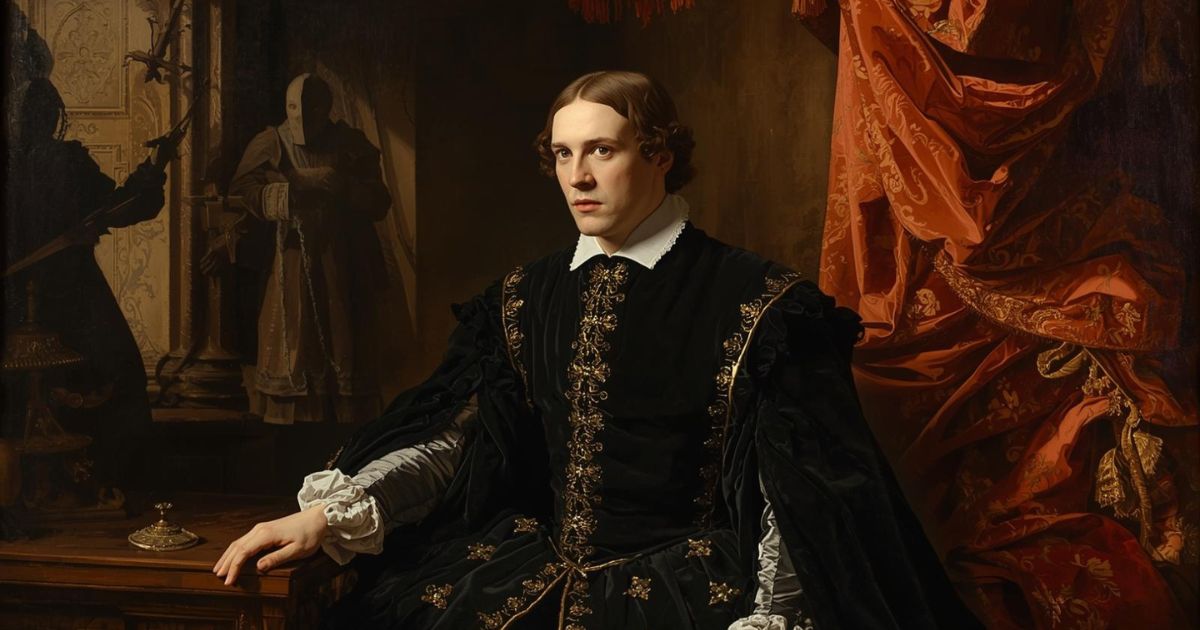
Chapter 04
Family Advice and Hidden Agendas
SCENE III. A room in Polonius’s house. Enter Laertes and Ophelia. LAERTES. My necessaries are embark’d. Farewell. And, sister, as the winds give benefit And convoy is assistant, do not sleep, But let me hear from you. OPHELIA. Do you doubt that? LAERTES. For Hamlet, and the trifling of his favour, Hold it a fashion and a toy in blood; A violet in the youth of primy nature, Forward, not permanent, sweet, not lasting; The perfume and suppliance of a minute; No more. OPHELIA. No more but so? LAERTES. Think it no more. For nature crescent does not grow alone…
Public-domain chapter text, formatted for reading.
Master this chapter. Complete your experience
Purchase the complete book to access all chapters and support classic literature
Available in paperback, hardcover, and e-book formats
Now let's explore the literary elements.
Key Quotes & Analysis
"This above all: to thine own self be true; And it must follow, as the night the day, Thou canst not then be false to any man."
Context: Parting advice to Laertes
Famous counsel on integrity that Polonius will not extend to Ophelia.
In Today's Words:
Polonius tells Laertes to be true to himself and then demands Ophelia distrust her heart. Famous proverbs are easy to preach and hard to practice. When someone's public wisdom never limits their own commands, treat the speech as reputation management, not moral guidance you must accept.
"his will is not his own; For he himself is subject to his birth:"
Context: Laertes warns Ophelia about Hamlet
Royal rank limits private romantic choice.
In Today's Words:
Laertes warns that Hamlet's will is not his own because princes answer to the state. Rank binds romance to politics. In companies and dynasties, heirs date under surveillance, and the person with less power hears that love must wait for permission from the org chart.
"I shall obey, my lord."
Context: Ophelia answers Polonius's command
Powerlessness appears as polite compliance.
In Today's Words:
Ophelia answers her father with simple obedience after he forbids contact with Hamlet. When you hold no leverage, compliance is survival, not agreement. Notice who must say yes while the people giving orders keep every option you are told to surrender for their public reputation.
"springes to catch woodcocks."
Context: Polonius dismisses Hamlet's vows
He treats love as a trap set for naive prey.
In Today's Words:
Polonius calls Hamlet's vows springes to catch woodcocks, traps set for naive birds. He assumes seduction instead of asking what Ophelia observed with her own eyes. Controllers often project cynicism onto the person they manage so they never have to test that person's judgment against lived reality.
Thematic Threads
Power Dynamics
In This Chapter
Both men assert authority over Ophelia through 'wisdom' and commands, while she can only promise obedience
Development
Introduced here as family power structure that mirrors the political corruption in earlier chapters
In Your Life:
You might see this when family members or supervisors use their position to override your judgment 'for your own good.'
Betrayal
In This Chapter
Polonius betrays his own advice about being true to oneself by immediately forbidding Ophelia to trust her feelings
Development
Continues the theme of people not practicing what they preach, following Claudius's false mourning
In Your Life:
You might experience this when someone gives you advice they don't follow themselves, or uses your trust against you.
Family Loyalty
In This Chapter
Ophelia is trapped between competing family demands and her own desires, with loyalty used as a weapon of control
Development
Expands from Hamlet's conflicted family loyalty to show how families manipulate through obligation
In Your Life:
You might feel this when family members use guilt or duty to pressure you into choices that serve them more than you.
Moral Corruption
In This Chapter
Good intentions (protection) become corrupted into control, with the controllers blind to their own contradictions
Development
Continues the pattern of corruption spreading through relationships, not just politics
In Your Life:
You might notice this when your own desire to help someone becomes a need to control their choices.
Indecision
In This Chapter
Ophelia is paralyzed between her feelings for Hamlet and her family's commands, unable to trust her own judgment
Development
Mirrors Hamlet's paralysis but shows how external control can create internal confusion
In Your Life:
You might feel this when too many people are giving you conflicting advice about an important decision.
You now have the context. Time to form your own thoughts.
Discussion Questions
This is not a test. Five prompts guide you through the chapter, from how it opens to how it closes, so you notice context and rhythm rather than facts to memorize. Sit with each question in your own words. When you see "One way to read it," treat it as a starting point, not the only answer.
- 1
What specific advice do Laertes and Polonius give, and how do their actions contradict their words?
analysis • surfaceOne way to read it
Laertes warns Ophelia that princes cannot marry for love alone; Polonius offers noble counsel to Laertes then immediately interrogates and commands Ophelia. Both preach virtue while restricting her choices.
- 2
Why do both men claim they are protecting Ophelia when they are really controlling her choices?
analysis • mediumOne way to read it
Protection language hides reputation management and fear of Hamlet's power. They decide what she may feel and whom she may see while calling it care.
- 3
Where have you seen someone disguise control as protection in your workplace, family, or community?
application • mediumOne way to read it
Look for advice that always ends in restricted options for one person while the advisor keeps freedom. Real protection expands safety; control narrows choice and calls it love.
- 4
How does Polonius calling Hamlet's love 'springes to catch woodcocks' expose his view of Ophelia?
application • deepOne way to read it
He treats Ophelia as naive prey and Hamlet as trap-setter, not as a daughter with judgment. The metaphor reveals he would rather forbid contact than trust her reading of Hamlet.
- 5
When have you been caught between two authorities giving conflicting commands while both claimed to act in your interest?
reflection • deepOne way to read it
Ophelia can only promise obedience because she holds no power. If every voice says it protects you but none asks what you want, the pattern is control shared by competing authorities.
Critical Thinking Exercise
Decode the Real Message
Think of a recent situation where someone gave you advice or expressed concern about your choices. Write down what they said, then underneath write what they might have really been protecting (their reputation, control, worldview, or fears). Look for the gap between their stated concern and their underlying motivation.
Consider:
- •People can genuinely care about you AND still be protecting themselves
- •The advice-giver might not even realize their mixed motives
- •Your job isn't to fix their fears, just to recognize the pattern
Journaling Prompt
Write about a time when you realized someone's 'helpful advice' was really about their own needs. How did that recognition change how you handled the situation?
Coming Up Next...
Chapter 5: The Ghost Appears
Meanwhile, on the castle battlements, Hamlet keeps his promise to meet the ghost. The dead king's spirit finally reveals the shocking truth about his death - and demands a terrible price for justice On the cold castle battlements at midnight, Hamlet waits with his friends Horatio and Marcellus for his father's ghost to appear. While they wait, the sounds of King Claudius's drunken party.