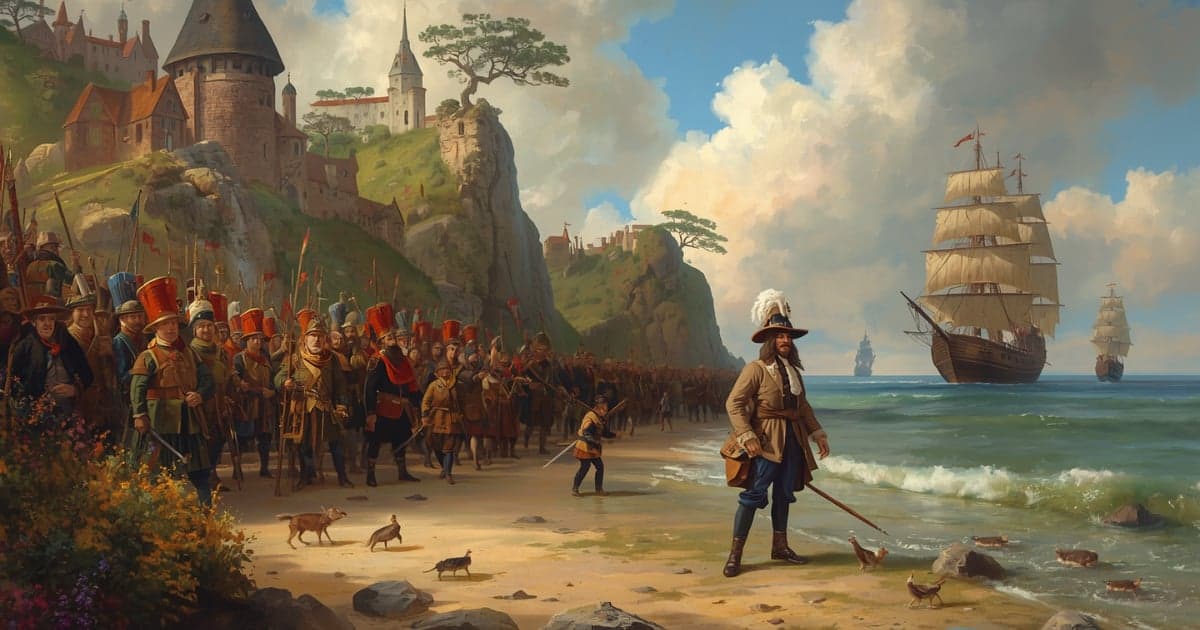
For two months a conspiracy has been forming against Gulliver in secret. He learns about it from an unnamed "considerable person" he once helped at court, who arrives at midnight in a close chair. Gulliver pockets the chair, sets it on his table, and listens. The conspirators are five: Skyresh Bolgolam the admiral, whose glory was eclipsed by the fleet capture; Flimnap the treasurer, still carrying the humiliation of the wife rumour; Limtoc the general; Lalcon the chamberlain; and Balmuff the grand justiciary. The charges are four. First: urinating in the palace (the fire). Second: refusing to reduce Blefuscu to a province and destroy the Big, Endians. Third: helping the Blefuscu ambassadors during the peace talks. Fourth: now preparing to visit Blefuscu on only a verbal license. The debate in council covers the full range of options for Gulliver's destruction. The treasurer and admiral want his house burned at night, 20,000 soldiers with poisoned arrows to the face and hands, and poisonous juice strewn on his shirts to make him tear his own flesh. This held a majority for some time. Reldresal intervenes with what he presents as mercy: spare his life and blind him. "Blindness is an addition to courage," he argues, "by concealing dangers from us." Bolgolam responds in fury: the services themselves are the greatest aggravation of the crimes; the same strength that captured the fleet could carry it back on the first discontent; Gulliver is a Big, Endian in his heart. Flimnap offers a counter, argument to blinding: blinding fowls makes them eat more and grow fat. The compromise the secretary eventually wins for Gulliver is worse than it sounds: the official sentence is blinding; the secret plan is starvation, by gradually reducing his food rations until he dies in a few months, his half, diminished carcass less dangerously smelly for the 5,000 to 6,000 subjects who will then cut his flesh from his bones by cart, loads. "By the great friendship of the secretary, the whole affair was compromised." Gulliver considers his choices. He could stand trial, but he knows state trials end as judges direct. He could resist: he could destroy the entire city with stones, and the full military strength of the empire could not subdue him while he had his liberty. He rejects this option with horror, remembering his oath to the Emperor and the favours he has received. He cannot persuade himself, he notes, that the Emperor's current severities cancel all past obligations, he has not yet learned "the gratitude of courtiers." He chooses flight. He writes to Reldresal invoking his standing license to visit Blefuscu, seizes a large man of war from the harbour, strips himself, packs his clothes and coverlet into the vessel, and wades and swims across the channel. The people of Blefuscu have long expected him. The Emperor rides out in person with the royal family to receive him. Gulliver lies on the ground to kiss the royal hands. He says nothing of his disgrace, presenting himself as arriving on his standing license with all due respect to his own emperor. He does not yet know whether Lilliput will pursue the matter. He sleeps that night on the ground, wrapped in his coverlet, for want of a house or bed.
Coming Up in Chapter 8
Safe in Blefuscu, Gulliver discovers something extraordinary washed up on the shore, something that might finally offer him a way home. But will his new hosts be any more trustworthy than his old ones Three days after arriving in Blefuscu, Gulliver walks the north, east coast and spots something half a league out to sea, a capsized boat, probably driven from a ship in.