Wide Reads
Literature MattersLife IndexEducators
Sign in
Where to Begin
Gulliver's Travels - Gulliver's Final Reflections and Farewell

Jonathan Swift

Gulliver's Travels

Gulliver's Final Reflections and Farewell

Home›Books›Gulliver's Travels›Chapter 39
Previous
39 of 39

Summary

In this final chapter, Gulliver addresses his readers directly, defending the truthfulness of his account and explaining his motivations for writing. He insists he has told only plain facts, unlike other travel writers who embellish their stories for entertainment. His time with the rational Houyhnhnms has taught him to value truth above all else. Gulliver then tackles the political implications of his discoveries, sarcastically praising British colonialism while actually critiquing the brutal reality of how European powers conquer and exploit other lands. He argues that the countries he visited have no gold or resources worth plundering, and their inhabitants are either too powerful (like the Brobdingnagians) or too virtuous (like the Houyhnhnms) to be easily conquered. The chapter reveals Gulliver's complete transformation - he has become so disgusted with human nature after experiencing Houyhnhnm rationality that he can barely tolerate human company. He describes his current life in isolation, slowly trying to readjust to living among humans, whom he now sees as Yahoos. He allows his wife to dine with him only at the far end of a long table and keeps his nose stuffed with herbs to block human smell. What particularly enrages him is human pride - the one vice that makes no sense to him, since humans have so little to be proud of. This final chapter serves as both Swift's satirical commentary on human nature and colonialism, and Gulliver's tragic isolation as someone who has seen a better way of living but cannot return to his former ignorance.

Share it with friends

Previous Chapter
GO ADS FREE — JOIN US
Original text
complete·2,458 words
T

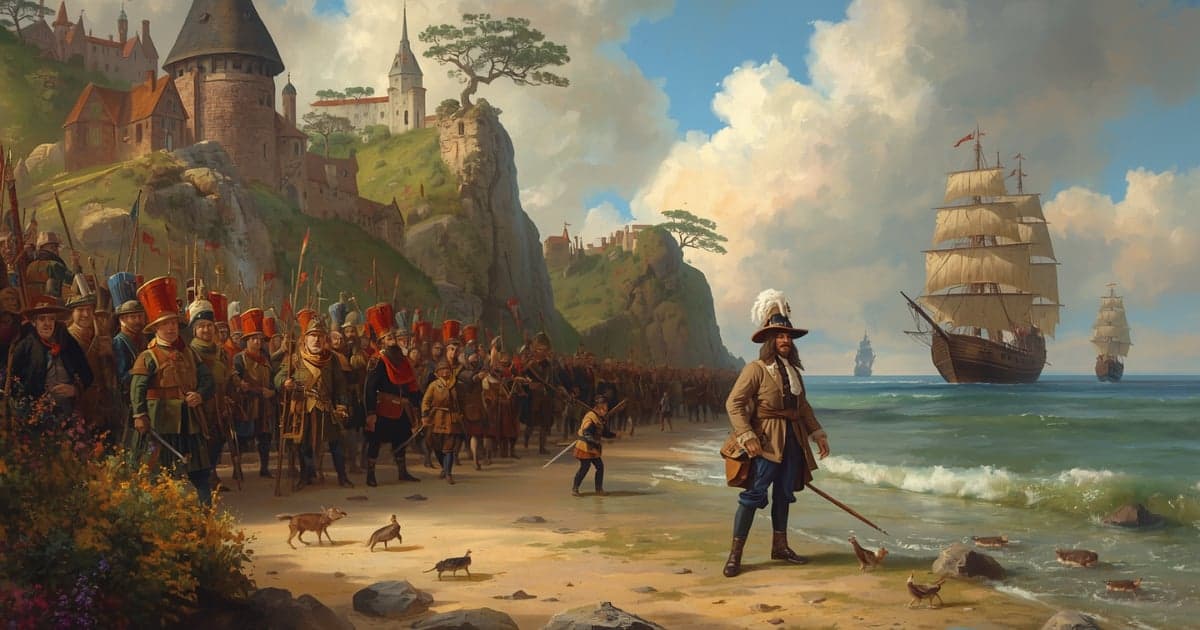
he author’s veracity. His design in publishing this work. His censure of those travellers who swerve from the truth. The author clears himself from any sinister ends in writing. An objection answered. The method of planting colonies. His native country commended. The right of the crown to those countries described by the author is justified. The difficulty of conquering them. The author takes his last leave of the reader; proposes his manner of living for the future; gives good advice, and concludes.

Thus, gentle reader, I have given thee a faithful history of my travels for sixteen years and above seven months: wherein I have not been so studious of ornament as of truth. I could, perhaps, like others, have astonished thee with strange improbable tales; but I rather chose to relate plain matter of fact, in the simplest manner and style; because my principal design was to inform, and not to amuse thee.

1 / 15

Master this chapter. Complete your experience

Purchase the complete book to access all chapters and support classic literature

Read Free on GutenbergBuy at Powell'sBuy on Amazon

As an Amazon Associate, we earn a small commission from qualifying purchases at no additional cost to you.

Available in paperback, hardcover, and e-book formats

GO ADS FREE — JOIN US

Why This Matters

Connect literature to life

Skill: Recognizing Righteous Isolation

This chapter teaches how to spot when legitimate insights become barriers to connection and influence.

Practice This Today

This week, notice when your new knowledge makes you want to withdraw from others—use it as a signal to find small ways to share insights instead of judging from a distance.

GO ADS FREE — JOIN US

Now let's explore the literary elements.

Key Quotes & Analysis

"I have not been so studious of ornament as of truth"

— Gulliver

Context: Defending his plain writing style and claiming he tells only facts

Ironically, this comes from a character who's clearly lost touch with reality. Swift is mocking both lying travel writers and people who claim moral superiority while being completely unreliable themselves.

In Today's Words:

I'm not trying to make this sound fancy - I'm just telling you what really happened

"A traveller's chief aim should be to make men wiser and better"

— Gulliver

Context: Explaining why he wrote his account instead of entertaining stories

This reveals Gulliver's missionary complex - he thinks his experiences should reform everyone else. It also shows Swift's own satirical purpose: using entertainment to teach moral lessons.

In Today's Words:

When you travel and learn something, you should help other people grow, not just show off

"I am not a little pleased that this work of mine can possibly meet with no censurers"

— Gulliver

Context: Claiming his book can't be criticized because it's so truthful

Pure delusion from someone who's become completely disconnected from reality. Swift is showing how moral certainty can make people blind to their own flaws and impossible to reason with.

In Today's Words:

Nobody can argue with what I'm saying because I'm obviously right about everything

Thematic Threads

Pride

In This Chapter

Gulliver is enraged by human pride, seeing it as the most senseless vice since humans have little to be proud of

Development

Evolved from earlier observations of human vanity to complete disgust with human arrogance

In Your Life:

You might feel this when someone brags about accomplishments that seem small compared to what you've learned is possible

Identity

In This Chapter

Gulliver's identity has completely shifted from human to someone who identifies more with horses than people

Development

Final transformation from the man who began as a typical ship's doctor to someone who can barely tolerate human company

In Your Life:

You might recognize this when education or new experiences make you feel like you no longer fit with your old crowd

Class

In This Chapter

Gulliver critiques British colonialism while positioning himself as superior to ordinary humans through his experiences

Development

Throughout the book, class has been about size, power, and perspective—now it's about moral and intellectual superiority

In Your Life:

You might see this when you use your education or experiences to feel superior to people in your original social circle

Social Expectations

In This Chapter

Gulliver can no longer meet basic social expectations like dining normally with his wife or tolerating human presence

Development

Complete breakdown of the social conformity that characterized his earlier adventures

In Your Life:

You might feel this tension when new knowledge makes old social rituals feel meaningless or repulsive

Human Relationships

In This Chapter

Gulliver's relationships are destroyed by his inability to see humans as anything but Yahoos—he keeps his wife at the far end of a long table

Development

Final deterioration from someone who maintained family connections despite strange experiences to complete relational isolation

In Your Life:

You might recognize this when personal growth creates distance from family or friends who haven't changed alongside you

GO ADS FREE — JOIN US

You now have the context. Time to form your own thoughts.

Discussion Questions

  1. 1

    Why does Gulliver become so disgusted with humans after living with the Houyhnhnms that he can barely stand to be around his own family?

    analysis • surface
  2. 2

    What pattern do you see in how Gulliver responds to experiencing a 'better' way of living - and why does this response actually make him less effective at creating change?

    analysis • medium
  3. 3

    Where have you seen this same pattern today - someone who learns something better and then becomes disgusted with everyone who hasn't learned it yet?

    application • medium
  4. 4

    If you were Gulliver's friend, what advice would you give him about how to use his knowledge of the Houyhnhnms to actually improve human society instead of just isolating himself?

    application • deep
  5. 5

    What does Gulliver's tragic isolation teach us about the danger of letting higher standards become a wall instead of a bridge?

    reflection • deep

Critical Thinking Exercise

10 minutes

Map Your Own Standards Trap

Think of an area where you've learned something that made you see problems everywhere - healthier eating, better parenting, workplace efficiency, financial literacy. Write down how this knowledge has affected your relationships. Are you becoming more like Gulliver, stuffing herbs in your nose to avoid the 'smell' of others' choices? Or have you found ways to stay connected while maintaining your standards?

Consider:

  • •Notice if your new knowledge is creating distance from people you care about
  • •Consider whether your disgust is justified but your response is counterproductive
  • •Think about how you could model better approaches instead of just judging current ones

Journaling Prompt

Write about a time when learning something better made you judgmental toward others. How could you use that knowledge as a bridge instead of a wall?

GO ADS FREE — JOIN US
Previous
The Unwilling Return to Humanity
Contents

Continue Exploring

Gulliver's Travels Study GuideTeaching ResourcesEssential Life IndexBrowse by ThemeAll Books

You Might Also Like

Jane Eyre cover

Jane Eyre

Charlotte Brontë

Explores personal growth

Great Expectations cover

Great Expectations

Charles Dickens

Explores personal growth

The Strange Case of Dr Jekyll and Mr Hyde cover

The Strange Case of Dr Jekyll and Mr Hyde

Robert Louis Stevenson

Explores personal growth

Don Quixote cover

Don Quixote

Miguel de Cervantes Saavedra

Explores personal growth

Browse all 47+ books
GO ADS FREE — JOIN US

Share This Chapter

Know someone who'd enjoy this? Spread the wisdom!

TwitterFacebookLinkedInEmail

Read ad-free with Prestige

Get rid of ads, unlock study guides and downloads, and support free access for everyone.

Subscribe to PrestigeCreate free account
Intelligence Amplifier
Intelligence Amplifier™Powering Wide Reads

Exploring human-AI collaboration through books, essays, and philosophical dialogues. Classic literature transformed into navigational maps for modern life.

2025 Books

→ The Amplified Human Spirit→ The Alarming Rise of Stupidity Amplified→ San Francisco: The AI Capital of the World
Visit intelligenceamplifier.org
hello@widereads.com

WideReads Originals

→ You Are Not Lost→ The Last Chapter First→ The Lit of Love→ Wealth and Poverty→ 10 Paradoxes in the Classics · coming soon
Arvintech
arvintechAmplify your Mind
Visit at arvintech.com

Navigate

  • Home
  • Library
  • Essential Life Index
  • How It Works
  • Subscribe
  • Account
  • About
  • Contact
  • Authors
  • Suggest a Book
  • Landings

Made For You

  • Students
  • Educators
  • Families
  • Readers
  • Literary Analysis
  • Finding Purpose
  • Letting Go
  • Recovering from a Breakup
  • Corruption
  • Gaslighting in the Classics

Newsletter

Weekly insights from the classics. Amplify Your Mind.

Legal

  • Privacy Policy
  • Terms of Service
  • Cookie Policy
  • Accessibility

Why Public Domain?

We focus on public domain classics because these timeless works belong to everyone. No paywalls, no restrictions—just wisdom that has stood the test of centuries, freely accessible to all readers.

Public domain books have shaped humanity's understanding of love, justice, ambition, and the human condition. By amplifying these works, we help preserve and share literature that truly belongs to the world.

A Pilgrimage

Powell's City of Books

Portland, Oregon

If you ever find yourself in Portland, walk to the corner of Burnside and 10th. The building takes up an entire city block. Inside is over a million books, new and used on the same shelf, organized by color-coded rooms with names like the Rose Room and the Pearl Room. You can lose an afternoon. You can lose a weekend. You will find a book you have been looking for your whole life, and three you did not know existed.

It is a pilgrimage. We cannot find a bookstore like it anywhere on earth. If you read the classics, and you ever get the chance, go. It belongs on every reader's bucket list.

Visit powells.com

We are not in any way affiliated with Powell's. We are just a very big fan.

© 2026 Wide Reads™. All Rights Reserved.

Intelligence Amplifier™ and Wide Reads™ are proprietary trademarks of Arvin Lioanag.

Copyright Protection: All original content, analyses, discussion questions, pedagogical frameworks, and methodology are protected by U.S. and international copyright law. Unauthorized reproduction, distribution, web scraping, or use for AI training is strictly prohibited. See our Copyright Notice for details.

Disclaimer: The information provided on this website is for general informational and educational purposes only and does not constitute professional, legal, financial, or technical advice. While we strive to ensure accuracy and relevance, we make no warranties regarding completeness, reliability, or suitability. Any reliance on such information is at your own risk. We are not liable for any losses or damages arising from use of this site. By using this site, you agree to these terms.