Wide Reads
Literature MattersLife IndexEducators
Sign in
Where to Begin
Gulliver's Travels - The Unwilling Return to Humanity

Jonathan Swift

Gulliver's Travels

The Unwilling Return to Humanity

Home›Books›Gulliver's Travels›Chapter 38
Previous
38 of 39
Next

Summary

Gulliver begins his desperate journey home, preferring solitude to human society after his time with the noble Houyhnhnms. He reaches New Holland (Australia) but is wounded by natives and reluctantly rescued by a Portuguese ship. Captain Pedro de Mendez treats him with extraordinary kindness, but Gulliver can barely tolerate human contact, seeing all people as 'Yahoos' - the savage creatures from his previous adventure. The captain's patience gradually helps Gulliver readjust enough to return to England, though he remains deeply conflicted. When Gulliver finally reaches home after years away, his family's joy at his return contrasts sharply with his revulsion at their touch and presence. He cannot bear physical contact with his wife and children, preferring the company of horses in his stable. This chapter reveals the dark side of enlightenment - how exposure to an idealized society can make someone unable to function in the real world. Gulliver's transformation shows how pursuing perfection can lead to complete alienation from the people who love you. His story becomes a warning about the dangers of rejecting human imperfection in favor of impossible standards. The irony is profound: in seeking to become better than human, Gulliver has become less human, trapped in a prison of his own moral superiority.

Coming Up in Chapter 39

The final chapter awaits, where Gulliver reflects on all his extraordinary journeys and offers his ultimate thoughts on human nature, society, and the lessons learned from his travels to impossible worlds.

Share it with friends

Previous ChapterNext Chapter
GO ADS FREE — JOIN US
Original text
complete·3,056 words
T

he author’s dangerous voyage. He arrives at New Holland, hoping to settle there. Is wounded with an arrow by one of the natives. Is seized and carried by force into a Portuguese ship. The great civilities of the captain. The author arrives at England.

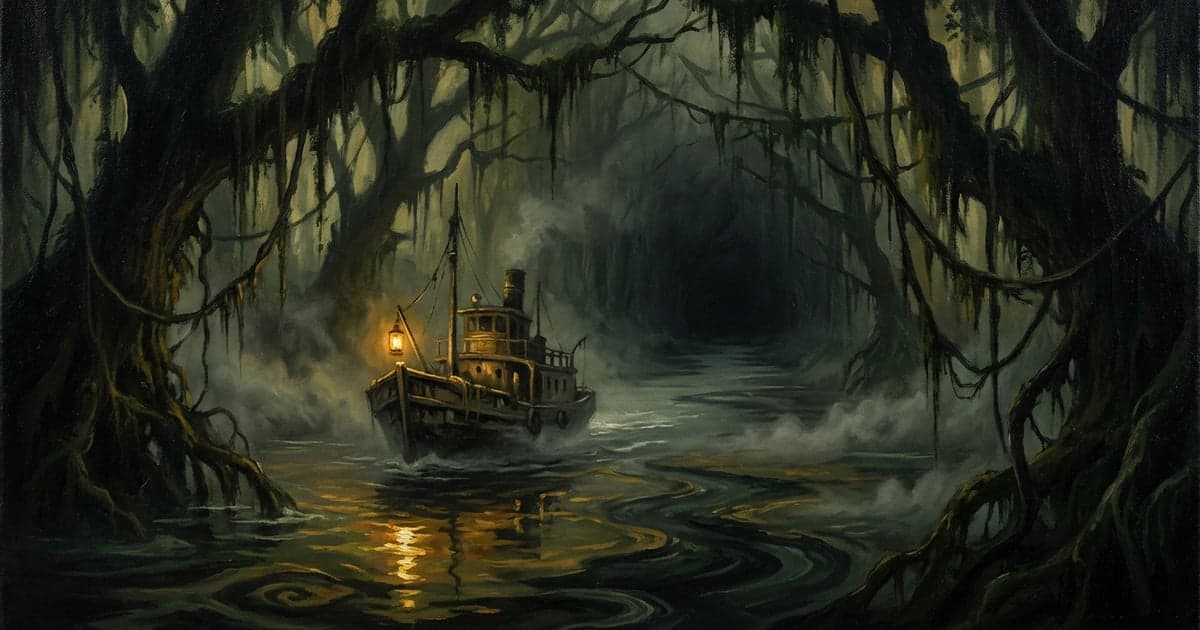
I began this desperate voyage on February 15, 1714–15, at nine o’clock in the morning. The wind was very favourable; however, I made use at first only of my paddles; but considering I should soon be weary, and that the wind might chop about, I ventured to set up my little sail; and thus, with the help of the tide, I went at the rate of a league and a half an hour, as near as I could guess. My master and his friends continued on the shore till I was almost out of sight; and I often heard the sorrel nag (who always loved me) crying out, “Hnuy illa nyha, majah Yahoo;” “Take care of thyself, gentle Yahoo.”

1 / 18

Master this chapter. Complete your experience

Purchase the complete book to access all chapters and support classic literature

Read Free on GutenbergBuy at Powell'sBuy on Amazon

As an Amazon Associate, we earn a small commission from qualifying purchases at no additional cost to you.

Available in paperback, hardcover, and e-book formats

GO ADS FREE — JOIN US

Why This Matters

Connect literature to life

Skill: Detecting Perfectionism Traps

This chapter teaches how to recognize when pursuit of ideals becomes a barrier to human connection and practical progress.

Practice This Today

This week, notice when you use phrases like 'they just don't get it' or feel physically uncomfortable around people who don't share your standards - that's the perfectionism trap activating.

GO ADS FREE — JOIN US

Now let's explore the literary elements.

Key Quotes & Analysis

"Take care of thyself, gentle Yahoo"

— The sorrel nag

Context: The horse's farewell as Gulliver leaves Houyhnhnm land

Shows the tragic irony that a horse shows more genuine care for Gulliver than he can now show for humans. The word 'gentle' reveals the horse's affection despite calling him a Yahoo.

In Today's Words:

Be safe out there, you poor human

"I would have thought a greater happiness, than to be first minister in the politest court of Europe"

— Narrator/Gulliver

Context: Gulliver explaining why he'd rather live alone on a desert island

Reveals how completely he's rejected human society and ambition. He'd rather be alone than have the highest position among people he now sees as disgusting.

In Today's Words:

I'd rather live alone in the middle of nowhere than have the best job in the world

"so horrible was the idea I conceived of returning to live in the society, and under the government of Yahoos"

— Narrator/Gulliver

Context: Explaining his desperate desire to avoid returning to human civilization

Shows how his enlightenment has become a curse. What should be homecoming is now horror because he sees all humans as savage beasts unworthy of his presence.

In Today's Words:

The thought of going back to live with regular people made me sick

Thematic Threads

Alienation

In This Chapter

Gulliver cannot bear physical contact with his own family after living among the 'perfect' Houyhnhnms

Development

Culmination of growing disconnection from humanity throughout his travels

In Your Life:

You might feel this when comparing your life to social media perfection or after experiencing an idealized situation.

Standards

In This Chapter

Gulliver's time with rational horses has created impossible expectations for human behavior

Development

Each journey has raised his standards until reality becomes intolerable

In Your Life:

You might set standards so high that no real person or situation can meet them.

Identity

In This Chapter

Gulliver no longer identifies as human, preferring horses to his own species

Development

Complete transformation from curious traveler to alienated misanthrope

In Your Life:

You might lose touch with who you really are when chasing an idealized version of yourself.

Connection

In This Chapter

His pursuit of perfection has destroyed his ability to connect with those who love him

Development

Shows the ultimate cost of his travels and transformations

In Your Life:

You might sacrifice real relationships while pursuing perfect ones that don't exist.

Perspective

In This Chapter

Gulliver sees all humans as 'Yahoos' - savage beasts unworthy of respect

Development

His perspective has become so distorted he can't see his family's humanity

In Your Life:

You might develop such a narrow view that you can't appreciate the good in everyday people and situations.

GO ADS FREE — JOIN US

You now have the context. Time to form your own thoughts.

Discussion Questions

  1. 1

    Why can't Gulliver stand to be around his own family when he returns home?

    analysis • surface
  2. 2

    How did Gulliver's time with the 'perfect' Houyhnhnms change his ability to see good in regular people?

    analysis • medium
  3. 3

    When have you seen someone become impossible to please after experiencing something they thought was perfect?

    application • medium
  4. 4

    How can you learn from better examples without becoming unable to appreciate what you already have?

    application • deep
  5. 5

    What does Gulliver's story teach us about the danger of pursuing impossible standards?

    reflection • deep

Critical Thinking Exercise

10 minutes

Map Your Standards Trap

Think of an area where you've raised your standards recently - work, relationships, health, parenting. Write down what your 'ideal' looks like, then list three ways this ideal might be making you less appreciative of your current reality. Finally, identify one way you can keep the good parts of your new standards while staying connected to the people in your life.

Consider:

  • •Are your new standards helping you grow or making you critical?
  • •What are you gaining versus what relationships might you be losing?
  • •How can you use ideals as inspiration rather than weapons?

Journaling Prompt

Write about a time when pursuing something 'better' made you unable to appreciate something good you already had. What would you do differently now?

GO ADS FREE — JOIN US

Coming Up Next...

Chapter 39: Gulliver's Final Reflections and Farewell

The final chapter awaits, where Gulliver reflects on all his extraordinary journeys and offers his ultimate thoughts on human nature, society, and the lessons learned from his travels to impossible worlds.

Continue to Chapter 39
Previous
Paradise Lost: When Perfect Worlds Reject You
Contents
Next
Gulliver's Final Reflections and Farewell

Continue Exploring

Gulliver's Travels Study GuideTeaching ResourcesEssential Life IndexBrowse by ThemeAll Books

You Might Also Like

Jane Eyre cover

Jane Eyre

Charlotte Brontë

Explores personal growth

Great Expectations cover

Great Expectations

Charles Dickens

Explores personal growth

The Strange Case of Dr Jekyll and Mr Hyde cover

The Strange Case of Dr Jekyll and Mr Hyde

Robert Louis Stevenson

Explores personal growth

Don Quixote cover

Don Quixote

Miguel de Cervantes Saavedra

Explores personal growth

Browse all 47+ books
GO ADS FREE — JOIN US

Share This Chapter

Know someone who'd enjoy this? Spread the wisdom!

TwitterFacebookLinkedInEmail

Read ad-free with Prestige

Get rid of ads, unlock study guides and downloads, and support free access for everyone.

Subscribe to PrestigeCreate free account
Intelligence Amplifier
Intelligence Amplifier™Powering Wide Reads

Exploring human-AI collaboration through books, essays, and philosophical dialogues. Classic literature transformed into navigational maps for modern life.

2025 Books

→ The Amplified Human Spirit→ The Alarming Rise of Stupidity Amplified→ San Francisco: The AI Capital of the World
Visit intelligenceamplifier.org
hello@widereads.com

WideReads Originals

→ You Are Not Lost→ The Last Chapter First→ The Lit of Love→ Wealth and Poverty→ 10 Paradoxes in the Classics · coming soon
Arvintech
arvintechAmplify your Mind
Visit at arvintech.com

Navigate

  • Home
  • Library
  • Essential Life Index
  • How It Works
  • Subscribe
  • Account
  • About
  • Contact
  • Authors
  • Suggest a Book
  • Landings

Made For You

  • Students
  • Educators
  • Families
  • Readers
  • Literary Analysis
  • Finding Purpose
  • Letting Go
  • Recovering from a Breakup
  • Corruption
  • Gaslighting in the Classics

Newsletter

Weekly insights from the classics. Amplify Your Mind.

Legal

  • Privacy Policy
  • Terms of Service
  • Cookie Policy
  • Accessibility

Why Public Domain?

We focus on public domain classics because these timeless works belong to everyone. No paywalls, no restrictions—just wisdom that has stood the test of centuries, freely accessible to all readers.

Public domain books have shaped humanity's understanding of love, justice, ambition, and the human condition. By amplifying these works, we help preserve and share literature that truly belongs to the world.

A Pilgrimage

Powell's City of Books

Portland, Oregon

If you ever find yourself in Portland, walk to the corner of Burnside and 10th. The building takes up an entire city block. Inside is over a million books, new and used on the same shelf, organized by color-coded rooms with names like the Rose Room and the Pearl Room. You can lose an afternoon. You can lose a weekend. You will find a book you have been looking for your whole life, and three you did not know existed.

It is a pilgrimage. We cannot find a bookstore like it anywhere on earth. If you read the classics, and you ever get the chance, go. It belongs on every reader's bucket list.

Visit powells.com

We are not in any way affiliated with Powell's. We are just a very big fan.

© 2026 Wide Reads™. All Rights Reserved.

Intelligence Amplifier™ and Wide Reads™ are proprietary trademarks of Arvin Lioanag.

Copyright Protection: All original content, analyses, discussion questions, pedagogical frameworks, and methodology are protected by U.S. and international copyright law. Unauthorized reproduction, distribution, web scraping, or use for AI training is strictly prohibited. See our Copyright Notice for details.

Disclaimer: The information provided on this website is for general informational and educational purposes only and does not constitute professional, legal, financial, or technical advice. While we strive to ensure accuracy and relevance, we make no warranties regarding completeness, reliability, or suitability. Any reliance on such information is at your own risk. We are not liable for any losses or damages arising from use of this site. By using this site, you agree to these terms.