Wide Reads
Literature MattersLife IndexEducators
Sign in
Where to Begin
Frankenstein - The Creature's Rage—From Rejection to Murder

Mary Shelley

Frankenstein

The Creature's Rage—From Rejection to Murder

Home›Books›Frankenstein›Chapter 20
Previous
20 of 28
Next

Summary

The Creature's Rage—From Rejection to Murder

Frankenstein by Mary Shelley

0:000:00
Listen to Next Chapter

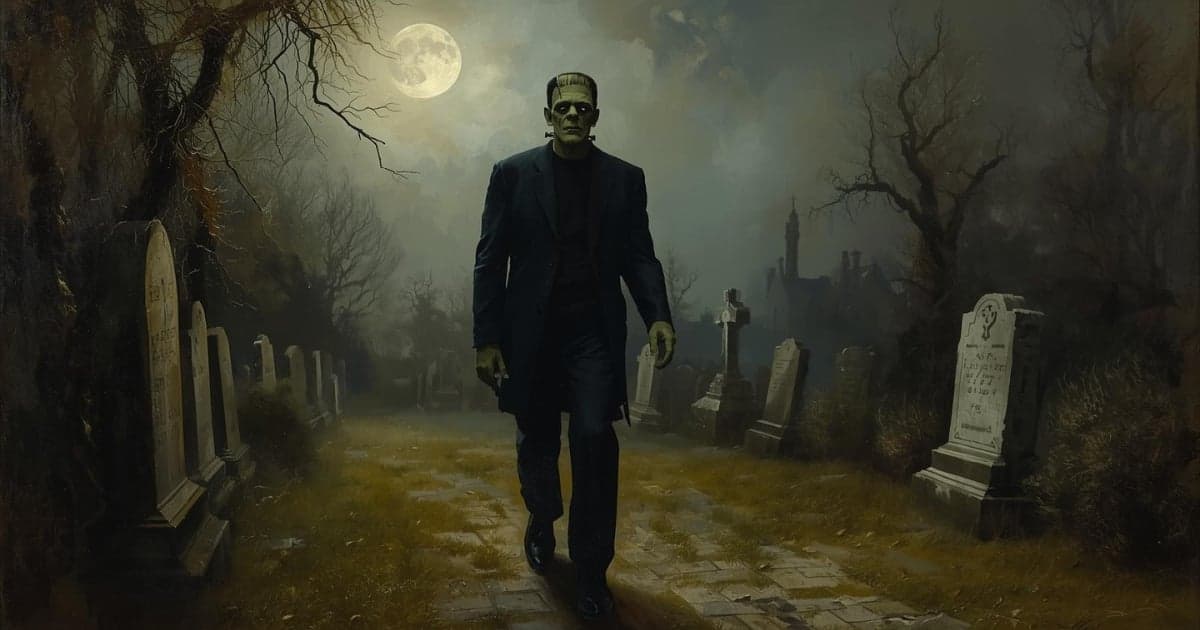
After being violently rejected by the De Laceys, the creature's grief transforms into rage. He howls in the woods, declaring 'everlasting war against the species.' In his fury, he burns down the cottage that had been his only connection to humanity. With nothing left, the creature decides to seek out Victor, his creator, in Geneva—the only being who might owe him anything. His journey is long and miserable, traveling only at night to avoid humans. Then, in a moment of spring sunshine, the creature feels brief happiness and tries to save a drowning girl. As reward for his heroism, he's shot and wounded. This act of violence after an act of kindness extinguishes any remaining hope—kindness only brings him pain. Near Geneva, the creature encounters a beautiful child (William) and thinks perhaps a young, unprejudiced mind could be his companion. But William screams 'monster!' and reveals he's a Frankenstein. The creature, realizing this is his creator's brother, strangles him in rage: 'I too can create desolation; my enemy is not invulnerable.' He takes William's locket containing a portrait of Caroline and plants it on sleeping Justine, deliberately framing her. This chapter shows the creature's complete transformation from benevolent being seeking love to calculated destroyer seeking revenge. His actions aren't random violence—they're strategic strikes designed to make Victor suffer as he has suffered. The creature's intelligence makes his vengeance more terrible.

Coming Up in Chapter 21

The creature finishes his tale, having explained how Victor's abandonment created a murderer. Now he demands a mate—and Victor must decide.

Share it with friends

Previous ChapterNext Chapter
GO ADS FREE — JOIN US
Original text
complete·3,197 words
C

“ursed, cursed creator! Why did I live? Why, in that instant, did I not extinguish the spark of existence which you had so wantonly bestowed? I know not; despair had not yet taken possession of me; my feelings were those of rage and revenge. I could with pleasure have destroyed the cottage and its inhabitants and have glutted myself with their shrieks and misery.

1 / 22

Master this chapter. Complete your experience

Purchase the complete book to access all chapters and support classic literature

Read Free on GutenbergBuy at Powell'sBuy on Amazon

As an Amazon Associate, we earn a small commission from qualifying purchases at no additional cost to you.

Available in paperback, hardcover, and e-book formats

GO ADS FREE — JOIN US

Why This Matters

Connect literature to life

Skill: Reading Abandonment Cycles

This chapter teaches how abandoning problems when they get difficult often creates bigger, more targeted problems later.

Practice This Today

This week, notice when you're tempted to ghost someone or abandon a difficult situation - ask what monster that abandonment might create.

GO ADS FREE — JOIN US

Now let's explore the literary elements.

Key Quotes & Analysis

"I am malicious because I am miserable. Am I not shunned and hated by all mankind?"

— The creature

Context: The creature explains to Victor why he has become vengeful after telling his story of rejection

This reveals the direct connection between how we treat others and how they behave. The creature isn't inherently evil - he became malicious as a response to being treated as a monster. It's a powerful statement about cause and effect in human behavior.

In Today's Words:

I'm mean because everyone treats me like garbage. What do you expect when the whole world hates me?

"My heart was fashioned to be susceptible of love and sympathy, and when wrenched by misery to vice and hatred, it did not endure the violence of the change without torture."

— The creature

Context: The creature describes the painful transformation from loving to hateful

This shows that becoming cruel isn't easy or natural - it's a violent change that causes internal suffering. The creature had the capacity for good but was forced into evil by circumstances, making his story tragic rather than simply frightening.

In Today's Words:

I was born to love people, and turning into someone full of hate has been agony.

"I had feelings of affection, and they were requited by detestation and scorn."

— The creature

Context: The creature reflects on his attempts to connect with humans and their rejection

This captures the fundamental tragedy - the creature offered love and received hatred in return. It shows how our responses to others can either nurture their humanity or destroy it completely.

In Today's Words:

I tried to care about people, and all I got back was disgust and rejection.

Thematic Threads

Abandonment

In This Chapter

Victor's complete abandonment of his creation leads directly to the creature's transformation from innocent to vengeful

Development

Evolved from Victor's initial flight to this deeper exploration of abandonment's long-term psychological consequences

In Your Life:

You might recognize this when a colleague or family member becomes increasingly difficult after being consistently ignored or dismissed.

Social Belonging

In This Chapter

The creature's desperate desire to belong to the De Lacey family shows the fundamental human need for acceptance

Development

Introduced here as the creature's core motivation and deepest wound

In Your Life:

You see this in your own need to fit in at work or in social groups, and how rejection from these groups affects your behavior.

Identity Formation

In This Chapter

The creature learns who he is through others' reactions - fear, horror, violence - shaping his self-concept

Development

Builds on earlier hints about the creature's nature, now showing how identity forms through social interaction

In Your Life:

You might notice how others' treatment of you - as competent or incompetent, valuable or disposable - shapes how you see yourself.

Class Exclusion

In This Chapter

The creature is permanently excluded from human society based on his appearance, regardless of his intelligence or capacity for feeling

Development

Introduced here as a form of ultimate social exclusion based on physical difference

In Your Life:

You might experience this through economic class barriers, educational background, or other markers that keep you out of certain social circles.

Responsibility

In This Chapter

Victor's refusal to take responsibility for his creation's wellbeing directly causes the creature's turn to violence

Development

Deepens the theme from Victor's earlier avoidance to show the real-world consequences of shirking responsibility

In Your Life:

You see this when parents, bosses, or leaders create problems then refuse to help solve them, leaving others to deal with the fallout.

GO ADS FREE — JOIN US

You now have the context. Time to form your own thoughts.

Discussion Questions

  1. 1

    What specific experiences transformed the creature from innocent to vengeful, and what was the final breaking point?

    analysis • surface
  2. 2

    Why did the creature's intelligence and eloquence make his rejection more painful and his revenge more calculated?

    analysis • medium
  3. 3

    Where do you see this rejection loop playing out today - at work, in families, or in communities?

    application • medium
  4. 4

    How would you intervene early if you noticed someone starting down this path of escalating rejection and retaliation?

    application • deep
  5. 5

    What does the creature's story reveal about the responsibility we have for how our treatment of others shapes who they become?

    reflection • deep

Critical Thinking Exercise

10 minutes

Map Your Own Rejection Points

Think of a time when you felt rejected or excluded from something you wanted to belong to. Map out what happened: What did you want? How were you rejected? How did it change your behavior toward that person or group? Did you become more defensive, angry, or withdrawn? Now consider someone in your life who might be experiencing rejection. What small gesture could interrupt their rejection loop before it hardens into something destructive?

Consider:

  • •Notice how rejection changes your behavior toward the rejector - do you become what they expected?
  • •Consider whether your defensive reactions sometimes create more rejection
  • •Think about times when one person's acceptance helped you recover from others' rejection

Journaling Prompt

Write about a relationship where you might be unknowingly creating the very behavior you're complaining about through rejection or dismissal. How could you break this cycle?

GO ADS FREE — JOIN US

Coming Up Next...

Chapter 21: The Creature Demands a Mate

The creature finishes his tale, having explained how Victor's abandonment created a murderer. Now he demands a mate—and Victor must decide.

Continue to Chapter 21
Previous
The Creature Discovers Paradise Lost
Contents
Next
The Creature Demands a Mate

Continue Exploring

Frankenstein Study GuideTeaching ResourcesEssential Life IndexBrowse by ThemeAll Books
Identity & Self-DiscoveryMoral Dilemmas & EthicsPower & Corruption

You Might Also Like

The Strange Case of Dr Jekyll and Mr Hyde cover

The Strange Case of Dr Jekyll and Mr Hyde

Robert Louis Stevenson

Explores identity & self

Jane Eyre cover

Jane Eyre

Charlotte Brontë

Explores identity & self

Wuthering Heights cover

Wuthering Heights

Emily Brontë

Explores identity & self

Crime and Punishment cover

Crime and Punishment

Fyodor Dostoevsky

Explores identity & self

Browse all 47+ books
GO ADS FREE — JOIN US

Share This Chapter

Know someone who'd enjoy this? Spread the wisdom!

TwitterFacebookLinkedInEmail

Read ad-free with Prestige

Get rid of ads, unlock study guides and downloads, and support free access for everyone.

Subscribe to PrestigeCreate free account
Intelligence Amplifier
Intelligence Amplifier™Powering Wide Reads

Exploring human-AI collaboration through books, essays, and philosophical dialogues. Classic literature transformed into navigational maps for modern life.

2025 Books

→ The Amplified Human Spirit→ The Alarming Rise of Stupidity Amplified→ San Francisco: The AI Capital of the World
Visit intelligenceamplifier.org
hello@widereads.com

WideReads Originals

→ You Are Not Lost→ The Last Chapter First→ The Lit of Love→ Wealth and Poverty→ 10 Paradoxes in the Classics · coming soon
Arvintech
arvintechAmplify your Mind
Visit at arvintech.com

Navigate

  • Home
  • Library
  • Essential Life Index
  • How It Works
  • Subscribe
  • Account
  • About
  • Contact
  • Authors
  • Suggest a Book
  • Landings

Made For You

  • Students
  • Educators
  • Families
  • Readers
  • Literary Analysis
  • Finding Purpose
  • Letting Go
  • Recovering from a Breakup
  • Corruption
  • Gaslighting in the Classics

Newsletter

Weekly insights from the classics. Amplify Your Mind.

Legal

  • Privacy Policy
  • Terms of Service
  • Cookie Policy
  • Accessibility

Why Public Domain?

We focus on public domain classics because these timeless works belong to everyone. No paywalls, no restrictions—just wisdom that has stood the test of centuries, freely accessible to all readers.

Public domain books have shaped humanity's understanding of love, justice, ambition, and the human condition. By amplifying these works, we help preserve and share literature that truly belongs to the world.

A Pilgrimage

Powell's City of Books

Portland, Oregon

If you ever find yourself in Portland, walk to the corner of Burnside and 10th. The building takes up an entire city block. Inside is over a million books, new and used on the same shelf, organized by color-coded rooms with names like the Rose Room and the Pearl Room. You can lose an afternoon. You can lose a weekend. You will find a book you have been looking for your whole life, and three you did not know existed.

It is a pilgrimage. We cannot find a bookstore like it anywhere on earth. If you read the classics, and you ever get the chance, go. It belongs on every reader's bucket list.

Visit powells.com

We are not in any way affiliated with Powell's. We are just a very big fan.

© 2026 Wide Reads™. All Rights Reserved.

Intelligence Amplifier™ and Wide Reads™ are proprietary trademarks of Arvin Lioanag.

Copyright Protection: All original content, analyses, discussion questions, pedagogical frameworks, and methodology are protected by U.S. and international copyright law. Unauthorized reproduction, distribution, web scraping, or use for AI training is strictly prohibited. See our Copyright Notice for details.

Disclaimer: The information provided on this website is for general informational and educational purposes only and does not constitute professional, legal, financial, or technical advice. While we strive to ensure accuracy and relevance, we make no warranties regarding completeness, reliability, or suitability. Any reliance on such information is at your own risk. We are not liable for any losses or damages arising from use of this site. By using this site, you agree to these terms.