Wide Reads
Literature MattersLife IndexEducators
Sign in
Where to Begin
Fathers and Sons - Behind Closed Doors

Ivan Turgenev

Fathers and Sons

Behind Closed Doors

Home›Books›Fathers and Sons›Chapter 8
Previous
8 of 28
Next

Summary

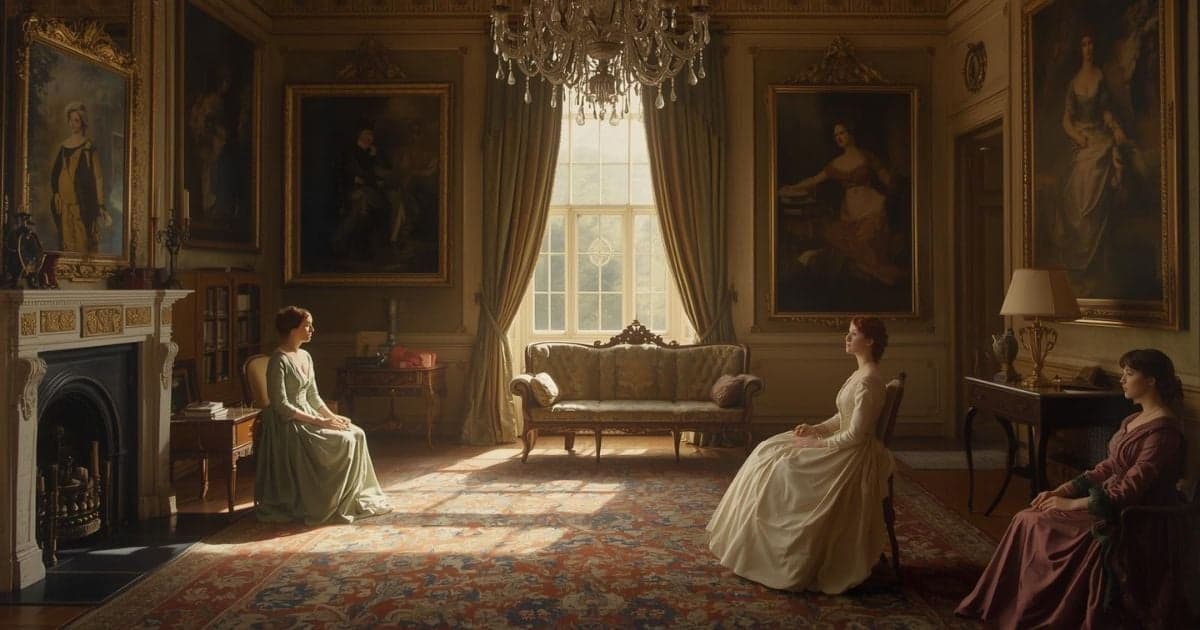
This chapter reveals the complex web of relationships beneath the surface at Marino estate. Nikolai struggles with financial problems as his estate management fails, while his brother Paul offers occasional help but judges his practicality. The real drama unfolds when Paul visits Thenichka, Nikolai's young partner and mother of his child. Their awkward conversation reveals layers of unspoken tension - Paul's conflicted feelings about the arrangement, Thenichka's nervousness around him, and the social complexity of her position in the household. When Nikolai arrives and tenderly interacts with both Thenichka and baby Mitia, we see genuine affection despite the unconventional nature of their relationship. The chapter then reveals their backstory: how Nikolai met Thenichka when she was sixteen, the daughter of his housekeeper, and how their relationship gradually developed after her mother's death. This intimate glimpse shows how real human connections can transcend social boundaries, while also highlighting the vulnerability of those in precarious positions. The chapter masterfully contrasts public propriety with private emotion, showing how people navigate complex relationships when society offers no clear rules for their situation.

Coming Up in Chapter 9

Bazarov is about to meet Thenichka for the first time during a garden walk with Arkady. Their encounter promises to add another dynamic to the already complex household relationships, as the outspoken nihilist encounters this gentle woman who represents everything traditional he claims to reject.

Share it with friends

Previous ChapterNext Chapter
GO ADS FREE — JOIN US
Original text
complete·2,703 words
A

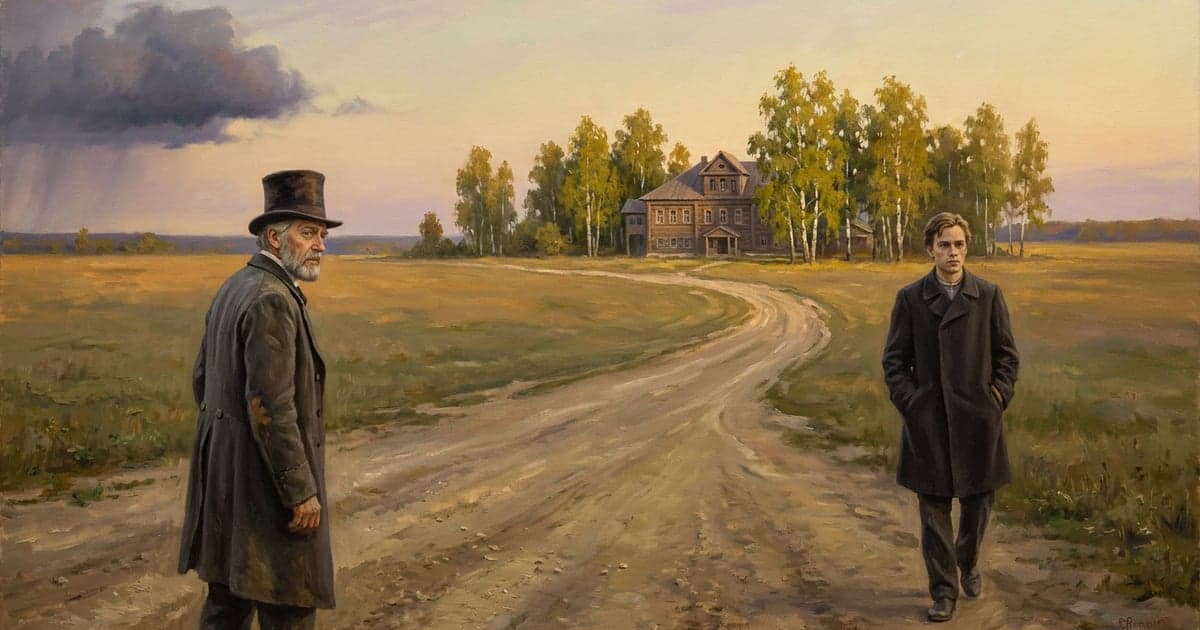
t his brother's interview with the steward (the latter was a tall, thin man of shifty eyes who to every remark of Nikolai's replied in an unctuous, mellifluous voice: "Very well, if so it please you") Paul Petrovitch did not long remain present. Recently the system of estate-management had been reorganised on a new footing, and was creaking as loudly as an ungreased cartwheel or furniture which has been fashioned of unseasoned wood. For the same reason, though never actually giving way to melancholy, Nikolai Petrovitch often indulged in moodiness and sighing, for the reason that it was clear that his affairs would never prosper without money, and that the bulk of the latter had disappeared. As for Arkady's statement that frequently Paul Petrovitch had come to his brother's assistance, it had been perfectly true, for on more than one occasion had Paul been moved by the sight of his brother's perplexity to walk slowly to the window, to plunge a hand into his pocket, to mutter, "Mais je puis vous donner de l'argent," and, lastly, to suit the action to the word. But on the day of which we are speaking Paul had no spare cash himself; wherefore he preferred to remove himself elsewhere, and the more so in that the minutiæ of estate-management wearied him, and that he felt certain that, though powerless to suggest a better way of doing business than the present one, he knew at least that Nikolai's was at fault.

1 / 13

Master this chapter. Complete your experience

Purchase the complete book to access all chapters and support classic literature

Read Free on GutenbergBuy at Powell'sBuy on Amazon

As an Amazon Associate, we earn a small commission from qualifying purchases at no additional cost to you.

Available in paperback, hardcover, and e-book formats

GO ADS FREE — JOIN US

Why This Matters

Connect literature to life

Skill: Reading Unspoken Power Dynamics

This chapter teaches how to recognize the complex tensions that exist when people operate outside official structures.

Practice This Today

This week, notice when people around you seem to have arrangements that work but aren't officially acknowledged—and observe how others react to these relationships.

GO ADS FREE — JOIN US

Now let's explore the literary elements.

Key Quotes & Analysis

"Mais je puis vous donner de l'argent"

— Paul Petrovitch

Context: When Paul offers money to help his struggling brother

Paul speaks French even in private, showing his pretensions and distance from practical matters. His willingness to help financially contrasts with his inability to offer emotional support or practical advice.

In Today's Words:

Here, I can give you some cash

"He is not sufficiently practical"

— Paul Petrovitch (thinking about Nikolai)

Context: Paul's judgment of his brother's business failures

This reveals Paul's frustration with Nikolai's idealism and poor management skills. It shows the tension between intellectual pursuits and practical necessities that runs throughout the novel.

In Today's Words:

He doesn't know how to handle real-world stuff

"The system of estate-management had been reorganised on a new footing, and was creaking as loudly as an ungreased cartwheel"

— Narrator

Context: Describing the failing reforms on Nikolai's estate

This metaphor perfectly captures how new systems often fail when implemented poorly. It shows that good intentions aren't enough without proper execution and ongoing maintenance.

In Today's Words:

The new business plan was falling apart and making a lot of noise doing it

Thematic Threads

Class

In This Chapter

The relationship between Nikolai and Thenichka crosses class lines—landowner and housekeeper's daughter—creating tension about propriety and power dynamics

Development

Building on earlier class tensions between generations, now showing how class affects intimate relationships

In Your Life:

You might navigate this when your relationships cross economic or educational boundaries, creating unspoken questions about equality and belonging.

Vulnerability

In This Chapter

Thenichka's position is precarious—dependent on Nikolai's continued affection with no legal protection, nervous around Paul who represents judgment

Development

Introduced here as a new dimension of how social position creates emotional vulnerability

In Your Life:

You experience this when you depend on someone's goodwill without formal protections—whether in work, housing, or relationships.

Authenticity

In This Chapter

Despite social complications, Nikolai and Thenichka's genuine affection contrasts with Paul's rigid adherence to social forms

Development

Continues the theme of authentic feeling versus social performance from earlier chapters

In Your Life:

You face this choice between following your genuine feelings and conforming to what others expect in your relationships.

Judgment

In This Chapter

Paul's discomfort and barely concealed disapproval of the arrangement, even as he tries to be civil

Development

Extends the pattern of generational judgment, now applied to lifestyle choices rather than just politics

In Your Life:

You might find yourself either judging others' unconventional choices or feeling judged for your own decisions that don't fit traditional molds.

Protection

In This Chapter

Nikolai's defensive tenderness toward both Thenichka and their child, knowing their vulnerability in an arrangement society doesn't recognize

Development

Introduced here as the emotional response to caring for those in precarious positions

In Your Life:

You experience this when you care for someone whose position is uncertain—whether family members, friends, or partners without official status.

GO ADS FREE — JOIN US

You now have the context. Time to form your own thoughts.

Discussion Questions

  1. 1

    Why is Thenichka nervous around Pavel, and what does this reveal about her position in the household?

    analysis • surface
  2. 2

    How did Nikolai and Thenichka's relationship develop, and what needs did it meet for both of them?

    analysis • medium
  3. 3

    Where do you see similar 'unspoken arrangements' in modern life - relationships that work but don't fit official categories?

    application • medium
  4. 4

    If you were advising Thenichka, what would you tell her about protecting herself in this vulnerable position?

    application • deep
  5. 5

    What does this chapter teach us about how people create meaningful connections when society doesn't provide clear rules?

    reflection • deep

Critical Thinking Exercise

10 minutes

Map Your Own Unspoken Arrangements

Think about your own life and identify one relationship or arrangement that doesn't fit neat categories but serves an important purpose. This could be a neighbor who helps with your kids, a coworker who mentors you informally, or a friend who provides emotional support in ways that blur typical friendship boundaries. Write down what each person gets from this arrangement and what makes it vulnerable.

Consider:

  • •What would happen if one person's needs changed suddenly?
  • •How do other people view or judge this arrangement?
  • •What boundaries exist, even if they're never spoken aloud?

Journaling Prompt

Write about a time when you were in a relationship that society didn't have clear rules for. How did you navigate the uncertainty? What did you learn about protecting yourself while staying open to genuine connection?

GO ADS FREE — JOIN US

Coming Up Next...

Chapter 9: First Impressions and Social Boundaries

Bazarov is about to meet Thenichka for the first time during a garden walk with Arkady. Their encounter promises to add another dynamic to the already complex household relationships, as the outspoken nihilist encounters this gentle woman who represents everything traditional he claims to reject.

Continue to Chapter 9
Previous
The Princess Who Broke a Man
Contents
Next
First Impressions and Social Boundaries

Continue Exploring

Fathers and Sons Study GuideTeaching ResourcesEssential Life IndexBrowse by ThemeAll Books

You Might Also Like

Jane Eyre cover

Jane Eyre

Charlotte Brontë

Explores personal growth

Great Expectations cover

Great Expectations

Charles Dickens

Explores personal growth

The Strange Case of Dr Jekyll and Mr Hyde cover

The Strange Case of Dr Jekyll and Mr Hyde

Robert Louis Stevenson

Explores personal growth

Don Quixote cover

Don Quixote

Miguel de Cervantes Saavedra

Explores personal growth

Browse all 47+ books
GO ADS FREE — JOIN US

Share This Chapter

Know someone who'd enjoy this? Spread the wisdom!

TwitterFacebookLinkedInEmail

Read ad-free with Prestige

Get rid of ads, unlock study guides and downloads, and support free access for everyone.

Subscribe to PrestigeCreate free account
Intelligence Amplifier
Intelligence Amplifier™Powering Wide Reads

Exploring human-AI collaboration through books, essays, and philosophical dialogues. Classic literature transformed into navigational maps for modern life.

2025 Books

→ The Amplified Human Spirit→ The Alarming Rise of Stupidity Amplified→ San Francisco: The AI Capital of the World
Visit intelligenceamplifier.org
hello@widereads.com

WideReads Originals

→ You Are Not Lost→ The Last Chapter First→ The Lit of Love→ Wealth and Poverty→ 10 Paradoxes in the Classics · coming soon
Arvintech
arvintechAmplify your Mind
Visit at arvintech.com

Navigate

  • Home
  • Library
  • Essential Life Index
  • How It Works
  • Subscribe
  • Account
  • About
  • Contact
  • Authors
  • Suggest a Book
  • Landings

Made For You

  • Students
  • Educators
  • Families
  • Readers
  • Literary Analysis
  • Finding Purpose
  • Letting Go
  • Recovering from a Breakup
  • Corruption
  • Gaslighting in the Classics

Newsletter

Weekly insights from the classics. Amplify Your Mind.

Legal

  • Privacy Policy
  • Terms of Service
  • Cookie Policy
  • Accessibility

Why Public Domain?

We focus on public domain classics because these timeless works belong to everyone. No paywalls, no restrictions—just wisdom that has stood the test of centuries, freely accessible to all readers.

Public domain books have shaped humanity's understanding of love, justice, ambition, and the human condition. By amplifying these works, we help preserve and share literature that truly belongs to the world.

A Pilgrimage

Powell's City of Books

Portland, Oregon

If you ever find yourself in Portland, walk to the corner of Burnside and 10th. The building takes up an entire city block. Inside is over a million books, new and used on the same shelf, organized by color-coded rooms with names like the Rose Room and the Pearl Room. You can lose an afternoon. You can lose a weekend. You will find a book you have been looking for your whole life, and three you did not know existed.

It is a pilgrimage. We cannot find a bookstore like it anywhere on earth. If you read the classics, and you ever get the chance, go. It belongs on every reader's bucket list.

Visit powells.com

We are not in any way affiliated with Powell's. We are just a very big fan.

© 2026 Wide Reads™. All Rights Reserved.

Intelligence Amplifier™ and Wide Reads™ are proprietary trademarks of Arvin Lioanag.

Copyright Protection: All original content, analyses, discussion questions, pedagogical frameworks, and methodology are protected by U.S. and international copyright law. Unauthorized reproduction, distribution, web scraping, or use for AI training is strictly prohibited. See our Copyright Notice for details.

Disclaimer: The information provided on this website is for general informational and educational purposes only and does not constitute professional, legal, financial, or technical advice. While we strive to ensure accuracy and relevance, we make no warranties regarding completeness, reliability, or suitability. Any reliance on such information is at your own risk. We are not liable for any losses or damages arising from use of this site. By using this site, you agree to these terms.