Wide Reads
Literature MattersLife IndexEducators
Sign in
Where to Begin
Fathers and Sons - First Impressions and Hidden Tensions

Ivan Turgenev

Fathers and Sons

First Impressions and Hidden Tensions

Home›Books›Fathers and Sons›Chapter 4
Previous
4 of 28
Next

Summary

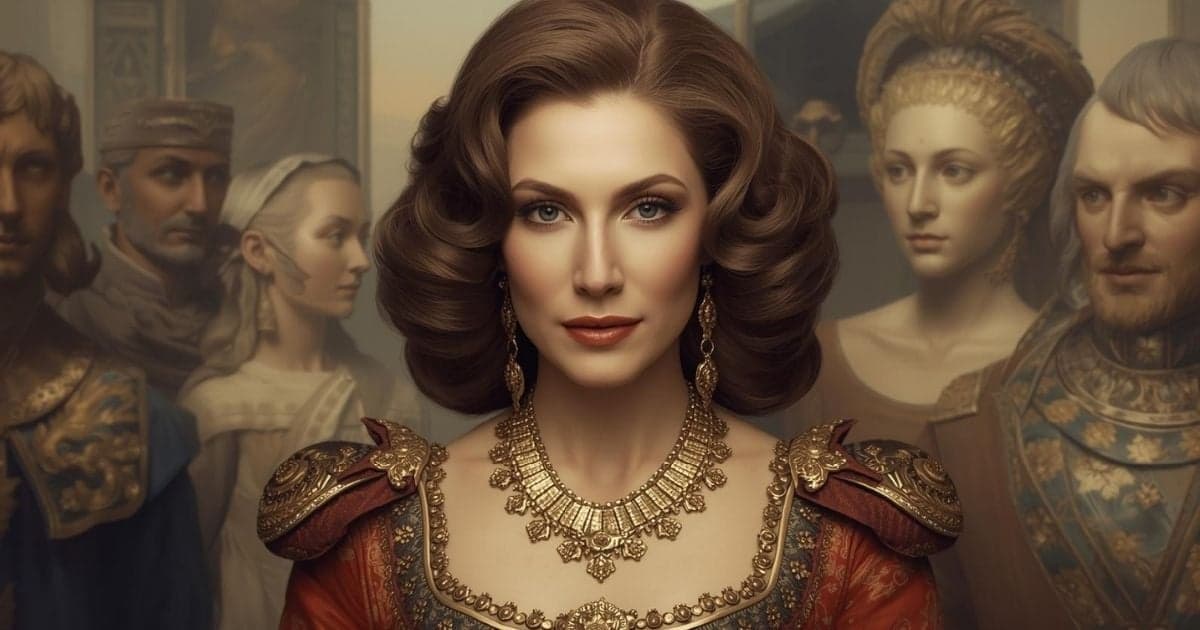
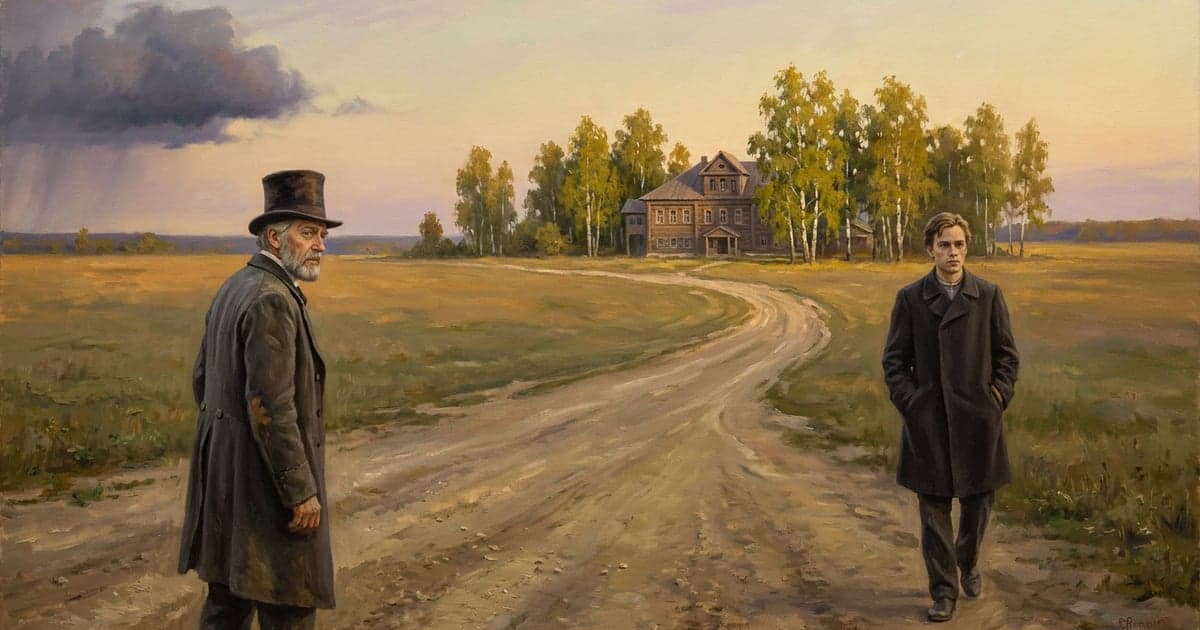
The travelers finally arrive at the Kirsanov family estate, where the real drama begins to unfold. Arkady returns home to his father Nikolai, but he's no longer the boy who left for university—he's trying to act more sophisticated, even changing how he addresses his father. The evening introduces us to Uncle Pavel, Nikolai's brother, who represents old-world aristocratic elegance with his perfectly manicured appearance and refined manners. The contrast between Pavel and Bazarov is immediate and sharp: Pavel embodies traditional Russian nobility while Bazarov represents the new generation of practical, no-nonsense thinkers. During supper, these tensions simmer beneath polite conversation. Bazarov barely speaks but observes everything, while Pavel makes subtle comments that hint at his disapproval of this 'long-haired fellow.' Arkady feels caught between his old life and his new university persona, struggling with how to behave around his family. After the meal, Bazarov and Arkady discuss their impressions privately. Bazarov dismisses Pavel as a relic living on past glories, noting his obsession with appearance and elegance. Meanwhile, we glimpse the household's other inhabitants: Nikolai lies awake excited about his son's return, Pavel sits brooding in his study, and a mysterious young woman named Thenichka tends to a sleeping child in a back room. The chapter establishes the key relationships and conflicts that will drive the story forward, showing how different generations and worldviews clash even within the same family.

Coming Up in Chapter 5

Morning brings new opportunities for conflict as Bazarov ventures outside, ready to explore his surroundings and likely stir up more trouble with his unconventional ways.

Share it with friends

Previous ChapterNext Chapter
GO ADS FREE — JOIN US
Original text
complete·1,588 words
T

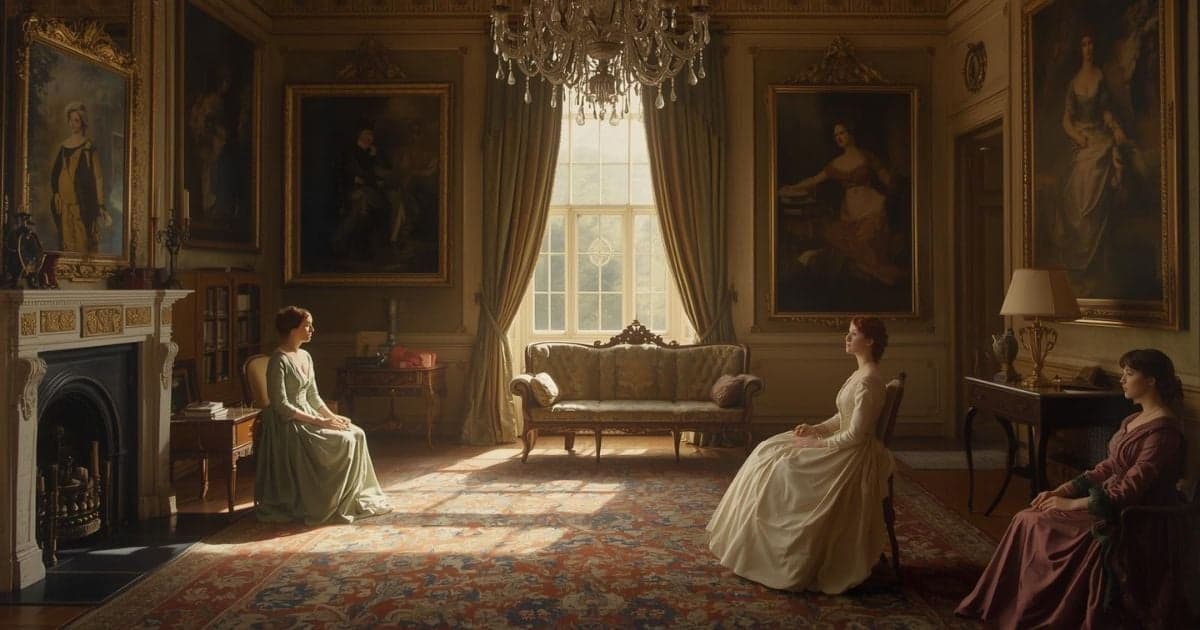
here issued on to the verandah to greet the arrivals no throng of household serfs--only a solitary girl of twelve. Presently, however, she was joined by a young fellow much resembling Peter, but dressed in a grey livery coat to which embossed, silver-gilt buttons were attached. This was Paul Kirsanov's valet. In silence he opened the door of the koliaska, and unhooked the apron of the tarantass; whereupon the three gentlemen alighted, passed through a dark, bare hall (the face of a young woman peered at them for a moment from behind a door), and entered a drawing-room upholstered in the latest fashion.

"So here we are at home again!" exclaimed Nikolai Petrovitch, taking off his cap, and shaking back his hair. "Let us have supper, and then for bed, bed!"

"Yes, something to eat would undoubtedly be welcome," remarked Bazarov as, yawning, he seated himself upon a sofa.

"Quite so; I will have supper served at once." Nikolai Petrovitch, for no apparent reason, tripped over his own feet. "And here comes Prokofitch," he added.

1 / 10

Master this chapter. Complete your experience

Purchase the complete book to access all chapters and support classic literature

Read Free on GutenbergBuy at Powell'sBuy on Amazon

As an Amazon Associate, we earn a small commission from qualifying purchases at no additional cost to you.

Available in paperback, hardcover, and e-book formats

GO ADS FREE — JOIN US

Why This Matters

Connect literature to life

Skill: Reading Social Performance

This chapter teaches how to distinguish between authentic behavior and social performance in yourself and others.

Practice This Today

This week, notice when you change your voice, posture, or word choices in different settings - ask yourself if you're performing or adapting authentically.

GO ADS FREE — JOIN US

Now let's explore the literary elements.

Key Quotes & Analysis

"So here we are at home again!"

— Nikolai Petrovitch

Context: When they first enter the house after the long journey

This simple exclamation reveals Nikolai's genuine joy and relief at having his son home. But the word 'again' hints that things might not be the same as before - home is the same, but the people have changed.

In Today's Words:

We made it! Everything's back to normal now!

"And here comes Prokofitch"

— Nikolai Petrovitch

Context: Introducing the old family servant who's approaching to greet Arkady

Nikolai's warm tone shows how the household operates like a family, with servants who are genuinely cared for. This represents the traditional Russian way of life that Bazarov will challenge.

In Today's Words:

Oh good, here's someone who's really excited to see you!

"So here is the young master, Prokofitch! He is home at last."

— Nikolai Petrovitch

Context: Presenting Arkady to the delighted old servant

The formal title 'young master' shows the household hierarchy, but Nikolai's pride and excitement come through clearly. He's showing off his son to someone who helped raise him.

In Today's Words:

Look who's finally back! Our boy made it home!

Thematic Threads

Identity

In This Chapter

Arkady struggles between his old self and new university persona, unsure how to be authentic with his family

Development

Introduced here as central conflict

In Your Life:

You might recognize this when you find yourself acting differently around different groups, never feeling fully yourself anywhere.

Class

In This Chapter

Pavel's aristocratic refinement clashes with Bazarov's deliberate rejection of social polish and manners

Development

Deepened from earlier hints into open tension

In Your Life:

You see this in code-switching between work and home, or feeling judged for your background in professional settings.

Generational Divide

In This Chapter

The older generation (Pavel, Nikolai) represents tradition while the younger (Arkady, Bazarov) challenges established ways

Development

Established as core structural conflict

In Your Life:

This appears when your values clash with your parents' expectations or when you struggle to understand your children's worldview.

Belonging

In This Chapter

Everyone seems slightly out of place - Arkady between worlds, Bazarov as outsider, Pavel clinging to faded relevance

Development

Introduced as underlying tension

In Your Life:

You feel this when starting a new job, moving to a different community, or when your life circumstances change dramatically.

Observation

In This Chapter

Bazarov watches and judges while saying little, Pavel makes subtle disapproving comments, everyone is sizing everyone else up

Development

Introduced here

In Your Life:

This happens in any new social situation where people are figuring out power dynamics and where they fit in the hierarchy.

GO ADS FREE — JOIN US

You now have the context. Time to form your own thoughts.

Discussion Questions

  1. 1

    How does Arkady's behavior change when he returns home, and what specific things does he do differently?

    analysis • surface
  2. 2

    Why do you think Arkady feels the need to perform a new version of himself instead of just being natural with his family?

    analysis • medium
  3. 3

    Where do you see people today performing an identity instead of living authentically - at work, on social media, or in relationships?

    application • medium
  4. 4

    If you were Arkady's friend, how would you help him feel comfortable being himself around both his university peers and his family?

    application • deep
  5. 5

    What does this chapter reveal about how we protect ourselves when we're unsure where we belong?

    reflection • deep

Critical Thinking Exercise

10 minutes

Identity Performance Audit

Think about three different environments where you spend time (work, family, friends, online, etc.). For each space, write down how you act, speak, and present yourself. Notice where you feel most natural versus where you feel like you're performing a role. Identify one small way you could be more authentic in the space where you perform the most.

Consider:

  • •Performance isn't always bad - sometimes we adapt appropriately to different contexts
  • •The key is recognizing when performance becomes exhausting or prevents real connection
  • •Authentic doesn't mean saying everything you think - it means your responses come from your true self rather than from fear

Journaling Prompt

Write about a time when you felt caught between two different versions of yourself. What were you afraid would happen if you stopped performing? Looking back, what do you wish you had done differently?

Coming Up Next...

Chapter 5: Morning Revelations and Uncomfortable Truths

Morning brings new opportunities for conflict as Bazarov ventures outside, ready to explore his surroundings and likely stir up more trouble with his unconventional ways.

Continue to Chapter 5
Previous
The Awkward Homecoming Conversation
Contents
Next
Morning Revelations and Uncomfortable Truths

Continue Exploring

Fathers and Sons Study GuideTeaching ResourcesEssential Life IndexBrowse by ThemeAll Books

You Might Also Like

Jane Eyre cover

Jane Eyre

Charlotte Brontë

Explores personal growth

Great Expectations cover

Great Expectations

Charles Dickens

Explores personal growth

The Strange Case of Dr Jekyll and Mr Hyde cover

The Strange Case of Dr Jekyll and Mr Hyde

Robert Louis Stevenson

Explores personal growth

Don Quixote cover

Don Quixote

Miguel de Cervantes Saavedra

Explores personal growth

Browse all 47+ books

Share This Chapter

Know someone who'd enjoy this? Spread the wisdom!

TwitterFacebookLinkedInEmail

Read ad-free with Prestige

Get rid of ads, unlock study guides and downloads, and support free access for everyone.

Subscribe to PrestigeCreate free account
Intelligence Amplifier
Intelligence Amplifier™Powering Wide Reads

Exploring human-AI collaboration through books, essays, and philosophical dialogues. Classic literature transformed into navigational maps for modern life.

2025 Books

→ The Amplified Human Spirit→ The Alarming Rise of Stupidity Amplified→ San Francisco: The AI Capital of the World
Visit intelligenceamplifier.org
hello@widereads.com

WideReads Originals

→ You Are Not Lost→ The Last Chapter First→ The Lit of Love→ Wealth and Poverty→ 10 Paradoxes in the Classics · coming soon
Arvintech
arvintechAmplify your Mind
Visit at arvintech.com

Navigate

  • Home
  • Library
  • Essential Life Index
  • How It Works
  • Subscribe
  • Account
  • About
  • Contact
  • Authors
  • Suggest a Book
  • Landings

Made For You

  • Students
  • Educators
  • Families
  • Readers
  • Literary Analysis
  • Finding Purpose
  • Letting Go
  • Recovering from a Breakup
  • Corruption
  • Gaslighting in the Classics

Newsletter

Weekly insights from the classics. Amplify Your Mind.

Legal

  • Privacy Policy
  • Terms of Service
  • Cookie Policy
  • Accessibility

Why Public Domain?

We focus on public domain classics because these timeless works belong to everyone. No paywalls, no restrictions—just wisdom that has stood the test of centuries, freely accessible to all readers.

Public domain books have shaped humanity's understanding of love, justice, ambition, and the human condition. By amplifying these works, we help preserve and share literature that truly belongs to the world.

A Pilgrimage

Powell's City of Books

Portland, Oregon

If you ever find yourself in Portland, walk to the corner of Burnside and 10th. The building takes up an entire city block. Inside is over a million books, new and used on the same shelf, organized by color-coded rooms with names like the Rose Room and the Pearl Room. You can lose an afternoon. You can lose a weekend. You will find a book you have been looking for your whole life, and three you did not know existed.

It is a pilgrimage. We cannot find a bookstore like it anywhere on earth. If you read the classics, and you ever get the chance, go. It belongs on every reader's bucket list.

Visit powells.com

We are not in any way affiliated with Powell's. We are just a very big fan.

© 2026 Wide Reads™. All Rights Reserved.

Intelligence Amplifier™ and Wide Reads™ are proprietary trademarks of Arvin Lioanag.

Copyright Protection: All original content, analyses, discussion questions, pedagogical frameworks, and methodology are protected by U.S. and international copyright law. Unauthorized reproduction, distribution, web scraping, or use for AI training is strictly prohibited. See our Copyright Notice for details.

Disclaimer: The information provided on this website is for general informational and educational purposes only and does not constitute professional, legal, financial, or technical advice. While we strive to ensure accuracy and relevance, we make no warranties regarding completeness, reliability, or suitability. Any reliance on such information is at your own risk. We are not liable for any losses or damages arising from use of this site. By using this site, you agree to these terms.