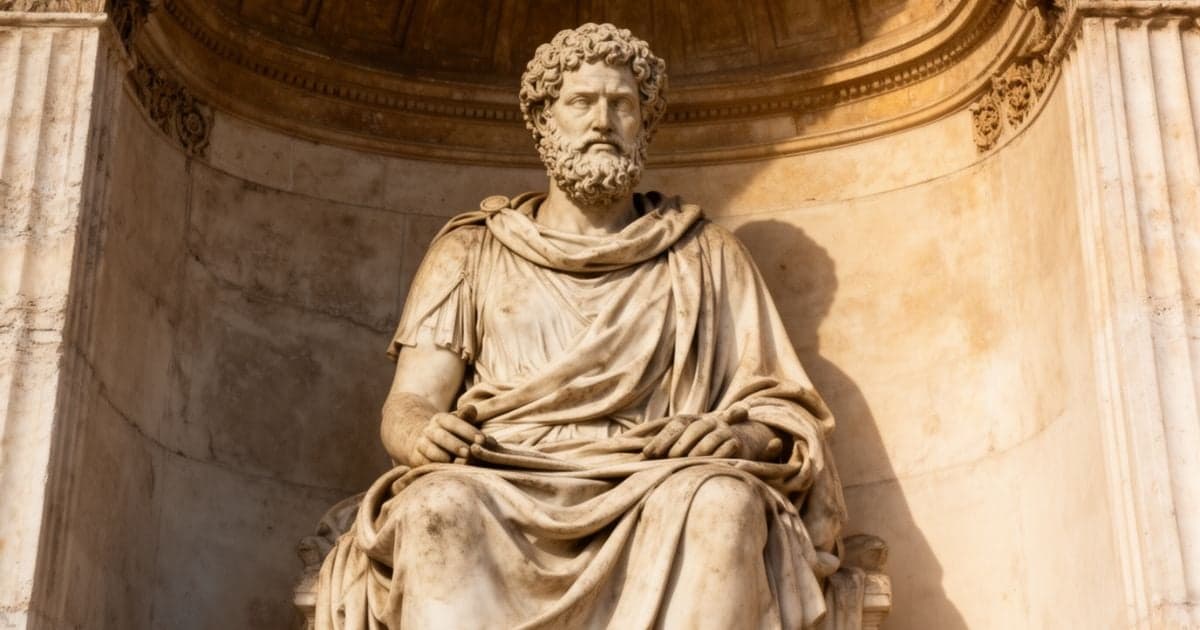
Chapter 21
Keep Death in Your Pocket
Let death and exile, and all other things which appear terrible, be daily
before your eyes, but death chiefly; and you will never entertain an
abject thought, nor too eagerly covet anything.
Master this chapter. Complete your experience
Purchase the complete book to access all chapters and support classic literature
Available in paperback, hardcover, and e-book formats
Now let's explore the literary elements.
Key Quotes & Analysis
"Let death and exile, and all other things which appear terrible, be daily before your eyes, but death chiefly"
Context: Opening daily practice: death first, then exile and other terrors
Daily is the method, not occasional crisis. Death chiefly anchors the list so smaller fears do not pretend they are the worst case.
In Today's Words:
Put death, exile, and every other thing that looks terrifying in front of you on purpose, every day, with death first. Epictetus is not asking for gloom. He is asking for a morning calibration so the worst cases are already visible before your mind starts bargaining as if permanence were guaranteed.
"and all other things which appear terrible, be daily before your eyes, but death chiefly"
Context: Middle emphasis on the full list of terrors held daily
Exile and other terrible things share the same daily ledger as death. Appear terrible marks what the mind exaggerates until you look steadily.
In Today's Words:
Exile, ruin, disgrace, and the rest of what looks unbearable from a distance belong on the same daily list as death. Epictetus says keep them before your eyes, not once at a crisis, but daily, with death chiefly, so smaller shocks stop posing as the end of the world.
"and you will never entertain an abject thought"
Context: Closing first payoff of the daily practice
Abject thought is self-shrinking misery: the inner voice that grovels and calls you worthless. Daily mortality breaks its spell.
In Today's Words:
Hold the terrible in view every day and you stop feeding abject thoughts, the ones that shrink you into worthlessness and panic. Epictetus ties self-contempt to forgetting how fragile life is. When death is already on the table, groveling inside your head loses its main fuel.
"nor too eagerly covet anything"
Context: Closing second payoff: release from desperate wanting
Too eagerly covet is clutching at externals as if they could save you. The daily ledger loosens that grip because nothing on the list is permanent.
In Today's Words:
You also stop clutching too eagerly at what you do not have and what you cannot keep. Coveting feeds on the fantasy that the right title, money, or approval would finally make you safe. Epictetus says daily death awareness drains that desperation before it owns your choices.
Thematic Threads
Daily Before Your Eyes
In This Chapter
Let death and exile and all things which appear terrible be daily before your eyes, but death chiefly
Development
Introduced here as the opening schedule for Stoic calibration
In Your Life:
You might pick one daily moment to name the worst case honestly instead of saving it for a crisis
Death Chiefly
In This Chapter
Death anchors the list before exile and other terrors
Development
Introduced here as the ordering that keeps smaller fears from posing as ultimate
In Your Life:
You might notice how often you treat a job loss or insult as the end of the world until death puts it in scale
No Abject Thought
In This Chapter
You will never entertain an abject thought
Development
Introduced here as the first payoff of the daily ledger
In Your Life:
You might catch the inner grovel that shrinks you into worthlessness and ask what permanence fantasy feeds it
No Eager Coveting
In This Chapter
Nor too eagerly covet anything
Development
Introduced here as the second payoff: release from desperate clutching
In Your Life:
You might notice when you treat another person's funding, title, or stability as proof you are behind
You now have the context. Time to form your own thoughts.
Discussion Questions
This is not a test. Five prompts guide you through the chapter, from how it opens to how it closes, so you notice context and rhythm rather than facts to memorize. Sit with each question in your own words. When you see "One way to read it," treat it as a starting point, not the only answer.
- 1
What does Epictetus mean by keeping death 'daily before your eyes'?
analysis • surfaceOne way to read it
He means making mortality a regular part of your thinking, not avoiding it. This daily awareness keeps you calibrated to what actually matters instead of getting lost in trivial worries.
- 2
Why does remembering mortality prevent 'abject thoughts' and excessive coveting?
analysis • mediumOne way to read it
When you know the worst possibilities upfront, your mind stops shrinking into panic over smaller problems. And you stop desperately clutching things that were always temporary anyway.
- 3
Where do you see people chasing things that seem less important when viewed against mortality?
application • mediumOne way to read it
Social media fame, perfect home decor, or workplace drama often consume enormous energy. Against the backdrop of death, these pursuits reveal themselves as less urgent than we make them.
- 4
How would daily awareness of death change your approach to a current conflict or goal?
application • deepOne way to read it
It might shift focus from winning an argument to preserving the relationship, or from perfect execution to simply starting. Mortality puts urgency on what connects rather than what impresses.
- 5
What does our tendency to avoid thinking about death reveal about human psychology?
reflection • deepOne way to read it
We often live as if permanence were possible, which makes us fragile when change comes. Epictetus suggests this avoidance actually creates the panic we're trying to prevent.
Critical Thinking Exercise
The Last Year Exercise
Imagine you knew with certainty that you had exactly one more year in your current life situation - same job, same relationships, same health, same responsibilities. Write down what you're currently worrying about or spending mental energy on. Then rewrite that list, crossing out what you'd stop caring about and highlighting what you'd finally take action on. Notice how this perspective shift changes your priorities.
Consider:
- •Don't focus on dramatic changes - look for small shifts in daily choices and energy allocation
- •Pay attention to which worries disappear completely versus which ones become more urgent
- •Consider what conversations you've been avoiding or what boundaries you've been afraid to set
Journaling Prompt
Write about a time when you gained sudden clarity about what mattered - maybe during illness, job loss, or another major life change. What did you stop caring about, and what became crystal clear as important? How can you access that clarity now without waiting for crisis?
Coming Up Next...
Chapter 22: Handling the Haters
But what happens when you start taking philosophy seriously and people around you think you've lost your mind? Epictetus prepares us for the social cost of thinking differently and how to handle the inevitable mockery...