Wide Reads
Literature MattersLife IndexEducators
Sign in
Where to Begin
Emma - Mrs. Elton's Patronizing Schemes

Jane Austen

Emma

Mrs. Elton's Patronizing Schemes

Home›Books›Emma›Chapter 33
Previous
33 of 55
Next

Summary

Mrs. Elton's Patronizing Schemes

Emma by Jane Austen

0:000:00
Listen to Next Chapter

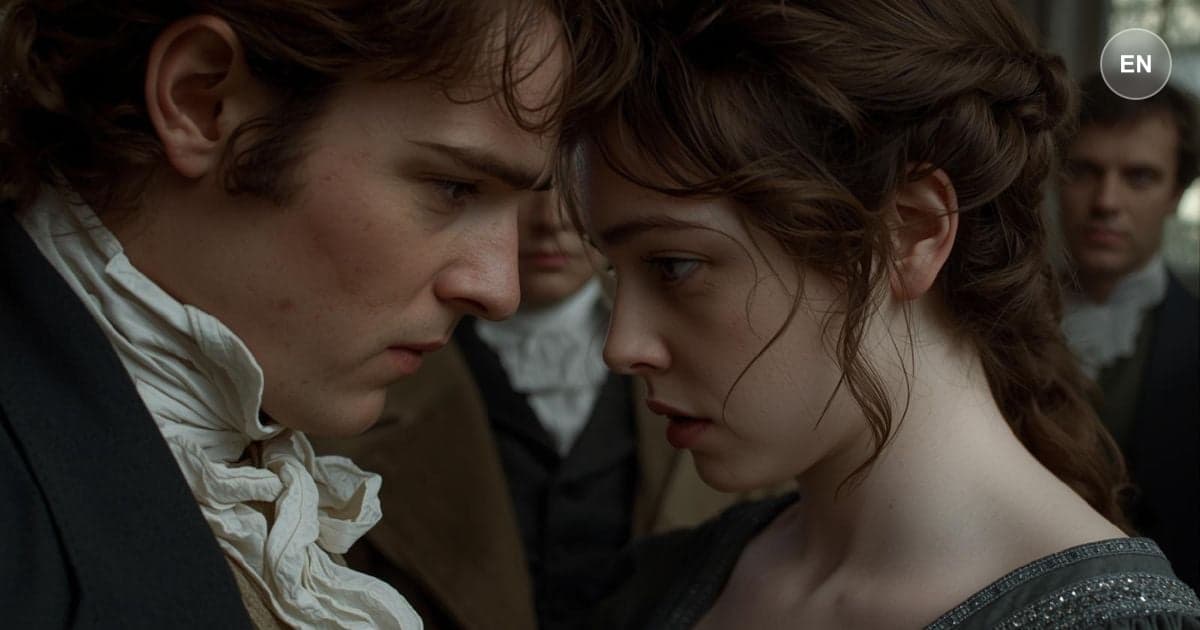
Emma's initial impression of Mrs. Elton proves accurate—she's self-important, presuming, and ill-bred, yet most of Highbury accepts her at face value. Mrs. Elton becomes obsessed with 'helping' Jane Fairfax, launching into grandiose plans to showcase Jane's talents and find her a position. Her patronizing enthusiasm reveals more about her own need to feel important than genuine concern for Jane. Emma is horrified by Mrs. Elton's condescending treatment, thinking 'Poor Jane Fairfax!' Meanwhile, the Eltons treat Harriet with cold contempt, clearly having discussed Emma's matchmaking attempts in private. The chapter explores a crucial conversation about Mr. Knightley's feelings for Jane Fairfax. When Emma hints that his admiration might be deeper than he realizes, Knightley firmly denies any romantic interest, explaining that while he respects Jane, he finds her too reserved for his taste—he prefers an 'open temper' in a woman. This moment reveals both characters' true feelings and establishes important boundaries. The chapter brilliantly illustrates how people use charity and kindness as social currency, and how isolation can make even unwanted attention seem preferable to loneliness. Mrs. Elton's 'knight-errantry' serves her own vanity while putting Jane in an uncomfortable position of dependence.

Coming Up in Chapter 34

As Mrs. Elton's schemes for Jane Fairfax continue to unfold, the social dynamics of Highbury grow more complex. New developments will test the relationships between all the major characters.

Share it with friends

Previous ChapterNext Chapter
GO ADS FREE — JOIN US
Original text
complete·2,906 words
E

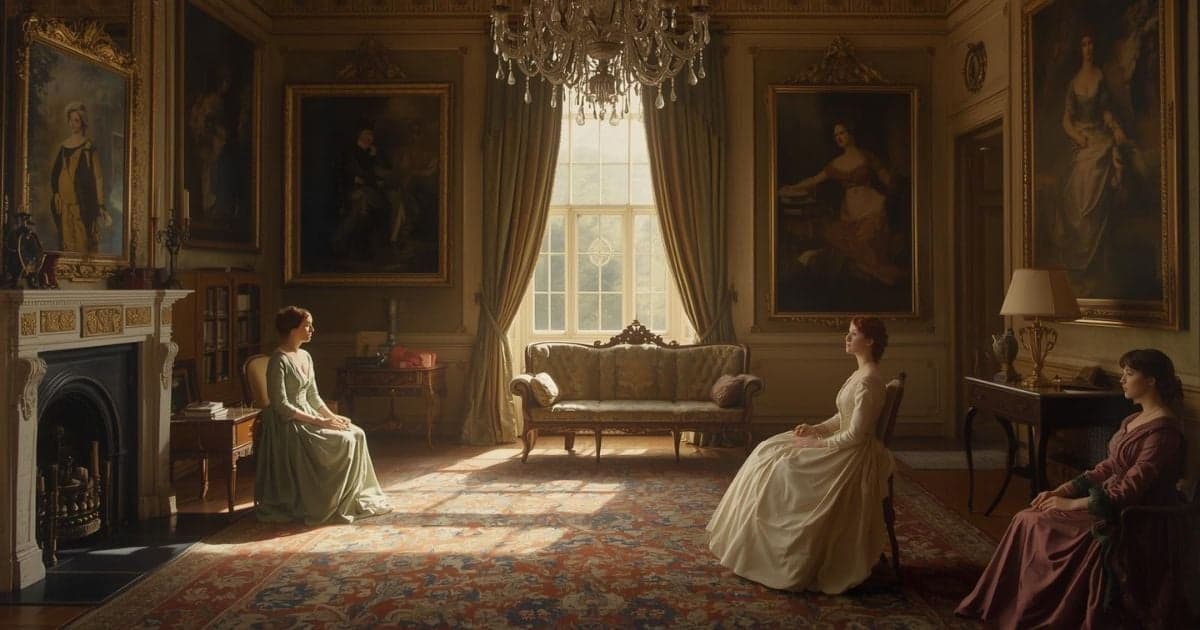
mma was not required, by any subsequent discovery, to retract her ill opinion of Mrs. Elton. Her observation had been pretty correct. Such as Mrs. Elton appeared to her on this second interview, such she appeared whenever they met again,—self-important, presuming, familiar, ignorant, and ill-bred. She had a little beauty and a little accomplishment, but so little judgment that she thought herself coming with superior knowledge of the world, to enliven and improve a country neighbourhood; and conceived Miss Hawkins to have held such a place in society as Mrs. Elton’s consequence only could surpass.

1 / 18

Master this chapter. Complete your experience

Purchase the complete book to access all chapters and support classic literature

Read Free on GutenbergBuy at Powell'sBuy on Amazon

As an Amazon Associate, we earn a small commission from qualifying purchases at no additional cost to you.

Available in paperback, hardcover, and e-book formats

GO ADS FREE — JOIN US

Why This Matters

Connect literature to life

Skill: Detecting Charity-Based Manipulation

This chapter teaches how to recognize when someone uses helping as a way to gain power and social status rather than genuinely supporting others.

Practice This Today

This week, notice when someone's offer to help seems more about making them look good than addressing your actual needs—trust your discomfort and maintain clear boundaries about what assistance you actually want.

GO ADS FREE — JOIN US

Now let's explore the literary elements.

Key Quotes & Analysis

"She had a little beauty and a little accomplishment, but so little judgment that she thought herself coming with superior knowledge of the world, to enliven and improve a country neighbourhood"

— Narrator

Context: Describing Mrs. Elton's inflated sense of her own importance

This perfectly captures how a little bit of knowledge can make someone dangerous. Mrs. Elton's small advantages have given her massive overconfidence.

In Today's Words:

She was decent-looking and had some skills, but was so clueless she thought she was doing everyone a favor just by showing up.

"Poor Jane Fairfax!"

— Emma

Context: Emma's reaction to Mrs. Elton's patronizing treatment of Jane

Shows Emma's growing empathy and ability to see how others suffer from social manipulation. It's a moment of genuine compassion.

In Today's Words:

That poor girl - she has no idea what she's gotten herself into.

"I have not the presumption to suppose that I might not be equally attracted by her if I had known her as you do"

— Mr. Knightley

Context: Explaining to Emma why he's not romantically interested in Jane

Knightley shows remarkable self-awareness about his preferences while being respectful of Jane. He knows what works for him without putting others down.

In Today's Words:

Look, she might be great, but we're just not compatible - I need someone more open.

Thematic Threads

Class

In This Chapter

Mrs. Elton uses her perceived social position to patronize Jane, treating her like a charity case despite Jane's superior education and refinement

Development

Evolved from earlier focus on Emma's class assumptions to showing how newcomers manipulate class dynamics

In Your Life:

You might encounter people who use their job title, income, or connections to talk down to you while pretending to help

Identity

In This Chapter

Mrs. Elton constructs her identity around being a benefactor and patron, needing others to be inferior so she can feel superior

Development

Builds on Emma's identity struggles by showing how some people build identity through manufactured superiority

In Your Life:

You might know someone who always needs to be the helper, the advice-giver, or the person others depend on

Boundaries

In This Chapter

Jane's discomfort with Mrs. Elton's unwanted attention shows how hard it is to reject help without seeming ungrateful

Development

Introduced here as a new theme about protecting autonomy while navigating social expectations

In Your Life:

You might struggle to say no to help that feels controlling because rejecting it seems rude or ungrateful

Authentic Relationships

In This Chapter

Knightley's honest assessment of his feelings for Jane contrasts with Mrs. Elton's performative concern

Development

Continues the theme of genuine versus artificial connections from earlier chapters

In Your Life:

You might notice the difference between people who are honest about their limitations and those who perform caring for an audience

Social Performance

In This Chapter

Mrs. Elton's public displays of generosity toward Jane are designed for the audience, not for Jane's benefit

Development

Builds on earlier themes about social theater by showing how charity can become performance

In Your Life:

You might see people who make a big show of their generosity on social media or in public settings

GO ADS FREE — JOIN US

You now have the context. Time to form your own thoughts.

Discussion Questions

  1. 1

    What specific behaviors does Mrs. Elton display toward Jane Fairfax that reveal her true motivations?

    analysis • surface
  2. 2

    Why does Mrs. Elton's 'charity' make Emma uncomfortable, even though helping Jane seems like a good thing?

    analysis • medium
  3. 3

    Where do you see this pattern of weaponized charity in your workplace, family, or community today?

    application • medium
  4. 4

    How would you handle someone who insists on 'helping' you in ways that feel controlling or condescending?

    application • deep
  5. 5

    What's the difference between genuine support and charity that comes with invisible strings attached?

    reflection • deep

Critical Thinking Exercise

10 minutes

Decode the Helper's True Agenda

Think of someone in your life who frequently offers help or advice. Write down what they say they're doing versus what they might actually be getting from the situation. Look for patterns: Do they help publicly or privately? Do they remind you of their help later? Do they seem more invested in being seen as helpful than in your actual needs?

Consider:

  • •Notice if their help creates dependency rather than independence
  • •Pay attention to whether they respect your boundaries when you decline help
  • •Consider if their assistance comes with expectations or strings attached

Journaling Prompt

Write about a time when someone's help felt controlling or uncomfortable. What red flags did you notice? How did you handle it, and what would you do differently now?

GO ADS FREE — JOIN US

Coming Up Next...

Chapter 34: Social Maneuvering and Hidden Letters

As Mrs. Elton's schemes for Jane Fairfax continue to unfold, the social dynamics of Highbury grow more complex. New developments will test the relationships between all the major characters.

Continue to Chapter 34
Previous
Meeting Mrs. Elton's True Colors
Contents
Next
Social Maneuvering and Hidden Letters

Continue Exploring

Emma Study GuideTeaching ResourcesEssential Life IndexBrowse by ThemeAll Books
Social Class & StatusLove & RelationshipsIdentity & Self-Discovery

You Might Also Like

Pride and Prejudice cover

Pride and Prejudice

Jane Austen

Also by Jane Austen

Jane Eyre cover

Jane Eyre

Charlotte Brontë

Explores personal growth

Great Expectations cover

Great Expectations

Charles Dickens

Explores personal growth

The Strange Case of Dr Jekyll and Mr Hyde cover

The Strange Case of Dr Jekyll and Mr Hyde

Robert Louis Stevenson

Explores personal growth

Browse all 47+ books
GO ADS FREE — JOIN US

Share This Chapter

Know someone who'd enjoy this? Spread the wisdom!

TwitterFacebookLinkedInEmail

Read ad-free with Prestige

Get rid of ads, unlock study guides and downloads, and support free access for everyone.

Subscribe to PrestigeCreate free account
Intelligence Amplifier
Intelligence Amplifier™Powering Wide Reads

Exploring human-AI collaboration through books, essays, and philosophical dialogues. Classic literature transformed into navigational maps for modern life.

2025 Books

→ The Amplified Human Spirit→ The Alarming Rise of Stupidity Amplified→ San Francisco: The AI Capital of the World
Visit intelligenceamplifier.org
hello@widereads.com

WideReads Originals

→ You Are Not Lost→ The Last Chapter First→ The Lit of Love→ Wealth and Poverty→ 10 Paradoxes in the Classics · coming soon
Arvintech
arvintechAmplify your Mind
Visit at arvintech.com

Navigate

  • Home
  • Library
  • Essential Life Index
  • How It Works
  • Subscribe
  • Account
  • About
  • Contact
  • Authors
  • Suggest a Book
  • Landings

Made For You

  • Students
  • Educators
  • Families
  • Readers
  • Literary Analysis
  • Finding Purpose
  • Letting Go
  • Recovering from a Breakup
  • Corruption
  • Gaslighting in the Classics

Newsletter

Weekly insights from the classics. Amplify Your Mind.

Legal

  • Privacy Policy
  • Terms of Service
  • Cookie Policy
  • Accessibility

Why Public Domain?

We focus on public domain classics because these timeless works belong to everyone. No paywalls, no restrictions—just wisdom that has stood the test of centuries, freely accessible to all readers.

Public domain books have shaped humanity's understanding of love, justice, ambition, and the human condition. By amplifying these works, we help preserve and share literature that truly belongs to the world.

A Pilgrimage

Powell's City of Books

Portland, Oregon

If you ever find yourself in Portland, walk to the corner of Burnside and 10th. The building takes up an entire city block. Inside is over a million books, new and used on the same shelf, organized by color-coded rooms with names like the Rose Room and the Pearl Room. You can lose an afternoon. You can lose a weekend. You will find a book you have been looking for your whole life, and three you did not know existed.

It is a pilgrimage. We cannot find a bookstore like it anywhere on earth. If you read the classics, and you ever get the chance, go. It belongs on every reader's bucket list.

Visit powells.com

We are not in any way affiliated with Powell's. We are just a very big fan.

© 2026 Wide Reads™. All Rights Reserved.

Intelligence Amplifier™ and Wide Reads™ are proprietary trademarks of Arvin Lioanag.

Copyright Protection: All original content, analyses, discussion questions, pedagogical frameworks, and methodology are protected by U.S. and international copyright law. Unauthorized reproduction, distribution, web scraping, or use for AI training is strictly prohibited. See our Copyright Notice for details.

Disclaimer: The information provided on this website is for general informational and educational purposes only and does not constitute professional, legal, financial, or technical advice. While we strive to ensure accuracy and relevance, we make no warranties regarding completeness, reliability, or suitability. Any reliance on such information is at your own risk. We are not liable for any losses or damages arising from use of this site. By using this site, you agree to these terms.