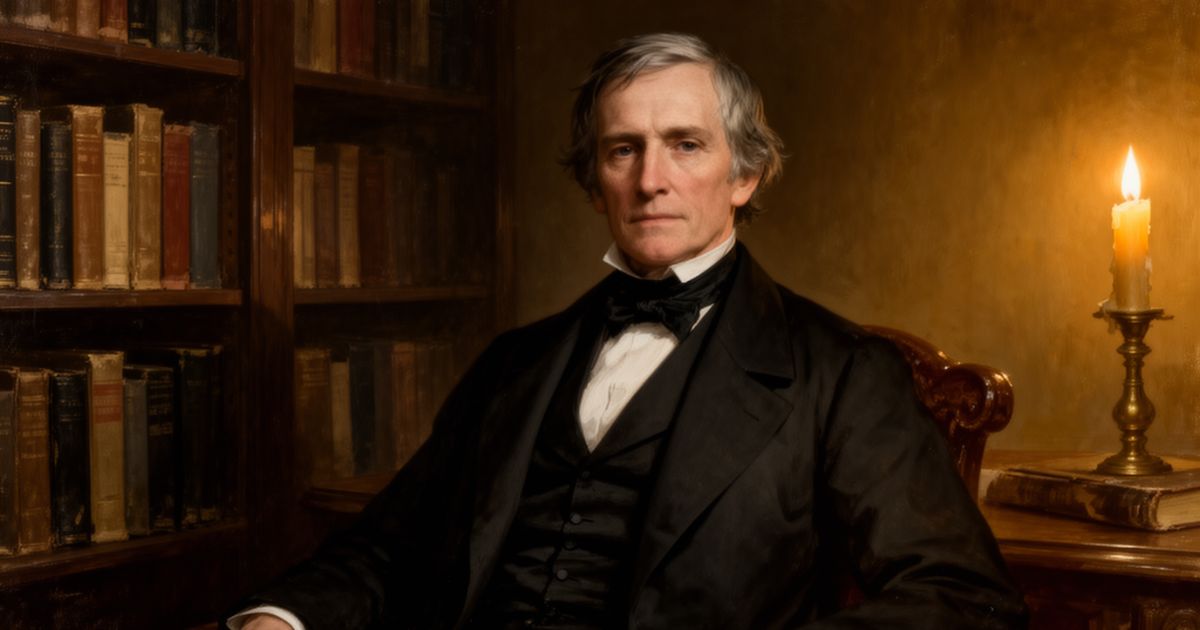
Chapter 04
The Sacred Art of True Friendship
expected and announced, and an uneasiness between pleasure and pain invades all the hearts of a household. His arrival almost brings fear to the good hearts that would welcome him. The house is dusted, all things fly into their places, the old coat is exchanged for the new, and they must get up a dinner if they can. Of a commended stranger, only the good report is told by others, only the good and new is heard by us. He stands to us for humanity. He is, what we wish. Having imagined and invested him, we ask how we should…
Public-domain chapter text, formatted for reading.
Master this chapter. Complete your experience
Purchase the complete book to access all chapters and support classic literature
Available in paperback, hardcover, and e-book formats
Now let's explore the literary elements.
Key Quotes & Analysis
"He is no stranger now. Vulgarity, ignorance, misapprehension, are old acquaintances."
Context: When the idealized newcomer's flaws end the spell of conversation
Emerson marks the collapse of projection. Intimacy arrives, and with it the ordinary defects we refused to see while the stranger stood for humanity.
In Today's Words:
You built them up from gossip and first impressions, then one honest conversation showed who they actually are. After that you can still invite them to dinner, but the magic, the real talk, and the throbbing of the heart are not coming back to you again.
"A friend is a person with whom I may be sincere. Before him, I may think aloud."
Context: Naming Truth as the first element of friendship
Emerson defines friendship by speech without costume. Most society is performance; a friend is the rare person before whom thought needs no disguise.
In Today's Words:
A real friend is not someone who always agrees with you on every topic in every room. It is someone you can think out loud with, without rehearsing, flattering, or hiding the thought you are actually trying to figure out together there honestly and plainly.
"Better be a nettle in the side of your friend, than his echo."
Context: Arguing that friendship needs honest resistance, not compliant mush
Emerson rejects flattering agreement. The friend who only mirrors you removes the friction that makes the relation real and useful.
In Today's Words:
If your friend only repeats your opinions back to you, you do not have friendship, you have applause. Better the person who pricks you when you are wrong than the one who nods along to keep things comfortable and easy for everyone in the group.
"The only reward of virtue, is virtue; the only way to have a friend is to be one."
Context: Closing counsel on patience, self-possession, and mutual worth
Emerson ends by reversing the search outward. Friendship is not captured by pursuit or proximity; it reflects the worth you already embody.
In Today's Words:
You cannot contract friendship like a transaction or force it by hanging around the right people forever. Become the kind of person who tells truth with tenderness, and the friend you want is the person you are learning to be each day already inside yourself.
Thematic Threads
Truth vs. Performance
In This Chapter
Emerson argues real friendship requires absolute honesty, but most relationships are built on mutual performance and social pleasantries
Development
Builds on earlier themes of authenticity—now applied specifically to relationships rather than self-knowledge
In Your Life:
Notice when you're performing 'niceness' instead of offering genuine truth with kindness.
Idealization and Disappointment
In This Chapter
We project perfection onto strangers, then feel betrayed when they reveal human flaws, cycling through relationship disappointment
Development
Introduced here
In Your Life:
Catch yourself when you're either putting someone on a pedestal or writing them off for being imperfect.
Emotional Independence
In This Chapter
True friendship exists between two complete people who choose connection rather than need it for survival or validation
Development
Extends the self-reliance theme into relationships—you must be whole to truly connect
In Your Life:
Ask yourself if you're seeking relationships to fill gaps in yourself or to share your wholeness.
Distance and Respect
In This Chapter
Emerson advocates for 'reverent distance' in friendship—caring without possessing, supporting without controlling
Development
Introduced here
In Your Life:
Practice loving people without trying to change them or make them meet your emotional needs.
Quality over Quantity
In This Chapter
Better to have one authentic connection than many shallow ones built on mutual deception and comfort-seeking
Development
Introduced here
In Your Life:
Consider whether your relationships are built on truth-telling and genuine care or just shared activities and pleasant conversation.
You now have the context. Time to form your own thoughts.
Discussion Questions
This is not a test. Five prompts guide you through the chapter, from how it opens to how it closes, so you notice context and rhythm rather than facts to memorize. Sit with each question in your own words. When you see "One way to read it," treat it as a starting point, not the only answer.
- 1
Why does Emerson say the commended stranger makes us talk better than we are wont, and what changes once he is no stranger?
analysis • surfaceOne way to read it
A praised newcomer stands for the humanity we wish we were, so we rise to meet the ideal. Once familiarity removes the halo, ordinary friction returns and we speak more plainly, for better or worse.
- 2
What does Emerson mean when he says friendships hurry to short conclusions because we make them a texture of wine and dreams?
analysis • mediumOne way to read it
We romanticize new bonds with warmth and fantasy instead of testing them through time and truth. Friendships built on intoxication and projection collapse quickly when reality arrives.
- 3
Emerson names Truth and Tenderness as the two elements of friendship. Why does he insist on both sincerity and practical loyalty rather than either alone?
application • mediumOne way to read it
Truth without tenderness becomes cruelty; tenderness without truth becomes flattery. Real friendship requires honest speech and steady care, not pleasant performance or brutal honesty alone.
- 4
Why does Emerson say better be a nettle in the side of your friend than his echo, and when have you seen flattery masquerading as friendship?
application • deepOne way to read it
An echo only repeats what pleases; a nettle pricks toward truth. Flattery looks like loyalty but protects the friend's faults and your own comfort. Think of yes-men at work or friends who never challenge a destructive habit.
- 5
The essay closes by saying the only way to have a friend is to be one. What would change in your relationships if you stopped searching outward and started there?
reflection • deepOne way to read it
You would invest in candor, steadiness, and service instead of auditioning people for the role of ideal companion. Friendship would become something you practice rather than something you hunt for in the right person.
Critical Thinking Exercise
Audit Your Relationship Patterns
List three important relationships in your life. For each one, honestly assess: Can you tell this person hard truths? Do they tell you hard truths? What topics do you avoid discussing? What do you complain about to others that you haven't addressed directly with them? This audit reveals where you're choosing comfort over authentic connection.
Consider:
- •Notice which relationships feel 'safe' because nothing real is ever discussed
- •Pay attention to relationships where you feel like you're performing rather than being yourself
- •Consider whether your 'difficult' people might actually be the most honest ones in your life
Journaling Prompt
Write about a time when someone told you a hard truth that ultimately helped you grow. What made that person trustworthy enough to deliver difficult feedback? How can you become that kind of friend to others?
Coming Up Next...
Chapter 5: The Nature of True Heroism
From the intimate bonds of friendship, Emerson turns to examine heroism and the noble character that commands respect in society. He explores what makes someone truly heroic and how ordinary people can cultivate the courage and dignity that others instinctively recognize and honor..