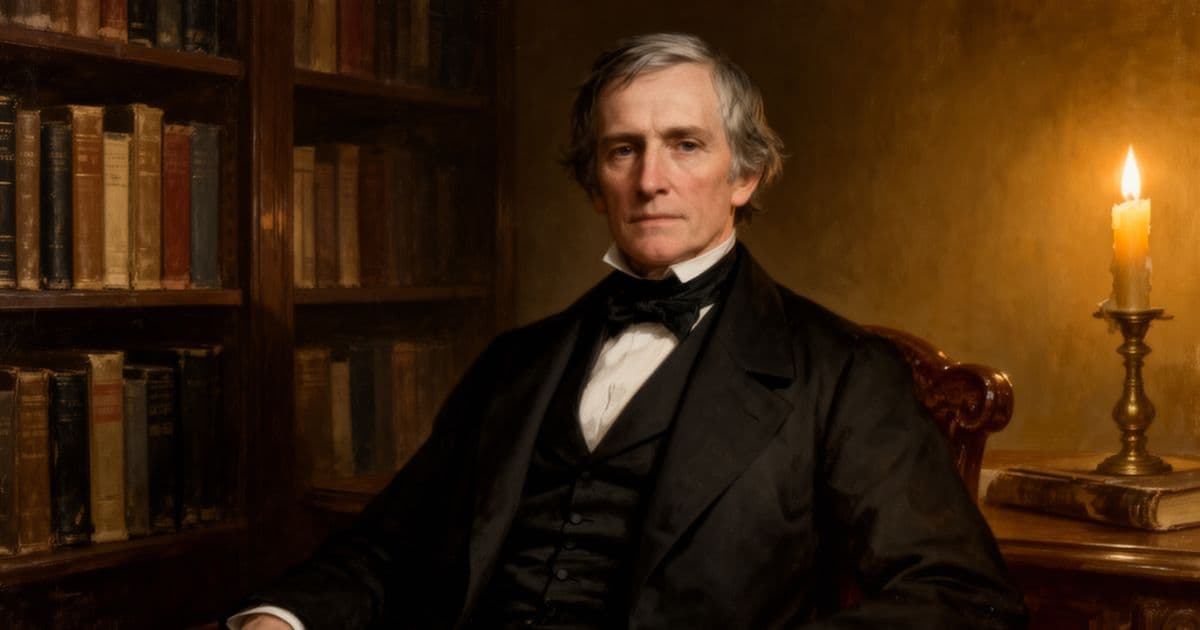
Emerson picks up where the prior chapter left off: the voice of the mind is familiar, yet we worship Moses, Plato, and Milton because they spoke their own thought instead of repeating tradition. We dismiss the gleam that flashes within us precisely because it is ours, then meet it again in genius with alienated majesty. Tomorrow a stranger may say with masterly good sense what we already felt, and we take our own opinion from another in shame. Envy is ignorance and imitation is suicide. No nourishing corn reaches you except through your own plot of ground. Trust thyself, Emerson says: every heart vibrates to that iron string. Accept the place providence found for you and advance on chaos as guides, not invalids in a protected corner.
Children and youth still show the pattern we lose. Infancy conforms to nobody; all conform to it. Boys in the parlor judge passing facts with swift independence, never troubling themselves about consequences. Adults clap themselves into jail by consciousness, watched by hundreds after one act with éclat. Society everywhere is in conspiracy against the manhood of its members. It is a joint-stock company in which shareholders surrender liberty and culture for bread. The virtue in most request is conformity; self-reliance is its aversion. Whoso would be a man must be a nonconformist. Nothing is at last sacred but the integrity of your own mind. When a valued adviser warned that impulses might come from below, Emerson answered that if he were the Devil's child he would live from the Devil. No law is sacred but that of his nature. He would write Whim on the lintels and refuse to varnish hard ambition with borrowed philanthropy.
The cost of conformity is force withdrawn from your proper life. If you maintain a dead church, vote with a dead party, and spread your table like base housekeepers, Emerson cannot detect the precise man you are. Conformity makes men false in all particulars. For nonconformity the world whips you with displeasure, yet sour faces often have no deep cause. The other terror is consistency: we drag the corpse of memory lest we contradict something we said in public. A foolish consistency is the hobgoblin of little minds. Speak what you think today in hard words and tomorrow again, though it contradict everything you said today. Pythagoras, Socrates, Jesus, and every pure spirit were misunderstood. To be great is to be misunderstood. Character teaches above our wills; the voyage of the best ship is a zigzag that straightens at sufficient distance. Do your work, and I shall know you.
Emerson then asks who is the Trustee behind self-trust. Intuition is primary wisdom; all later teachings are tuitions. In calm hours the sense of being rises in the soul, one with things and time. Perception is fatal, not whimsical: what you see truly, others will see after you. The rose under his window makes no reference to former roses; it exists with God today. Man postpones and remembers instead of living in the present. An institution is the lengthened shadow of one man: Luther, Fox, Clarkson. Let a man know his worth and keep things under his feet. The picture waits for his verdict; he is not commanded by it. When private men act with original views, the luster passes from kings to gentlemen. History resolves itself into the biography of a few stout and earnest persons.
But we are a mob that goes abroad to beg a cup of water from other men's urns. We must go alone. Isolation must be spiritual elevation, not mechanical withdrawal. Keep thy state when friend, client, child, and charity knock at once. Henceforward I am the truth's, Emerson declares: I will not hide my tastes or aversions. The populace may call this antinomianism, but consciousness has its own confessionals. Society has become timorous; our housekeeping, arts, marriages, and religion were chosen for us. If our young men miscarry once, they lose all heart, while the sturdy lad from New Hampshire tries all professions and falls on his feet. A sturdy lad is worth a hundred city dolls who study a profession but postpone their lives.
Emerson closes with a numbered revolution in the offices of life. Prayer that craves a particular commodity is meanness; the farmer weeding his field prays truly. Regret and cheap sympathy are diseases of the will. Traveling is a fool's paradise: my giant goes with me wherever I go. Insist on yourself; never imitate. Society never advances; for everything given something is taken. Reliance on property is want of self-reliance. Deal with cause and effect and you chain the wheel of chance. Nothing can bring you peace but yourself. Nothing can bring you peace but the triumph of principles. The essay then turns toward Friendship, where kindness runs deeper than speech and love bathes the human family like fine ether.