Wide Reads
Literature MattersLife IndexEducators
Sign in
Where to Begin
Don Quixote - The Knight of Mirrors Appears

Miguel de Cervantes Saavedra

Don Quixote

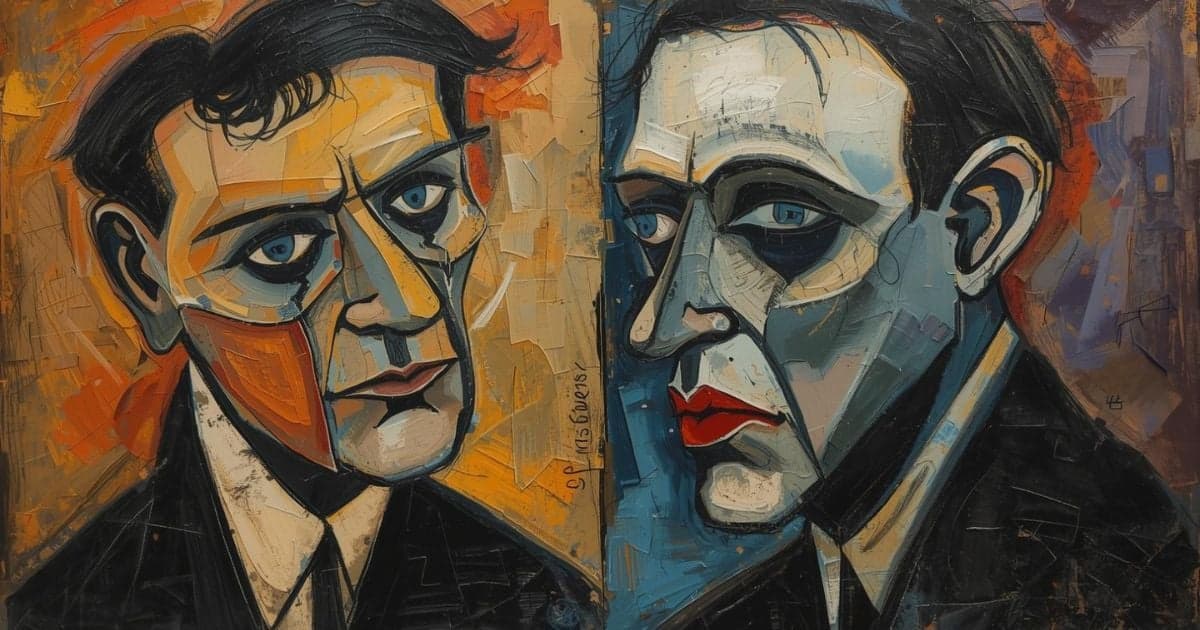
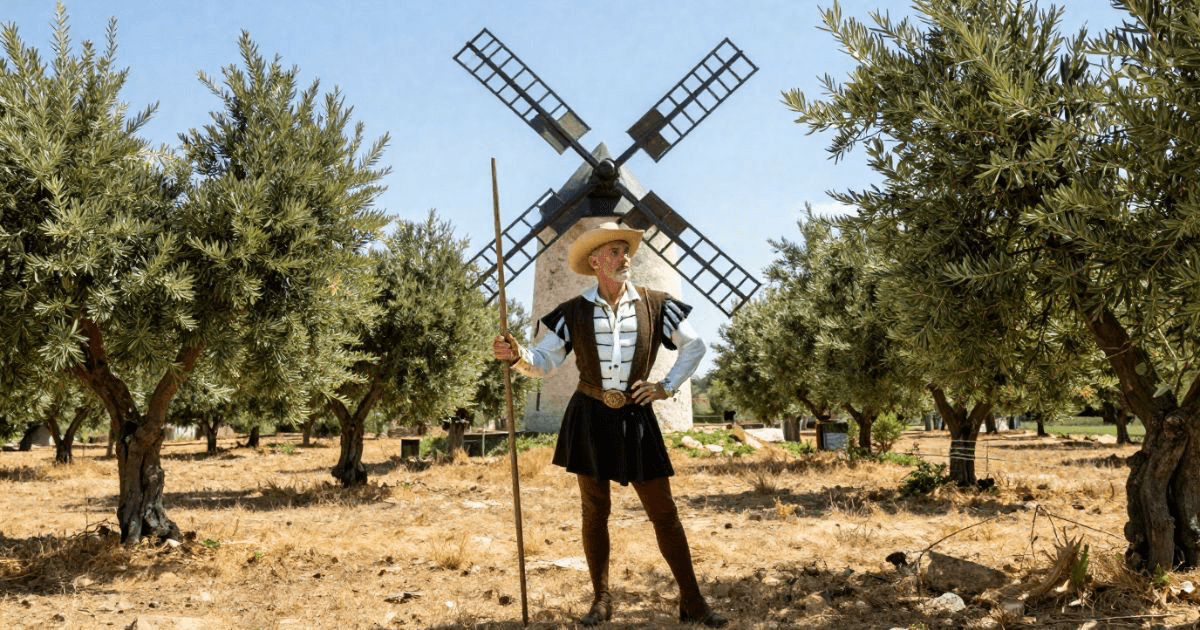
The Knight of Mirrors Appears

Home›Books›Don Quixote›Chapter 84
Previous
84 of 126
Next

Summary

The Knight of Mirrors Appears

Don Quixote by Miguel de Cervantes Saavedra

0:000:00
Listen to Next Chapter

Don Quixote and Sancho share a philosophical evening meal, discussing how theater mirrors life - just as actors shed their costumes after a play, death strips away all earthly distinctions and makes everyone equal. Sancho surprises his master with increasingly sophisticated observations, crediting their conversations for cultivating his previously 'barren' mind. Their peaceful night is interrupted by the arrival of a melancholy knight in armor, who dismounts and begins singing a sorrowful love song to his cruel lady, Casildea de Vandalia. This Knight of the Grove claims to have defeated all knights from various regions, forcing them to acknowledge his lady's supreme beauty. Don Quixote takes offense at this boast, since he's from La Mancha and has never made such a confession. The two knights approach each other courteously, bonding over their shared misfortunes in love. Meanwhile, their squires decide to have their own separate conversation, leaving their masters to discuss their romantic woes. The chapter explores themes of equality beneath surface differences, the power of mentorship to develop untapped potential, and how shared struggles can create unexpected connections. Sancho's growth demonstrates that wisdom isn't innate but cultivated through meaningful dialogue and experience.

Coming Up in Chapter 85

While the knights share tales of their romantic suffering, the squires withdraw for their own revealing conversation. What secrets will these practical men share about their masters and their own lives?

Share it with friends

Previous ChapterNext Chapter
GO ADS FREE — JOIN US
Original text
complete·5,574 words
O

F THE REPLY DON QUIXOTE GAVE HIS CENSURER, WITH OTHER INCIDENTS, GRAVE AND DROLL Don Quixote, then, having risen to his feet, trembling from head to foot like a man dosed with mercury, said in a hurried, agitated voice, “The place I am in, the presence in which I stand, and the respect I have and always have had for the profession to which your worship belongs, hold and bind the hands of my just indignation; and as well for these reasons as because I know, as everyone knows, that a gownsman’s weapon is the same as a woman’s, the tongue, I will with mine engage in equal combat with your worship, from whom one might have expected good advice instead of foul abuse. Pious, well-meant reproof requires a different demeanour and arguments of another sort; at any rate, to have reproved me in public, and so roughly, exceeds the bounds of proper reproof, for that comes better with gentleness than with rudeness; and it is not seemly to call the sinner roundly blockhead and booby, without knowing anything of the sin that is reproved. Come, tell me, for which of the stupidities you have observed in me do you condemn and abuse me, and bid me go home and look after my house and wife and children, without knowing whether I have any? Is nothing more needed than to get a footing, by hook or by crook, in other people’s houses to rule over the masters (and that, perhaps, after having been brought up in all the straitness of some seminary, and without having ever seen more of the world than may lie within twenty or thirty leagues round), to fit one to lay down the law rashly for chivalry, and pass judgment on knights-errant? Is it, haply, an idle occupation, or is the time ill-spent that is spent in roaming the world in quest, not of its enjoyments, but of those arduous toils whereby the good mount upwards to the abodes of everlasting life? If gentlemen, great lords, nobles, men of high birth, were to rate me as a fool I should take it as an irreparable insult; but I care not a farthing if clerks who have never entered upon or trod the paths of chivalry should think me foolish. Knight I am, and knight I will die, if such be the pleasure of the Most High. Some take the broad road of overweening ambition; others that of mean and servile flattery; others that of deceitful hypocrisy, and some that of true religion; but I, led by my star, follow the narrow path of knight-errantry, and in pursuit of that calling I despise wealth, but not honour. I have redressed injuries, righted wrongs, punished insolences, vanquished giants, and crushed monsters; I am in love, for no other reason than that it is incumbent on knights-errant to be so; but though I am, I am no carnal-minded lover, but one of the chaste, platonic sort. My intentions are always directed to worthy ends, to do good to all and evil to none; and if he who means this, does this, and makes this his practice deserves to be called a fool, it is for your highnesses to say, O most excellent duke and duchess.”

1 / 26

Master this chapter. Complete your experience

Purchase the complete book to access all chapters and support classic literature

Read Free on GutenbergBuy at Powell'sBuy on Amazon

As an Amazon Associate, we earn a small commission from qualifying purchases at no additional cost to you.

Available in paperback, hardcover, and e-book formats

GO ADS FREE — JOIN US

Why This Matters

Connect literature to life

Skill: Recognizing Intellectual Respect

This chapter teaches how to identify when someone takes your mind seriously versus when they're just being polite or dismissive.

Practice This Today

This week, notice the difference between someone who asks follow-up questions about your ideas versus someone who just waits for their turn to talk.

GO ADS FREE — JOIN US

Now let's explore the literary elements.

Key Quotes & Analysis

"A sparrow in the hand is better than a vulture on the wing."

— Sancho Panza

Context: Sancho reflects on choosing practical rewards over grand but uncertain promises.

This twist on the familiar proverb shows Sancho's growing wisdom and practical nature. He's learned to value what's real and achievable over spectacular fantasies.

In Today's Words:

I'll take what I can actually get over big promises that might not happen.

"The sceptres and crowns of those play-actor emperors were never yet pure gold, but only brass foil or tin."

— Sancho Panza

Context: Sancho observes that theatrical props aren't real, just as social distinctions are often artificial.

Sancho demonstrates sophisticated thinking about appearance versus reality. He's learning to see through surface glamour to underlying truth.

In Today's Words:

All that glitters isn't gold - most impressive-looking stuff is just cheap imitation.

"They are all instruments of great good to the State, placing before us at every step a mirror in which we may see vividly displayed what the actions of human life are like."

— Don Quixote

Context: Don Quixote defends the value of theater and actors to society.

Don Quixote reveals his understanding that fiction serves a purpose by reflecting real life back to us. Art helps us understand ourselves and society better.

In Today's Words:

Movies and TV shows matter because they show us what real life is actually like.

Thematic Threads

Class

In This Chapter

Sancho transcends his peasant origins through intellectual engagement, proving that wisdom isn't determined by birth or formal education

Development

Evolved from early comic relief to demonstration that class boundaries are more fluid than society pretends

In Your Life:

You might notice how differently you think and speak depending on whether someone treats you as smart or simple

Identity

In This Chapter

Both the Knight of the Grove and Don Quixote define themselves through their devotion to their ladies, showing how love shapes self-concept

Development

Continued exploration of how people construct identity around their passions and commitments

In Your Life:

You might recognize how your deepest commitments—to family, work, or values—become central to who you think you are

Personal Growth

In This Chapter

Sancho's transformation from 'barren' mind to philosophical insight demonstrates that intellectual capacity can be cultivated

Development

Building on earlier hints that Sancho possesses untapped wisdom, now showing the mechanism of development

In Your Life:

You might see how your own thinking has deepened through conversations with people who challenge and respect you

Human Relationships

In This Chapter

Two knights bond instantly over shared romantic suffering, while their squires form their own connection, showing how common struggles create understanding

Development

Continued theme that authentic connection transcends social boundaries when people recognize shared humanity

In Your Life:

You might notice how quickly you connect with strangers who've faced similar challenges—divorce, illness, job loss, or difficult family situations

Social Expectations

In This Chapter

The theater metaphor reveals how social roles are temporary costumes that death ultimately strips away, making all people equal

Development

Deepened from earlier questioning of social hierarchies to philosophical recognition of fundamental human equality

In Your Life:

You might consider how the roles you play—employee, parent, patient—are temporary masks over your essential humanity

GO ADS FREE — JOIN US

You now have the context. Time to form your own thoughts.

Discussion Questions

  1. 1

    What transformation do we see in Sancho during his evening conversation with Don Quixote, and what does he credit for this change?

    analysis • surface
  2. 2

    Why does Sancho's mind develop so dramatically under Don Quixote's influence, when he had seemed simple before their travels began?

    analysis • medium
  3. 3

    Where have you seen someone bloom intellectually when treated with respect, or shrink when constantly corrected or dismissed?

    application • medium
  4. 4

    How would you apply Don Quixote's approach to developing someone's potential in your own relationships - at work, home, or in your community?

    application • deep
  5. 5

    What does this chapter reveal about the difference between intelligence and education, and how people's minds can be cultivated through genuine dialogue?

    reflection • deep

Critical Thinking Exercise

10 minutes

Map Your Growth Relationships

Draw two columns on paper. In the left column, list people who take your thoughts seriously - who ask your opinion, build on your ideas, or engage with you as an intellectual equal. In the right column, list people whose potential you could develop by treating them this way. For each person, write one specific way you could either learn from them or help them grow.

Consider:

  • •Notice who makes you feel smarter versus who makes you feel dismissed
  • •Consider how your own communication style affects others' willingness to share ideas
  • •Think about missed opportunities where you could have taken someone more seriously

Journaling Prompt

Write about a time when someone's belief in your intelligence changed how you saw yourself. What did they do differently that made you rise to their expectations?

GO ADS FREE — JOIN US

Coming Up Next...

Chapter 85: Two Squires Share Wine and Wisdom

While the knights share tales of their romantic suffering, the squires withdraw for their own revealing conversation. What secrets will these practical men share about their masters and their own lives?

Continue to Chapter 85
Previous
The Cart of Death Performance
Contents
Next
Two Squires Share Wine and Wisdom

Continue Exploring

Don Quixote Study GuideTeaching ResourcesEssential Life IndexBrowse by ThemeAll Books
Identity & Self-DiscoveryMoral Dilemmas & EthicsLove & Relationships

You Might Also Like

Jane Eyre cover

Jane Eyre

Charlotte Brontë

Explores identity & self

Great Expectations cover

Great Expectations

Charles Dickens

Explores identity & self

The Strange Case of Dr Jekyll and Mr Hyde cover

The Strange Case of Dr Jekyll and Mr Hyde

Robert Louis Stevenson

Explores identity & self

The Odyssey cover

The Odyssey

Homer

Explores identity & self

Browse all 47+ books
GO ADS FREE — JOIN US

Share This Chapter

Know someone who'd enjoy this? Spread the wisdom!

TwitterFacebookLinkedInEmail

Read ad-free with Prestige

Get rid of ads, unlock study guides and downloads, and support free access for everyone.

Subscribe to PrestigeCreate free account
Intelligence Amplifier
Intelligence Amplifier™Powering Wide Reads

Exploring human-AI collaboration through books, essays, and philosophical dialogues. Classic literature transformed into navigational maps for modern life.

2025 Books

→ The Amplified Human Spirit→ The Alarming Rise of Stupidity Amplified→ San Francisco: The AI Capital of the World
Visit intelligenceamplifier.org
hello@widereads.com

WideReads Originals

→ You Are Not Lost→ The Last Chapter First→ The Lit of Love→ Wealth and Poverty→ 10 Paradoxes in the Classics · coming soon
Arvintech
arvintechAmplify your Mind
Visit at arvintech.com

Navigate

  • Home
  • Library
  • Essential Life Index
  • How It Works
  • Subscribe
  • Account
  • About
  • Contact
  • Authors
  • Suggest a Book
  • Landings

Made For You

  • Students
  • Educators
  • Families
  • Readers
  • Literary Analysis
  • Finding Purpose
  • Letting Go
  • Recovering from a Breakup
  • Corruption
  • Gaslighting in the Classics

Newsletter

Weekly insights from the classics. Amplify Your Mind.

Legal

  • Privacy Policy
  • Terms of Service
  • Cookie Policy
  • Accessibility

Why Public Domain?

We focus on public domain classics because these timeless works belong to everyone. No paywalls, no restrictions—just wisdom that has stood the test of centuries, freely accessible to all readers.

Public domain books have shaped humanity's understanding of love, justice, ambition, and the human condition. By amplifying these works, we help preserve and share literature that truly belongs to the world.

A Pilgrimage

Powell's City of Books

Portland, Oregon

If you ever find yourself in Portland, walk to the corner of Burnside and 10th. The building takes up an entire city block. Inside is over a million books, new and used on the same shelf, organized by color-coded rooms with names like the Rose Room and the Pearl Room. You can lose an afternoon. You can lose a weekend. You will find a book you have been looking for your whole life, and three you did not know existed.

It is a pilgrimage. We cannot find a bookstore like it anywhere on earth. If you read the classics, and you ever get the chance, go. It belongs on every reader's bucket list.

Visit powells.com

We are not in any way affiliated with Powell's. We are just a very big fan.

© 2026 Wide Reads™. All Rights Reserved.

Intelligence Amplifier™ and Wide Reads™ are proprietary trademarks of Arvin Lioanag.

Copyright Protection: All original content, analyses, discussion questions, pedagogical frameworks, and methodology are protected by U.S. and international copyright law. Unauthorized reproduction, distribution, web scraping, or use for AI training is strictly prohibited. See our Copyright Notice for details.

Disclaimer: The information provided on this website is for general informational and educational purposes only and does not constitute professional, legal, financial, or technical advice. While we strive to ensure accuracy and relevance, we make no warranties regarding completeness, reliability, or suitability. Any reliance on such information is at your own risk. We are not liable for any losses or damages arising from use of this site. By using this site, you agree to these terms.