Chapter 82
The Fair Huntress
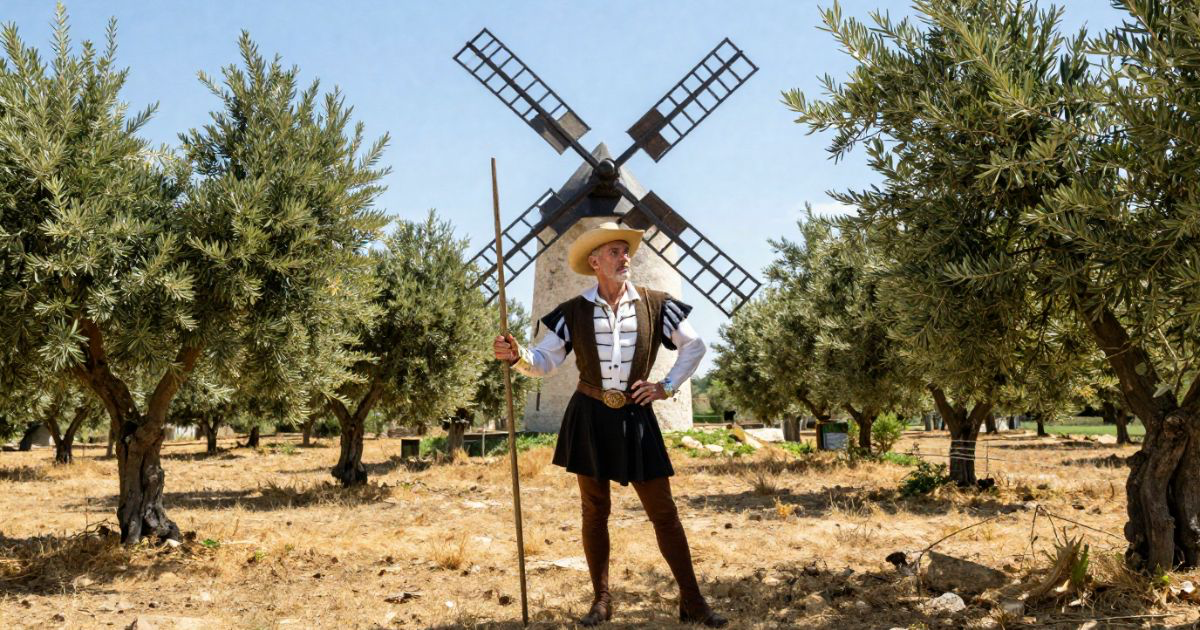
OF DON QUIXOTE’S ADVENTURE WITH A FAIR HUNTRESS They reached their beasts in low spirits and bad humour enough, knight and squire, Sancho particularly, for with him what touched the stock of money touched his heart, and when any was taken from him he felt as if he was robbed of the apples of his eyes. In fine, without exchanging a word, they mounted and quitted the famous river, Don Quixote absorbed in thoughts of his love, Sancho in thinking of his advancement, which just then, it seemed to him, he was very far from securing; for, fool as he…
Public-domain chapter text, formatted for reading.
Master this chapter. Complete your experience
Purchase the complete book to access all chapters and support classic literature
Available in paperback, hardcover, and e-book formats
Now let's explore the literary elements.
Key Quotes & Analysis
"I, the Knight of the Lions, kiss the hands of her exalted beauty"
Context: Message to the huntress
Quixote sends ceremony toward a woman who already knows his story.
In Today's Words:
I, the Knight of the Lions, kiss the hands of her exalted beauty The same dynamic turns up in offices, relationships, and public life today, wherever someone bends circumstances to fit a story they cannot put down The same dynamic turns up in offices, relationships, and public life today, wherever someone bends circumstances to fit
"fall in with his humour and agree with everything he said"
Context: Before receiving Don Quixote
Hospitality becomes performance for a reader of chivalric books.
In Today's Words:
Fall in with his humour and agree with everything he said The same dynamic turns up in offices, relationships, and public life today, wherever someone bends circumstances to fit a story they cannot put down The same dynamic turns up in offices, relationships, and public life today, wherever someone bends circumstances to fit a story
"what we call nature is like a potter that makes vessels of clay, and he who makes one fair vessel can as well make two, or three, or a hundred"
Context: Praising the duchess beside Dulcinea
Sancho's proverb diplomacy flatters the host without denying his mistress.
In Today's Words:
Nature is like a potter who can make many fair vessels The same dynamic turns up in offices, relationships, and public life today, wherever someone bends circumstances to fit a story they cannot put down The same dynamic turns up in offices, relationships, and public life today, wherever someone bends circumstances to fit a story
"Of the Lions, your highness must say,” said Sancho, “for there is no Rueful Countenance nor any such character now."
Context: Correcting the duke's title for his master
Sancho guards the new name even amid the fall and flattery.
In Today's Words:
Say Knight of the Lions; there is no Rueful Countenance now The same dynamic turns up in offices, relationships, and public life today, wherever someone bends circumstances to fit a story they cannot put down The same dynamic turns up in offices, relationships, and public life today, wherever someone bends circumstances to fit a story
Thematic Threads
When the Hosts Already Know the Story
In This Chapter
Still smarting from the fifty-real bark disaster, Sancho broods on quitting while Don Quixote thinks of Dulcinea, until at sunset they meet a hawking party...
Development
This chapter pushes the pattern into visible action and consequence.
In Your Life:
You may recognize this pattern when stress removes the polite version of a situation.
Identity
In This Chapter
Characters defend who they are or who they pretend to be when challenged.
Development
Fantasy and reality collide around name, rank, and role.
In Your Life:
You might cling to a version of yourself that no longer matches your choices.
Class
In This Chapter
Rank, money, and reputation decide who is heard, protected, or punished.
Development
Social order shapes every rescue, betrayal, and humiliation here.
In Your Life:
You see this when status decides whose account of events becomes official.
You now have the context. Time to form your own thoughts.
Discussion Questions
This is not a test. Five prompts guide you through the chapter, from how it opens to how it closes, so you notice context and rhythm rather than facts to memorize. Sit with each question in your own words. When you see "One way to read it," treat it as a starting point, not the only answer.
- 1
Why does Sancho feel like 'the apples of his eyes' have been robbed when money is taken from him?
analysis • surfaceOne way to read it
Sancho sees money as essential to his security and advancement. When he loses it, he feels personally violated because financial loss threatens his dreams of bettering his station.
- 2
Why does Cervantes have the duke and duchess already know Don Quixote's story from reading the First Part?
analysis • mediumOne way to read it
This creates a new kind of performance where the audience knows they're watching a show. The nobles can manipulate Don Quixote because they know his delusions, making his situation more tragic.
- 3
Where do you see people today performing roles because others expect it of them?
application • mediumOne way to read it
Social media influencers often perform exaggerated versions of themselves because followers expect certain content. Like Don Quixote, they become trapped in personas that others want to see.
- 4
How should someone respond when they realize others are humoring their dreams rather than taking them seriously?
application • deepOne way to read it
They might need to evaluate whether their goals are realistic and whether the support is genuine. Sometimes well-meaning encouragement can become patronizing if it lacks honest feedback.
- 5
What does the duchess's delight in Sancho's 'shrewd remarks' reveal about how we consume other people's struggles?
reflection • deepOne way to read it
We often find entertainment in others' earnest efforts, especially when we feel superior to them. The duchess enjoys Sancho's wit without considering his real hopes and fears.
Critical Thinking Exercise
Name the When the Hosts Already Know the Story Move
Re-read the chapter summary and write down where when the hosts already know the story first appears, who pays for it, and who benefits from keeping it going. Then write one sentence you could say to interrupt the pattern without shaming the person caught in it.
Consider:
- •Separate the person's worth from the pattern's cost
- •Notice who has power to stop or fuel the scene
- •Ask what truth would require someone to give up
Journaling Prompt
Write about a time when you saw when the hosts already know the story in your own life. What finally made the pattern impossible to ignore?
Coming Up Next...
Chapter 83: Many and Great Matters
Supreme was Sancho's satisfaction at becoming the duchess's favourite, for he looked forward to feasts like Camacho's wedding and Don Diego's house What follows unsettles everything settled here Sancho looks forward to ducal feasting while the duke instructs every servant how to receive Don Quixote, and at the castle gate crimson-clad lackeys lift the knight from his horse so he may take the duchess.