Chapter 80
When the Brave Man Flees
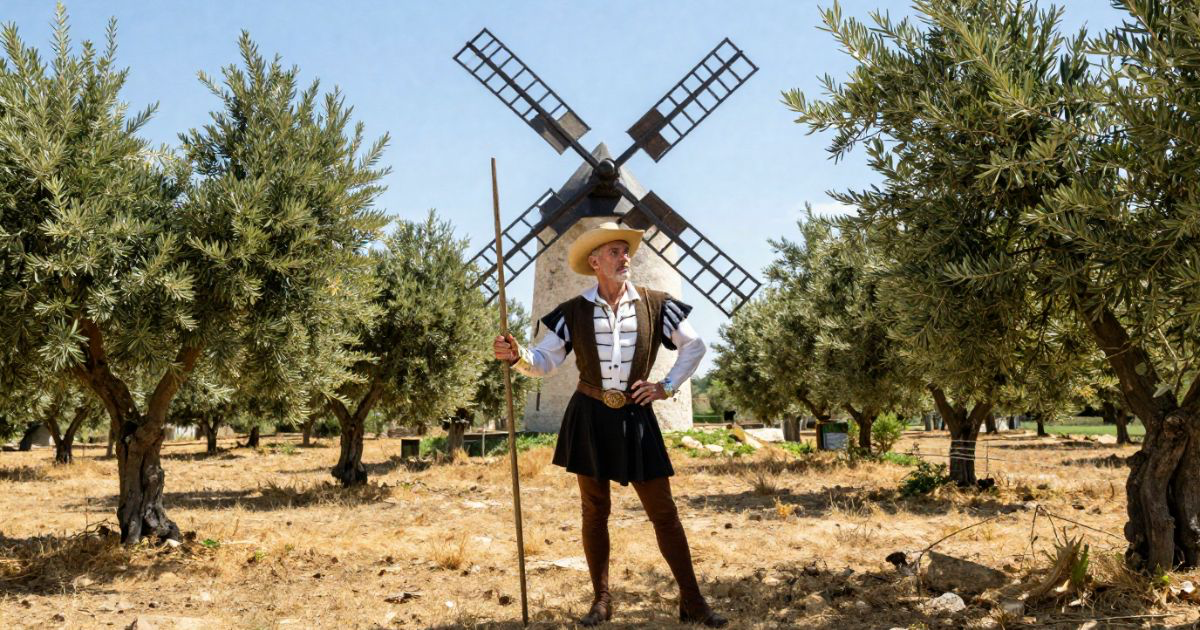
OF MATTERS THAT BENENGELI SAYS HE WHO READS THEM WILL KNOW, IF HE READS THEM WITH ATTENTION When the brave man flees, treachery is manifest and it is for wise men to reserve themselves for better occasions. This proved to be the case with Don Quixote, who, giving way before the fury of the townsfolk and the hostile intentions of the angry troop, took to flight and, without a thought of Sancho or the danger in which he was leaving him, retreated to such a distance as he thought made him safe. Sancho, lying across his ass, followed him, as…
Public-domain chapter text, formatted for reading.
Master this chapter. Complete your experience
Purchase the complete book to access all chapters and support classic literature
Available in paperback, hardcover, and e-book formats
Now let's explore the literary elements.
Key Quotes & Analysis
"When the brave man flees, treachery is manifest and it is for wise men to reserve themselves for better occasions."
Context: Opening moral on Don Quixote's retreat
The history frames flight as betrayal before Quixote reframes it as prudence.
In Today's Words:
When a brave man runs, it looks like treachery; wise men save themselves for better times The same dynamic turns up in offices, relationships, and public life today, wherever someone bends circumstances to fit a story they cannot put down The same dynamic turns up in offices, relationships, and public life today, wherever someone bends
"mention the rope in the house of the man that has been hanged?"
Context: Rebuking Sancho for braying among the braying town
Quixote blames the squire for provoking the beating he helped cause.
In Today's Words:
Why mention the rope in the house of a hanged man The same dynamic turns up in offices, relationships, and public life today, wherever someone bends circumstances to fit a story they cannot put down The same dynamic turns up in offices, relationships, and public life today, wherever someone bends circumstances to fit a story
"Measure out seven feet on the earth, brother squire, and if that’s not enough for you, take as many more"
Context: Complaining about squirely sleeping conditions
Sancho measures the gap between chivalric promise and bodily misery.
In Today's Words:
Measure seven feet of earth for sleeping, brother squire, and take more if you need it The same dynamic turns up in offices, relationships, and public life today, wherever someone bends circumstances to fit a story they cannot put down The same dynamic turns up in offices, relationships, and public life today, wherever someone bends
"to be a complete ass, all I want is a tail; if your worship will only fix one on to me, I’ll look on it as rightly placed"
Context: After Don Quixote threatens to dismiss him
Remorse turns insult into submission and restores the partnership.
In Today's Words:
To be a complete ass I only need a tail; fix one on me and I'll serve as an ass The same dynamic turns up in offices, relationships, and public life today, wherever someone bends circumstances to fit a story they cannot put down The same dynamic turns up in offices, relationships, and public life
Thematic Threads
When Retreat Becomes Prudence and the Squire Sends the Bill
In This Chapter
Hamete opens by saying that when the brave man flees, treachery is manifest; Don Quixote has run from the braying troop and left Sancho to be beaten before...
Development
This chapter pushes the pattern into visible action and consequence.
In Your Life:
You may recognize this pattern when stress removes the polite version of a situation.
Identity
In This Chapter
Characters defend who they are or who they pretend to be when challenged.
Development
Fantasy and reality collide around name, rank, and role.
In Your Life:
You might cling to a version of yourself that no longer matches your choices.
Class
In This Chapter
Rank, money, and reputation decide who is heard, protected, or punished.
Development
Social order shapes every rescue, betrayal, and humiliation here.
In Your Life:
You see this when status decides whose account of events becomes official.
You now have the context. Time to form your own thoughts.
Discussion Questions
This is not a test. Five prompts guide you through the chapter, from how it opens to how it closes, so you notice context and rhythm rather than facts to memorize. Sit with each question in your own words. When you see "One way to read it," treat it as a starting point, not the only answer.
- 1
When Don Quixote says he 'retired' rather than 'fled,' what distinction is he trying to make?
analysis • surfaceOne way to read it
Quixote claims retirement is prudent strategy while flight is cowardice. He insists valiant men reserve themselves for better occasions, not that they run away in fear.
- 2
Why does Cervantes have Sancho miscalculate twenty years when only two months have passed since the island promise?
analysis • mediumOne way to read it
The absurd miscalculation shows how suffering stretches time and how desperately Sancho wants his reward. It also highlights the gap between promise and reality.
- 3
Where do you see people rebranding their failures as strategic decisions in modern life?
application • mediumOne way to read it
Politicians call electoral losses 'strategic repositioning,' or employees claim they 'chose to explore new opportunities' after being fired. Like Quixote, people protect dignity through language.
- 4
How should someone respond when a mentor or boss consistently promises rewards that never materialize?
application • deepOne way to read it
Like Sancho, they might need to directly address the gap between promises and delivery. Setting clear timelines and asking for specifics can help, though loyalty and hope complicate the decision.
- 5
What does Sancho's offer to wear an ass's tail reveal about the relationship between dignity and survival?
reflection • deepOne way to read it
Sancho will sacrifice dignity to maintain the relationship that sustains him. His willingness to be literally labeled shows how dependence can make people accept humiliation for security.
Critical Thinking Exercise
Name the When Retreat Becomes Prudence and the Squire Sends the Bill Move
Re-read the chapter summary and write down where when retreat becomes prudence and the squire sends the bill first appears, who pays for it, and who benefits from keeping it going. Then write one sentence you could say to interrupt the pattern without shaming the person caught in it.
Consider:
- •Separate the person's worth from the pattern's cost
- •Notice who has power to stop or fuel the scene
- •Ask what truth would require someone to give up
Journaling Prompt
Write about a time when you saw when retreat becomes prudence and the squire sends the bill in your own life. What finally made the pattern impossible to ignore?
Coming Up Next...
Chapter 81: The Enchanted Bark
Two days after leaving the grove, Don Quixote and Sancho reach the river Ebro, where an enchanted bark will carry them into the next adventure Two days after the grove, Don Quixote and Sancho reach the Ebro, where Quixote still trusts the Montesinos cave more than Sancho or Master Pedro's ape did, and finds a tied boat he declares an enchanted summons to rescue.