Chapter 78
The Puppet Show's Destruction
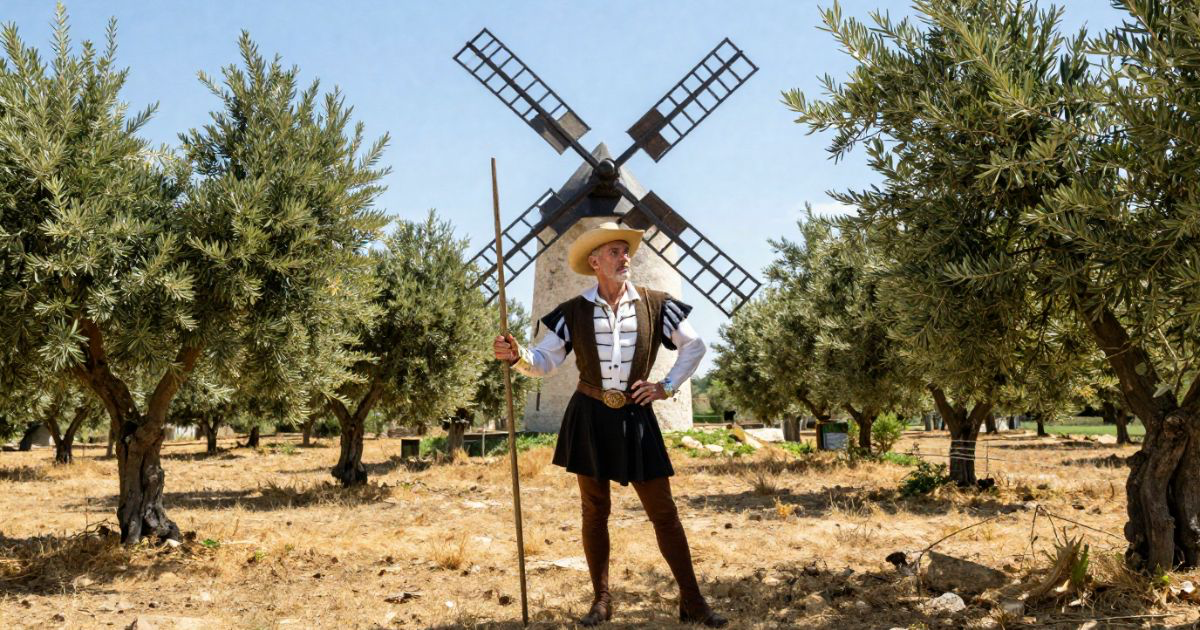
WHEREIN IS CONTINUED THE DROLL ADVENTURE OF THE PUPPET-SHOWMAN, TOGETHER WITH OTHER THINGS IN TRUTH RIGHT GOOD All were silent, Tyrians and Trojans; I mean all who were watching the show were hanging on the lips of the interpreter of its wonders, when drums and trumpets were heard to sound inside it and cannon to go off. The noise was soon over, and then the boy lifted up his voice and said, “This true story which is here represented to your worships is taken word for word from the French chronicles and from the Spanish ballads that are in everybody’s…
Public-domain chapter text, formatted for reading.
Master this chapter. Complete your experience
Purchase the complete book to access all chapters and support classic literature
Available in paperback, hardcover, and e-book formats
Now let's explore the literary elements.
Key Quotes & Analysis
"Child, child, go straight on with your story, and don’t run into curves and slants"
Context: During the Melisendra narration
Quixote demands factual rigor from a ballad told with puppets.
In Today's Words:
Child, tell the story straight and stop wandering off The same dynamic turns up in offices, relationships, and public life today, wherever someone bends circumstances to fit a story they cannot put down The same dynamic turns up in offices, relationships, and public life today, wherever someone bends circumstances to fit a story they cannot
"Go in peace, O peerless pair of true lovers! May you reach your longed-for fatherland in safety"
Context: Gaiferos and Melisendra ride toward Paris
The narrator blesses the lovers moments before Quixote destroys their escape.
In Today's Words:
Go in peace, true lovers, and reach your homeland safely The same dynamic turns up in offices, relationships, and public life today, wherever someone bends circumstances to fit a story they cannot put down The same dynamic turns up in offices, relationships, and public life today, wherever someone bends circumstances to fit a story they
"Hold hard! Señor Don Quixote! can’t you see they’re not real Moors you’re knocking down and killing and destroying, but only little pasteboard figures!"
Context: During the assault on the show
The showman names the medium while the knight cannot stop slashing.
In Today's Words:
Stop! Those are not real Moors, only little pasteboard figures The same dynamic turns up in offices, relationships, and public life today, wherever someone bends circumstances to fit a story they cannot put down The same dynamic turns up in offices, relationships, and public life today, wherever someone bends circumstances to fit a story they
"the enchanters who persecute me do nothing more than put figures like these before my eyes, and then change and turn them into what they please."
Context: Explaining why he attacked the puppets
Enchantment theory lets him pay damages while keeping his calling intact.
In Today's Words:
The enchanters who persecute me put figures before my eyes and change them at will The same dynamic turns up in offices, relationships, and public life today, wherever someone bends circumstances to fit a story they cannot put down The same dynamic turns up in offices, relationships, and public life today, wherever someone bends circumstances
Thematic Threads
When Knight-Errantry Attacks the Stage
In This Chapter
The boy showman narrates Master Pedro's puppet tale of Don Gaiferos and Melisendra: Charlemagne scolds the idle husband, a Moor kisses the captive, Marsilio...
Development
This chapter pushes the pattern into visible action and consequence.
In Your Life:
You may recognize this pattern when stress removes the polite version of a situation.
Identity
In This Chapter
Characters defend who they are or who they pretend to be when challenged.
Development
Fantasy and reality collide around name, rank, and role.
In Your Life:
You might cling to a version of yourself that no longer matches your choices.
Class
In This Chapter
Rank, money, and reputation decide who is heard, protected, or punished.
Development
Social order shapes every rescue, betrayal, and humiliation here.
In Your Life:
You see this when status decides whose account of events becomes official.
You now have the context. Time to form your own thoughts.
Discussion Questions
This is not a test. Five prompts guide you through the chapter, from how it opens to how it closes, so you notice context and rhythm rather than facts to memorize. Sit with each question in your own words. When you see "One way to read it," treat it as a starting point, not the only answer.
- 1
When Don Quixote corrects Master Pedro about bells versus kettledrums in Moorish cities, what does Pedro's response reveal about his priorities?
analysis • surfaceOne way to read it
Pedro dismisses accuracy, saying 'so long as I fill my pouch, no matter if I show as many inaccuracies as there are motes in a sunbeam.' He cares about profit, not truth.
- 2
Why does Cervantes have Don Quixote destroy the very story he's trying to save, and what does this cost everyone involved?
analysis • mediumOne way to read it
Quixote's idealistic intervention destroys the art it meant to protect. Pedro loses his livelihood, the audience loses entertainment, and Quixote pays forty reals for his 'heroism.'
- 3
Where do you see people today getting so caught up in defending their beliefs that they damage what they claim to protect?
application • mediumOne way to read it
Online activists sometimes attack allies over minor disagreements, or protesters damage the very communities they want to help, like Quixote destroying Pedro's show while 'saving' it.
- 4
If you strongly believed something was wrong but others said you were overreacting, how would you decide whether to act?
application • deepOne way to read it
Consider the real consequences versus imagined ones. Quixote saw real danger in puppet Moors, but his action caused actual harm to real people like Pedro.
- 5
What does Don Quixote's claim that enchanters made the puppets seem real reveal about how we justify our mistakes?
reflection • deepOne way to read it
We often blame external forces rather than admit our perception was wrong. Quixote can't accept he attacked puppets, so he invents magical explanations to preserve his worldview.
Critical Thinking Exercise
Name the When Knight-Errantry Attacks the Stage Move
Re-read the chapter summary and write down where when knight-errantry attacks the stage first appears, who pays for it, and who benefits from keeping it going. Then write one sentence you could say to interrupt the pattern without shaming the person caught in it.
Consider:
- •Separate the person's worth from the pattern's cost
- •Notice who has power to stop or fuel the scene
- •Ask what truth would require someone to give up
Journaling Prompt
Write about a time when you saw when knight-errantry attacks the stage in your own life. What finally made the pattern impossible to ignore?
Coming Up Next...
Chapter 79: Master Pedro Unmasked and the Braying Battle
Cide Hamete swears as a Catholic Christian that he will reveal who Master Pedro and his ape really were, and tell how Don Quixote's braying adventure ended far worse than he hoped Hamete swears he tells the truth when he reveals Master Pedro as Gines de Pasamonte, the galley slave freed in the Sierra Morena who stole Dapple and now runs a puppet show.