Chapter 74
The Cave of Montesinos
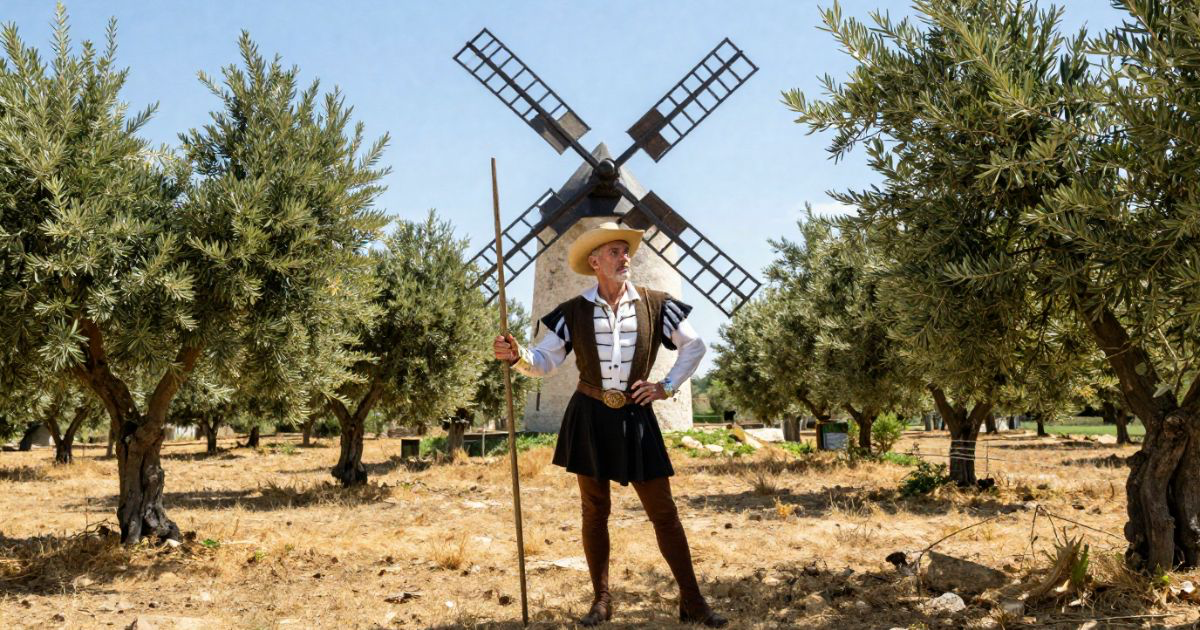
WHEREIN IS RELATED THE GRAND ADVENTURE OF THE CAVE OF MONTESINOS IN THE HEART OF LA MANCHA, WHICH THE VALIANT DON QUIXOTE BROUGHT TO A HAPPY TERMINATION Many and great were the attentions shown to Don Quixote by the newly married couple, who felt themselves under an obligation to him for coming forward in defence of their cause; and they exalted his wisdom to the same level with his courage, rating him as a Cid in arms, and a Cicero in eloquence. Worthy Sancho enjoyed himself for three days at the expense of the pair, from whom they learned that…
Public-domain chapter text, formatted for reading.
Master this chapter. Complete your experience
Purchase the complete book to access all chapters and support classic literature
Available in paperback, hardcover, and e-book formats
Now let's explore the literary elements.
Key Quotes & Analysis
"is not and ought not to be called deception which aims at virtuous ends;"
Context: Judging Basilio's staged suicide at the wedding
Quixote blesses the trick that love and war already justified.
In Today's Words:
A trick for a good end is not really deception The same dynamic turns up in offices, relationships, and public life today, wherever someone bends circumstances to fit a story they cannot put down The same dynamic turns up in offices, relationships, and public life today, wherever someone bends circumstances to fit a story they
"not only might he take a pulpit in hand, but two on each finger, and go into the market-places to his heart’s content."
Context: Listening to Don Quixote advise Basilio on marriage and wealth
Sancho discovers his master preaches as easily as he quests.
In Today's Words:
He could preach with two pulpits on every finger The same dynamic turns up in offices, relationships, and public life today, wherever someone bends circumstances to fit a story they cannot put down The same dynamic turns up in offices, relationships, and public life today, wherever someone bends circumstances to fit a story they cannot
"there are some who weary themselves out in learning and proving things that, after they are known and proved, are not worth a farthing to the understanding or memory."
Context: Responding to Sancho's Lucifer answer and the cousin's books
Cervantes mocks erudition beside the cave adventure about to start.
In Today's Words:
Some people study things that, once proved, are worthless The same dynamic turns up in offices, relationships, and public life today, wherever someone bends circumstances to fit a story they cannot put down The same dynamic turns up in offices, relationships, and public life today, wherever someone bends circumstances to fit a story they cannot
"Hell do you call it?” said Don Quixote; “call it by no such name, for it does not deserve it, as ye shall soon see."
Context: After waking from the cave and naming Montesinos and Ruidera
He renames the underworld before telling what he saw there.
In Today's Words:
Do not call it hell. You will see it does not deserve that name The same dynamic turns up in offices, relationships, and public life today, wherever someone bends circumstances to fit a story they cannot put down The same dynamic turns up in offices, relationships, and public life today, wherever someone bends circumstances to
Thematic Threads
When the Descent Starts the Marvel
In This Chapter
Basilio and Quiteria honor Don Quixote for three days, and he justifies Basilio's wedding trick as deception aimed at virtuous ends while preaching...
Development
This chapter pushes the pattern into visible action and consequence.
In Your Life:
You may recognize this pattern when stress removes the polite version of a situation.
Identity
In This Chapter
Characters defend who they are or who they pretend to be when challenged.
Development
Fantasy and reality collide around name, rank, and role.
In Your Life:
You might cling to a version of yourself that no longer matches your choices.
Class
In This Chapter
Rank, money, and reputation decide who is heard, protected, or punished.
Development
Social order shapes every rescue, betrayal, and humiliation here.
In Your Life:
You see this when status decides whose account of events becomes official.
You now have the context. Time to form your own thoughts.
Discussion Questions
This is not a test. Five prompts guide you through the chapter, from how it opens to how it closes, so you notice context and rhythm rather than facts to memorize. Sit with each question in your own words. When you see "One way to read it," treat it as a starting point, not the only answer.
- 1
What does Don Quixote say about Basilio's wedding trick, and how does he justify deception?
analysis • surfaceOne way to read it
Don Quixote says it 'is not and ought not to be called deception which aims at virtuous ends,' defending Basilio's fake wound because it served the noble purpose of true love.
- 2
Why does Cervantes have Sancho mutter that his master could take 'two pulpits on each finger' after hearing Don Quixote's marriage advice?
analysis • mediumOne way to read it
Sancho's exaggerated image highlights the irony that Don Quixote, who has never been married, delivers endless wisdom about marriage while claiming knights only know chivalry.
- 3
Where do you see people today giving confident advice about experiences they've never had?
application • mediumOne way to read it
Social media influencers offering relationship advice while single, or career coaches who've never worked in corporate settings. Like Don Quixote, they speak with authority about unfamiliar territory.
- 4
When might you need to decide whether to listen to someone's passionate advice about something they haven't experienced themselves?
application • deepOne way to read it
When choosing a college major based on a professor's enthusiasm, or taking parenting advice from childless friends. The key is weighing their wisdom against their actual experience.
- 5
What does Don Quixote's prayer to Dulcinea before descending reveal about how idealists approach dangerous situations?
reflection • deepOne way to read it
Idealists transform practical dangers into romantic quests by invoking higher purposes. Don Quixote turns a risky cave exploration into a heroic mission for his lady's honor, making the mundane magical.
Critical Thinking Exercise
Name the When the Descent Starts the Marvel Move
Re-read the chapter summary and write down where when the descent starts the marvel first appears, who pays for it, and who benefits from keeping it going. Then write one sentence you could say to interrupt the pattern without shaming the person caught in it.
Consider:
- •Separate the person's worth from the pattern's cost
- •Notice who has power to stop or fuel the scene
- •Ask what truth would require someone to give up
Journaling Prompt
Write about a time when you saw when the descent starts the marvel in your own life. What finally made the pattern impossible to ignore?
Coming Up Next...
Chapter 75: The Wonders of Montesinos' Cave
In the afternoon shade Don Quixote will relate the wonders he saw in Montesinos' cave, so vast and strange that many will call the adventure apocryphal In the afternoon shade Don Quixote tells Sancho and the scholar cousin what he saw underground: a recess where rope and weariness led him to sleep, then a crystal palace where Montesinos himself declared Don Quixote the knight.