Chapter 72
Camacho's Wedding Feast
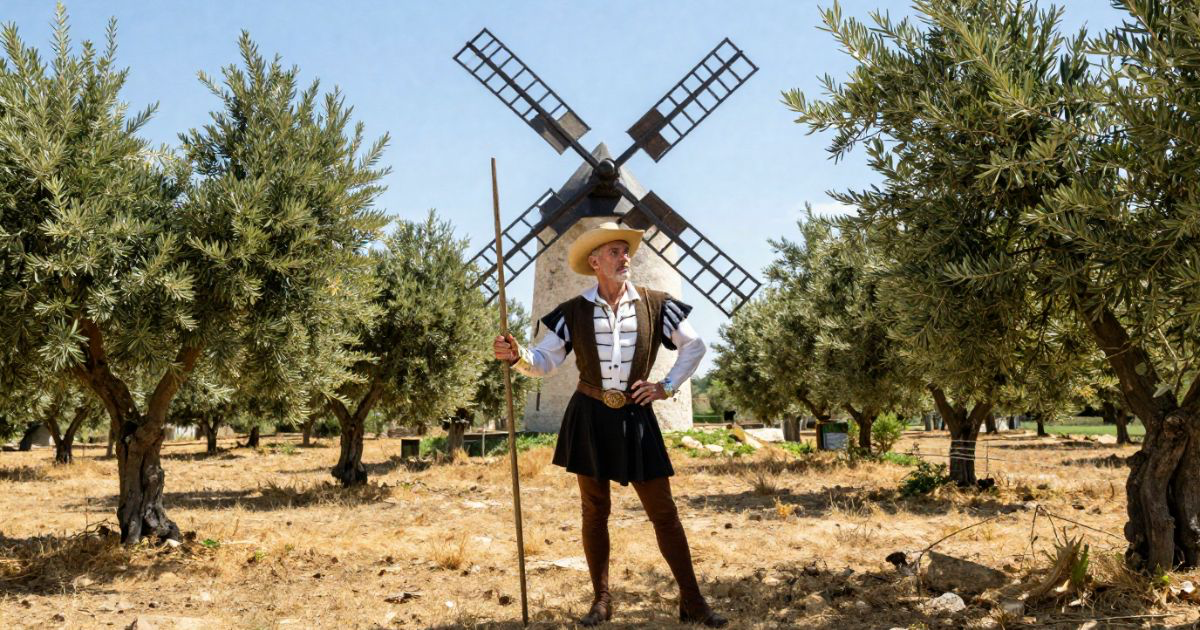
WHEREIN AN ACCOUNT IS GIVEN OF THE WEDDING OF CAMACHO THE RICH, TOGETHER WITH THE INCIDENT OF BASILIO THE POOR Scarce had the fair Aurora given bright Phœbus time to dry the liquid pearls upon her golden locks with the heat of his fervent rays, when Don Quixote, shaking off sloth from his limbs, sprang to his feet and called to his squire Sancho, who was still snoring; seeing which Don Quixote ere he roused him thus addressed him: “Happy thou, above all the dwellers on the face of the earth, that, without envying or being envied, sleepest with tranquil…
Public-domain chapter text, formatted for reading.
Master this chapter. Complete your experience
Purchase the complete book to access all chapters and support classic literature
Available in paperback, hardcover, and e-book formats
Now let's explore the literary elements.
Key Quotes & Analysis
"The servant sleeps and the master lies awake thinking how he is to feed him, advance him, and reward him."
Context: Waking Sancho at dawn before the wedding
Quixote names the social order Sancho will spend the chapter eating through.
In Today's Words:
Servants sleep while masters lie awake figuring how to pay them The same dynamic turns up in offices, relationships, and public life today, wherever someone bends circumstances to fit a story they cannot put down The same dynamic turns up in offices, relationships, and public life today, wherever someone bends circumstances to fit a story
"come, let us go and witness this bridal, and see what the rejected Basilio does."
Context: After Sancho smells the wedding cooking
The knight frames the day as theater about the rejected lover.
In Today's Words:
Come watch the wedding and see what Basilio does The same dynamic turns up in offices, relationships, and public life today, wherever someone bends circumstances to fit a story they cannot put down The same dynamic turns up in offices, relationships, and public life today, wherever someone bends circumstances to fit a story they cannot
"Long live Camacho and Quiteria! he as rich as she is fair; and she the fairest on earth!"
Context: Holiday races opening the wedding spectacle
Public praise ties wealth and beauty into one cheer.
In Today's Words:
Long live Camacho and Quiteria, rich and fair The same dynamic turns up in offices, relationships, and public life today, wherever someone bends circumstances to fit a story they cannot put down The same dynamic turns up in offices, relationships, and public life today, wherever someone bends circumstances to fit a story they cannot put
"He preaches well who lives well,” said Sancho, “and I know no more theology than that."
Context: After his rustic sermon on Death
Sancho closes philosophy and returns to the skimmings bucket.
In Today's Words:
Live well and you'll preach well. That's all the theology I know The same dynamic turns up in offices, relationships, and public life today, wherever someone bends circumstances to fit a story they cannot put down The same dynamic turns up in offices, relationships, and public life today, wherever someone bends circumstances to fit a
Thematic Threads
When the Bountiful Pot Wins the Argument
In This Chapter
At dawn Don Quixote wakes Sancho with a long speech on the servant who sleeps while the master lies awake planning how to feed him.
Development
This chapter pushes the pattern into visible action and consequence.
In Your Life:
You may recognize this pattern when stress removes the polite version of a situation.
Identity
In This Chapter
Characters defend who they are or who they pretend to be when challenged.
Development
Fantasy and reality collide around name, rank, and role.
In Your Life:
You might cling to a version of yourself that no longer matches your choices.
Class
In This Chapter
Rank, money, and reputation decide who is heard, protected, or punished.
Development
Social order shapes every rescue, betrayal, and humiliation here.
In Your Life:
You see this when status decides whose account of events becomes official.
You now have the context. Time to form your own thoughts.
Discussion Questions
This is not a test. Five prompts guide you through the chapter, from how it opens to how it closes, so you notice context and rhythm rather than facts to memorize. Sit with each question in your own words. When you see "One way to read it," treat it as a starting point, not the only answer.
- 1
When Don Quixote wakes Sancho, he says the master lies awake thinking how to feed, advance, and reward his servant. What does this reveal about their relationship?
analysis • surfaceOne way to read it
Don Quixote sees himself as the responsible protector who bears all burdens while Sancho sleeps peacefully. It shows his noble view of duty, even if misguided.
- 2
Why does Cervantes have Sancho defend wealth with folk sayings like 'an ass covered with gold looks better than a horse with a pack-saddle'?
analysis • mediumOne way to read it
Cervantes uses Sancho's earthy wisdom to challenge romantic ideals. The crude proverbs expose how survival often trumps nobility in real life.
- 3
Where do you see Sancho's 'Haves versus Haven'ts' philosophy playing out in modern society?
application • mediumOne way to read it
Social media displays of wealth, designer brands as status symbols, or choosing practical careers over artistic dreams all echo Sancho's preference for material security.
- 4
Imagine you're choosing between a stable job you dislike and pursuing a passion with uncertain income. How might this chapter guide your thinking?
application • deepOne way to read it
The chapter suggests considering both Sancho's practical wisdom about security and Don Quixote's idealism. Perhaps find a middle path that honors both survival needs and dreams.
- 5
When Sancho preaches about Death treating rich and poor equally, what does this reveal about how stories use simple characters to express profound truths?
reflection • deepOne way to read it
Cervantes shows that wisdom often comes from unexpected sources. Sancho's rustic theology rivals learned sermons, suggesting truth transcends social class and education.
Critical Thinking Exercise
Name the When the Bountiful Pot Wins the Argument Move
Re-read the chapter summary and write down where when the bountiful pot wins the argument first appears, who pays for it, and who benefits from keeping it going. Then write one sentence you could say to interrupt the pattern without shaming the person caught in it.
Consider:
- •Separate the person's worth from the pattern's cost
- •Notice who has power to stop or fuel the scene
- •Ask what truth would require someone to give up
Journaling Prompt
Write about a time when you saw when the bountiful pot wins the argument in your own life. What finally made the pattern impossible to ignore?
Coming Up Next...
Chapter 73: Basilio's Wedding Trick
Shouts announce the bride and bridegroom's arrival, and Basilio's desperate move at Camacho's wedding is about to upend the feast What follows unsettles everything settled here Camacho and Quiteria arrive at the wedding theatre in full pageantry while Sancho rhapsodizes over the bride's jewels and velvet. Before vows can be spoken, Basilio appears in black and cypress crown, begs the crowd to wait, and.