Chapter 63
The Cart of "The Cortes of Death"
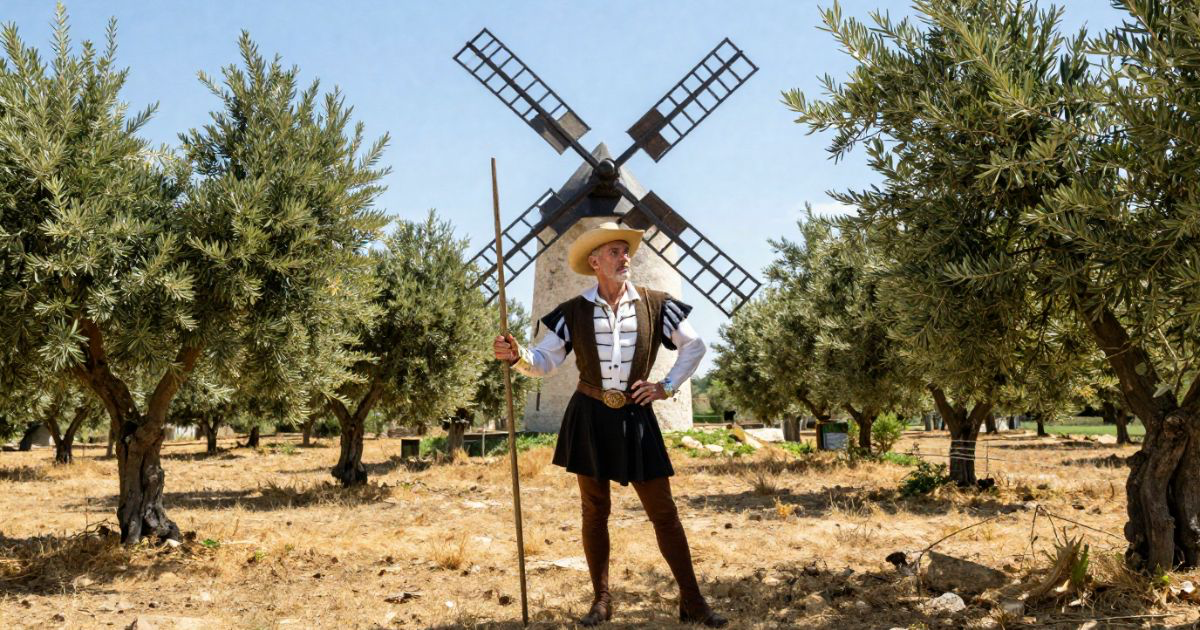
OF THE STRANGE ADVENTURE WHICH THE VALIANT DON QUIXOTE HAD WITH THE CAR OR CART OF “THE CORTES OF DEATH” Dejected beyond measure did Don Quixote pursue his journey, turning over in his mind the cruel trick the enchanters had played him in changing his lady Dulcinea into the vile shape of the village lass, nor could he think of any way of restoring her to her original form; and these reflections so absorbed him, that without being aware of it he let go Rocinante’s bridle, and he, perceiving the liberty that was granted him, stopped at every step to…
Public-domain chapter text, formatted for reading.
Master this chapter. Complete your experience
Purchase the complete book to access all chapters and support classic literature
Available in paperback, hardcover, and e-book formats
Now let's explore the literary elements.
Key Quotes & Analysis
"Melancholy, señor,” said he, “was made, not for beasts, but for men; but if men give way to it overmuch they turn to beasts"
Context: Opening: Sancho pulls Quixote out of his Dulcinea gloom
Sancho treats depression as a human luxury that becomes self-destructive when indulged too long.
In Today's Words:
Sadness is for people, not animals; wallow in it too long and you stop acting human The same dynamic turns up in offices, relationships, and public life today, wherever someone bends circumstances to fit a story they cannot put down The same dynamic turns up in offices, relationships, and public life today, wherever someone bends
"thou saidst that her eyes were pearls; but eyes that are like pearls are rather the eyes of a sea-bream than of a lady"
Context: Opening debate about how Sancho described Dulcinea
Even in grief Quixote rewrites reality through romance grammar, correcting pearl eyes to emerald eyes.
In Today's Words:
You said her eyes were pearls, but pearl eyes belong on a fish, not a lady The same dynamic turns up in offices, relationships, and public life today, wherever someone bends circumstances to fit a story they cannot put down The same dynamic turns up in offices, relationships, and public life today, wherever someone bends
"when I saw this cart I fancied some great adventure was presenting itself to me; but I declare one must touch with the hand what appears to the eye, if illusions are to be avoided."
Context: After the players explain they are Angulo el Malo's company
Quixote briefly admits the gap between appearance and reality, then forgets the lesson minutes later.
In Today's Words:
I thought this cart meant adventure, but you have to verify what your eyes show you The same dynamic turns up in offices, relationships, and public life today, wherever someone bends circumstances to fit a story they cannot put down The same dynamic turns up in offices, relationships, and public life today, wherever someone bends
"against sops from the brook, and plenty of them, there is no defensive armour in the world, except to stow oneself away under a brass bell"
Context: Death's stone-throwing squadron blocks Quixote's attack
Sancho translates theater into practical war advice: bread soaked in water beats armor.
In Today's Words:
There is no armor against a barrage of wet bread except hiding under a bell The same dynamic turns up in offices, relationships, and public life today, wherever someone bends circumstances to fit a story they cannot put down The same dynamic turns up in offices, relationships, and public life today, wherever someone bends circumstances
Thematic Threads
When the Stage Looks Like a Quest
In This Chapter
Don Quixote rides on in mourning for the enchanted Dulcinea, so lost in guilt and enchantment theory that Rocinante stops to graze unchecked.
Development
This chapter pushes the pattern into visible action and consequence.
In Your Life:
You may recognize this pattern when stress removes the polite version of a situation.
Identity
In This Chapter
Characters defend who they are or who they pretend to be when challenged.
Development
Fantasy and reality collide around name, rank, and role.
In Your Life:
You might cling to a version of yourself that no longer matches your choices.
Class
In This Chapter
Rank, money, and reputation decide who is heard, protected, or punished.
Development
Social order shapes every rescue, betrayal, and humiliation here.
In Your Life:
You see this when status decides whose account of events becomes official.
You now have the context. Time to form your own thoughts.
Discussion Questions
This is not a test. Five prompts guide you through the chapter, from how it opens to how it closes, so you notice context and rhythm rather than facts to memorize. Sit with each question in your own words. When you see "One way to read it," treat it as a starting point, not the only answer.
- 1
When the devil carter explains they're actors going between villages in costume, how does Don Quixote's reaction change?
analysis • surfaceOne way to read it
Don Quixote immediately shifts from threatening battle to wishing them well, even mentioning his childhood love of theater. The explanation transforms his perception completely.
- 2
Why does Cervantes have Sancho point out that none of the costumed figures are actual dubbed knights?
analysis • mediumOne way to read it
It shows how Don Quixote's chivalric code can actually prevent violence when applied logically. Sancho uses the knight's own rules to save him from a foolish fight.
- 3
Where do you see people today mistaking performance or costume for reality?
application • mediumOne way to read it
Social media personas, political theater, or celebrity culture often blur the line between authentic identity and performed roles, just like Don Quixote's confusion with the actors.
- 4
Think of a time when someone's explanation completely changed how you saw a situation. What made you shift perspective?
application • deepOne way to read it
Like Don Quixote learning the 'demons' were just actors, we often discover that threatening situations have innocent explanations when we pause to listen rather than react.
- 5
What does this encounter reveal about the difference between living in stories versus engaging with real people?
reflection • deepOne way to read it
Don Quixote's willingness to listen and accept the actors' explanation shows that genuine human connection can break through even the most elaborate fantasies and prevent unnecessary conflict.
Critical Thinking Exercise
Name the When the Stage Looks Like a Quest Move
Re-read the chapter summary and write down where when the stage looks like a quest first appears, who pays for it, and who benefits from keeping it going. Then write one sentence you could say to interrupt the pattern without shaming the person caught in it.
Consider:
- •Separate the person's worth from the pattern's cost
- •Notice who has power to stop or fuel the scene
- •Ask what truth would require someone to give up
Journaling Prompt
Write about a time when you saw when the stage looks like a quest in your own life. What finally made the pattern impossible to ignore?
Coming Up Next...
Chapter 64: The Bold Knight of the Mirrors
That night under shady trees, Sancho eats from Dapple's pack and tells his master a sparrow in the hand beats a vulture on the wing; tomorrow they meet the Knight of the Mirrors The night after the cart of Death, Don Quixote and Sancho eat under shady trees and replay the missed spoils of the play-actors' cart. Sancho prefers the foals he chose to.