Chapter 55
Samson Carrasco and the Book of Don Quixote
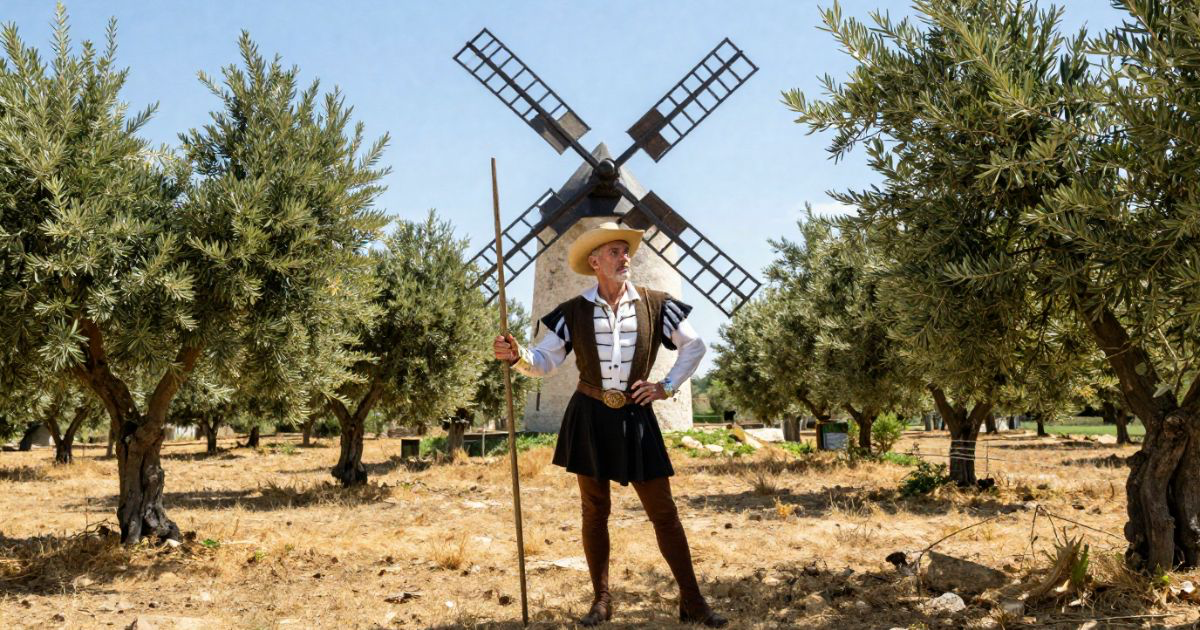
OF THE LAUGHABLE CONVERSATION THAT PASSED BETWEEN DON QUIXOTE, SANCHO PANZA, AND THE BACHELOR SAMSON CARRASCO Don Quixote remained very deep in thought, waiting for the bachelor Carrasco, from whom he was to hear how he himself had been put into a book as Sancho said; and he could not persuade himself that any such history could be in existence, for the blood of the enemies he had slain was not yet dry on the blade of his sword, and now they wanted to make out that his mighty achievements were going about in print. For all that, he fancied…
Public-domain chapter text, formatted for reading.
Master this chapter. Complete your experience
Purchase the complete book to access all chapters and support classic literature
Available in paperback, hardcover, and e-book formats
Now let's explore the literary elements.
Key Quotes & Analysis
"more than twelve thousand volumes of the said history in print this very day"
Context: Confirming the book's reach
The knight's life is already mass media. Deeds outrun the man who lived them.
In Today's Words:
More than twelve thousand copies of that history are in print today The same dynamic turns up in offices, relationships, and public life today, wherever someone bends circumstances to fit a story they cannot put down The same dynamic turns up in offices, relationships, and public life today, wherever someone bends circumstances to fit a
"does the adventure with the Yanguesans come in, when our good Rocinante went hankering after dainties?”"
Context: Asking what the history includes
Sancho hunts his own episodes in the canon. The squire wants equal billing.
In Today's Words:
Is the adventure with the Yanguesans in it, when Rocinante went after food The same dynamic turns up in offices, relationships, and public life today, wherever someone bends circumstances to fit a story they cannot put down The same dynamic turns up in offices, relationships, and public life today, wherever someone bends circumstances to fit
"they see any lean hack, they say, ‘There goes Rocinante.’"
Context: On the book's popularity
Fiction enters common speech. The knight becomes proverb before he rides again.
In Today's Words:
When they see a thin horse, they say, There goes Rocinante The same dynamic turns up in offices, relationships, and public life today, wherever someone bends circumstances to fit a story they cannot put down The same dynamic turns up in offices, relationships, and public life today, wherever someone bends circumstances to fit a story
"History is in a measure a sacred thing, for it should be true, and where the truth is, there God is"
Context: On historians and authorship
He demands truth while living inside romance. The book both flatters and exposes him.
In Today's Words:
History is almost sacred because it should be true, and where truth is, God is The same dynamic turns up in offices, relationships, and public life today, wherever someone bends circumstances to fit a story they cannot put down The same dynamic turns up in offices, relationships, and public life today, wherever someone bends circumstances
Thematic Threads
When Life Becomes a Published Story
In This Chapter
Quixote waits for Samson Carrasco, unable to believe his deeds are already in print while enemy blood is still fresh on his sword.
Development
This chapter pushes the pattern into visible action and consequence.
In Your Life:
You may recognize this pattern when stress removes the polite version of a situation.
Identity
In This Chapter
Characters defend who they are or who they pretend to be when challenged.
Development
Fantasy and reality collide around name, rank, and role.
In Your Life:
You might cling to a version of yourself that no longer matches your choices.
Class
In This Chapter
Rank, money, and reputation decide who is heard, protected, or punished.
Development
Social order shapes every rescue, betrayal, and humiliation here.
In Your Life:
You see this when status decides whose account of events becomes official.
You now have the context. Time to form your own thoughts.
Discussion Questions
This is not a test. Five prompts guide you through the chapter, from how it opens to how it closes, so you notice context and rhythm rather than facts to memorize. Sit with each question in your own words. When you see "One way to read it," treat it as a starting point, not the only answer.
- 1
Why does Don Quixote worry that the Moorish author might have written about his love affairs in an indecorous fashion?
analysis • surfaceOne way to read it
Don Quixote fears damage to Dulcinea's reputation and his own image as a pure, chivalrous knight who spurns all other women for his ideal lady.
- 2
Why does Cervantes have Samson praise the book's popularity while also listing its flaws and omissions?
analysis • mediumOne way to read it
This creates irony about literary fame: even flawed stories can captivate readers, suggesting people love entertainment more than perfection.
- 3
Where do you see people today struggling with how they're portrayed in public stories or social media?
application • mediumOne way to read it
Politicians, celebrities, or even ordinary people worry about online reviews, news coverage, or social media posts that might misrepresent them.
- 4
How should someone respond when they discover others are telling stories about their life that feel incomplete or unfair?
application • deepOne way to read it
Like Don Quixote, they might focus on living authentically rather than controlling every narrative, while accepting that all stories have gaps and biases.
- 5
What does this chapter reveal about the relationship between living a life and having that life become a story?
reflection • deepOne way to read it
Stories inevitably simplify and distort lived experience, but they also give meaning and fame that can outlast the original deeds themselves.
Critical Thinking Exercise
Name the When Life Becomes a Published Story Move
Re-read the chapter summary and write down where when life becomes a published story first appears, who pays for it, and who benefits from keeping it going. Then write one sentence you could say to interrupt the pattern without shaming the person caught in it.
Consider:
- •Separate the person's worth from the pattern's cost
- •Notice who has power to stop or fuel the scene
- •Ask what truth would require someone to give up
Journaling Prompt
Write about a time when you saw when life becomes a published story in your own life. What finally made the pattern impossible to ignore?
Coming Up Next...
Chapter 56: Sancho Answers Dapple, Crowns, and the Next Sally
Sancho returns to answer how Dapple was stolen in the Sierra Morena and what became of the hundred crowns from the valise What follows unsettles everything settled here Sancho returns to Don Quixote's house and answers Samson's questions about Dapple. Thieves in the Sierra Morena propped him on four stakes while he slept and stole the ass; he later saw Gines de Pasamonte riding.