Chapter 04
Intervention and Defeat
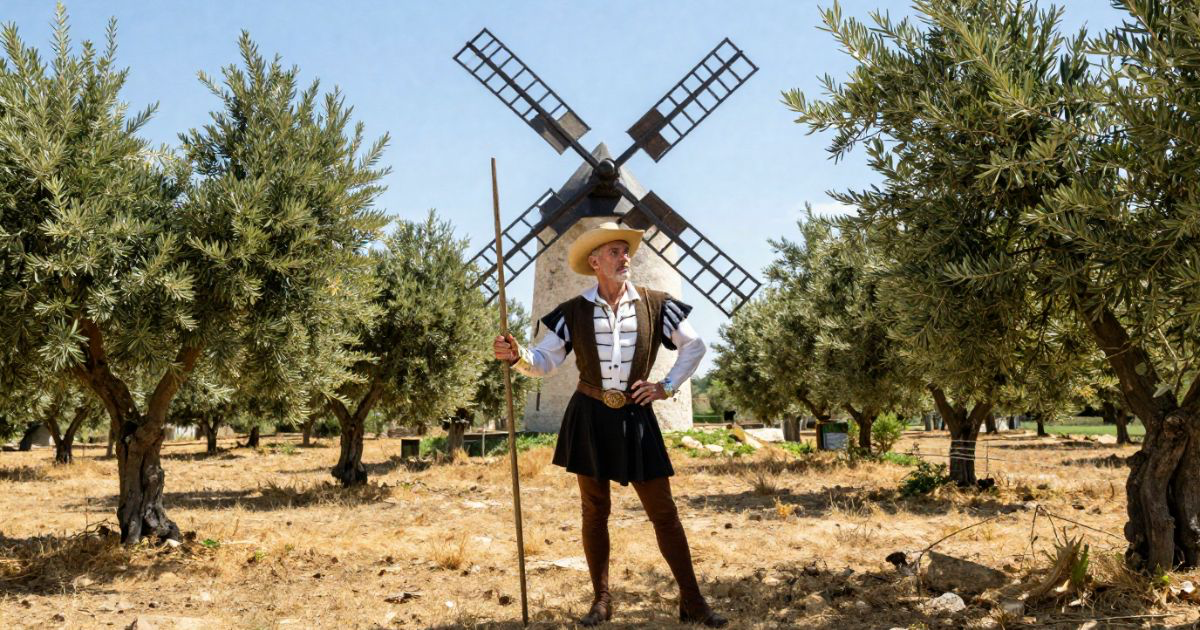
OF WHAT HAPPENED TO OUR KNIGHT WHEN HE LEFT THE INN Day was dawning when Don Quixote quitted the inn, so happy, so gay, so exhilarated at finding himself now dubbed a knight, that his joy was like to burst his horse-girths. However, recalling the advice of his host as to the requisites he ought to carry with him, especially that referring to money and shirts, he determined to go home and provide himself with all, and also with a squire, for he reckoned upon securing a farm-labourer, a neighbour of his, a poor man with a family, but very…
Public-domain chapter text, formatted for reading.
Master this chapter. Complete your experience
Purchase the complete book to access all chapters and support classic literature
Available in paperback, hardcover, and e-book formats
Now let's explore the literary elements.
Key Quotes & Analysis
"I go with him!” said the youth. “Nay, God forbid! No, señor, not for the world; for once alone with me, he would flay me like a Saint Bartholomew.”"
Context: After Quixote orders the farmer to pay wages at home
The victim sees the power dynamic Quixote ignores. The knight hears refusal as insolence; Andres hears a death sentence.
In Today's Words:
Do not send me back alone with him. You are fixing the story, not the danger The same dynamic turns up in offices, relationships, and public life today, wherever someone bends circumstances to fit a story they cannot put down The same dynamic turns up in offices, relationships, and public life today, wherever someone bends
"Thus did the valiant Don Quixote right that wrong, and, thoroughly satisfied with what had taken place, as he considered he had made a very happy and noble beginning with his knighthood"
Context: After Andres is beaten worse offstage
Cervantes cuts straight from catastrophe to self-congratulation. The narrator reports victory where the chapter shows defeat.
In Today's Words:
He rode away convinced he had nailed day one while the person he saved was being punished for his help The same dynamic turns up in offices, relationships, and public life today, wherever someone bends circumstances to fit a story they cannot put down The same dynamic turns up in offices, relationships, and public life
"All the world stand, unless all the world confess that in all the world there is no maiden fairer than the Empress of La Mancha, the peerless Dulcinea del Toboso.”"
Context: Blocking the Toledo merchants on the road
Quixote escalates from rescue fantasy to compulsory praise. Proof is irrelevant; confession is the toll.
In Today's Words:
Stop everything until everyone agrees my cause is beautiful without evidence The same dynamic turns up in offices, relationships, and public life today, wherever someone bends circumstances to fit a story they cannot put down The same dynamic turns up in offices, relationships, and public life today, wherever someone bends circumstances to fit a story
"Fly not, cowards and caitiffs! stay, for not by my fault, but my horse’s, am I stretched here.”"
Context: Pinned under armor after Rocinante falls
Even prostrate and helpless, he reframes collapse as honorable combat interrupted by treachery and bad luck.
In Today's Words:
I am losing, but only because my equipment failed and you will not fight fair The same dynamic turns up in offices, relationships, and public life today, wherever someone bends circumstances to fit a story they cannot put down The same dynamic turns up in offices, relationships, and public life today, wherever someone bends circumstances
Thematic Threads
Hero Complex Intervention
In This Chapter
At dawn Quixote leaves the inn thrilled to be a knight and turns toward home to fetch money, shirts, and a squire.
Development
This chapter pushes the pattern into visible action and consequence.
In Your Life:
You may recognize this pattern when stress removes the polite version of a situation.
Identity
In This Chapter
Characters defend who they are or who they pretend to be when challenged.
Development
Fantasy and reality collide around name, rank, and role.
In Your Life:
You might cling to a version of yourself that no longer matches your choices.
Class
In This Chapter
Rank, money, and reputation decide who is heard, protected, or punished.
Development
Social order shapes every rescue, betrayal, and humiliation here.
In Your Life:
You see this when status decides whose account of events becomes official.
You now have the context. Time to form your own thoughts.
Discussion Questions
This is not a test. Five prompts guide you through the chapter, from how it opens to how it closes, so you notice context and rhythm rather than facts to memorize. Sit with each question in your own words. When you see "One way to read it," treat it as a starting point, not the only answer.
- 1
When Don Quixote finds Andres being beaten, what specific command does he give the farmer, and how does the farmer respond?
analysis • surfaceOne way to read it
Quixote demands the farmer pay Andres sixty-three reals in back wages immediately or die. The trembling farmer tries to deduct shoes and medical costs but eventually agrees to pay.
- 2
Why does Cervantes show us the farmer beating Andres worse after Quixote leaves, rather than ending the scene with the knight's departure?
analysis • mediumOne way to read it
Cervantes reveals that Quixote's intervention made things worse, not better. The dramatic irony shows how good intentions without follow-through can backfire spectacularly.
- 3
Where do you see people today intervening in situations they don't fully understand, like Quixote with Andres and the farmer?
application • mediumOne way to read it
Social media activism often mirrors this pattern. People share outrage about complex situations based on limited information, then move on without seeing the real consequences.
- 4
Think of a time you wanted to help someone but weren't sure if your intervention would actually make things better. What would you do differently?
application • deepOne way to read it
One approach is asking what the person actually needs rather than assuming. Quixote never asks Andres what would truly help him escape his situation safely.
- 5
What does Quixote's reaction to being beaten by the muleteer reveal about how people protect their self-image when reality contradicts their story?
reflection • deepOne way to read it
Quixote blames his horse and calls the beating a 'regular knight-errant's mishap.' People often reframe failures to preserve their identity rather than questioning their assumptions.
Critical Thinking Exercise
Name the Hero Complex Intervention Move
Re-read the chapter summary and write down where hero complex intervention first appears, who pays for it, and who benefits from keeping it going. Then write one sentence you could say to interrupt the pattern without shaming the person caught in it.
Consider:
- •Separate the person's worth from the pattern's cost
- •Notice who has power to stop or fuel the scene
- •Ask what truth would require someone to give up
Journaling Prompt
Write about a time when you saw hero complex intervention in your own life. What finally made the pattern impossible to ignore?
Coming Up Next...
Chapter 5: Coming Home Broken
Finding, then, that, in fact he could not move, he thought himself of having recourse to his usual remedy, which was to think of some passage in his books, and his craze brought to his mind that about Baldwin....