Chapter 38
Arms Versus Letters and the Captive's Promise
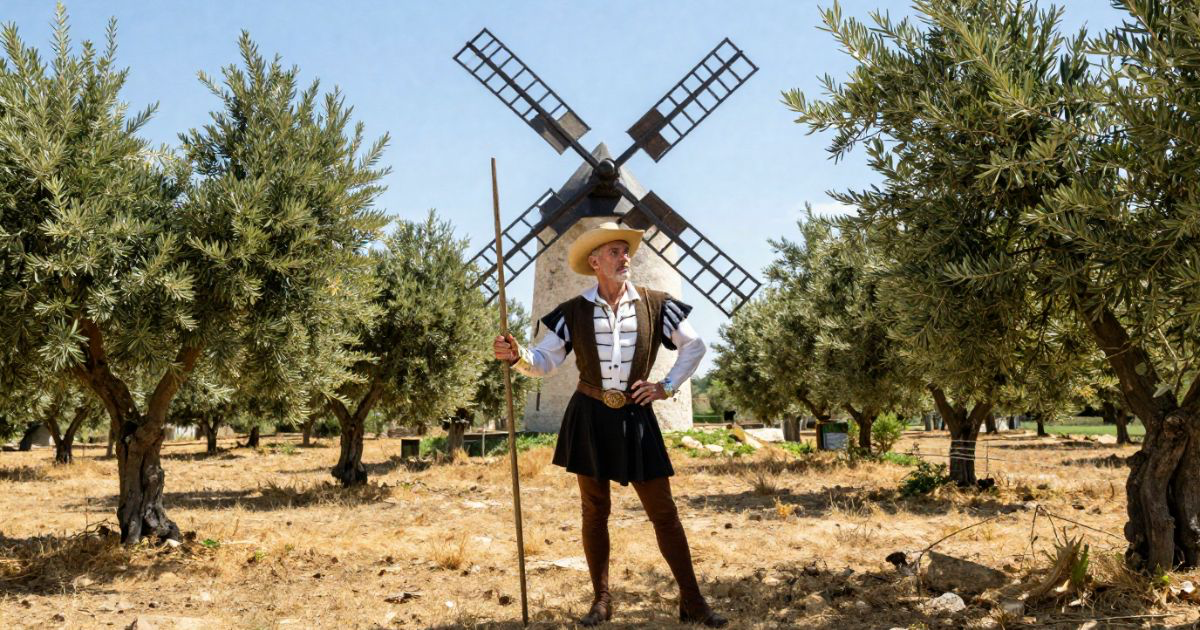
WHICH TREATS OF THE CURIOUS DISCOURSE DON QUIXOTE DELIVERED ON ARMS AND LETTERS Continuing his discourse Don Quixote said: “As we began in the student’s case with poverty and its accompaniments, let us see now if the soldier is richer, and we shall find that in poverty itself there is no one poorer; for he is dependent on his miserable pay, which comes late or never, or else on what he can plunder, seriously imperilling his life and conscience; and sometimes his nakedness will be so great that a slashed doublet serves him for uniform and shirt, and in the…
Public-domain chapter text, formatted for reading.
Master this chapter. Complete your experience
Purchase the complete book to access all chapters and support classic literature
Available in paperback, hardcover, and e-book formats
Now let's explore the literary elements.
Key Quotes & Analysis
"in poverty itself there is no one poorer; for he is dependent on his miserable pay, which comes late or never"
Context: Comparing the soldier's poverty to the student's
The mad knight speaks like a social critic. Cervantes lets eloquence land before the delusion returns.
In Today's Words:
Among the poor, the soldier is poorest: paid late or never The same dynamic turns up in offices, relationships, and public life today, wherever someone bends circumstances to fit a story they cannot put down The same dynamic turns up in offices, relationships, and public life today, wherever someone bends circumstances to fit a story
"invest him with the doctor’s cap made of lint, to mend some bullet-hole, perhaps, that has gone through his temples"
Context: Describing the soldier's degree day on the battlefield
He turns promotion into wound dressing. Honor and mutilation share one grim ceremony.
In Today's Words:
His graduation is a lint cap over the hole in his head The same dynamic turns up in offices, relationships, and public life today, wherever someone bends circumstances to fit a story they cannot put down The same dynamic turns up in offices, relationships, and public life today, wherever someone bends circumstances to fit a
"Happy the blest ages that knew not the dread fury of those devilish engines of artillery, whose inventor I am persuaded is in hell receiving the reward of his diabolical invention"
Context: Praising pre-gunpowder courage, then regretting his own calling
He mourns a world where valor could speak before random bullets. Even his chivalry flinches at modern warfare.
In Today's Words:
Blessed were the ages before cannons, and their inventor belongs in hell The same dynamic turns up in offices, relationships, and public life today, wherever someone bends circumstances to fit a story they cannot put down The same dynamic turns up in offices, relationships, and public life today, wherever someone bends circumstances to fit a
"will hear a true story which, perhaps, fictitious ones constructed with ingenious and studied art cannot come up to.”"
Context: Don Fernando asks for his life story after supper
Cervantes pivots from Quixote's theory to a promised real tale. Fiction will now compete with testimony.
In Today's Words:
You are about to hear a true story that may beat anything made up The same dynamic turns up in offices, relationships, and public life today, wherever someone bends circumstances to fit a story they cannot put down The same dynamic turns up in offices, relationships, and public life today, wherever someone bends circumstances to
Thematic Threads
When Reason Stops at the One Story
In This Chapter
Don Quixote continues his supper speech on arms and letters by turning to the soldier's poverty: miserable pay, nakedness, winter in the open field, and the...
Development
This chapter pushes the pattern into visible action and consequence.
In Your Life:
You may recognize this pattern when stress removes the polite version of a situation.
Identity
In This Chapter
Characters defend who they are or who they pretend to be when challenged.
Development
Fantasy and reality collide around name, rank, and role.
In Your Life:
You might cling to a version of yourself that no longer matches your choices.
Class
In This Chapter
Rank, money, and reputation decide who is heard, protected, or punished.
Development
Social order shapes every rescue, betrayal, and humiliation here.
In Your Life:
You see this when status decides whose account of events becomes official.
You now have the context. Time to form your own thoughts.
Discussion Questions
This is not a test. Five prompts guide you through the chapter, from how it opens to how it closes, so you notice context and rhythm rather than facts to memorize. Sit with each question in your own words. When you see "One way to read it," treat it as a starting point, not the only answer.
- 1
What does Don Quixote mean when he says a soldier's 'doctor's cap' is 'made of lint, to mend some bullet-hole'?
analysis • surfaceOne way to read it
He's describing battlefield medical treatment ironically - the soldier's 'graduation' is getting bandaged for wounds, not receiving an academic degree like scholars do.
- 2
Why does Cervantes have Don Quixote forget to eat while giving this passionate speech about soldiers and scholars?
analysis • mediumOne way to read it
It shows how completely absorbed he becomes in his idealistic theories, losing touch with basic physical needs while lecturing about practical hardships.
- 3
Where do you see people today getting so caught up in their passionate beliefs that they ignore practical realities?
application • mediumOne way to read it
Social media debates, political arguments, or hobby enthusiasts who spend hours online defending their views while neglecting work, family, or self-care.
- 4
How might someone handle a situation where their deeply held ideals conflict with what others see as obvious practical concerns?
application • deepOne way to read it
They could listen to feedback like Sancho's gentle reminders, find trusted friends who support their values but also ground them in reality.
- 5
What does the captive's promise of a 'true story' that fiction cannot match suggest about how we value different kinds of truth?
reflection • deepOne way to read it
It reveals our hunger for authentic experience over crafted narratives, yet we're reading this in Cervantes' fiction, highlighting the complex relationship between lived truth and storytelling.
Critical Thinking Exercise
Name the When Reason Stops at the One Story Move
Re-read the chapter summary and write down where when reason stops at the one story first appears, who pays for it, and who benefits from keeping it going. Then write one sentence you could say to interrupt the pattern without shaming the person caught in it.
Consider:
- •Separate the person's worth from the pattern's cost
- •Notice who has power to stop or fuel the scene
- •Ask what truth would require someone to give up
Journaling Prompt
Write about a time when you saw when reason stops at the one story in your own life. What finally made the pattern impossible to ignore?
Coming Up Next...
Chapter 39: The Captive's Life from Leon to the Oar
The captive says his family came from a village in the mountains of Leon, where his father passed for rich until a soldier's free hand spent what fortune had given The captive begins in Leon with a prodigal soldier father who divides his estate among three sons and quotes the proverb: the church, the sea, or the king's house. The eldest chooses arms, the.