Chapter 02
The First Sally
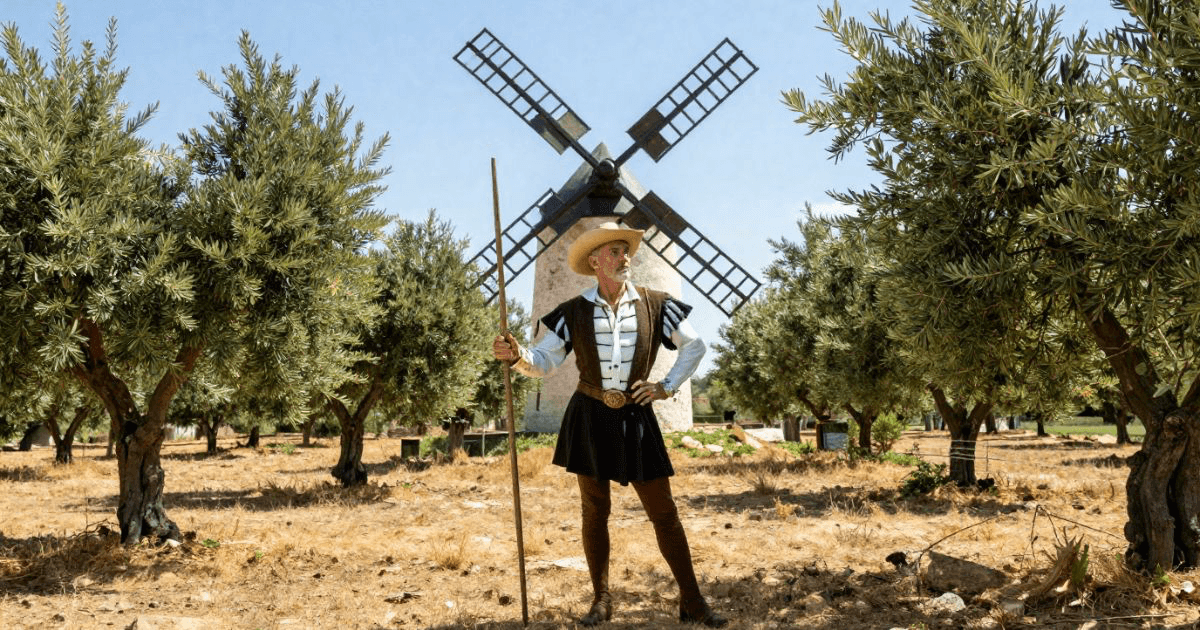
WHICH TREATS OF THE FIRST SALLY THE INGENIOUS DON QUIXOTE MADE FROM HOME These preliminaries settled, he did not care to put off any longer the execution of his design, urged on to it by the thought of all the world was losing by his delay, seeing what wrongs he intended to right, grievances to redress, injustices to repair, abuses to remove, and duties to discharge. So, without giving notice of his intention to anyone, and without anybody seeing him, one morning before the dawning of the day (which was one of the hottest of the month of July) he…
Public-domain chapter text, formatted for reading.
Master this chapter. Complete your experience
Purchase the complete book to access all chapters and support classic literature
Available in paperback, hardcover, and e-book formats
Now let's explore the literary elements.
Key Quotes & Analysis
"But scarcely did he find himself upon the open plain, when a terrible thought struck him, one all but enough to make him abandon the enterprise at the very outset."
Context: The moment Quixote realizes he has not been dubbed a knight
The adventure nearly ends before it starts on a technicality. Obsession overrides the obstacle within a paragraph.
In Today's Words:
You can talk yourself out of a reckless plan until you find a loophole in the story you want to live The same dynamic turns up in offices, relationships, and public life today, wherever someone bends circumstances to fit a story they cannot put down.
"his craze being stronger than any reasoning, he made up his mind to have himself dubbed a knight by the first one he came across"
Context: After listing the laws of chivalry that should stop him
Quixote does not defeat the objection. He schedules around it. The books said this was allowed, so the books win.
In Today's Words:
When the rule blocks you, you do not pause. You find the first person who will bless the next step The same dynamic turns up in offices, relationships, and public life today, wherever someone bends circumstances to fit a story they cannot put down The same dynamic turns up in offices, relationships, and public life
"the moment he saw the inn he pictured it to himself as a castle with its four turrets and pinnacles of shining silver, not forgetting the drawbridge and moat"
Context: Nightfall hunger transforms an ordinary inn
Expectation redraws architecture. The inn does not change. His perception does, in full detail.
In Today's Words:
A roadside motel becomes a fortress the second your story needs one The same dynamic turns up in offices, relationships, and public life today, wherever someone bends circumstances to fit a story they cannot put down The same dynamic turns up in offices, relationships, and public life today, wherever someone bends circumstances to fit a
"he could not lawfully engage in any adventure without receiving the order of knighthood."
Context: Closing worry after the inn fantasy has fully taken hold
Even inside the delusion, the genre keeps score. Chapter II ends on paperwork, not glory.
In Today's Words:
You can rename the whole world and still know you lack the credential that makes the story official The same dynamic turns up in offices, relationships, and public life today, wherever someone bends circumstances to fit a story they cannot put down The same dynamic turns up in offices, relationships, and public life today, wherever
Thematic Threads
Expectation-Driven Perception
In This Chapter
Don Quixote slips out before dawn through the back door, armor on, Rocinante saddled, convinced the world is losing greatness by the hour.
Development
This chapter pushes the pattern into visible action and consequence.
In Your Life:
You may recognize this pattern when stress removes the polite version of a situation.
Identity
In This Chapter
Characters defend who they are or who they pretend to be when challenged.
Development
Fantasy and reality collide around name, rank, and role.
In Your Life:
You might cling to a version of yourself that no longer matches your choices.
Class
In This Chapter
Rank, money, and reputation decide who is heard, protected, or punished.
Development
Social order shapes every rescue, betrayal, and humiliation here.
In Your Life:
You see this when status decides whose account of events becomes official.
You now have the context. Time to form your own thoughts.
Discussion Questions
This is not a test. Five prompts guide you through the chapter, from how it opens to how it closes, so you notice context and rhythm rather than facts to memorize. Sit with each question in your own words. When you see "One way to read it," treat it as a starting point, not the only answer.
- 1
What terrible thought strikes Don Quixote on the open plain, and how does he resolve to handle this problem?
analysis • surfaceOne way to read it
He realizes he hasn't been dubbed a knight and legally can't bear arms. He decides to have the first stranger he meets confer knighthood on him, following examples from his books.
- 2
Why does Cervantes show us Don Quixote rehearsing his own future biography while riding alone?
analysis • mediumOne way to read it
It reveals how completely he lives inside literary fantasy. He's already writing himself as a legendary hero before any actual adventure begins, showing his delusion's depth.
- 3
Where do you see people today transforming ordinary situations into something grander through their expectations?
application • mediumOne way to read it
Social media often works this way. People frame routine activities as epic journeys or transform casual encounters into meaningful connections through careful presentation and internal narrative.
- 4
When might someone benefit from seeing reality through Don Quixote's transformative lens rather than accepting things as they appear?
application • deepOne way to read it
In creative work or when facing discouragement, reimagining mundane tasks as meaningful quests can provide motivation. A janitor might see themselves as maintaining sacred spaces.
- 5
What does Don Quixote's ability to transform an inn into a castle reveal about how stories shape our sense of who we are?
reflection • deepOne way to read it
It shows that identity often depends more on the narrative we tell ourselves than external reality. Our self-concept can completely reshape how we interpret experiences and interactions.
Critical Thinking Exercise
Name the Expectation-Driven Perception Move
Re-read the chapter summary and write down where expectation-driven perception first appears, who pays for it, and who benefits from keeping it going. Then write one sentence you could say to interrupt the pattern without shaming the person caught in it.
Consider:
- •Separate the person's worth from the pattern's cost
- •Notice who has power to stop or fuel the scene
- •Ask what truth would require someone to give up
Journaling Prompt
Write about a time when you saw expectation-driven perception in your own life. What finally made the pattern impossible to ignore?
Coming Up Next...
Chapter 3: The Mock Knighting
Harassed by this reflection, he made haste with his scanty pothouse supper, and having finished it called the landlord, and shutting himself into the stable with him, fell on his knees before him, saying, “From this spot I rise...