Chapter 18
When Reality Crashes Down
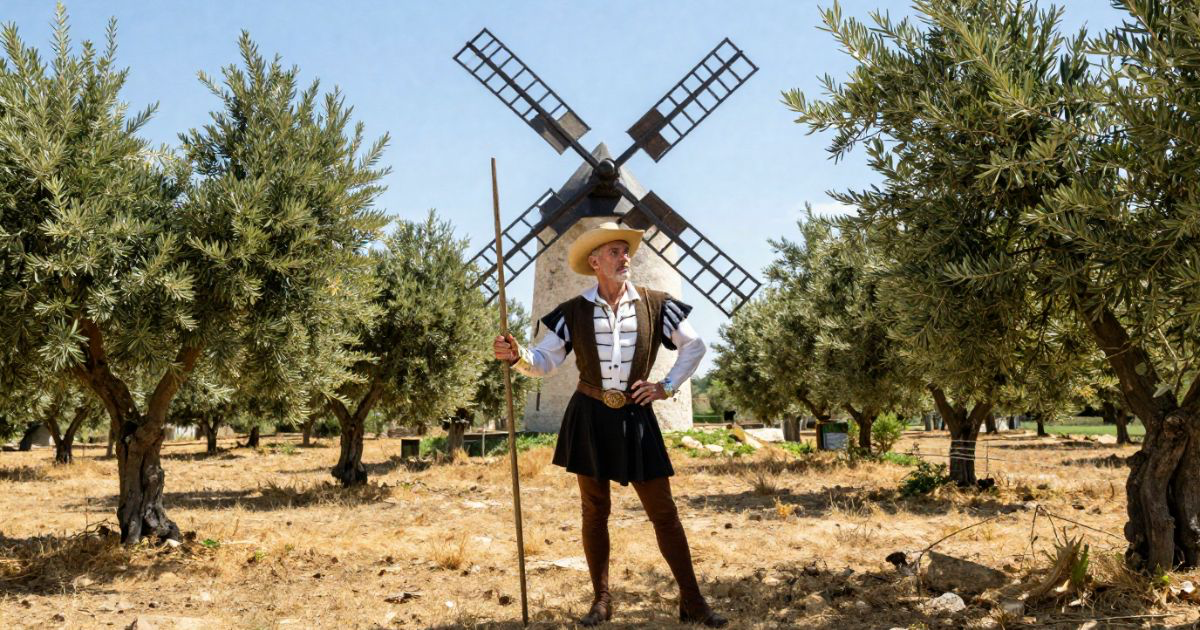
IN WHICH IS RELATED THE DISCOURSE SANCHO PANZA HELD WITH HIS MASTER, DON QUIXOTE, AND OTHER ADVENTURES WORTH RELATING Sancho reached his master so limp and faint that he could not urge on his beast. When Don Quixote saw the state he was in he said, “I have now come to the conclusion, good Sancho, that this castle or inn is beyond a doubt enchanted, because those who have so atrociously diverted themselves with thee, what can they be but phantoms or beings of another world? and I hold this confirmed by having noticed that when I was by the…
Public-domain chapter text, formatted for reading.
Master this chapter. Complete your experience
Purchase the complete book to access all chapters and support classic literature
Available in paperback, hardcover, and e-book formats
Now let's explore the literary elements.
Key Quotes & Analysis
"persuaded those who amused themselves with me were not phantoms or enchanted men, as your worship says, but men of flesh and bone like ourselves; and they all had their names, for I heard them name them when they were tossing me, and one was called Pedro Martinez, and another Tenorio Hernandez, and the innkeeper, I heard, was called Juan Palomeque the Left-handed;"
Context: After Quixote calls the inn enchanted
Sancho names real men with real names against his master's phantom theory.
In Today's Words:
Those were not ghosts. I heard Pedro, Tenorio, and the innkeeper's name The same dynamic turns up in offices, relationships, and public life today, wherever someone bends circumstances to fit a story they cannot put down The same dynamic turns up in offices, relationships, and public life today, wherever someone bends circumstances to fit a
"these adventures we go seeking will in the end lead us into such misadventures that we shall not know which is our right foot; and that the best and wisest thing, according to my small wits, would be for us to return home, now that it is harvest-time"
Context: Proposing they abandon the quest
Harvest-time pragmatism against endless adventure.
In Today's Words:
These adventures will break us. Go home while the grain is ready The same dynamic turns up in offices, relationships, and public life today, wherever someone bends circumstances to fit a story they cannot put down The same dynamic turns up in offices, relationships, and public life today, wherever someone bends circumstances to fit a
"I hear nothing but a great bleating of ewes and sheep,"
Context: While Quixote describes armies in the dust
One sentence splits reality from narrative: bleating versus trumpets.
In Today's Words:
That is not an army. That is sheep The same dynamic turns up in offices, relationships, and public life today, wherever someone bends circumstances to fit a story they cannot put down The same dynamic turns up in offices, relationships, and public life today, wherever someone bends circumstances to fit a story they cannot put
"Sancho stood on the hill watching the crazy feats his master was performing, and tearing his beard and cursing the hour and the occasion when fortune had made him acquainted with him."
Context: After Quixote attacks the flock
Sancho watches the cost of following a story into a stoning.
In Today's Words:
He tore his beard and cursed the day he ever met this man The same dynamic turns up in offices, relationships, and public life today, wherever someone bends circumstances to fit a story they cannot put down The same dynamic turns up in offices, relationships, and public life today, wherever someone bends circumstances to fit
Thematic Threads
Hearing Armies in the Bleating
In This Chapter
Sancho's body can keep a ledger even when his master keeps rewriting the story.
Development
This chapter pushes the pattern into visible action and consequence.
In Your Life:
You may recognize this pattern when stress removes the polite version of a situation.
Identity
In This Chapter
Characters defend who they are or who they pretend to be when challenged.
Development
Fantasy and reality collide around name, rank, and role.
In Your Life:
You might cling to a version of yourself that no longer matches your choices.
Class
In This Chapter
Rank, money, and reputation decide who is heard, protected, or punished.
Development
Social order shapes every rescue, betrayal, and humiliation here.
In Your Life:
You see this when status decides whose account of events becomes official.
You now have the context. Time to form your own thoughts.
Discussion Questions
This is not a test. Five prompts guide you through the chapter, from how it opens to how it closes, so you notice context and rhythm rather than facts to memorize. Sit with each question in your own words. When you see "One way to read it," treat it as a starting point, not the only answer.
- 1
When Sancho insists his tormentors had real names like Pedro Martinez and Juan Palomeque, what is he trying to prove to Don Quixote?
analysis • surfaceOne way to read it
Sancho argues they were flesh and bone men, not phantoms or enchanted beings, to counter Quixote's magical explanations for their suffering.
- 2
Why does Cervantes have Don Quixote give elaborate backstories to imaginary knights while Sancho hears only sheep bleating?
analysis • mediumOne way to read it
The contrast shows how completely Quixote's fantasy has overtaken reality, while Sancho remains grounded in what his senses actually perceive.
- 3
Where do you see people today hearing trumpets and battle cries when others hear only ordinary bleating?
application • mediumOne way to read it
Social media echo chambers, political rallies, or conspiracy theories where people interpret normal events as epic battles between good and evil.
- 4
If you had a friend who kept reinterpreting their failures as enchantment or enemy plots, how would you help them?
application • deepOne way to read it
Like Sancho, you might gently point to concrete facts and consequences, though changing someone's fundamental worldview often requires patience and time.
- 5
What does Don Quixote's ability to transform sheep into armies reveal about how stories shape our perception of reality?
reflection • deepOne way to read it
Stories can become so powerful they override our senses, turning ordinary experiences into epic narratives that may blind us to actual consequences.
Critical Thinking Exercise
Name the Hearing Armies in the Bleating Move
Re-read the chapter summary and write down where hearing armies in the bleating first appears, who pays for it, and who benefits from keeping it going. Then write one sentence you could say to interrupt the pattern without shaming the person caught in it.
Consider:
- •Separate the person's worth from the pattern's cost
- •Notice who has power to stop or fuel the scene
- •Ask what truth would require someone to give up
Journaling Prompt
Write about a time when you saw hearing armies in the bleating in your own life. What finally made the pattern impossible to ignore?
Coming Up Next...
Chapter 19: Sancho on Broken Vows and a Dead Body
“It seems to me, señor, that all these mishaps that have befallen us of late have been without any doubt a punishment for the offence committed by your worship against the order of chivalry in not keeping the oath....