Wide Reads
Literature MattersLife IndexEducators
Sign in
Where to Begin
Don Quixote - When Reality Crashes Down

Miguel de Cervantes Saavedra

Don Quixote

When Reality Crashes Down

Home›Books›Don Quixote›Chapter 18
Previous
18 of 126
Next

Summary

When Reality Crashes Down

Don Quixote by Miguel de Cervantes Saavedra

0:000:00
Listen to Next Chapter

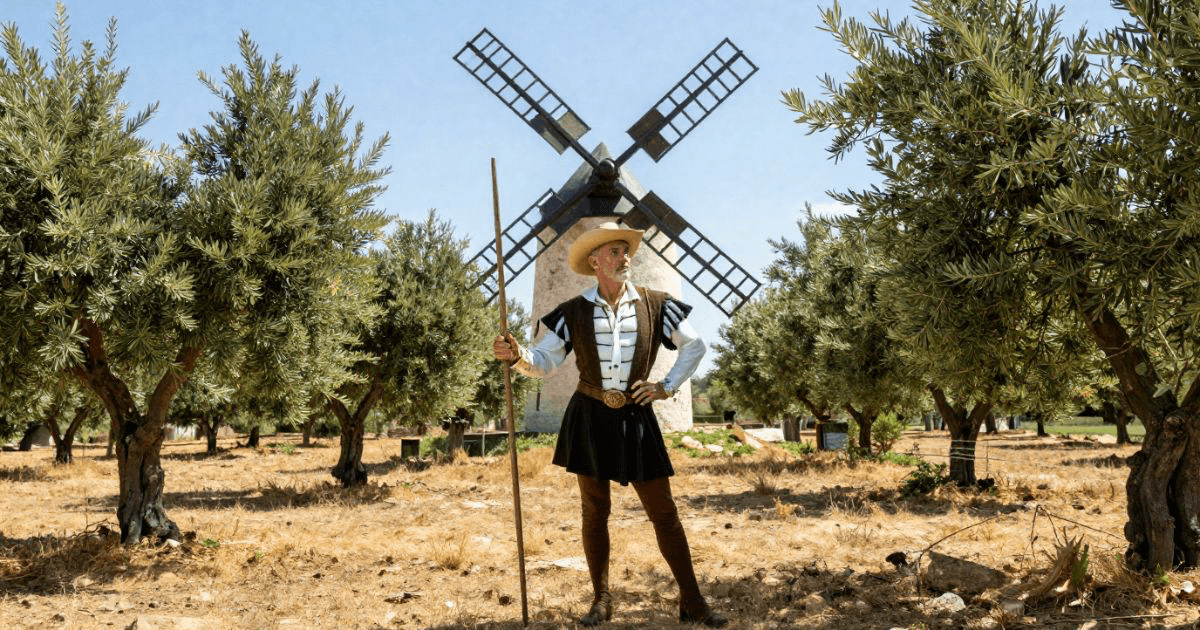
This chapter contains two crucial moments: Sancho's first serious suggestion they quit, and Don Quixote's second iconic animal mistake (sheep for armies). After being blanket-tossed, Sancho catches up limp and faint. Quixote immediately explains: the inn was enchanted, those who tossed Sancho were phantoms, and Quixote himself was enchanted and couldn't help. Sancho delivers the killing blow: they weren't phantoms—they were men with names. Pedro Martinez, Tenorio Hernandez, Juan Palomeque the Left-handed. He heard their names while being tossed. They were real. So Quixote's paralysis came from something else besides enchantment. Then Sancho makes his case: these adventures only lead to misadventures. We don't know our right foot from our left. The wise thing would be going home for harvest-time and attending to business instead of wandering from Zeca to Mecca. This is Sancho's first real quit attempt—reasoned, practical, based on evidence. Quixote dismisses it: you don't understand chivalry's honor. What greater pleasure than winning battles? Sancho's response is devastating: "All I know is that since we've been knights-errant, we have never won any battle except the one with the Biscayan, and even out of that your worship came with half an ear less. From that till now it has been all cudgellings and more cudgellings, cuffs and more cuffs, I getting the blanketing over and above." He's doing the accounting: zero wins, constant losses. Then comes the sheep scene. Don Quixote sees dust clouds and announces: vast armies! Two nations marching to battle! Sancho points out there's dust from both directions. Quixote concludes: two armies about to engage! They're actually sheep. But Quixote begins naming elaborate fictional knights: Emperor Alifanfaron versus King Pentapolin of the Bare Arm. A pagan in love with a Christian princess. Sancho, surprisingly, gets drawn in—he'll help Pentapolin! Quixote spends so long describing imaginary knights that Sancho starts believing. This shows Quixote's persuasive detail—he names dozens of warriors with their armor, heraldry, backstories. It's so elaborate that even skeptical Sancho wavers. The chapter reveals how sustained detailed fiction can override even direct contradictory evidence. Sancho just finished saying they should quit because adventures don't work. But Quixote's narrative is so compelling that within minutes Sancho is asking which side to help.

Coming Up in Chapter 19

Don Quixote charges into what he believes are battling armies. They're sheep. The shepherds will respond with stones. Another disaster is coming, and once again, Quixote will have an explanation that preserves his delusion.

Share it with friends

Previous ChapterNext Chapter
GO ADS FREE — JOIN US
Original text
complete·4,128 words
I

N WHICH IS RELATED THE DISCOURSE SANCHO PANZA HELD WITH HIS MASTER, DON QUIXOTE, AND OTHER ADVENTURES WORTH RELATING Sancho reached his master so limp and faint that he could not urge on his beast. When Don Quixote saw the state he was in he said, “I have now come to the conclusion, good Sancho, that this castle or inn is beyond a doubt enchanted, because those who have so atrociously diverted themselves with thee, what can they be but phantoms or beings of another world? and I hold this confirmed by having noticed that when I was by the wall of the yard witnessing the acts of thy sad tragedy, it was out of my power to mount upon it, nor could I even dismount from Rocinante, because they no doubt had me enchanted; for I swear to thee by the faith of what I am that if I had been able to climb up or dismount, I would have avenged thee in such a way that those braggart thieves would have remembered their freak for ever, even though in so doing I knew that I contravened the laws of chivalry, which, as I have often told thee, do not permit a knight to lay hands on him who is not one, save in case of urgent and great necessity in defence of his own life and person.”

1 / 23

Master this chapter. Complete your experience

Purchase the complete book to access all chapters and support classic literature

Read Free on GutenbergBuy at Powell'sBuy on Amazon

As an Amazon Associate, we earn a small commission from qualifying purchases at no additional cost to you.

Available in paperback, hardcover, and e-book formats

GO ADS FREE — JOIN US

Why This Matters

Connect literature to life

Skill: Distinguishing Help from Harm

This chapter teaches how to recognize when someone's good intentions are causing real damage to real people.

Practice This Today

This week, notice when someone offers help you didn't ask for—watch whether they listen to your response or push harder when you decline.

GO ADS FREE — JOIN US

Now let's explore the literary elements.

Key Quotes & Analysis

"Those who amused themselves with me were not phantoms or enchanted men...they all had their names, for I heard them name them when they were tossing me."

— Sancho Panza

Context: Refuting Quixote's enchantment explanation

Perfect use of evidence—they had names, I heard the names, therefore they were real. Sancho using basic logic to resist magical explanations. Specificity as proof of reality.

In Today's Words:

They weren't ghosts—they were real people with actual names that I heard.

"These adventures we go seeking will in the end lead us into such misadventures that we shall not know which is our right foot."

— Sancho Panza

Context: Arguing they should quit

Sancho predicting accurately where this leads—total disorientation, constant disaster. He's doing risk projection based on pattern: if it's been all beatings so far, more beatings are coming. Rational forecasting Quixote ignores.

In Today's Words:

These adventures are just going to keep getting us hurt until we're completely lost.

"Since we have been knights-errant...we have never won any battle except the one with the Biscayan, and even out of that your worship came with half an ear the less."

— Sancho Panza

Context: Tallying their record

Devastating accounting. One partial win (and Quixote lost half an ear), then pure losses. Sancho doing the math Quixote refuses to do. Evidence-based assessment versus faith-based optimism.

In Today's Words:

We've won exactly one fight, and you still got badly hurt. Everything else has been us getting destroyed.

Thematic Threads

Delusion

In This Chapter

Don Quixote sees armies in sheep flocks and refuses to accept reality even when beaten

Development

Deepening from earlier windmill fantasies—now his delusions actively harm innocent people

In Your Life:

You might recognize this in someone who won't accept feedback about their 'helpful' behavior.

Class

In This Chapter

Working shepherds suffer consequences while the delusional nobleman pursues his fantasy

Development

Continuing theme of how upper-class fantasies impact working people's real lives

In Your Life:

You've probably dealt with managers whose grand visions create extra work for frontline staff.

Loyalty

In This Chapter

Sancho finally reaches his breaking point and confronts Don Quixote with harsh truths

Development

Evolution from blind loyalty to frustrated honesty—relationship hitting crisis point

In Your Life:

You might face this moment when supporting someone becomes enabling their destructive behavior.

Reality

In This Chapter

Physical violence forces Don Quixote to confront the gap between his dreams and consequences

Development

Reality intrudes more violently than before, creating first real crack in his armor

In Your Life:

You might recognize when harsh feedback finally breaks through someone's defensive walls.

Consequences

In This Chapter

Don Quixote loses teeth and dignity while innocent shepherds lose livestock and peace

Development

Introduced here—showing how noble intentions don't prevent real damage

In Your Life:

You might see this when good intentions at work create problems you have to fix.

GO ADS FREE — JOIN US

You now have the context. Time to form your own thoughts.

Discussion Questions

  1. 1

    What actually happened when Don Quixote charged at what he thought were armies?

    analysis • surface
  2. 2

    Why couldn't Don Quixote see that he was hurting innocent people who were just doing their jobs?

    analysis • medium
  3. 3

    Think about someone you know who always 'helps' but creates more problems. How do they justify their actions to themselves?

    application • medium
  4. 4

    When someone is convinced they're helping but clearly causing harm, what's the most effective way to protect yourself and others?

    application • deep
  5. 5

    What does this chapter reveal about the difference between good intentions and actually doing good?

    reflection • deep

Critical Thinking Exercise

10 minutes

Rewrite from the Shepherd's Perspective

Imagine you're one of the shepherds whose sheep got scattered by this madman on a horse. Write a short account of what happened from your point of view. Focus on what you were actually doing, what you saw, and how you felt when your livelihood was suddenly under attack by someone claiming to fight injustice.

Consider:

  • •The shepherds had no idea about Don Quixote's noble quest - they just saw destruction
  • •These were working people whose income depended on keeping their animals safe
  • •Consider how differently the same event looks depending on who's telling the story

Journaling Prompt

Write about a time when someone's 'help' created problems for you. How did you handle it, and what would you do differently now?

GO ADS FREE — JOIN US

Coming Up Next...

Chapter 19: Sheep, Stones, and Vomit

Don Quixote charges into what he believes are battling armies. They're sheep. The shepherds will respond with stones. Another disaster is coming, and once again, Quixote will have an explanation that preserves his delusion.

Continue to Chapter 19
Previous
The Enchanted Moor and the Balsam
Contents
Next
Sheep, Stones, and Vomit

Continue Exploring

Don Quixote Study GuideTeaching ResourcesEssential Life IndexBrowse by ThemeAll Books
Identity & Self-DiscoveryMoral Dilemmas & EthicsLove & Relationships

You Might Also Like

Jane Eyre cover

Jane Eyre

Charlotte Brontë

Explores identity & self

Great Expectations cover

Great Expectations

Charles Dickens

Explores identity & self

The Strange Case of Dr Jekyll and Mr Hyde cover

The Strange Case of Dr Jekyll and Mr Hyde

Robert Louis Stevenson

Explores identity & self

The Odyssey cover

The Odyssey

Homer

Explores identity & self

Browse all 47+ books
GO ADS FREE — JOIN US

Share This Chapter

Know someone who'd enjoy this? Spread the wisdom!

TwitterFacebookLinkedInEmail

Read ad-free with Prestige

Get rid of ads, unlock study guides and downloads, and support free access for everyone.

Subscribe to PrestigeCreate free account
Intelligence Amplifier
Intelligence Amplifier™Powering Wide Reads

Exploring human-AI collaboration through books, essays, and philosophical dialogues. Classic literature transformed into navigational maps for modern life.

2025 Books

→ The Amplified Human Spirit→ The Alarming Rise of Stupidity Amplified→ San Francisco: The AI Capital of the World
Visit intelligenceamplifier.org
hello@widereads.com

WideReads Originals

→ You Are Not Lost→ The Last Chapter First→ The Lit of Love→ Wealth and Poverty→ 10 Paradoxes in the Classics · coming soon
Arvintech
arvintechAmplify your Mind
Visit at arvintech.com

Navigate

  • Home
  • Library
  • Essential Life Index
  • How It Works
  • Subscribe
  • Account
  • About
  • Contact
  • Authors
  • Suggest a Book
  • Landings

Made For You

  • Students
  • Educators
  • Families
  • Readers
  • Literary Analysis
  • Finding Purpose
  • Letting Go
  • Recovering from a Breakup
  • Corruption
  • Gaslighting in the Classics

Newsletter

Weekly insights from the classics. Amplify Your Mind.

Legal

  • Privacy Policy
  • Terms of Service
  • Cookie Policy
  • Accessibility

Why Public Domain?

We focus on public domain classics because these timeless works belong to everyone. No paywalls, no restrictions—just wisdom that has stood the test of centuries, freely accessible to all readers.

Public domain books have shaped humanity's understanding of love, justice, ambition, and the human condition. By amplifying these works, we help preserve and share literature that truly belongs to the world.

A Pilgrimage

Powell's City of Books

Portland, Oregon

If you ever find yourself in Portland, walk to the corner of Burnside and 10th. The building takes up an entire city block. Inside is over a million books, new and used on the same shelf, organized by color-coded rooms with names like the Rose Room and the Pearl Room. You can lose an afternoon. You can lose a weekend. You will find a book you have been looking for your whole life, and three you did not know existed.

It is a pilgrimage. We cannot find a bookstore like it anywhere on earth. If you read the classics, and you ever get the chance, go. It belongs on every reader's bucket list.

Visit powells.com

We are not in any way affiliated with Powell's. We are just a very big fan.

© 2026 Wide Reads™. All Rights Reserved.

Intelligence Amplifier™ and Wide Reads™ are proprietary trademarks of Arvin Lioanag.

Copyright Protection: All original content, analyses, discussion questions, pedagogical frameworks, and methodology are protected by U.S. and international copyright law. Unauthorized reproduction, distribution, web scraping, or use for AI training is strictly prohibited. See our Copyright Notice for details.

Disclaimer: The information provided on this website is for general informational and educational purposes only and does not constitute professional, legal, financial, or technical advice. While we strive to ensure accuracy and relevance, we make no warranties regarding completeness, reliability, or suitability. Any reliance on such information is at your own risk. We are not liable for any losses or damages arising from use of this site. By using this site, you agree to these terms.