Chapter 121
Altisidora's Catafalque and Sancho's Martyrdom
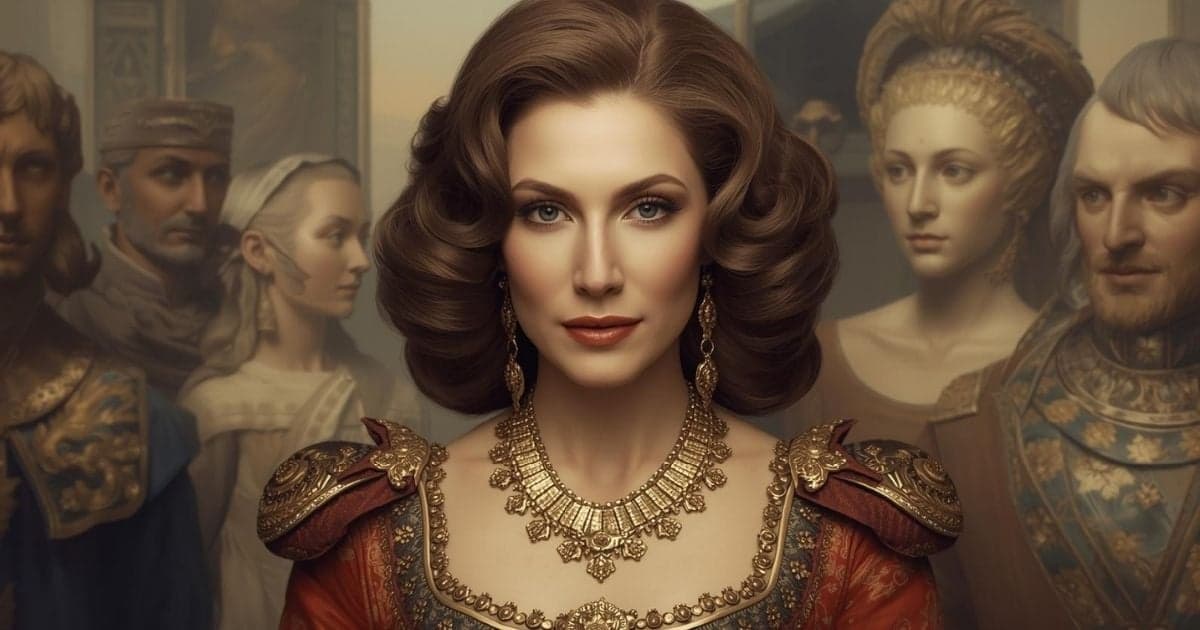
CHAPTER LXIX. OF THE STRANGEST AND MOST EXTRAORDINARY ADVENTURE THAT BEFELL DON QUIXOTE IN THE WHOLE COURSE OF THIS GREAT HISTORY The horsemen dismounted, and, together with the men on foot, without a moment’s delay taking up Sancho and Don Quixote bodily, they carried them into the court, all round which near a hundred torches fixed in sockets were burning, besides above five hundred lamps in the corridors, so that in spite of the night, which was somewhat dark, the want of daylight could not be perceived. In the middle of the court was a catafalque, raised about two yards…
Public-domain chapter text, formatted for reading.
Master this chapter. Complete your experience
Purchase the complete book to access all chapters and support classic literature
Available in paperback, hardcover, and e-book formats
Now let's explore the literary elements.
Key Quotes & Analysis
"catafalque, raised about two yards above the ground"
Context: Court spectacle
Altisidora lies in staged state.
In Today's Words:
A catafalque raised above the ground The same dynamic turns up in offices, relationships, and public life today, wherever someone bends circumstances to fit a story they cannot put down The same dynamic turns up in offices, relationships, and public life today, wherever someone bends circumstances to fit a story they cannot put down.
"four-and-twenty smacks, and give him twelve pinches and six pin thrusts"
Context: Sentence on Sancho
Revival requires measured torment.
In Today's Words:
Twenty-four smacks, twelve pinches, six pin-thrusts The same dynamic turns up in offices, relationships, and public life today, wherever someone bends circumstances to fit a story they cannot put down The same dynamic turns up in offices, relationships, and public life today, wherever someone bends circumstances to fit a story they cannot put down.
"I’m not made of brass not to feel such out-of-the-way tortures"
Context: Torch attack
Pins exceed his patience.
In Today's Words:
I'm not made of brass The same dynamic turns up in offices, relationships, and public life today, wherever someone bends circumstances to fit a story they cannot put down The same dynamic turns up in offices, relationships, and public life today, wherever someone bends circumstances to fit a story they cannot put down.
"trick upon trick, I think, and not honey upon pancakes"
Context: On more whipping
He rejects stacked penances.
In Today's Words:
Trick upon trick, not honey on pancakes The same dynamic turns up in offices, relationships, and public life today, wherever someone bends circumstances to fit a story they cannot put down The same dynamic turns up in offices, relationships, and public life today, wherever someone bends circumstances to fit a story they cannot put down.
Thematic Threads
When Sancho's Torment Raises Altisidora from the Duke's Catafalque
In This Chapter
Captors carry Don Quixote and Sancho into the duke's blazing court where a catafalque holds Altisidora's lovely corpse, two crowned kings sit as Minos and...
Development
This chapter pushes the pattern into visible action and consequence.
In Your Life:
You may recognize this pattern when stress removes the polite version of a situation.
Identity
In This Chapter
Characters defend who they are or who they pretend to be when challenged.
Development
Fantasy and reality collide around name, rank, and role.
In Your Life:
You might cling to a version of yourself that no longer matches your choices.
Class
In This Chapter
Rank, money, and reputation decide who is heard, protected, or punished.
Development
Social order shapes every rescue, betrayal, and humiliation here.
In Your Life:
You see this when status decides whose account of events becomes official.
You now have the context. Time to form your own thoughts.
Discussion Questions
This is not a test. Five prompts guide you through the chapter, from how it opens to how it closes, so you notice context and rhythm rather than facts to memorize. Sit with each question in your own words. When you see "One way to read it," treat it as a starting point, not the only answer.
- 1
Why does Sancho refuse to let duennas touch him but says he might bear daggers and pincers from others?
analysis • surfaceOne way to read it
Sancho has a specific hatred of duennas from past humiliations at the castle, calling them worse than physical torture from other people.
- 2
What makes Cervantes stage this resurrection as an elaborate theatrical performance with kings, torches, and music?
analysis • mediumOne way to read it
The theatrical setup exposes how the nobility creates artificial drama for entertainment, turning genuine suffering into spectacle.
- 3
Where do you see people today being asked to sacrifice for problems they didn't create?
application • mediumOne way to read it
Like Sancho bearing punishment for Altisidora's death, employees often face consequences for management failures or family members sacrifice for others' mistakes.
- 4
How would you respond if asked to endure pain to solve someone else's crisis you had no part in causing?
application • deepOne way to read it
Sancho's resistance shows the importance of questioning unfair demands, though sometimes helping others requires personal cost even when we're not responsible.
- 5
What does Sancho keeping the flaming robe as a memento reveal about how we remember difficult experiences?
reflection • deepOne way to read it
Even painful experiences become treasured stories over time, transforming suffering into identity and proof of what we've survived.
Critical Thinking Exercise
Name the When Sancho's Torment Raises Altisidora from the Duke's Catafalque Move
Re-read the chapter summary and write down where when sancho's torment raises altisidora from the duke's catafalque first appears, who pays for it, and who benefits from keeping it going. Then write one sentence you could say to interrupt the pattern without shaming the person caught in it.
Consider:
- •Separate the person's worth from the pattern's cost
- •Notice who has power to stop or fuel the scene
- •Ask what truth would require someone to give up
Journaling Prompt
Write about a time when you saw when sancho's torment raises altisidora from the duke's catafalque in your own life. What finally made the pattern impossible to ignore?
Coming Up Next...
Chapter 122: Hamete Explains the Plot and Altisidora's Hell
Sancho slept that night in a cot in the same chamber with Don Quixote, a thing he would have gladly excused if he could for he knew very well that with questions and answers his master would not let....