Chapter 11
The Golden Age Speech
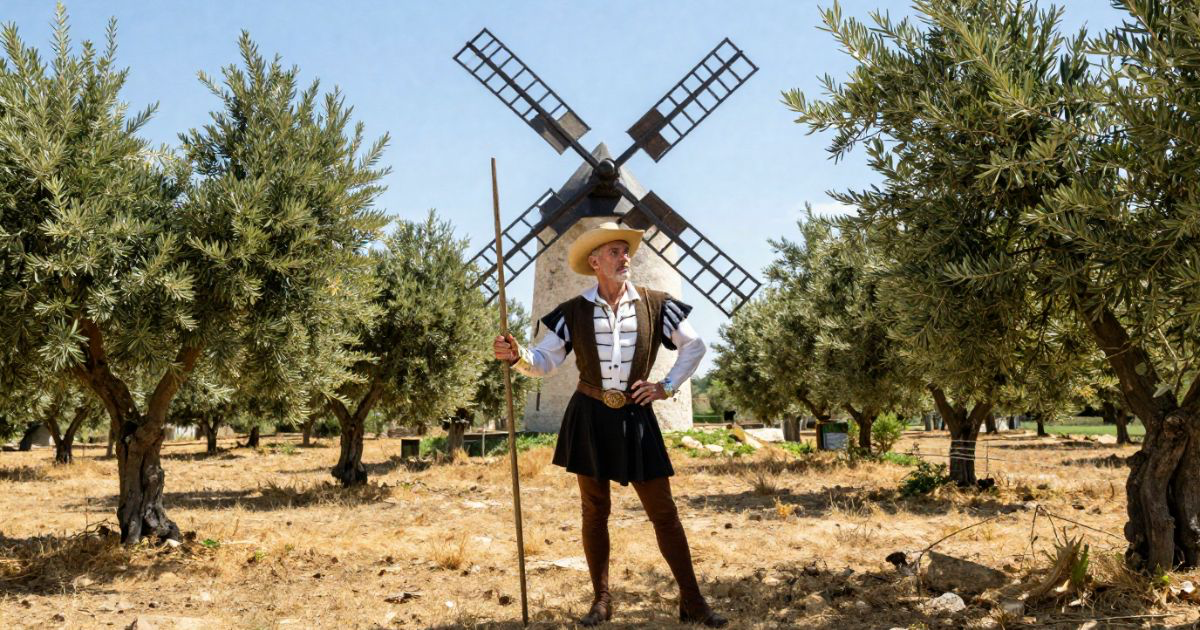
WHAT BEFELL DON QUIXOTE WITH CERTAIN GOATHERDS He was cordially welcomed by the goatherds, and Sancho, having as best he could put up Rocinante and the ass, drew towards the fragrance that came from some pieces of salted goat simmering in a pot on the fire; and though he would have liked at once to try if they were ready to be transferred from the pot to the stomach, he refrained from doing so as the goatherds removed them from the fire, and laying sheepskins on the ground, quickly spread their rude table, and with signs of hearty good-will invited…
Public-domain chapter text, formatted for reading.
Master this chapter. Complete your experience
Purchase the complete book to access all chapters and support classic literature
Available in paperback, hardcover, and e-book formats
Now let's explore the literary elements.
Key Quotes & Analysis
""
Context: Inviting Sancho to sit and share his plate
Equality is performance for the knight. Sancho will pay for it in discomfort.
In Today's Words:
Knight-errantry works like love: it makes everyone equal at the table The same dynamic turns up in offices, relationships, and public life today, wherever someone bends circumstances to fit a story they cannot put down The same dynamic turns up in offices, relationships, and public life today, wherever someone bends circumstances to fit a story
"if the truth is to be told, what I eat in my corner without form or fuss has much more relish for me, even though it be bread and onions, than the turkeys of those other tables where I am forced to chew slowly, drink little, wipe my mouth every minute, and cannot sneeze or cough if I want or do other things that are the privileges of liberty and solitude."
Context: Refusing to dine as Quixote's equal
He chooses liberty over honor. Fancy tables mean surveillance, not freedom.
In Today's Words:
I would rather eat bread and onions alone than turkey where I cannot sneeze The same dynamic turns up in offices, relationships, and public life today, wherever someone bends circumstances to fit a story they cannot put down The same dynamic turns up in offices, relationships, and public life today, wherever someone bends circumstances to
"Happy the age, happy the time, to which the ancients gave the name of golden, not because in that fortunate age the gold so coveted in this our iron one was gained without toil, but because they that lived in it knew not the two words “_mine_” and “_thine_”!"
Context: Beginning the Golden Age speech over acorns
He describes communal innocence to men who herd goats for a living.
In Today's Words:
In the golden age nobody said mine or thine. Everything was shared The same dynamic turns up in offices, relationships, and public life today, wherever someone bends circumstances to fit a story they cannot put down The same dynamic turns up in offices, relationships, and public life today, wherever someone bends circumstances to fit a
"All this long harangue (which might very well have been spared) our knight delivered because the acorns they gave him reminded him of the golden age; and the whim seized him to address all this unnecessary argument to the goatherds, who listened to him gaping in amazement without saying a word in reply."
Context: After the Golden Age harangue
Cervantes marks the speech as optional and the audience as stunned, not converted.
In Today's Words:
He gave a long speech nobody needed because acorns reminded him of the golden age The same dynamic turns up in offices, relationships, and public life today, wherever someone bends circumstances to fit a story they cannot put down The same dynamic turns up in offices, relationships, and public life today, wherever someone bends circumstances
Thematic Threads
Romanticizing Other People's Labor
In This Chapter
The goatherds welcome Don Quixote and Sancho with salted goat, cheese, acorns, and wine.
Development
This chapter pushes the pattern into visible action and consequence.
In Your Life:
You may recognize this pattern when stress removes the polite version of a situation.
Identity
In This Chapter
Characters defend who they are or who they pretend to be when challenged.
Development
Fantasy and reality collide around name, rank, and role.
In Your Life:
You might cling to a version of yourself that no longer matches your choices.
Class
In This Chapter
Rank, money, and reputation decide who is heard, protected, or punished.
Development
Social order shapes every rescue, betrayal, and humiliation here.
In Your Life:
You see this when status decides whose account of events becomes official.
You now have the context. Time to form your own thoughts.
Discussion Questions
This is not a test. Five prompts guide you through the chapter, from how it opens to how it closes, so you notice context and rhythm rather than facts to memorize. Sit with each question in your own words. When you see "One way to read it," treat it as a starting point, not the only answer.
- 1
Why does Sancho refuse to sit at Don Quixote's side, saying he prefers eating bread and onions alone to turkeys at fancy tables?
analysis • surfaceOne way to read it
Sancho values the freedom to eat naturally without forced manners, wiping, or restraint. He'd rather have simple food with liberty than rich food with social obligations.
- 2
Why does Cervantes tell us that Don Quixote's Golden Age speech 'might very well have been spared' while the goatherds listen 'gaping in amazement'?
analysis • mediumOne way to read it
Cervantes shows how Quixote's romantic theories miss the reality before him. The goatherds don't need lectures about their simple life; they're living it.
- 3
Where do you see people today romanticizing simple living or manual labor while missing what it's actually like?
application • mediumOne way to read it
Social media posts about 'cottage core' or farm life often ignore the hard work, financial stress, and isolation that real farmers face daily.
- 4
When might you catch yourself idealizing someone else's situation without understanding their actual experience?
application • deepOne way to read it
When envying a friend's job, relationship, or lifestyle without knowing their real struggles, or when assuming people in different circumstances are happier or more authentic.
- 5
What does the contrast between Quixote's Golden Age vision and the goatherds' practical hospitality reveal about how stories shape our view of reality?
reflection • deepOne way to read it
Stories can make us see what we expect rather than what's there. Quixote sees ancient simplicity; the goatherds just see dinner and a guest who talks too much.
Critical Thinking Exercise
Name the Romanticizing Other People's Labor Move
Re-read the chapter summary and write down where romanticizing other people's labor first appears, who pays for it, and who benefits from keeping it going. Then write one sentence you could say to interrupt the pattern without shaming the person caught in it.
Consider:
- •Separate the person's worth from the pattern's cost
- •Notice who has power to stop or fuel the scene
- •Ask what truth would require someone to give up
Journaling Prompt
Write about a time when you saw romanticizing other people's labor in your own life. What finally made the pattern impossible to ignore?
Coming Up Next...
Chapter 12: The Story of Marcela
A messenger brings news from the village: the student-shepherd Chrysostom has died, rumoured of love for Marcela, the rich orphan who tends sheep in these hills A messenger brings news from the village: the student-shepherd Chrysostom has died, rumoured of love for Marcela, the rich orphan who tends sheep in these hills. He asked to be buried like a Moor at the cork-tree spring.