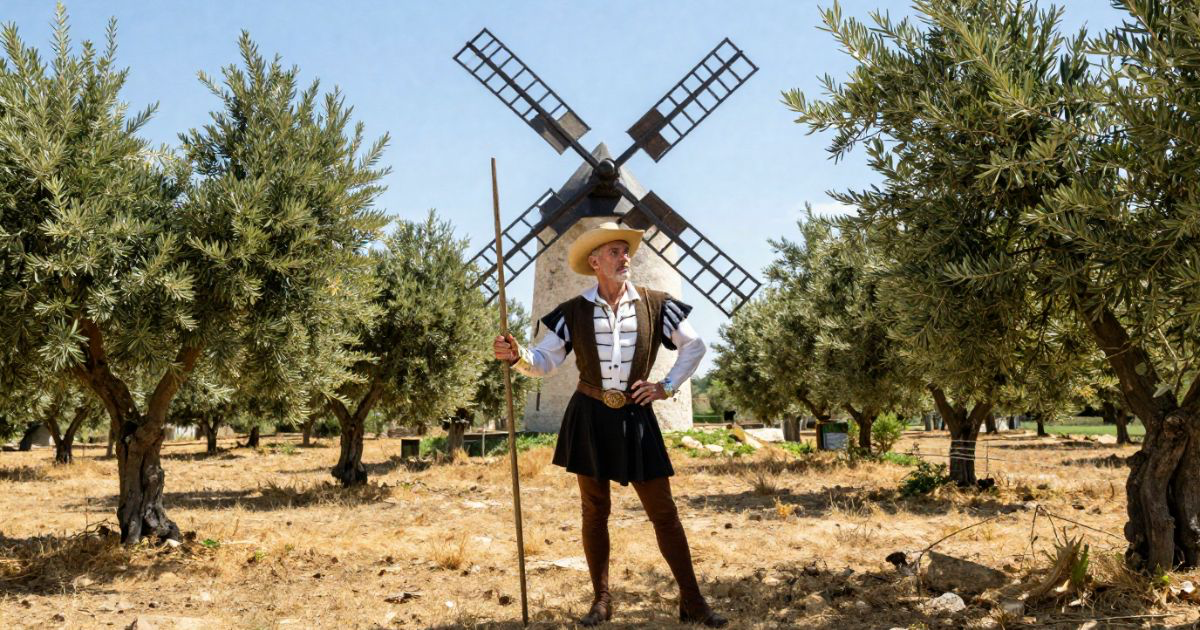
Chapter 113
Entering Barcelona on Saint John's Eve
CHAPTER LXI. OF WHAT HAPPENED DON QUIXOTE ON ENTERING BARCELONA, TOGETHER WITH OTHER MATTERS THAT PARTAKE OF THE TRUE RATHER THAN OF THE INGENIOUS Don Quixote passed three days and three nights with Roque, and had he passed three hundred years he would have found enough to observe and wonder at in his mode of life. At daybreak they were in one spot, at dinner-time in another; sometimes they fled without knowing from whom, at other times they lay in wait, not knowing for what. They slept standing, breaking their slumbers to shift from place to place. There was nothing…
Public-domain chapter text, formatted for reading.
Master this chapter. Complete your experience
Purchase the complete book to access all chapters and support classic literature
Available in paperback, hardcover, and e-book formats
Now let's explore the literary elements.
Key Quotes & Analysis
"Clear the way there!"
Context: City sounds at dawn
Barcelona wakes to ceremony.
In Today's Words:
Clear the way there The same dynamic turns up in offices, relationships, and public life today, wherever someone bends circumstances to fit a story they cannot put down The same dynamic turns up in offices, relationships, and public life today, wherever someone bends circumstances to fit a story they cannot put down.
"mirror, beacon, star and cynosure"
Context: Welcome on the strand
Grand titles greet the knight.
In Today's Words:
Mirror, beacon, star and cynosure The same dynamic turns up in offices, relationships, and public life today, wherever someone bends circumstances to fit a story they cannot put down The same dynamic turns up in offices, relationships, and public life today, wherever someone bends circumstances to fit a story they cannot put down.
"not the false, the fictitious, the apocryphal"
Context: True versus fake Quixote
Rejects the spurious history.
In Today's Words:
Not the false, fictitious, apocryphal Quixote The same dynamic turns up in offices, relationships, and public life today, wherever someone bends circumstances to fit a story they cannot put down The same dynamic turns up in offices, relationships, and public life today, wherever someone bends circumstances to fit a story they cannot put down.
"such is Cide Hamete’s pleasure"
Context: Chapter close
Historian pauses at the threshold.
In Today's Words:
Such is Cide Hamete's pleasure The same dynamic turns up in offices, relationships, and public life today, wherever someone bends circumstances to fit a story they cannot put down The same dynamic turns up in offices, relationships, and public life today, wherever someone bends circumstances to fit a story they cannot put down.
Thematic Threads
When Roque's Letter Brings Welcome and Furze Upsets the Entrance
In This Chapter
Quixote passes three days and three nights with Roque's weary miserable life of spies, sentinels, and secret paths; Roque embraces him on Saint John's Eve,...
Development
This chapter pushes the pattern into visible action and consequence.
In Your Life:
You may recognize this pattern when stress removes the polite version of a situation.
Identity
In This Chapter
Characters defend who they are or who they pretend to be when challenged.
Development
Fantasy and reality collide around name, rank, and role.
In Your Life:
You might cling to a version of yourself that no longer matches your choices.
Class
In This Chapter
Rank, money, and reputation decide who is heard, protected, or punished.
Development
Social order shapes every rescue, betrayal, and humiliation here.
In Your Life:
You see this when status decides whose account of events becomes official.
You now have the context. Time to form your own thoughts.
Discussion Questions
This is not a test. Five prompts guide you through the chapter, from how it opens to how it closes, so you notice context and rhythm rather than facts to memorize. Sit with each question in your own words. When you see "One way to read it," treat it as a starting point, not the only answer.
- 1
Why does Roque sleep apart from his own men and fear even they might kill him or turn him in?
analysis • surfaceOne way to read it
The viceroy's proclamations against his life make Roque so paranoid he can't trust anyone, even his followers, creating a 'weary miserable life' of constant fear.
- 2
Why does Cervantes have the horsemen praise Don Quixote as the 'true' knight while dismissing 'false, fictitious' versions?
analysis • mediumOne way to read it
Cervantes mocks competing sequels to his own work while ironically having fictional characters debate which version of a fictional knight is 'real.'
- 3
Where do you see people today getting grand welcomes that turn embarrassing through small mishaps?
application • mediumOne way to read it
Politicians stumbling at rallies, celebrities tripping on red carpets, or graduation speakers having microphone failures all echo this pattern of dignity meeting pratfalls.
- 4
How should someone respond when pranksters undermine their moment of recognition or achievement?
application • deepOne way to read it
Like Don Quixote removing the furze with dignity, focus on restoring composure rather than seeking revenge, since pursuing the troublemakers often causes more embarrassment.
- 5
What does the contrast between Quixote's grand welcome and the boys' prank reveal about how reality treats our ideals?
reflection • deepOne way to read it
Reality rarely allows pure triumph; even genuine recognition gets mixed with humiliation, suggesting that idealism must coexist with life's inevitable absurdities and setbacks.
Critical Thinking Exercise
Name the When Roque's Letter Brings Welcome and Furze Upsets the Entrance Move
Re-read the chapter summary and write down where when roque's letter brings welcome and furze upsets the entrance first appears, who pays for it, and who benefits from keeping it going. Then write one sentence you could say to interrupt the pattern without shaming the person caught in it.
Consider:
- •Separate the person's worth from the pattern's cost
- •Notice who has power to stop or fuel the scene
- •Ask what truth would require someone to give up
Journaling Prompt
Write about a time when you saw when roque's letter brings welcome and furze upsets the entrance in your own life. What finally made the pattern impossible to ignore?
Coming Up Next...
Chapter 114: The Enchanted Head and Don Antonio's House
Don Quixote's host was one Don Antonio Moreno by name, a gentleman of wealth and intelligence, and very fond of diverting himself in any fair and good-natured way Don Antonio Moreno hosts Quixote to harmless sport in Barcelona, saying jests that give pain are no jests and no sport is worth anything if it hurts another; he shows him on a balcony in tight.