Chapter 101
Sancho's Night Round of Barataria
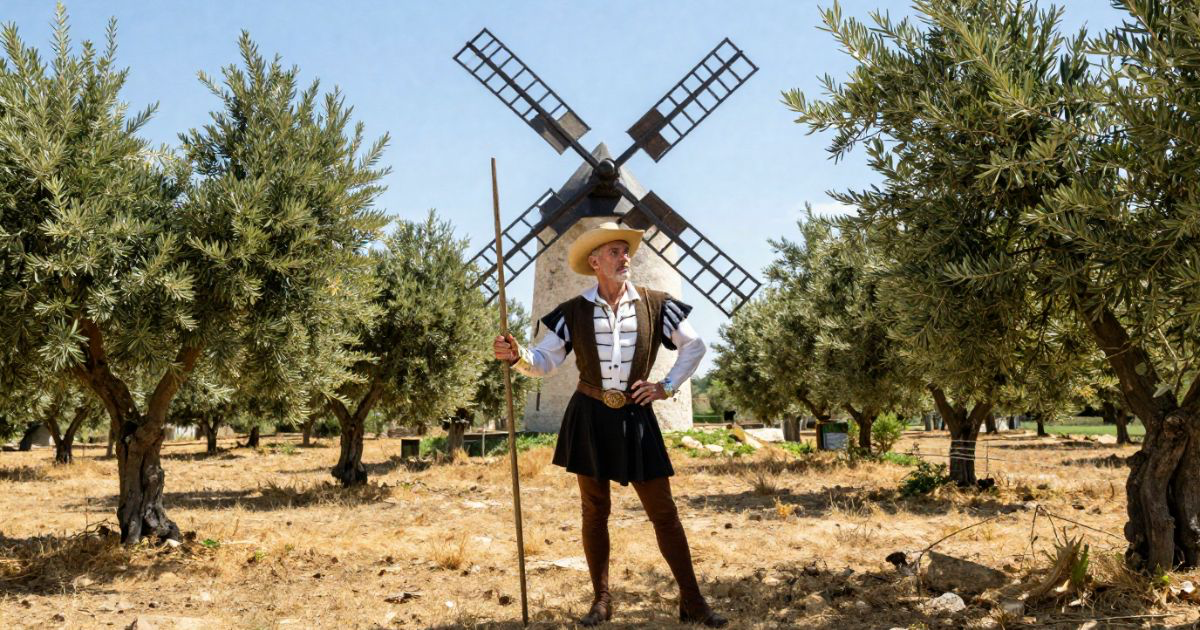
LIX. OF WHAT HAPPENED SANCHO IN MAKING THE ROUND OF HIS ISLAND We left the great governor angered and irritated by that portrait-painting rogue of a farmer who, instructed by the majordomo, as the majordomo was by the duke, tried to practise upon him; he however, fool, boor, and clown as he was, held his own against them all, saying to those round him and to Doctor Pedro Recio, who as soon as the private business of the duke’s letter was disposed of had returned to the room, “Now I see plainly enough that judges and governors ought to be…
Public-domain chapter text, formatted for reading.
Master this chapter. Complete your experience
Purchase the complete book to access all chapters and support classic literature
Available in paperback, hardcover, and e-book formats
Now let's explore the literary elements.
Key Quotes & Analysis
"judges and governors ought to be and must be made of brass"
Context: After the farmer and Doctor Recio
Office hardens the squire into eloquence.
In Today's Words:
Judges and governors ought to be made of brass The same dynamic turns up in offices, relationships, and public life today, wherever someone bends circumstances to fit a story they cannot put down The same dynamic turns up in offices, relationships, and public life today, wherever someone bends circumstances to fit a story they cannot
"ollas podridas (and the rottener they are the better they smell)"
Context: At supper with the doctor
Peasant taste rejects physician's dainties.
In Today's Words:
Ollas podridas, and the rottener the better they smell The same dynamic turns up in offices, relationships, and public life today, wherever someone bends circumstances to fit a story they cannot put down The same dynamic turns up in offices, relationships, and public life today, wherever someone bends circumstances to fit a story they cannot
"give this assailant of yours a hundred reals at once"
Context: Gambling-house quarrel
Comic equity taxes winner and idler.
In Today's Words:
Give this assailant a hundred reals at once The same dynamic turns up in offices, relationships, and public life today, wherever someone bends circumstances to fit a story they cannot put down The same dynamic turns up in offices, relationships, and public life today, wherever someone bends circumstances to fit a story they cannot put
"the woman and the hen by gadding about are soon lost"
Context: Sending the siblings home
Proverb closes the night wanderers' case.
In Today's Words:
The woman and the hen by gadding about are soon lost The same dynamic turns up in offices, relationships, and public life today, wherever someone bends circumstances to fit a story they cannot put down The same dynamic turns up in offices, relationships, and public life today, wherever someone bends circumstances to fit a story
Thematic Threads
When the Governor Walks the Island by Night
In This Chapter
Still angered by the portrait farmer, Sancho tells Doctor Recio that judges must be brass to endure applicants at dinner and bed-time, blames Tirteafuera...
Development
This chapter pushes the pattern into visible action and consequence.
In Your Life:
You may recognize this pattern when stress removes the polite version of a situation.
Identity
In This Chapter
Characters defend who they are or who they pretend to be when challenged.
Development
Fantasy and reality collide around name, rank, and role.
In Your Life:
You might cling to a version of yourself that no longer matches your choices.
Class
In This Chapter
Rank, money, and reputation decide who is heard, protected, or punished.
Development
Social order shapes every rescue, betrayal, and humiliation here.
In Your Life:
You see this when status decides whose account of events becomes official.
You now have the context. Time to form your own thoughts.
Discussion Questions
This is not a test. Five prompts guide you through the chapter, from how it opens to how it closes, so you notice context and rhythm rather than facts to memorize. Sit with each question in your own words. When you see "One way to read it," treat it as a starting point, not the only answer.
- 1
When Sancho says judges must be made of brass to endure constant applicants, what does this reveal about his understanding of leadership?
analysis • surfaceOne way to read it
Sancho recognizes that governing requires emotional resilience against endless demands. His brass metaphor shows he's learning that authority means bearing pressure from all sides.
- 2
Why does Cervantes have the young weaver outsmart Sancho with logic about sleeping in jail, making the governor look foolish?
analysis • mediumOne way to read it
Cervantes shows that clever wordplay can expose the limits of authority. Even a simple governor's power has boundaries when faced with human will and logical thinking.
- 3
Where do you see people today using technicalities or clever arguments to avoid consequences, like the weaver does with Sancho?
application • mediumOne way to read it
Students finding loopholes in assignment rules, lawyers using legal technicalities, or people exploiting fine print in contracts all mirror the weaver's clever evasion tactics.
- 4
If you were the young woman caught wandering at night, how would you balance your desire for freedom with family expectations?
application • deepOne way to read it
Like Diego's daughter, you might start with honest conversation about your needs, suggest compromises like supervised outings, or gradually earn trust through responsible behavior.
- 5
What does the head-carver's instant marriage plan and Sancho's matchmaking scheme reveal about how people respond to brief encounters?
reflection • deepOne way to read it
People often project entire futures onto fleeting moments. The chapter shows how quickly we build elaborate plans from minimal information, revealing our hunger for connection and meaning.
Critical Thinking Exercise
Name the When the Governor Walks the Island by Night Move
Re-read the chapter summary and write down where when the governor walks the island by night first appears, who pays for it, and who benefits from keeping it going. Then write one sentence you could say to interrupt the pattern without shaming the person caught in it.
Consider:
- •Separate the person's worth from the pattern's cost
- •Notice who has power to stop or fuel the scene
- •Ask what truth would require someone to give up
Journaling Prompt
Write about a time when you saw when the governor walks the island by night in your own life. What finally made the pattern impossible to ignore?
Coming Up Next...
Chapter 102: The Page to Teresa Panza
Hamete names the enchanted executioners who flogged Doña Rodriguez and pinched Don Quixote, and tells what befell Sancho's letter to Teresa What follows unsettles everything settled here Hamete explains that a tattling duenna followed Doña Rodriguez to Don Quixote's room; the duchess and Altisidora overheard the leg-issue gossip at the door, burst in, and flogged the duenna and pinched the knight, after which the.