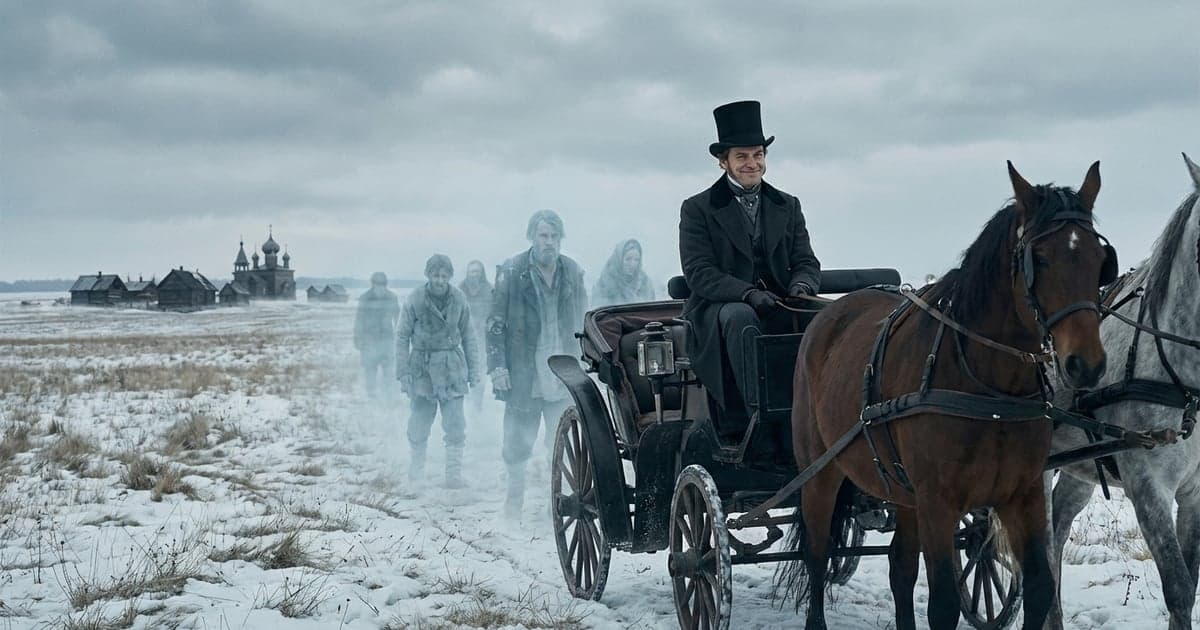
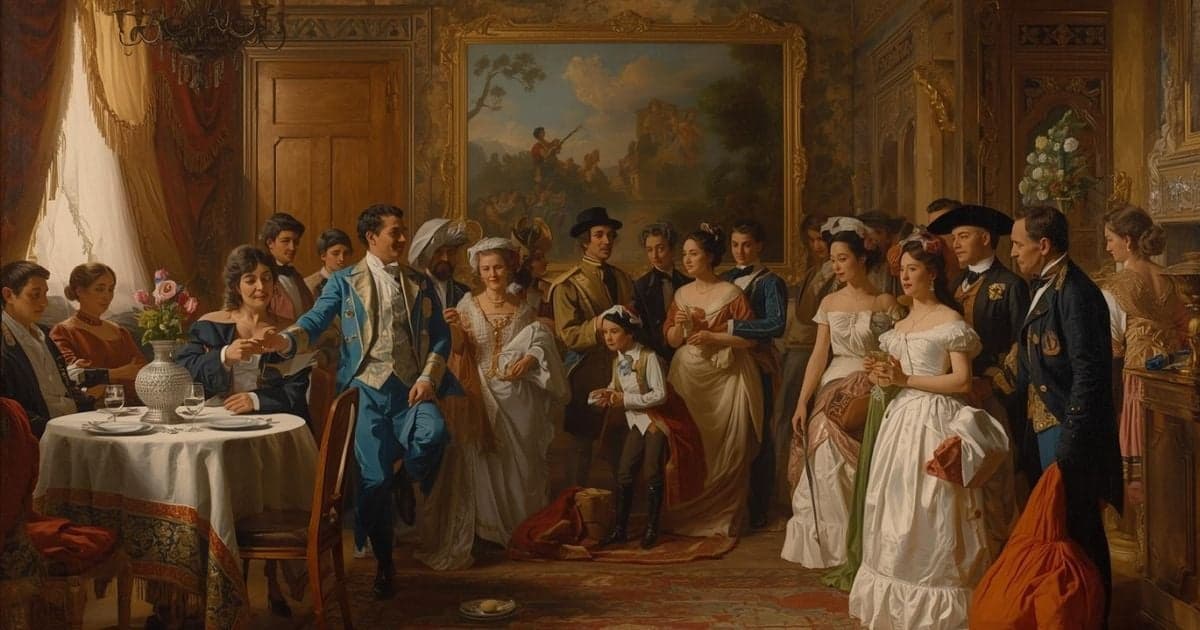
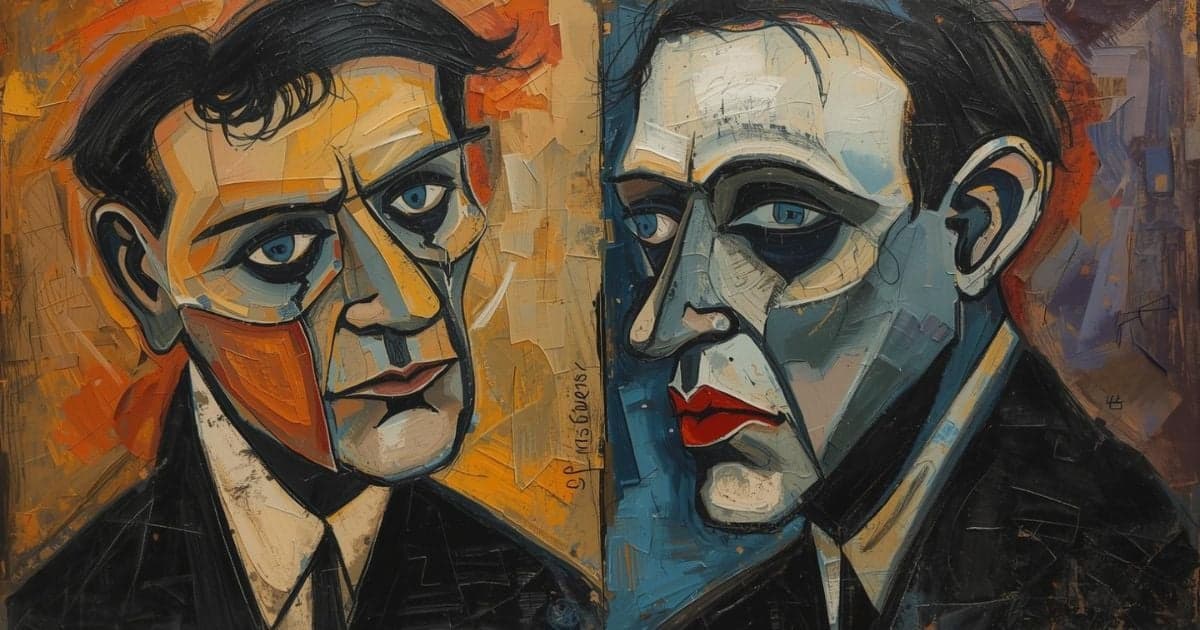
Chichikov wakes owning nearly four hundred souls, skips his mirror, cuts capers in Moroccan slippers like a Scottish highlander, and drafts indentures himself to save lawyer fees and lawyer delays. At the municipal offices he is bounced from desk to desk until Ivan Antonovitch, a pitcher-mug face buried in papers, admits this is the serf desk. In the President's sanctum Sobakevitch already sits; Plushkin's letter is read with wonder that the miser still lives; witnesses are summoned; fees shrink because the President likes the total near a hundred thousand roubles. At the Chief of Police's feast Chichikov is toasted as a Kherson landowner, urged to marry, and carried home drunk while Selifan and Petrushka slip to a basement tavern. The President forbids gratuities yet hosts a feast where the Chief of Police procures sturgeon like a father to the town.
Reading the lists, he sighs over names: Korobotchka's nicknames, Plushkin's terse dots, Sobakevitch's biographies listing fathers, mothers, and trades. He invents lives for Probka Stepan the carpenter and drunk shoemakers, then imagines runaways arguing with gendarmes in a comic monologue that turns the census into fiction. Manilov arrives with a list bordered by his wife and supports Chichikov through every stair with embarrassing zeal. Chichikov lectures on liberal youth while hiding that he is talking rubbish; Sobakevitch boasts of selling Michiev though the President thought the craftsman dead. Ivan Antonovitch whispers that the serfs are worthless; Sobakevitch whispers why Plushkin was visited. Witnesses multiply: the blinking Public Prosecutor, the Medical Inspector, Father Cyril and his clerk-son, each signing with ornate flourishes while Ivan Antonovitch dockets the deed for half fees. Toasts follow: health to the Kherson landowner, prosperity to transferred peasants, beauty to a future wife Chichikov has never met.
Sobakevitch devours a quarter of the sturgeon before anyone else reaches it, then sits frowning in an armchair. Champagne yields to Hungarian wine; officials dispute politics without sense; Chichikov recites verses and imagines agricultural reform on land he does not own. The Public Prosecutor's drozhki carry him home while the driver holds him upright; Petrushka and Selifan abandon duty for a basement drink and sleep in a tangle of snores. The chapter turns acquisition into bureaucracy and celebration: paper souls pass through Themis in a dirty dressing-gown, then through sturgeon and champagne. Chichikov babbles poetry to a blinking Sobakevitch, orders Selifan to inventory peasants who exist only on lists, and sleeps the sleep of a man who believes paperwork can become property. Fraud has graduated from village haggling to official registry; the town now treats the scheme as respectability. Volume One's economic joke is complete: the dead are registered, toasted, and imagined marching to Kherson while the living sleep off the champagne.
Coming Up in Chapter 8
Chichikov's purchases are already town gossip. Citizens debate escorts for his convoy while rumour crowns him a millionaire long before anyone asks what transferring dead souls actually means. The Governor's ball is next, and the ladies of N. are shopping for dress materials..