Wide Reads
Literature MattersLife IndexEducators
Sign in
Where to Begin
Dead Souls - The Mysterious Gentleman Arrives

Nikolai Gogol

Dead Souls

The Mysterious Gentleman Arrives

Home›Books›Dead Souls›Chapter 1
1 of 15
Next

Summary

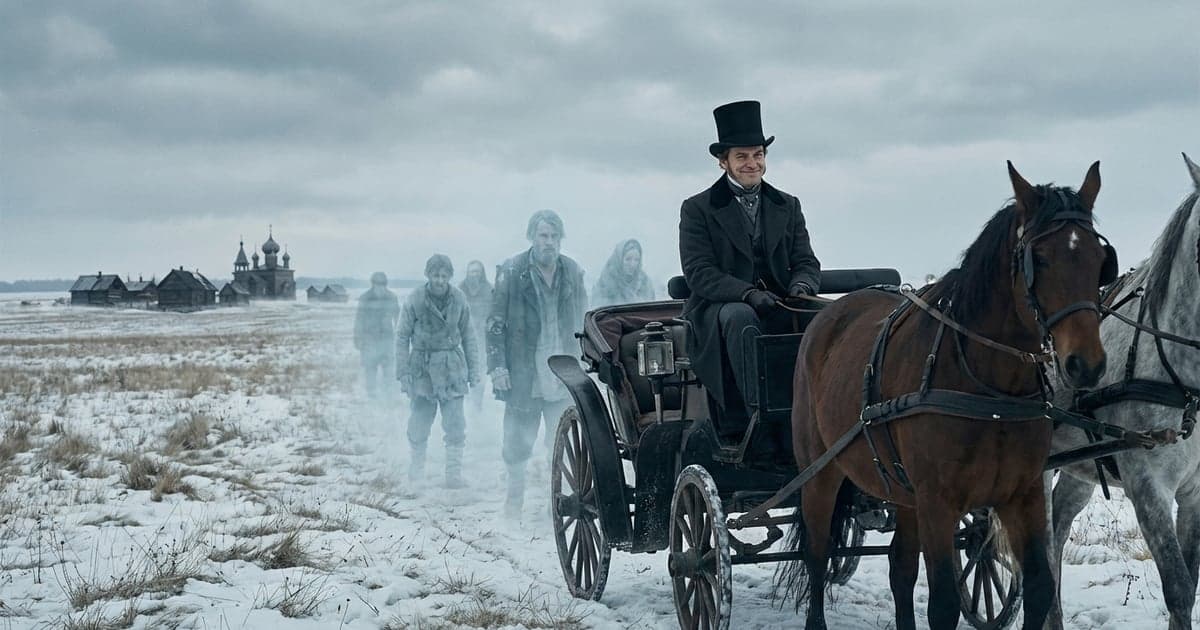
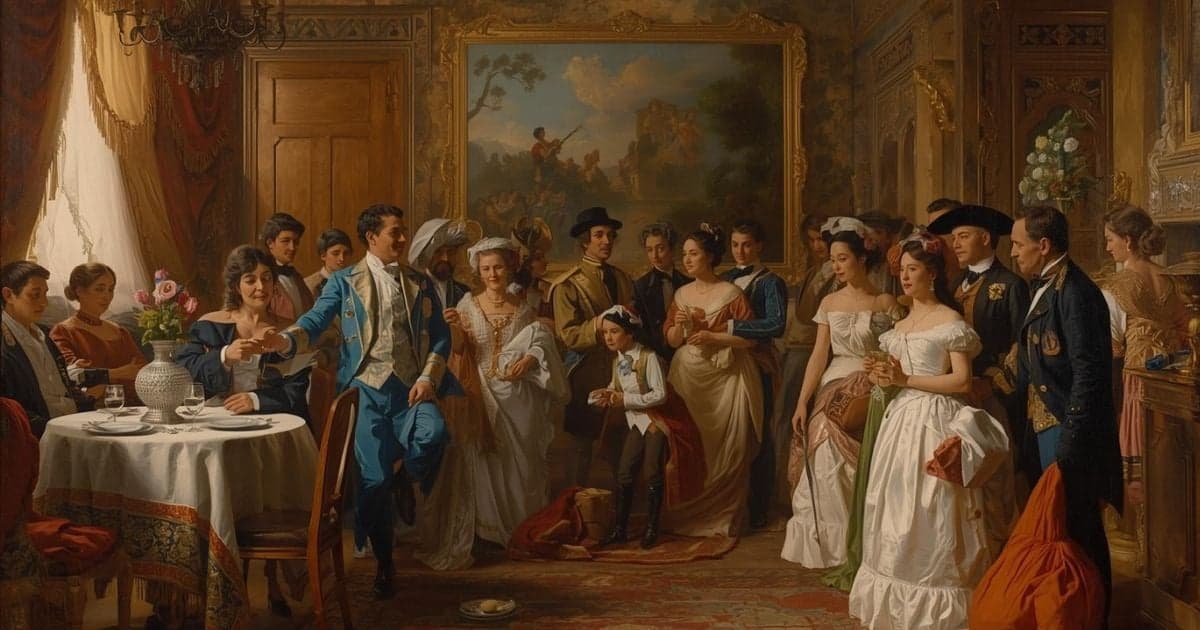
A britchka draws up to a provincial inn. Two peasants watch it arrive and exchange opinions about where it might be headed — Moscow, perhaps, but probably not Kazan. The man inside is described with characteristic Gogol precision: "not handsome, not ill-favoured, not over-fat, not over-thin, not over-elderly, not over-young." He appears constructed to be unremarkable. He takes a room, orders dinner, and while waiting interrogates the waiter with apparent casualness: who is the Governor? The Vice-Governor? The Chief of Police? The landowners nearby — how many, how far, what are their characters? His name appears only when he signs the police register: Paul Ivanovitch Chichikov, Collegiate Councillor, Landowner, Travelling on Private Affairs. Next morning he inspects the town. The municipal gardens contain sorry little trees propped on painted supports, barely taller than a walking stick — yet the local paper recently praised the Governor for enriching the town with "umbrageous, spaciously-branching trees" that move citizens to shed tears of gratitude. He then launches his social campaign. In a single day he calls on the Governor, Vice-Governor, Public Prosecutor, President of the Local Council, Chief of Police, Commissioner of Taxes, Director of State Factories, Inspector of Medicine, and the City Architect. To the Governor he remarks that arriving in his province feels like reaching Paradise, the roads are so fine. To two State Councillors not yet holding the rank of Excellency, he addresses them as "Your Excellency" twice — a blunder that delights them both. At the Governor's evening party he observes two species of man: slim ones who dance with ladies; stout ones who sit at the card table and accumulate. The stout ones, he reflects, end up with country estates. He joins the stout ones. At cards he meets Manilov — sweet-eyed, effusive, unable to say enough about his new friend — and Sobakevitch, who opens the acquaintance by standing on Chichikov's foot. To both, amid the pleasantries, Chichikov puts his careful question: how many peasant souls do they possess? Within days, every official has the highest opinion of him. The Governor: excellent intentions. The Public Prosecutor: sound man of business. Even Sobakevitch — who speaks well of no one — tells his wife that Chichikov is "a very pleasant fellow." The chapter closes with a hint: a certain speciality of his will soon plunge the majority of townsfolk into perplexity.

Coming Up in Chapter 2

Having conquered the town's social scene, Chichikov is ready to move beyond mere networking. He plans to visit the landowners he's befriended, but his true motives for these countryside excursions hint at something far more calculating than simple social calls.

Share it with friends

Next Chapter
GO ADS FREE — JOIN US
Original text
complete·5,473 words
T

o the door of an inn in the provincial town of N. there drew up a smart britchka--a light spring-carriage of the sort affected by bachelors, retired lieutenant-colonels, staff-captains, land-owners possessed of about a hundred souls, and, in short, all persons who rank as gentlemen of the intermediate category. In the britchka was seated such a gentleman--a man who, though not handsome, was not ill-favoured, not over-fat, and not over-thin. Also, though not over-elderly, he was not over-young. His arrival produced no stir in the town, and was accompanied by no particular incident, beyond that a couple of peasants who happened to be standing at the door of a dramshop exchanged a few comments with reference to the equipage rather than to the individual who was seated in it. “Look at that carriage,” one of them said to the other. “Think you it will be going as far as Moscow?” “I think it will,” replied his companion. “But not as far as Kazan, eh?” “No, not as far as Kazan.” With that the conversation ended. Presently, as the britchka was approaching the inn, it was met by a young man in a pair of very short, very tight breeches of white dimity, a quasi-fashionable frockcoat, and a dickey fastened with a pistol-shaped bronze tie-pin. The young man turned his head as he passed the britchka and eyed it attentively; after which he clapped his hand to his cap (which was in danger of being removed by the wind) and resumed his way. On the vehicle reaching the inn door, its occupant found standing there to welcome him the polevoi, or waiter, of the establishment--an individual of such nimble and brisk movement that even to distinguish the character of his face was impossible. Running out with a napkin in one hand and his lanky form clad in a tailcoat, reaching almost to the nape of his neck, he tossed back his locks, and escorted the gentleman upstairs, along a wooden gallery, and so to the bedchamber which God had prepared for the gentleman’s reception. The said bedchamber was of quite ordinary appearance, since the inn belonged to the species to be found in all provincial towns--the species wherein, for two roubles a day, travellers may obtain a room swarming with black-beetles, and communicating by a doorway with the apartment adjoining. True, the doorway may be blocked up with a wardrobe; yet behind it, in all probability, there will be standing a silent, motionless neighbour whose ears are burning to learn every possible detail concerning the latest arrival. The inn’s exterior corresponded with its interior. Long, and consisting only of two storeys, the building had its lower half destitute of stucco; with the result that the dark-red bricks, originally more or less dingy, had grown yet dingier under the influence of atmospheric changes. As for the upper half of the building, it was, of course, painted the usual tint of unfading yellow. Within, on the ground floor, there stood a number of benches heaped with horse-collars, rope, and sheepskins; while the window-seat accommodated a sbitentshik [4], cheek by jowl with a samovar [5]--the latter so closely resembling the former in appearance that, but for the fact of the samovar possessing a pitch-black lip, the samovar and the sbitentshik might have been two of a pair.

1 / 11

Master this chapter. Complete your experience

Purchase the complete book to access all chapters and support classic literature

Read Free on GutenbergBuy at Powell'sBuy on Amazon

As an Amazon Associate, we earn a small commission from qualifying purchases at no additional cost to you.

Available in paperback, hardcover, and e-book formats

GO ADS FREE — JOIN US

Why This Matters

Connect literature to life

Skill: Reading Power Dynamics

This chapter teaches how to identify who actually holds influence versus who just appears important.

Practice This Today

This week, notice who people go to when they need real help—not the person with the biggest title, but the one who gets things done.

GO ADS FREE — JOIN US

Now let's explore the literary elements.

Key Quotes & Analysis

"Look at that carriage. Think you it will be going as far as Moscow?"

— Local peasant

Context: Two peasants casually discussing Chichikov's arrival at the inn

This seemingly throwaway conversation establishes that even ordinary people notice and speculate about strangers. It shows how small provincial towns work - everyone's business becomes everyone else's curiosity.

In Today's Words:

Wonder where that guy's headed - looks like he's got some money.

"The gentleman was neither handsome nor ill-favored, neither too stout nor too thin, neither too old nor too young."

— Narrator

Context: Gogol's introduction of Chichikov's deliberately unremarkable appearance

Chichikov's ordinariness is strategic - he's designed to blend in and not attract suspicion. This physical description suggests someone who has cultivated anonymity as a tool.

In Today's Words:

He was the kind of guy you'd forget five minutes after meeting him - completely average in every way.

"He had the faculty of accommodating himself to every one and everything."

— Narrator

Context: Describing how Chichikov adapts his personality to charm different people

This reveals Chichikov's core skill - he's a social chameleon who becomes whatever each person needs him to be. It's both impressive and deeply manipulative.

In Today's Words:

He was one of those people who could talk to anyone about anything and make them feel like they were best friends.

Thematic Threads

Social Masks

In This Chapter

Chichikov presents a carefully crafted persona, adjusting his personality to match each official's expectations and interests

Development

Introduced here

In Your Life:

You might recognize this when someone seems almost too perfectly interested in exactly what you care about

Information as Currency

In This Chapter

Chichikov asks strategic questions about landowners and their 'souls' while appearing to make casual conversation

Development

Introduced here

In Your Life:

You see this when people pump you for details about your workplace, finances, or personal life under the guise of friendly interest

Power Recognition

In This Chapter

Chichikov immediately identifies who holds real influence—the stout officials who play cards and accumulate wealth rather than the fashionable socialites

Development

Introduced here

In Your Life:

You experience this when learning to navigate any new environment by figuring out who actually makes decisions versus who just has titles

First Impressions

In This Chapter

Within days, Chichikov has convinced an entire town that he's a refined gentleman of good character through careful impression management

Development

Introduced here

In Your Life:

You see this power when starting a new job, moving to a new neighborhood, or entering any social group where you can define yourself from scratch

Hidden Agendas

In This Chapter

Everyone believes Chichikov is simply a pleasant gentleman making social calls, while he's actually gathering intelligence for an unknown scheme

Development

Introduced here

In Your Life:

You encounter this when someone's actions don't quite match their stated intentions, leaving you with a nagging feeling something else is going on

GO ADS FREE — JOIN US

You now have the context. Time to form your own thoughts.

Discussion Questions

  1. 1

    How does Chichikov systematically work his way into the town's social circle, and what specific tactics does he use with different types of people?

    analysis • surface
  2. 2

    Why does Chichikov choose to align himself with the 'stout officials' who play cards rather than the slim, fashionable men who dance with ladies?

    analysis • medium
  3. 3

    Where do you see this pattern of strategic networking playing out in your workplace, community, or social media today?

    application • medium
  4. 4

    If you needed to build influence in a new environment (new job, neighborhood, school), how would you apply Chichikov's methods ethically without being manipulative?

    application • deep
  5. 5

    What does Chichikov's success reveal about what people really want from social interactions, and how can understanding this help you build genuine relationships?

    reflection • deep

Critical Thinking Exercise

10 minutes

Map Your Social Network's Power Structure

Choose one environment where you spend time regularly (work, school, community group, online space). Draw or list the key players and identify who actually holds influence versus who just seems popular. Note what each person values most and how they prefer to be approached. Then mark where you currently fit and where you'd like more connection or influence.

Consider:

  • •Look for the difference between formal authority and actual influence
  • •Notice who people go to for advice, favors, or information
  • •Consider what each person gets excited talking about or takes pride in

Journaling Prompt

Write about a time when you misjudged who held real power in a situation. What did you learn, and how would you approach it differently now?

GO ADS FREE — JOIN US

Coming Up Next...

Chapter 2: The Art of Meaningless Politeness

Having conquered the town's social scene, Chichikov is ready to move beyond mere networking. He plans to visit the landowners he's befriended, but his true motives for these countryside excursions hint at something far more calculating than simple social calls.

Continue to Chapter 2
Contents
Next
The Art of Meaningless Politeness

Continue Exploring

Dead Souls Study GuideTeaching ResourcesEssential Life IndexBrowse by ThemeAll Books

You Might Also Like

Jane Eyre cover

Jane Eyre

Charlotte Brontë

Explores personal growth

Great Expectations cover

Great Expectations

Charles Dickens

Explores personal growth

The Strange Case of Dr Jekyll and Mr Hyde cover

The Strange Case of Dr Jekyll and Mr Hyde

Robert Louis Stevenson

Explores personal growth

Don Quixote cover

Don Quixote

Miguel de Cervantes Saavedra

Explores personal growth

Browse all 47+ books
GO ADS FREE — JOIN US

Share This Chapter

Know someone who'd enjoy this? Spread the wisdom!

TwitterFacebookLinkedInEmail

Read ad-free with Prestige

Get rid of ads, unlock study guides and downloads, and support free access for everyone.

Subscribe to PrestigeCreate free account
Intelligence Amplifier
Intelligence Amplifier™Powering Wide Reads

Exploring human-AI collaboration through books, essays, and philosophical dialogues. Classic literature transformed into navigational maps for modern life.

2025 Books

→ The Amplified Human Spirit→ The Alarming Rise of Stupidity Amplified→ San Francisco: The AI Capital of the World
Visit intelligenceamplifier.org
hello@widereads.com

WideReads Originals

→ You Are Not Lost→ The Last Chapter First→ The Lit of Love→ Wealth and Poverty→ 10 Paradoxes in the Classics · coming soon
Arvintech
arvintechAmplify your Mind
Visit at arvintech.com

Navigate

  • Home
  • Library
  • Essential Life Index
  • How It Works
  • Subscribe
  • Account
  • About
  • Contact
  • Authors
  • Suggest a Book
  • Landings

Made For You

  • Students
  • Educators
  • Families
  • Readers
  • Literary Analysis
  • Finding Purpose
  • Letting Go
  • Recovering from a Breakup
  • Corruption
  • Gaslighting in the Classics

Newsletter

Weekly insights from the classics. Amplify Your Mind.

Legal

  • Privacy Policy
  • Terms of Service
  • Cookie Policy
  • Accessibility

Why Public Domain?

We focus on public domain classics because these timeless works belong to everyone. No paywalls, no restrictions—just wisdom that has stood the test of centuries, freely accessible to all readers.

Public domain books have shaped humanity's understanding of love, justice, ambition, and the human condition. By amplifying these works, we help preserve and share literature that truly belongs to the world.

A Pilgrimage

Powell's City of Books

Portland, Oregon

If you ever find yourself in Portland, walk to the corner of Burnside and 10th. The building takes up an entire city block. Inside is over a million books, new and used on the same shelf, organized by color-coded rooms with names like the Rose Room and the Pearl Room. You can lose an afternoon. You can lose a weekend. You will find a book you have been looking for your whole life, and three you did not know existed.

It is a pilgrimage. We cannot find a bookstore like it anywhere on earth. If you read the classics, and you ever get the chance, go. It belongs on every reader's bucket list.

Visit powells.com

We are not in any way affiliated with Powell's. We are just a very big fan.

© 2026 Wide Reads™. All Rights Reserved.

Intelligence Amplifier™ and Wide Reads™ are proprietary trademarks of Arvin Lioanag.

Copyright Protection: All original content, analyses, discussion questions, pedagogical frameworks, and methodology are protected by U.S. and international copyright law. Unauthorized reproduction, distribution, web scraping, or use for AI training is strictly prohibited. See our Copyright Notice for details.

Disclaimer: The information provided on this website is for general informational and educational purposes only and does not constitute professional, legal, financial, or technical advice. While we strive to ensure accuracy and relevance, we make no warranties regarding completeness, reliability, or suitability. Any reliance on such information is at your own risk. We are not liable for any losses or damages arising from use of this site. By using this site, you agree to these terms.