
The Consolation of Philosophy

Boethius
Essential truths through The Consolation of Philosophy
Who Remains After the Title
Sit with Philosophy's first question in Book I: have you forgotten who you are now that the titles are gone?
A Wheel That Only Rose
Hear Book II name the job: Fortune gives and takes, and a wheel that only rose would not be a wheel.
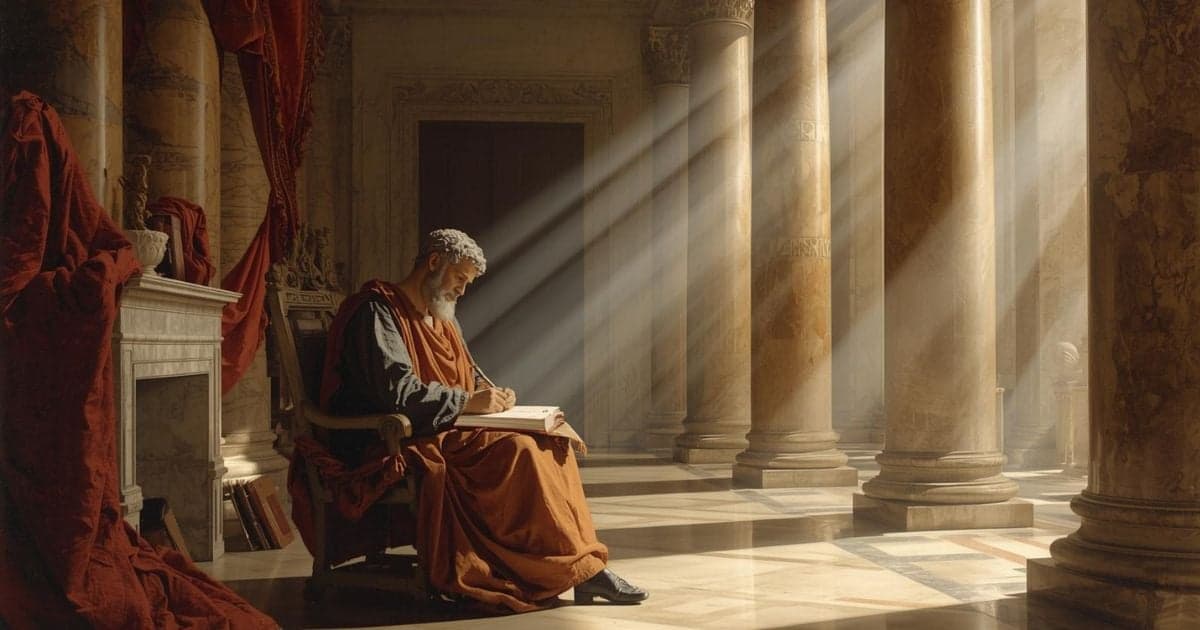
Lady Philosophy drives the muses out of a prison cell at Pavia and calls their comfort sweet poison. Boethius has been composing a lament for the life that was taken from him: consulships, wealth, a name that used to open every door. She will not let him keep rehearsing the wound. He wrote the dialogue in 524 while awaiting execution on a fabricated treason charge. The court called it treason. He called it a factional lie. The sentence will be carried out. The argument has to finish first. The man who lost the empire still has the one thing Fortune never owned.
Boethius is the prisoner: scholar, consul, translator of Aristotle, until recently one of the most powerful civilians under Theodoric the Great. Lady Philosophy is the visitor who will not flatter him. She changes height as she speaks, carries a book and a scepter, and treats his tears as a diagnosis, not a mood. Fortune is the wheel he mistook for a contract. The wicked who prosper become the objection that almost wrecks the argument. The argument also names the goods he thought were his: wealth, office, fame, pleasure, the titles that vanished overnight. The only opponent who never leaves the page is the claim that what can be taken was ever truly given.
Book I finds him writing bitter poetry. Philosophy dismisses the muses, names three failures beneath the despair (he has forgotten who he is, lost what life is for, and misunderstood how the world is governed), and starts with gentler remedies. Book II puts Fortune on the stand: change is her nature, giving and taking are the job, and a wheel that only rose would not be a wheel. Book III strips wealth, power, rank, and pleasure as counterfeit happiness, then points him toward a good that cannot be assembled like a career. Book IV faces the oldest scandal: if God is good, why do the wicked flourish while a decent man sits in a cell? Book V holds providence and human freedom in one frame, and leaves him clearer, still imprisoned, still scheduled to die.
Boethius never treats the cell as a metaphor you can walk out of, or Philosophy as a comfort animal, or Fortune as a villain who broke a deal. He writes the dialogue in alternating prose and verse while waiting for a sentence that will be carried out. The Consolation became one of the most copied books of the Middle Ages because it refuses the cheap ending. What remains is not a sermon that pain is good. It is a picture of a man learning that identity built on office collapses when the office is stripped, and that the goods worth wanting do not sit on Fortune's wheel.
Lady Philosophy's first move is to stop the lament. Refusing Sweet Poison is the muses expelled in Book I, the grief performance that keeps anguish alive instead of forcing accurate thought. Diagnosing Identity Crisis is the same book's three failures: he has forgotten who he is, lost what life is for, and misunderstood how the world is governed. Reading Fortune's Terms is Book II putting the wheel on the stand: change is her nature, giving and taking are the job. Spotting Counterfeit Happiness is Book III stripping wealth, power, rank, and pleasure as goods that create appetite instead of rest. Holding Moral Clarity Under Injustice is Book IV's scandal: the wicked flourish while a decent man sits in a cell. Acting Freely Under Providence is Book V holding God's sight and the choice he still has to make, clearer, still imprisoned, still scheduled to die.
He is still writing bitter poetry when she arrives. A book and a scepter are still in her hands. The wheel is still a wheel. Wide Reads places summaries, quotes, and audio beside all five books, and the last frame is still a mind that can hold providence and freedom without walking free.
The Essential Truths through The Consolation of Philosophy
Theme-by-theme chapter breakdowns of the essential skills in this classic work.
Diagnosing Identity Crisis
Philosophy's first question is not how to get the old life back. Three books from the lament in Pavia through Fortune's wheel to the cell he never leaves show what happens when titles evaporate and the man who held them cannot say who remains.
Reading Fortune's Terms
A wheel that only rose would not be a wheel. Three books from the stolen life through Fortune on the stand to the counterfeit goods of Book III show why treating a reversal as betrayal is a category error, not a moral insight.
Spotting Counterfeit Happiness
3 books stripping wealth, power, rank, and pleasure as goods that create appetite instead of rest.
Holding Moral Clarity Under Injustice
3 books on virtue punished, crime elevated, and the question that will not go away from a cell.
Acting Freely Under Providence
3 books holding God's sight and human choice in one frame without collapsing into despair.
Refusing Sweet Poison
3 books from the muses expelled to Fortune unmasked: grief that only rehearses the wound is not medicine.
Table of Contents
When Life Falls Apart
You have lost something that felt like your whole life: a job, a relationship, your health, your nam...
Why Fortune Always Disappoints
If you have ever enjoyed good fortune and then raged at bad fortune as if the universe broke a promi...
The Path to True Happiness
Until now the book has been tearing down false comforts. Book III begins to name what was missing al...
When the Wicked Seem to Win
You can agree that God is good in theory and still want to throw the book when the wicked prosper. ...
Freedom Under God's Sight
The last chapter asks the question that haunts every thoughtful person who has ever felt trapped: if...
About Boethius
Published 524
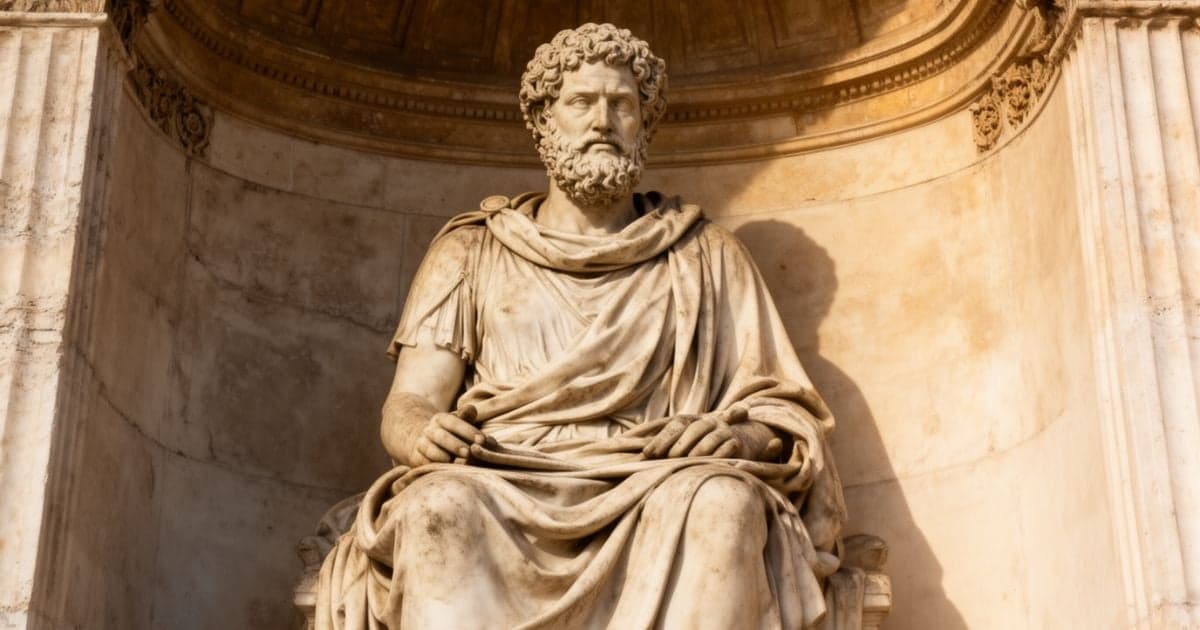
Anicius Manlius Severinus Boethius (c. 477-524) was a Roman senator, consul, and the last great Latin transmitter of Greek philosophy. Born into a senatorial family after the Western Empire had already fallen, he served Theodoric the Great, translated Aristotle, and wrote on music, arithmetic, and logic. For a few years he was as powerful as a civilian could be in Ostrogothic Italy.
Then the court turned. Accused of treason in a factional fight he later called fabricated, he was imprisoned at Pavia and executed. In that cell he wrote The Consolation of Philosophy, a dialogue that barely mentions Christ and still became a handbook of the Christian Middle Ages. Alfred the Great translated it. Chaucer translated it. Dante placed Boethius in the Heaven of the Sun.
His gift is refusing cheap comfort. He lets Philosophy scold him, puts Fortune on the stand, and keeps the problem of evil on the page until the argument can hold it. The book still finds readers who recognize the night a title, a fortune, or a reputation vanished, and who need a teacher who will not call that loss a misunderstanding of the universe's terms.
Why This Author Matters Today
Reading Boethius is an act of self-discovery — one that tends to be more unsettling, and more rewarding, than you expect. Their work doesn't offer easy answers. It offers something rarer: the right questions. Questions about what we owe each other, what we owe ourselves, and what kind of person we are quietly becoming through the choices we make every day.
What makes Boethius indispensable isn't just their insight into human nature — it's their honesty about its contradictions. They understood that people are capable of extraordinary courage and ordinary cowardice, often in the same breath. That we can hold convictions firmly and abandon them the moment they cost us something. That the gap between who we think we are and who we actually are is where most of life's real drama lives.
In an age of noise, distraction, and the constant pressure to perform certainty we don't feel,Boethius is a corrective. Their pages slow you down and ask you to look more carefully — at the world, yes, but especially at yourself. Few writers have done more to show us that thinking well is not an academic exercise but a survival skill, and that the examined life is not a luxury but the only honest way to live.
Wide Reads is different.
not a sparknotes, nor a cliffnotes
Two ways in
Read & listen to the summary
Walk with the characters. Hear the story told completely — chapter by chapter, with audio. Feel what they feel. The meaning arrives because you experienced it, not because someone listed bullet points. Every chapter has a summary that speaks.
Start with this.
Read the original text
The manuscript. The actual words the author wrote. Every book on Wide Reads includes the original text alongside the summary — so you can read Austen as Austen wrote her, Dostoevsky as he wrote his. Use the summary as a guide, then step into the source.
Then step into the source.
Either way, the door opens inward.
As you enter the realm — each chapter goes deeper
— and most of all, Why does this matter?
Get the Full Book
Purchase the complete book to access all chapters and support classic literature
Available in paperback, hardcover, and e-book formats
You Might Also Like


Free to read • No account required
