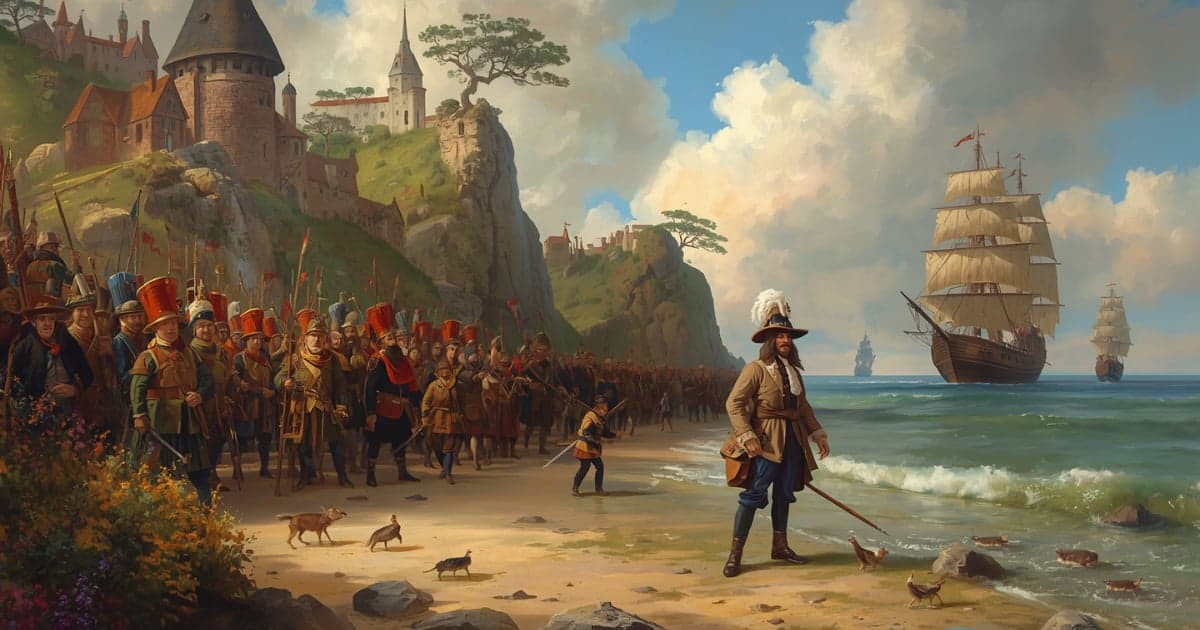
Chapter 04
When Your Teacher Falls Apart
HOW CANDIDE FOUND HIS OLD MASTER PANGLOSS, AND WHAT HAPPENED TO THEM. Candide, yet more moved with compassion than with horror, gave to this shocking beggar the two florins which he had received from the honest Anabaptist James. The spectre looked at him very earnestly, dropped a few tears, and fell upon his neck. Candide recoiled in disgust. "Alas!" said one wretch to the other, "do you no longer know your dear Pangloss?" "What do I hear? You, my dear master! you in this terrible plight! What misfortune has happened to you? Why are you no longer in the most…
Public-domain chapter text, formatted for reading.
Master this chapter. Complete your experience
Purchase the complete book to access all chapters and support classic literature
Available in paperback, hardcover, and e-book formats
Now let's explore the literary elements.
Key Quotes & Analysis
"She is dead"
Context: When Candide asks about Cunegonde after finding his teacher as a beggar
These simple words shatter Candide's world and his faith in his teacher's philosophy. The blunt delivery shows how suffering has stripped away Pangloss's flowery speech.
In Today's Words:
When the system explains suffering instead of reducing it, These simple words shatter Candide's world and his faith in his teacher's philosophy. The blunt delivery shows how suffering has stripped away Pangloss's flowery speech. Practical wisdom starts when philosophy stops performing. Ask who profits when suffering gets renamed as progress.
"Cunegonde is dead! Ah, best of worlds, where art thou?"
Context: His anguished response to learning of Cunegonde's death
Candide's sarcastic question shows he's beginning to doubt everything Pangloss taught him. The 'best of worlds' phrase becomes bitter irony in the face of real loss.
In Today's Words:
When a comforting theory meets a brutal fact, Candide's sarcastic question shows he's beginning to doubt everything Pangloss taught him. The 'best of worlds' phrase becomes bitter irony in the face of real loss. Candide's education is what happens when theory meets the road. Ask who profits when suffering gets renamed as progress.
"HOW CANDIDE FOUND HIS OLD MASTER PANGLOSS, AND WHAT HAPPENED TO THEM."
Context: From When Your Teacher Falls Apart
This line marks a turn where private feeling collides with the roles each character is trying to maintain.
In Today's Words:
If you have ever been punished for trusting the official story, This line marks a turn where private feeling collides with the roles each character is trying to maintain. Notice whether you are absorbing comfort or testing it against evidence. Ask who profits when suffering gets renamed as progress.
"Candide, yet more moved with compassion than with horror, gave to this shocking beggar the two florins which he had received from the honest Anabaptist James."
Context: From When Your Teacher Falls Apart
This line marks a turn where private feeling collides with the roles each character is trying to maintain.
In Today's Words:
When disaster arrives and someone still calls it necessary, This line marks a turn where private feeling collides with the roles each character is trying to maintain. Voltaire keeps asking who benefits from the explanation. Ask who profits when suffering gets renamed as progress. Ask who profits when suffering gets renamed as progress.
Thematic Threads
Authority
In This Chapter
Pangloss maintains his authority through confident explanations, even when his life proves his teachings wrong
Development
Building from earlier chapters where authority figures failed Candide
In Your Life:
You might follow someone's advice simply because they sound confident, not because their methods actually work
Suffering
In This Chapter
Pangloss transforms his obvious suffering into proof that everything is wonderful
Development
Deepening from earlier glimpses of violence to personal, intimate destruction
In Your Life:
You might catch yourself justifying your own pain instead of addressing its real causes
Compassion
In This Chapter
Candide shows genuine care for his diseased teacher, while James the Anabaptist helps without philosophical justification
Development
Introduced here as contrast to empty philosophizing
In Your Life:
You might notice the difference between people who help and people who explain why help isn't needed
Truth
In This Chapter
Reality directly contradicts Pangloss's teachings, yet he doubles down on his philosophy
Development
Evolving from Candide's innocent acceptance to active questioning
In Your Life:
You might find yourself defending ideas that your own experience has proven wrong
Class
In This Chapter
Pangloss has fallen from respected teacher to diseased beggar, yet clings to his intellectual superiority
Development
Continuing the theme of how quickly social positions can change
In Your Life:
You might see how people use education or credentials to maintain status even when their circumstances have changed
You now have the context. Time to form your own thoughts.
Discussion Questions
This is not a test. Five prompts guide you through the chapter, from how it opens to how it closes, so you notice context and rhythm rather than facts to memorize. Sit with each question in your own words. When you see "One way to read it," treat it as a starting point, not the only answer.
- 1
What happens in the opening of "When Your Teacher Falls Apart" when Candide encounters a diseased beggar who turns out to be...?
analysis • surfaceOne way to read it
Voltaire opens by showing Candide encounters a diseased beggar who turns out to be his beloved teacher Pangloss... before Candide's naive faith is tested further.
- 2
Why does the middle of "When Your Teacher Falls Apart" turn on His philosophy sounds wise until you see where it leads -...?
analysis • mediumOne way to read it
The chapter escalates when His philosophy sounds wise until you see where it leads - to accepting horrific..., exposing the gap between Pangloss's theory and lived catastrophe.
- 3
Where do you see intellectual immunity in modern workplaces, politics, or family life?
application • mediumOne way to read it
One reading: the same pattern appears when institutions explain harm instead of reducing it.
- 4
If you were Candide in the closing pressure of "When Your Teacher Falls Apart", what would you do differently?
application • deepOne way to read it
A practical response is to act on evidence before rebuilding a theory that makes the harm sound necessary.
- 5
What does "When Your Teacher Falls Apart" suggest about trusting philosophies that cannot survive bad evidence?
reflection • deepOne way to read it
It suggests that any worldview that cannot absorb real suffering is protecting someone else's comfort.
Critical Thinking Exercise
Spot the Intellectual Immunity
Think of someone you know who always has elaborate explanations for why their problems are actually benefits or someone else's fault. Write down three specific examples of their reasoning. Then identify what reality they're avoiding by creating these explanations.
Consider:
- •Look for patterns where the explanation gets more complex as the problem gets worse
- •Notice if they blame external forces while taking credit for any successes
- •Consider how their explanations affect the people around them
Journaling Prompt
Write about a time when you caught yourself making elaborate excuses for a situation that was clearly not working. What were you trying to avoid admitting, and what happened when you finally faced the truth?
Coming Up Next...
Chapter 5: When Disaster Strikes and Philosophy Fails
Just as things seem to stabilize, nature itself turns violent. A devastating earthquake will test everyone's philosophical theories against raw survival, and not everyone will make it through alive A brutal storm destroys the ship, and James the Anabaptist, the one genuinely good person they've met, drowns trying to save the very sailor who attacked him. The irony is crushing: the cruel sailor survives.