Chapter 19
The Price of Sugar and Broken Dreams
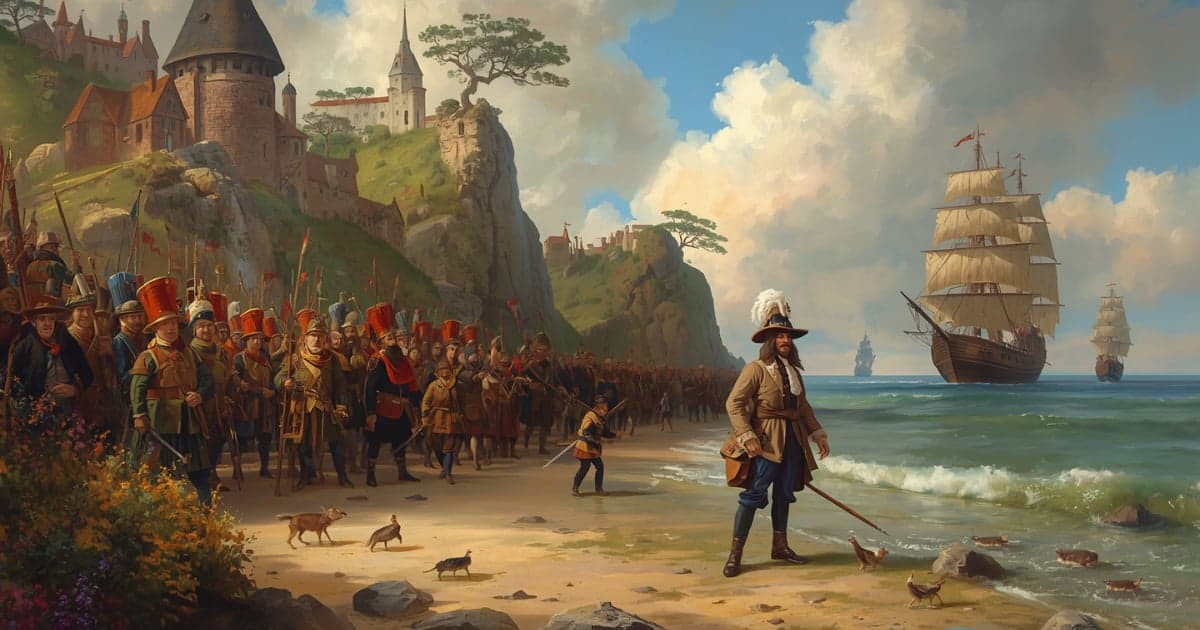
WHAT HAPPENED TO THEM AT SURINAM AND HOW CANDIDE GOT ACQUAINTED WITH MARTIN. Our travellers spent the first day very agreeably. They were delighted with possessing more treasure than all Asia, Europe, and Africa could scrape together. Candide, in his raptures, cut Cunegonde's name on the trees. The second day two of their sheep plunged into a morass, where they and their burdens were lost; two more died of fatigue a few days after; seven or eight perished with hunger in a desert; and others subsequently fell down precipices. At length, after travelling a hundred days, only two sheep remained.…
Public-domain chapter text, formatted for reading.
Master this chapter. Complete your experience
Purchase the complete book to access all chapters and support classic literature
Available in paperback, hardcover, and e-book formats
Now let's explore the literary elements.
Key Quotes & Analysis
"This is the price at which you eat sugar in Europe"
Context: After explaining how he lost his hand in a sugar mill and his leg for trying to escape
This devastating line connects European luxury directly to human mutilation. It's delivered without self-pity, making it even more powerful. This moment finally breaks Candide's optimism completely.
In Today's Words:
When the system explains suffering instead of reducing it, This devastating line connects European luxury directly to human mutilation. It's delivered without self-pity, making it even more powerful. This moment finally breaks Candide's optimism completely. Practical wisdom starts when philosophy stops performing. Ask who profits when suffering gets renamed as progress.
"My friend, you see how perishable are the riches of this world; there is nothing solid but virtue"
Context: After losing most of their treasure-laden sheep to accidents and disasters
Shows Candide still clinging to philosophical platitudes even as reality crashes down. He's trying to make sense of loss through abstract concepts rather than facing hard truths.
In Today's Words:
When a comforting theory meets a brutal fact, Shows Candide still clinging to philosophical platitudes even as reality crashes down. He's trying to make sense of loss through abstract concepts rather than facing hard truths. Candide's education is what happens when theory meets the road.
"WHAT HAPPENED TO THEM AT SURINAM AND HOW CANDIDE GOT ACQUAINTED WITH MARTIN."
Context: From The Price of Sugar and Broken Dreams
This line marks a turn where private feeling collides with the roles each character is trying to maintain.
In Today's Words:
If you have ever been punished for trusting the official story, This line marks a turn where private feeling collides with the roles each character is trying to maintain. Notice whether you are absorbing comfort or testing it against evidence. Ask who profits when suffering gets renamed as progress.
"Our travellers spent the first day very agreeably."
Context: From The Price of Sugar and Broken Dreams
This line marks a turn where private feeling collides with the roles each character is trying to maintain.
In Today's Words:
When disaster arrives and someone still calls it necessary, This line marks a turn where private feeling collides with the roles each character is trying to maintain. Voltaire keeps asking who benefits from the explanation. Ask who profits when suffering gets renamed as progress. Ask who profits when suffering gets renamed as progress.
Thematic Threads
Class
In This Chapter
Candide's wealth makes him a target, while his lack of street smarts about money reveals his privileged background
Development
Evolved from earlier displays of naive generosity to active exploitation by those who recognize his inexperience
In Your Life:
When you come into money or move between social classes, people immediately assess whether you're an easy mark
Disillusionment
In This Chapter
The enslaved man's matter-of-fact description of brutality finally breaks Candide's faith in optimistic philosophy
Development
Culmination of mounting evidence that contradicts Pangloss's teachings about the best of all possible worlds
In Your Life:
Sometimes one conversation with someone who's lived through real hardship shatters all your comfortable assumptions
Human Connection
In This Chapter
Candide seeks a travel companion through shared misery rather than shared joy, choosing Martin for his suffering
Development
Shift from seeking rescue through others to seeking understanding through common experience
In Your Life:
The deepest friendships often form not through good times but through surviving similar struggles together
Economic Exploitation
In This Chapter
The Dutch captain systematically increases prices and then steals outright, while the magistrate profits from corruption
Development
First detailed look at how systems of power extract wealth from the vulnerable
In Your Life:
When you're desperate or uninformed, every transaction becomes an opportunity for someone to take advantage
Moral Awakening
In This Chapter
Candide finally sees suffering that cannot be explained away as part of a greater good or divine plan
Development
Transition from blind acceptance of authority to critical thinking about justice and cruelty
In Your Life:
Growing up means recognizing that some pain serves no purpose and some systems are simply wrong
You now have the context. Time to form your own thoughts.
Discussion Questions
This is not a test. Five prompts guide you through the chapter, from how it opens to how it closes, so you notice context and rhythm rather than facts to memorize. Sit with each question in your own words. When you see "One way to read it," treat it as a starting point, not the only answer.
- 1
What happens in the opening of "The Price of Sugar and Broken Dreams" when Candide's fortune begins to crumble almost immediately.?
analysis • surfaceOne way to read it
Voltaire opens by showing Candide's fortune begins to crumble almost immediately. before Candide's naive faith is tested further.
- 2
Why does the middle of "The Price of Sugar and Broken Dreams" turn on He sends Cacambo with diamonds to attempt her rescue while he...?
analysis • mediumOne way to read it
The chapter escalates when He sends Cacambo with diamonds to attempt her rescue while he waits in Surinam., exposing the gap between Pangloss's theory and lived catastrophe.
- 3
Where do you see the compound betrayal loop in modern workplaces, politics, or family life?
application • mediumOne way to read it
One reading: the same pattern appears when institutions explain harm instead of reducing it.
- 4
If you were Candide in the closing pressure of "The Price of Sugar and Broken Dreams", what would you do differently?
application • deepOne way to read it
A practical response is to act on evidence before rebuilding a theory that makes the harm sound necessary.
- 5
What does "The Price of Sugar and Broken Dreams" suggest about trusting philosophies that cannot survive bad evidence?
reflection • deepOne way to read it
It suggests that any worldview that cannot absorb real suffering is protecting someone else's comfort.
Critical Thinking Exercise
Spot the Red Flags
Think about a time when someone took advantage of you financially, professionally, or personally. Write down the warning signs you missed at the time but can see clearly now. Then list three specific questions you could ask or boundaries you could set to protect yourself in similar future situations.
Consider:
- •Predators often create artificial time pressure to prevent you from thinking clearly
- •They may seem overly friendly or offer deals that sound too good to be true
- •Your gut feeling of something being 'off' is usually worth investigating
Journaling Prompt
Write about a situation where you felt vulnerable and how you protected yourself, or describe how you would handle being targeted by someone like the Dutch sea captain today.
Coming Up Next...
Chapter 20: Two Philosophers Debate at Sea
Candide and his new companion Martin set sail for Europe, but their philosophical discussions about the nature of good and evil will be tested by the dangers that await them on the high seas Candide and his new companion Martin sail toward France, locked in philosophical debate about good and evil. Martin, scarred by a lifetime of suffering, believes the world is controlled by.