Chapter 11
The Vision of Universal Form
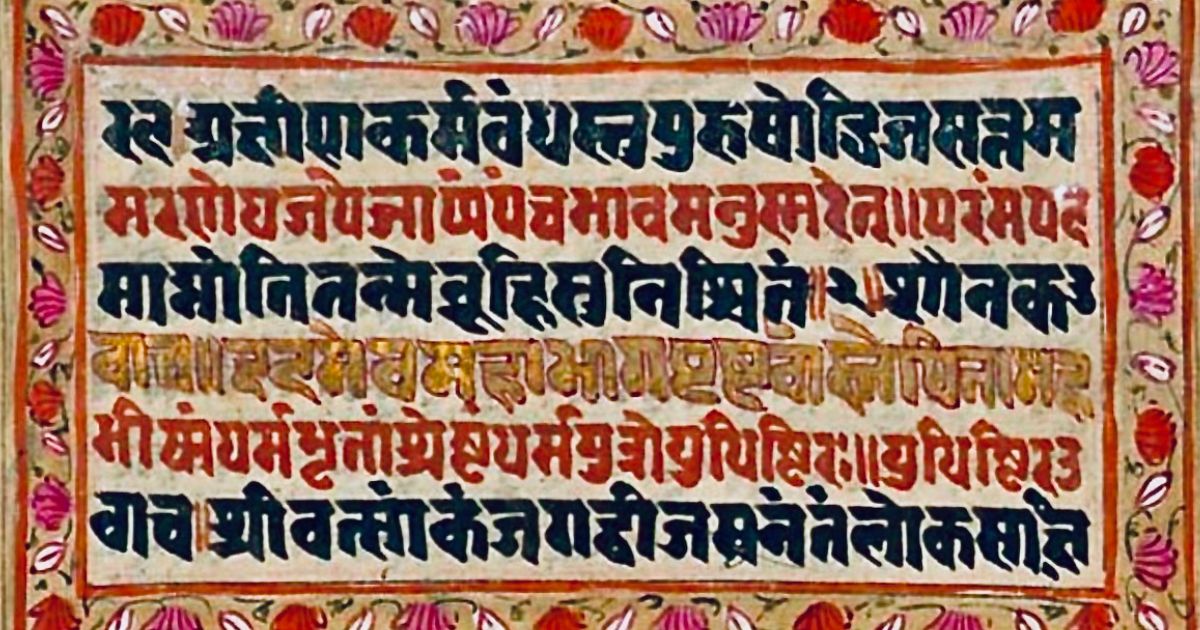
Arjuna. This, for my soul's peace, have I heard from Thee, The unfolding of the Mystery Supreme Named Adhyatman; comprehending which, My darkness is dispelled; for now I know-- O Lotus-eyed!--whence is the birth of men, And whence their death, and what the majesties Of Thine immortal rule. Fain would I see, As thou Thyself declar'st it, Sovereign Lord! The likeness of that glory of Thy Form Wholly revealed. O Thou Divinest One! If this can be, if I may bear the sight, Make Thyself visible, Lord of all prayers! Show me Thy very self, the Eternal God! Krishna. Gaze,…
Public-domain chapter text, formatted for reading.
Master this chapter. Complete your experience
Purchase the complete book to access all chapters and support classic literature
Available in paperback, hardcover, and e-book formats
Now let's explore the literary elements.
Key Quotes & Analysis
"Thou canst not!--nor, with human eyes, Arjuna! ever mayest! Therefore I give thee sense divine. Have other eyes, new light!"
Context: Before revealing the cosmic form, Krishna explains why mortal sight must be replaced
Ultimate reality exceeds ordinary perception; revelation requires a transformed way of seeing.
In Today's Words:
Krishna tells Arjuna ordinary eyes cannot carry this sight, so he grants a new way of seeing. In a hospital, that is like demanding the full mortality dashboard before you can steady your hands for the veteran in the waiting room. Some truth requires a wider lens, not sharper squinting at one corner.
"Behold! this is the Universe!--Look! what is live and dead I gather all in one--in Me!"
Context: Krishna unveils the Viswarupa containing all existence
Life and death are not separate chaos but one divine whole: overwhelming unity, not fragmentation.
In Today's Words:
Krishna gathers everything alive and dead into one form. In daily life that feels less mystical and more brutal: one crisis shows payroll, policy, and bedside care were never separate stories. You stop treating symptoms as random bad luck and start seeing one system breathing together.
"Thou seest Me as Time who kills, Time who brings all to doom, The Slayer Time, Ancient of Days, come hither to consume;"
Context: Krishna explains His fierce aspect after Arjuna sees warriors swallowed
Destruction is not random cruelty but Time's office; the battle's outcome is already within cosmic law.
In Today's Words:
Krishna says Arjuna sees Time itself, the force that finishes every plan on schedule. Layoffs, aging, and war do not wait for your moral debate or your careful spreadsheet. Recognizing that larger clock does not excuse cruelty; it stops the fantasy that you alone decide when the chapter ends.
"By Me they fall--not thee! the stroke of death is dealt them now, Even as they show thus gallantly; My instrument art thou!"
Context: Krishna sends Arjuna back to fight after the vision
Duty resumes: Arjuna acts, but the decisive power is Krishna's; courage means serving as instrument, not claiming authorship.
In Today's Words:
They fall by Krishna's will; Arjuna acts as instrument only. That reframes guilt on a battlefield or in bureaucracy: do the duty in front of you without claiming you authored the whole outcome. Courage is obedience to what must be done, not ownership of Time.
Thematic Threads
Identity
In This Chapter
Arjuna discovers his friend Krishna contains infinite cosmic identity beyond human comprehension
Development
Builds on earlier identity questions—now showing identity can be too vast to grasp
In Your Life:
You might struggle when someone close to you reveals depths you never suspected
Power
In This Chapter
Krishna demonstrates ultimate divine power but chooses to return to gentle human form
Development
Develops the power theme by showing restraint and appropriate application
In Your Life:
You might need to dial back your full capabilities to remain effective with others
Fear
In This Chapter
Arjuna becomes terrified when confronted with cosmic reality beyond his understanding
Development
Introduced here as response to overwhelming truth
In Your Life:
You might feel afraid when facing truths that challenge your basic assumptions about reality
Relationships
In This Chapter
The teacher-student bond requires returning to manageable human scale after cosmic revelation
Development
Develops relationship theme by showing how intimacy requires appropriate boundaries
In Your Life:
You might need to moderate how much you reveal to maintain functional relationships
Growth
In This Chapter
True spiritual growth means integrating overwhelming experiences into daily life
Development
Advances growth theme by showing integration rather than escape
In Your Life:
You might need to process major insights gradually rather than trying to change everything at once
You now have the context. Time to form your own thoughts.
Discussion Questions
This is not a test. Five prompts guide you through the chapter, from how it opens to how it closes, so you notice context and rhythm rather than facts to memorize. Sit with each question in your own words. When you see "One way to read it," treat it as a starting point, not the only answer.
- 1
Why does Krishna say Arjuna cannot see the divine form with human eyes, and what does granting "other eyes" change?
analysis • surfaceOne way to read it
Mortal sight cannot bear ultimate reality; divine sight lets Arjuna perceive the Viswarupa without going blind to meaning.
- 2
What happens when Arjuna sees warriors, including Bhishma and Drona, poured into Krishna's flaming mouths?
analysis • mediumOne way to read it
Wonder turns to horror; he realizes the battle's deaths are already inside Time's mouth, not a future he can negotiate away.
- 3
Where have you asked for total transparency at work or home and then felt less able to act?
application • mediumOne way to read it
Full dashboards, relationship histories, or legal packets can overwhelm before they guide the next concrete step.
- 4
How does Krishna's command to fight as "My instrument" reframe guilt after the vision of universal destruction?
application • deepOne way to read it
Duty continues, but authorship shifts: act without claiming you are the sole cause when larger forces already set the field.
- 5
Why does Arjuna beg for Krishna's familiar form, and what does that teach about integrating overwhelming insight?
reflection • deepOne way to read it
Profound sight must return to a human scale you can live with; mercy and familiar relationship restore action after awe.
Critical Thinking Exercise
Truth Dosage Assessment
Think of a situation where you want more information - about your health, your relationship, your job, or your family. Write down what you want to know, then honestly assess: Are you asking because you're ready to act on this information constructively, or because you feel you 'should' know? What would be the right 'dose' of truth that would help rather than overwhelm you?
Consider:
- •Consider your emotional bandwidth right now
- •Think about what you would actually do with the information
- •Ask whether partial information might be more useful than complete information
Journaling Prompt
Write about a time when you received more truth than you could handle. What did you learn about timing and your own capacity for difficult information?
Coming Up Next...
Chapter 12: The Path of Loving Devotion
Having seen the cosmic vision, Arjuna now faces a fundamental question about spiritual practice: Is it better to worship God in a personal form you can relate to, or to seek the formless absolute beyond all description? Krishna's answer will reshape how we think about the different paths to spiritual fulfillment..