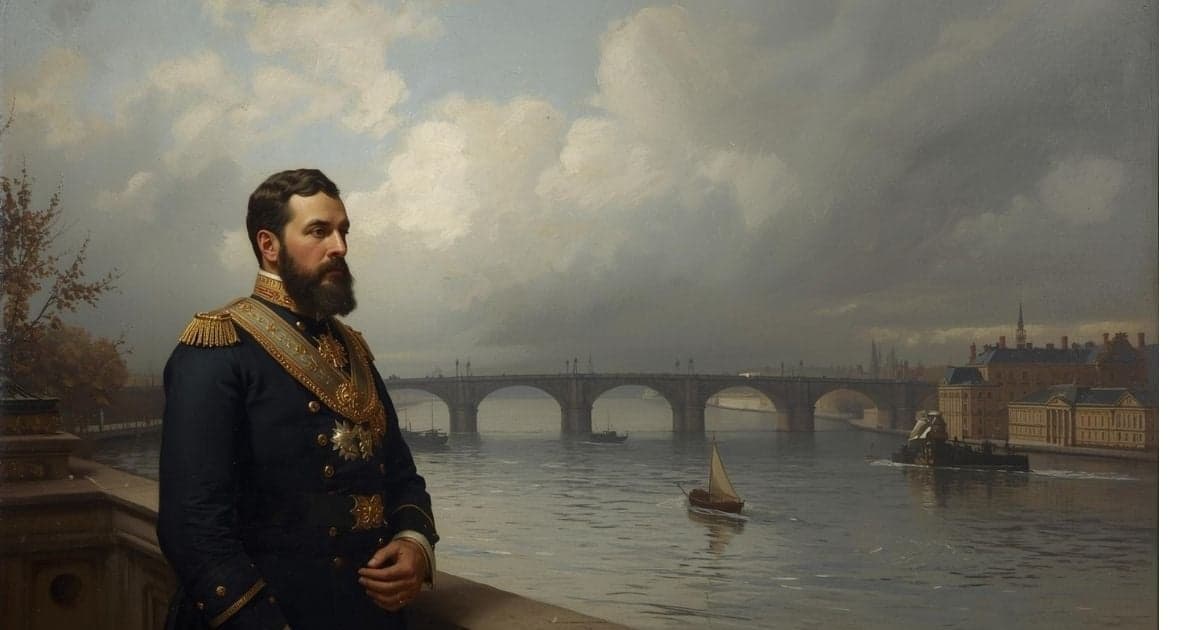
Chapter 42
Karenin saw nothing improper in Anna sitting apart with Vronsky unt...
Alexey Alexandrovitch had seen nothing striking or improper in the fact that his wife was sitting with Vronsky at a table apart, in eager conversation with him about something. But he noticed that to the rest of the party this appeared something striking and improper, and for that reason it seemed to him too to be improper. He made up his mind that he must speak of it to his wife. On reaching home Alexey Alexandrovitch went to his study, as he usually did, seated himself in his low chair, opened a book on the Papacy at the place where…
Public-domain chapter text, formatted for reading.
Master this chapter. Complete your experience
Purchase the complete book to access all chapters and support classic literature
Available in paperback, hardcover, and e-book formats
Now let's explore the literary elements.
Key Quotes & Analysis
"But he noticed that to the rest of the party this appeared something striking and improper, and for that reason it seemed to him too to be improper."
Context: Karenin recalling Anna and Vronsky at Betsy's party
His moral alarm runs through social optics first; he trusts the room before he trusts his own instinct.
In Today's Words:
He only thought something was wrong after he saw that other people did. Plenty of us borrow a crowd's judgment when we do not trust our own gut, especially in marriage or at work when naming the problem would make it real Image often arrives before insight in marriages and institutions alike.
"Now he experienced a feeling akin to that of a man who, while calmly crossing a precipice by a bridge, should suddenly discover that the bridge is broken, and that there is a chasm below."
Context: Karenin confronting the possibility that Anna might love another man
Life breaks through the reflective shell he has lived inside; the metaphor shows panic, not passion.
In Today's Words:
He realizes the safe path he walked on was never solid. That is what it feels like when a rule you lived by turns out not to protect you, and ordinary life suddenly has a drop beneath it you never learned to see Then every old certainty starts looking like performance instead of floor.
"My duty is clearly defined. As the head of the family, I am a person bound in duty to guide her, and consequently, in part the person responsible"
Context: Karenin organizing his approach before Anna returns
He converts fear into administrative responsibility, preferring categories to the messy fact of desire.
In Today's Words:
He tells himself his job is to guide her, not to ask what she feels. People often reach for duty language when emotion would require a different kind of courage and when admitting fear would feel like losing status Categories feel safer than the question of whether she still chooses you.
"Already, from the sound of light steps on the stairs, he was aware that she was close, and though he was satisfied with his speech, he felt frightened of the explanation confronting him"
Context: Anna arriving while Karenin waits with his prepared points
The speech satisfies his mind but not his body; preparation cannot substitute for confrontation.
In Today's Words:
He has the perfect talking points and still dreads the actual conversation. You can rehearse a hard talk all night and freeze when the person walks in, because preparation is not the same as being ready to hear the answer The gap between script and encounter is where marriages often actually fail.
Thematic Threads
Identity
In This Chapter
Karenin's official self cannot absorb the possibility that Anna has an inner life separate from his
Development
Public man meets private threat for the first time in the marriage
In Your Life:
You might discover a relationship problem only after outsiders make it visible
Social Expectations
In This Chapter
Karenin trusts decorum and public opinion more than direct emotional perception
Development
Impropriety becomes real through the room's eyes before through his own
In Your Life:
You might ask what people will think before asking what you actually feel
You now have the context. Time to form your own thoughts.
Discussion Questions
This is not a test. Five prompts guide you through the chapter, from how it opens to how it closes, so you notice context and rhythm rather than facts to memorize. Sit with each question in your own words. When you see "One way to read it," treat it as a starting point, not the only answer.
- 1
Why does Karenin decide to speak to Anna after the party?
analysis • surfaceOne way to read it
Others found her private talk with Vronsky striking and improper, and that social judgment makes it improper to him too.
- 2
What does the broken-bridge image suggest about Karenin's usual way of living?
analysis • mediumOne way to read it
He has lived in reflected, official life and is unprepared when raw possibility, like a wife loving another man, opens beneath him.
- 3
When have you built a principled argument for a fear you had not fully admitted?
application • mediumOne way to read it
Like Karenin sorting Anna's feelings into religion and duty, people often reach for rules when direct emotion would feel humiliating or unfamiliar.
- 4
Why is Karenin satisfied with his speech yet frightened when Anna arrives?
application • deepOne way to read it
The speech organizes the problem administratively; the living person in the doorway requires vulnerability his prepared points cannot supply.
- 5
What would change if Karenin asked about Anna's feelings before citing decorum?
reflection • deepOne way to read it
He might discover whether he is facing misunderstanding, distance, or love for another man instead of defending an abstract rule set.
Critical Thinking Exercise
Find the Real Alarm
Think of a conflict you handled with rules, talking points, or what people would think. Write what others noticed first, then what you feared underneath.
Consider:
- •Ask whether your principle came before or after social confirmation
- •Notice if preparation replaced curiosity
- •Consider what a direct question might have revealed
Journaling Prompt
Describe a time you were satisfied with a speech you never actually gave. What stopped you when the moment arrived?
Coming Up Next...
Chapter 43
Anna comes home glowing from Vronsky, and Karenin's rehearsed warning collapses into a conversation neither of them can honestly finish. Anna returns with a hood in her hands and a glow on her face that looks less like brightness than fire in darkness. She marvels at how easily she lies, feels armored in falsehood, and treats Karenin's need to talk like a sleepy inconvenience..