Chapter 10
The Blood Oath and Morning After
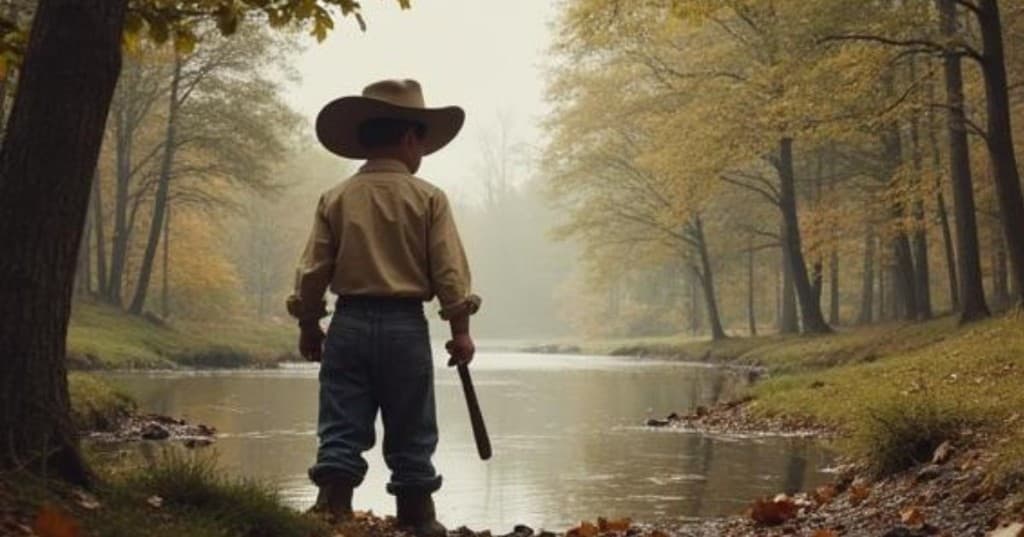
The two boys flew on and on, toward the village, speechless with horror. They glanced backward over their shoulders from time to time, apprehensively, as if they feared they might be followed. Every stump that started up in their path seemed a man and an enemy, and made them catch their breath; and as they sped by some outlying cottages that lay near the village, the barking of the aroused watch-dogs seemed to give wings to their feet. “If we can only get to the old tannery before we break down!” whispered Tom, in short catches between breaths. “I can’t…
Public-domain chapter text, formatted for reading.
Master this chapter. Complete your experience
Purchase the complete book to access all chapters and support classic literature
Available in paperback, hardcover, and e-book formats
Now let's explore the literary elements.
Key Quotes & Analysis
"The two boys flew on and on, toward the village, speechless with horror."
Context: Tom and Huck flee the graveyard after the murder
Flight replaces speech. The body carries what language cannot yet touch without endangering them.
In Today's Words:
They ran toward town without words because horror outran vocabulary. Sometimes the first response to trauma is movement, not explanation. The story will force them to choose whether silence stays a reflex or becomes a decision. Twain is tracking how small choices stack until they are hard to undo, which is why naming the pattern early matters more than judging the person caught in it.
"Tom, we _got_ to keep mum. You know that."
Context: Huck argues they cannot report Injun Joe
Huck names the central fear: telling the truth may get them killed if Joe escapes justice. Silence feels like survival.
In Today's Words:
We have to stay quiet, Huck says, because Injun Joe is real and vengeful. Whistleblowers and bystanders face the same math when the offender still has power. Silence can be fear, not agreement. Twain is tracking how small choices stack until they are hard to undo, which is why naming the pattern early matters more than judging the person caught in it.
"It don’t make any difference _what_ happens, we got to keep mum."
Context: Tom confirms the blood oath binds them forever
Tom escalates secrecy into ritual. The oath makes silence feel sacred and permanent, which raises the future cost of truth.
In Today's Words:
No matter what happens, we cannot talk. Tom turns fear into a blood contract so breaking silence later will feel like betrayal, not courage. Groups often seal harmful quiet the same way. Twain is tracking how small choices stack until they are hard to undo, which is why naming the pattern early matters more than judging the person caught in it.
"It was his brass andiron knob!"
Context: Becky returns Tom's rejected gift at school after the graveyard night
While Tom carries murderous knowledge, Becky sends back the symbol of his ruined romance. Grief stacks on grief in opposite registers.
In Today's Words:
His rejected treasure came back. Becky returns the knob while Tom is drowning in a far worse secret, which shows how adolescent pain and moral catastrophe can run on parallel tracks. One hurt does not pause because another is larger. Twain is tracking how small choices stack until they are hard to undo, which is why naming the pattern early matters more than judging the person caught in it.
Thematic Threads
Loyalty
In This Chapter
Tom and Huck's blood oath represents absolute loyalty forged in crisis, but it conflicts with other loyalties to family and justice
Development
Evolved from Tom's earlier casual friendships to this life-or-death commitment that trumps all other relationships
In Your Life:
You might face this when workplace loyalty conflicts with family obligations or when friendship requires keeping secrets that hurt others.
Moral Complexity
In This Chapter
The boys face an impossible choice between speaking truth (risking death) and staying silent (letting an innocent man suffer)
Development
Developed from Tom's earlier harmless mischief to genuine moral dilemmas with life-and-death consequences
In Your Life:
You encounter this when reporting workplace violations could cost your job or when telling the truth might destroy relationships.
Guilt
In This Chapter
Tom's guilt over his secret knowledge makes him unable to accept his family's love and comfort
Development
Progressed from guilt over minor rule-breaking to the crushing weight of keeping silent about injustice
In Your Life:
You might feel this when you know something that could help someone but revealing it would break trust or cause other harm.
Social Isolation
In This Chapter
The shared secret bonds Tom and Huck while cutting them off from everyone else who can't understand their burden
Development
New theme introduced here as Tom experiences his first real separation from his community
In Your Life:
You might experience this after any intense experience that others haven't shared, from job loss to medical crisis to family trauma.
Powerlessness
In This Chapter
Despite knowing the truth, the boys are powerless to act because of their age, class, and Injun Joe's threat
Development
Intensified from earlier chapters where Tom's powerlessness was mostly about adult rules, now it's about life and death
In Your Life:
You might feel this when you witness injustice at work but lack the position or resources to safely speak up.
You now have the context. Time to form your own thoughts.
Discussion Questions
This is not a test. Five prompts guide you through the chapter, from how it opens to how it closes, so you notice context and rhythm rather than facts to memorize. Sit with each question in your own words. When you see "One way to read it," treat it as a starting point, not the only answer.
- 1
Why do Tom and Huck choose a written blood oath instead of a simple hand promise?
analysis • surfaceOne way to read it
They believe ordinary promises are too weak for a murder secret. Blood and writing make the pact feel binding and adult.
- 2
How does Huck's fear of Injun Joe shape the decision not to tell?
analysis • mediumOne way to read it
If Joe is not hanged, he will kill them. The logic is survival math, not indifference to Potter.
- 3
What does the stray dog omen scene reveal about how the boys read fear?
application • mediumOne way to read it
They interpret signs to learn who will die, which shows superstition trying to organize chaos after trauma.
- 4
Why is the returned andiron knob devastating to Tom the next morning?
analysis • deepOne way to read it
It collapses his romantic repair while he is already carrying the murder secret. Becky rejects him again at the exact moment he cannot explain why he is distant.
- 5
When has fear pushed you or someone else to promise silence that later felt impossible to break?
reflection • deepOne way to read it
Strong answers name who the silence protected and who it harmed. Tom's oath is the book's central moral pressure point.
Critical Thinking Exercise
Map Your Inner Circle
Think about the different groups of people in your life - family, work friends, old friends, neighbors. Draw circles representing these groups, with yourself in the center. Now mark which groups share certain experiences or knowledge that others don't have. Notice where the circles overlap and where they're completely separate.
Consider:
- •Which experiences have created the strongest bonds in your life?
- •Are there secrets or experiences that make you feel isolated from certain people?
- •How do you bridge the gap between different groups who don't understand each other?
Journaling Prompt
Write about a time when you felt caught between loyalty to one group and honesty with another. How did you navigate that tension, and what would you do differently now?
Coming Up Next...
Chapter 11: The Weight of Secrets
The village erupts with shocking news that will change everything for Tom and Huck. Their secret knowledge suddenly becomes the most dangerous thing they possess as the community reacts to the graveyard discovery.